Sagoh
Sagoh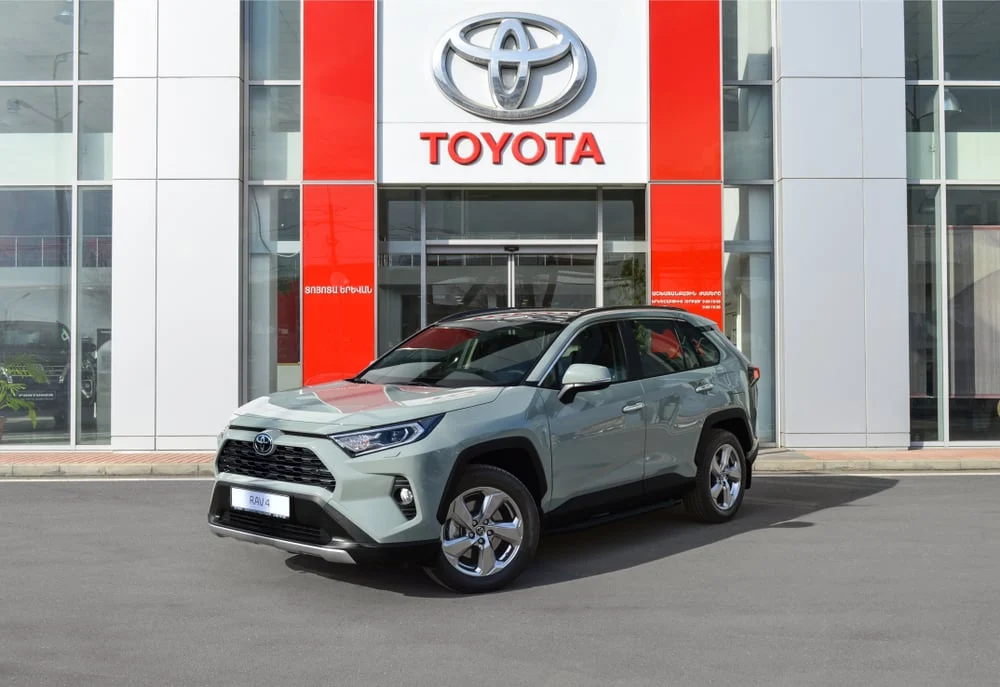
TOKYO, JAPAN – In a pivotal moment for the global automotive giant, Toyota Motor Corporation shareholders decisively re-elected Akio Toyoda as Chairman and approved the appointment of new CEO Kenta Kon to the board of directors during the company’s Annual Ordinary General Shareholders’ Meeting held in Toyota City, Aichi Prefecture. This significant shareholder endorsement signals continued confidence in Toyota’s long-standing "multi-pathway" strategy, a controversial approach that critics argue is hindering the urgent global transition to zero-emission electric vehicles (EVs).
The outcome of the meeting underscores a persistent divergence between the automaker’s strategic direction and the accelerating demands for rapid decarbonization from environmental advocates, climate scientists, and a growing segment of the investment community. Despite mounting pressure and evolving market dynamics, Toyota appears resolute in its commitment to a diverse powertrain portfolio, which includes hybrid and hydrogen technologies alongside battery electric vehicles.
Following the shareholder gathering, Toyota President and CEO Kenta Kon addressed reporters, reaffirming the company’s unwavering commitment to its multi-pathway strategy. Kon emphasized that Toyota intends to continue investing in and utilizing a range of powertrains, explicitly stating that the company has no intention of "hitting the brakes suddenly" on its current approach. This statement, delivered with conviction, suggests that significant shifts in strategy are unlikely in the immediate future, even as competitors rapidly expand their EV offerings.
Greenpeace East Asia Voices Concerns Over Pace of Transition
The decision has drawn sharp criticism from environmental organizations. Erin Eunseo Choi, climate and energy campaigner at Greenpeace East Asia, articulated a stark warning regarding Toyota’s pace of adaptation. "Geopolitical volatility and soaring oil prices have exposed the vulnerability of our fossil fuel-dependent industries, accelerating EV demand while Toyota slows to adapt," Choi stated. She highlighted a perceived lack of concrete action from Toyota, despite the company’s stated support for the Paris Agreement.
"In a reply to Greenpeace, Toyota said it supports the Paris Agreement, yet concrete steps remain invisible," Choi elaborated. "Its executives speak of a ‘multi-pathway strategy,’ but there is no time for corporate complacency. An ambulance carrying a critically ill patient needs a clear destination and speed. The climate crisis is that patient, and the hospital is not getting any closer." Her analogy powerfully conveys the urgency of the climate crisis and the perceived inadequacy of Toyota’s current strategy in addressing it.
Toyota’s Market Position and Environmental Performance Under Scrutiny
Toyota’s continued dominance as the world’s largest automotive manufacturer by volume in 2025 is a testament to its established global presence and diverse product lineup. However, this scale also brings significant environmental responsibility. The company’s total lifecycle greenhouse gas emissions, reported at 589.57 million tonnes of CO2 equivalent in its 2024 Sustainability Data Book, represent a substantial portion of global emissions. For comparative context, Japan’s total national annual emissions for the same period were 961.87 million tonnes, meaning Toyota’s emissions are equivalent to more than half of 50% of Japan’s annual emissions.
The automaker’s strategic choices are increasingly reflected in its ranking within industry assessments. In the 2026 Lead the Charge ranking, a comprehensive evaluation of global automakers’ efforts to transition to electric vehicles, Toyota slipped to 16th place out of 18 major manufacturers. This marks its second consecutive annual decline, a trend attributed to criticisms concerning its slow pace of supply-chain decarbonization and less robust human-rights tracking within its operations.
Furthermore, battery electric vehicles (BEVs) accounted for a mere 2% of Toyota’s total sales in 2025. This figure significantly lags behind many global competitors who have made substantial commitments to BEV production and sales targets. The absence of a clear internal combustion engine (ICE) phase-out target further fuels concerns among environmentalists and investors focused on long-term sustainability.
Adding to the controversy, Toyota, in conjunction with the Japan Automobile Manufacturers Association, has faced scrutiny for its lobbying efforts in emerging markets such as Indonesia, Brazil, and Colombia. Reports from organizations like InfluenceMap suggest that these lobbying activities have advocated for biofuels and transitional powertrains, which critics argue serve to intentionally delay the widespread adoption of fully electric vehicles in these regions.
Economic Headwinds and Accelerating EV Market Trends
While Toyota has navigated significant macroeconomic headwinds, including an estimated $4.3 billion impact from surging material costs and lost sales in the current year, the global EV market continues its rapid acceleration. This acceleration is particularly evident in key automotive markets. In Southeast Asia, a primary market for Toyota’s combustion engine vehicles, and in Japan itself, where EV sales experienced a remarkable doubling year-on-year in March, the market landscape is undergoing a profound transformation. This rapid shift presents both a challenge and an opportunity for automakers to adapt their strategies.
Akio Toyoda’s "Loneliness" and the Competitive Landscape
In a candid admission that has garnered significant attention, Chairman Akio Toyoda recently stated that he feels "very alone" in his conviction regarding the internal combustion engine’s future. This sentiment, while perhaps reflecting a personal perspective, has been interpreted by some as an acknowledgment of the evolving industry consensus towards electrification.
"Loneliness is not a strategy, and it’s costing Toyota its market dominance," commented Choi from Greenpeace. "To stay competitive against Chinese rivals—who now lead in pricing and technology and are already displacing Japanese automakers in Southeast Asia—Toyota needs an immediate, long-term electrification target." The rise of Chinese EV manufacturers, known for their competitive pricing and rapid technological advancements, poses a direct threat to Toyota’s established market leadership, particularly in rapidly growing Asian markets.
The Broader Implications of Toyota’s Strategy
The implications of Toyota’s continued adherence to its multi-pathway strategy extend beyond market share and corporate reputation. As climate-driven extreme weather events intensify globally, the long-term costs of hesitating on full electrification will be borne by communities and the planet. While Toyota has made some recent investments in EV production, such as an $800 million commitment in Kentucky, critics argue that these initiatives, while positive, do not yet reflect the scale of investment and ambition required to lead the global transition.
"We call on Mr. Toyoda to match his company’s resources with genuine ambition," urged Choi. This call to action encapsulates the broader sentiment among environmental advocates and a growing number of investors who believe that Toyota, with its immense global reach and resources, has the capacity and the responsibility to be a vanguard of the automotive transition, rather than a reluctant participant.
Timeline of Key Developments:
- Recent Shareholder Meeting: Akio Toyoda re-elected as Chairman, Kenta Kon approved as board member, affirming the "multi-pathway" strategy.
- 2025: Toyota remains the world’s largest automaker by volume. Battery EVs account for only 2% of total sales.
- 2026 Lead the Charge Ranking: Toyota falls to 16th place out of 18 global automakers, its second consecutive annual decline.
- March 2026: EV sales in Japan double year-on-year.
- Ongoing: Toyota and the Japan Automobile Manufacturers Association face scrutiny for lobbying efforts in emerging markets favoring transitional powertrains.
- Recent Past: Toyota announces an $800 million investment in Kentucky, including EV production.
- Reported: Recent macroeconomic headwinds cost Toyota an estimated $4.3 billion.
Supporting Data and Context:
- Emissions Data: Toyota’s reported lifecycle greenhouse gas emissions of 589.57 million tonnes CO2 equivalent (2024 Sustainability Data Book) compared to Japan’s national annual emissions of 961.87 million tonnes (Our World in Data).
- EV Sales Share: Battery EVs constituted just 2% of Toyota’s total sales in 2025, significantly behind industry leaders.
- Market Share Dynamics: Chinese automakers are increasingly challenging Japanese manufacturers in price and technology, particularly in Southeast Asia.
- Global EV Market Growth: Accelerating global EV sales contrast with Toyota’s slower adoption rate.
- Regional Market Shifts: Significant growth in EV adoption observed in Southeast Asia and Japan.
The upcoming period will be critical for Toyota as it navigates the complex interplay of shareholder expectations, environmental imperatives, and the rapidly evolving global automotive landscape. The company’s ability to balance its long-established strategies with the urgent need for a decisive transition to zero-emission mobility will be a defining factor in its future success and its contribution to global climate goals.
Media Contacts:
- Yujie Xue, International Communications Officer, Greenpeace East Asia: [email protected]
- Natalia Emi Hirai, Communications Manager, Greenpeace Japan: +81 (0)8065584446, [email protected]

 Pevita Pearce
 Siti Muinah