Ammar Sabilarrohman
Brexit Secretary David Davis declared on Sunday that the likelihood of the United Kingdom departing the European Union without a comprehensive trade agreement had significantly diminished following a pivotal agreement reached in Brussels on Friday. This development, he asserted, paved the way for a more optimistic outlook on future trade negotiations. Davis, a key figure in the UK’s departure from the EU, expressed his confidence that a substantive trade deal with the bloc could be finalized within the next twelve months.
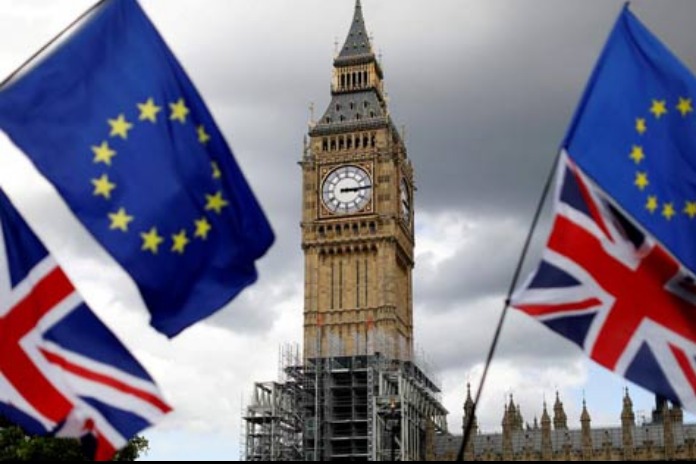
The agreement struck in Brussels by Prime Minister Theresa May on Friday was characterized by Davis as a crucial statement of intent, rather than a legally binding document. Its primary objective, he explained, was to facilitate the advancement of negotiations into the next critical phase concerning Britain’s post-Brexit relationship with the EU. This breakthrough was instrumental in enabling EU Commission President Jean-Claude Juncker to recommend to the European Council that discussions on the UK’s future relationship with the bloc could indeed proceed to this next important stage. Without this foundational progress, such a recommendation would have been unlikely, underscoring the significance of the Brussels accord.
Davis articulated his ambition to secure a free-trade agreement that would eliminate tariffs upon Britain’s exit from the EU. He elaborated on this vision, describing it as a "Canada plus plus plus" deal. This analogy refers to the comprehensive free trade agreement previously negotiated between Canada and the EU. However, Davis’s aspiration extends beyond this model, aiming to incorporate financial services within the tariff-free zone. This inclusion is deemed vital for safeguarding a highly lucrative sector for the British economy, particularly the City of London, a global financial hub, and its extensive banking cluster, which contributes significantly to the nation’s economic output. The City of London, for instance, is a leading global financial center, accounting for a substantial portion of the UK’s GDP and employment in the financial services sector, which itself represents a significant chunk of the UK’s total exports.

Further detailing his preferred framework for a future trade relationship, Davis suggested that Britain would aim for a bespoke Brexit deal. He articulated this by stating, "We’ll probably start with the best of Canada, and the best of Japan and the best of South Korea and then add to that the bits that are missing which is the services." This approach reflects a desire to leverage existing successful trade models while uniquely adapting them to British needs, especially concerning the crucial services sector, which is a major export earner for the UK. The economic significance of services exports for the UK cannot be overstated, comprising a larger proportion of the UK’s total exports than goods.
The commitment to maintaining a frictionless and invisible border between Northern Ireland and the Republic of Ireland was also reiterated by Davis. He assured that a solution would be found to uphold this principle, even in the event of a "no deal" Brexit scenario, a testament to the sensitivity and complexity surrounding the Irish border issue, which has been a significant sticking point in negotiations. The potential implications of a hard border for peace and economic stability on the island of Ireland are a primary concern for all parties involved.

Political Landscape and Opposition Views
Meanwhile, Keir Starmer, the Brexit spokesman for the main opposition Labour Party, presented a contrasting perspective in a separate Sunday interview. He emphasized Labour’s desire for a partnership with the EU that would preserve the benefits derived from the European single market and the customs union. This stance highlights a fundamental divergence in approach between the governing Conservative Party and the opposition regarding the nature and extent of the UK’s future relationship with the EU. Labour’s position suggests a preference for a closer economic alignment with the EU than that envisioned by the current government.
Prime Minister Theresa May is expected to convene a formal meeting of her cabinet, comprising her senior ministers, in the coming days. This meeting will be dedicated to a thorough discussion of the progress made in the Brexit talks. The UK has tentatively agreed to a "divorce bill" amounting to approximately 39 billion pounds (equivalent to about 52.2 billion U.S. dollars). However, the final payment of this sum is contingent upon the successful negotiation and agreement of a future trade deal between the UK and the EU. This linkage underscores the interconnectedness of the withdrawal agreement and the future economic relationship.

Background and Timeline of Negotiations
The journey to this point in the Brexit negotiations has been protracted and complex, marked by significant milestones and challenges.
- June 23, 2016: The United Kingdom votes to leave the European Union in a referendum, with 51.9% voting in favor of Brexit.
- March 29, 2017: Prime Minister Theresa May formally triggers Article 50 of the Treaty on European Union, initiating the two-year countdown to Britain’s departure.
- December 8, 2017: Following intensive negotiations, the UK and the EU announce a preliminary agreement on the terms of withdrawal, including citizens’ rights, the financial settlement, and the Irish border. This agreement was hailed as a "breakthrough" by the European Commission.
- December 11, 2017: Brexit Secretary David Davis expresses optimism about striking a trade deal within a year, following the Brussels agreement.
The preliminary agreement reached in December 2017 was crucial in allowing the EU to grant the UK permission to move to the next phase of negotiations, focusing on the future relationship, including trade. This phase is widely anticipated to be even more challenging than the initial withdrawal discussions, given the divergence of interests and priorities between the UK and the EU member states.

Supporting Data and Economic Considerations
The economic implications of Brexit are a central concern. The UK’s trade with the EU represents a substantial portion of its total trade. In 2016, the EU accounted for approximately 44% of UK exports and 53% of UK imports. A trade deal that minimizes tariffs and non-tariff barriers is therefore critical for mitigating potential economic disruption.
The financial services sector, as highlighted by Davis, is a particularly sensitive area. The City of London is a global financial powerhouse, generating significant revenue and employment. Losing frictionless access to the EU single market could have profound consequences. Data from TheCityUK, an industry body, shows that financial services contributed £71.4 billion to the UK’s GDP in 2016 and supported 1.1 million jobs.

The "Canada plus plus plus" aspiration is rooted in the Comprehensive Economic and Trade Agreement (CETA) between Canada and the EU, which eliminated over 98% of tariffs. However, CETA does not encompass financial services to the extent that Davis envisions for the UK. This ambition reflects a desire for a deep and comprehensive partnership that goes beyond a standard free trade agreement.
Broader Impact and Implications
The ongoing Brexit process has generated considerable uncertainty, impacting businesses, investment, and consumer confidence. The eventual trade deal will shape the UK’s economic trajectory for decades to come. A successful agreement that facilitates continued trade and investment would be a significant positive development. Conversely, a failure to reach a comprehensive deal, or one that erects significant barriers to trade, could lead to economic headwinds.

The political implications are equally significant. The agreement on the divorce bill, while a step forward, has not fully resolved the complex issues at play. The future relationship between the UK and the EU will define the UK’s role on the global stage and its economic competitiveness. The optimism expressed by David Davis, while welcome, must be tempered by the understanding that complex negotiations lie ahead, requiring considerable political will and compromise from both sides. The ultimate success of Brexit will be measured not just by the terms of departure but by the nature of the new relationship forged with the EU and the broader global community. The path forward is intricate, demanding careful navigation to achieve the best possible outcomes for all stakeholders involved.


 Nana Wu
 Suro Senen