Muslim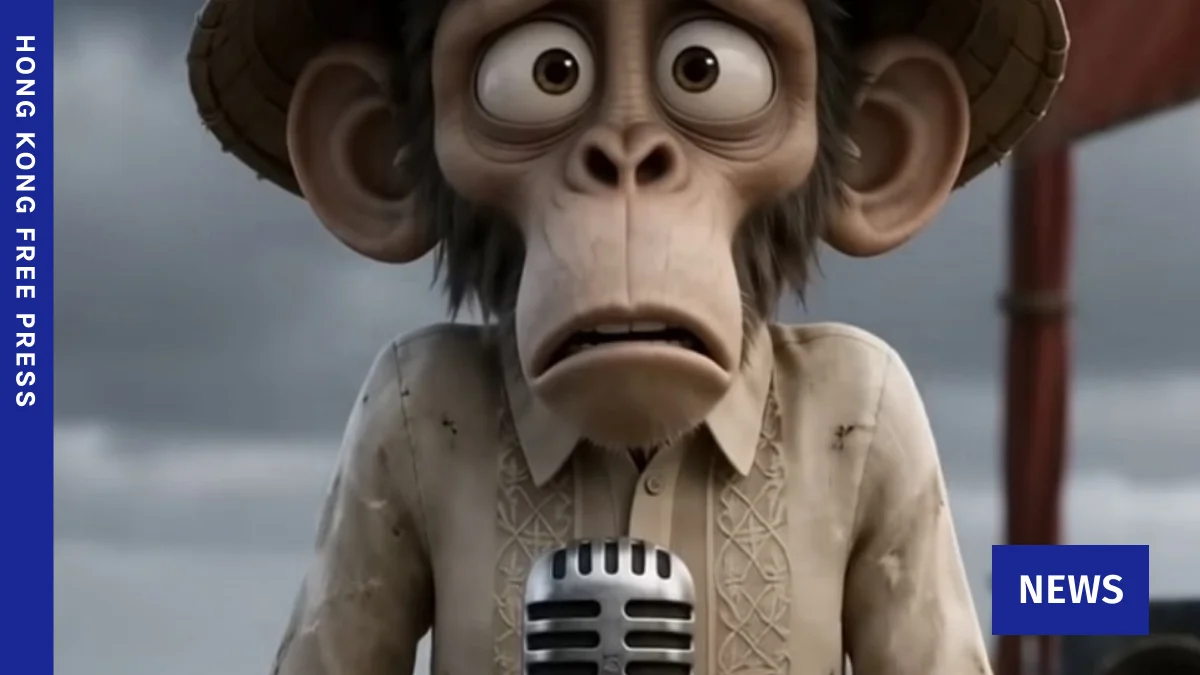
Manila has officially lodged a diplomatic protest with Beijing, condemning a "racist" video disseminated by Chinese state media that controversially portrays the Philippines as a cartoon monkey. The contentious minute-long animation, posted by China Daily, a prominent English-language newspaper owned by the Publicity Department of the Chinese Communist Party, has ignited a fresh wave of outrage and further exacerbated already strained relations between the two Asian neighbours, particularly over their long-running and increasingly acrimonious dispute in the South China Sea.
The diplomatic démarche was formally conveyed on Friday, following an initial firm objection raised by Foreign Undersecretary Leo Herrera-Lim during a meeting with Chinese Ambassador to Manila Jing Quan on Thursday. Herrera-Lim reportedly "demanded that the materials be taken down, stressing that such content is inconsistent with the mutual respect expected between states and does no favours to the sound and stable management of bilateral relations," according to a statement released by the Philippine foreign department. The statement further elaborated that the formal diplomatic protest explicitly condemned the videos and cartoons, asserting that "China Daily went beyond legitimate political debate by resorting to demeaning, dehumanizing and racist depictions of Filipinos." Adding to the diplomatic pressure, the Philippine embassy in Beijing also dispatched a letter to China Daily’s editor-in-chief, reiterating the demand for the "immediate takedown of the offensive material."
Details of the Offensive Animation and its Symbolism

The video in question, widely shared on the China Daily Facebook page, features a timid monkey adorned in a traditional Filipino barong shirt. The monkey is depicted being coerced onto a karaoke stage aboard a boat. Initially, it attempts to sing lyrics that appear to align with China’s expansive claims and positions on recent maritime delimitation talks between Manila and Tokyo. However, a disembodied voice abruptly shouts "wrong song," and the monkey is then handed a sheet explicitly labelled "South China Sea Arbitration Award." The animation then escalates, showing arms bearing the flags of the United States and Japan placing the monkey into a catapult, subsequently launching it towards a water cannon. This final act is a stark and provocative reference to the recurring incidents where the Chinese coast guard has employed water cannons against Filipino vessels and fishermen in disputed waters, frequently causing damage and injury.
The symbolism embedded in the video is multifaceted and highly provocative. The portrayal of Filipinos as monkeys is a deeply offensive and historically charged racist trope. The "wrong song" segment, followed by the "Arbitral Award" script, is a direct mockery of the 2016 Permanent Court of Arbitration ruling that largely invalidated China’s extensive claims in the South China Sea. Furthermore, the inclusion of US and Japanese flags implies that the Philippines is merely a puppet or an instrument of these larger powers, suggesting that its actions and adherence to international law are not genuine but rather externally manipulated. The depiction of violence via the catapult and water cannon is a thinly veiled glorification of the coercive tactics China has increasingly deployed in the contested maritime domain.
Strong Condemnation from Philippine Officials
Philippine Defence Secretary Gilberto Teodoro issued a scathing statement late Thursday, asserting that "the video’s glorification of violence against the Filipino people and soldiers exposes the moral and intellectual bankruptcy of China’s propaganda machine." Teodoro further emphasized, "This latest act of dehumanisation further reveals them as neither a secure and confident actor nor a trustworthy neighbour." His remarks underscore the profound level of indignation felt within the Philippine government, framing the incident not merely as a diplomatic gaffe but as a reflection of a deeper, more troubling stance by China. The use of terms like "moral and intellectual bankruptcy" and "dehumanisation" highlights the gravity with which Manila perceives this propaganda.

The Enduring South China Sea Dispute: A Complex Tapestry of Claims
The roots of this latest diplomatic flashpoint lie deep within the decades-old dispute over sovereignty in the South China Sea, a strategically vital waterway rich in natural resources and critical for global trade. China asserts historical sovereignty over nearly the entire sea, encompassing vast areas claimed by the Philippines, Vietnam, Malaysia, Brunei, and Taiwan, often demarcating its claims with a controversial "nine-dash line." These claims largely overlap with the Exclusive Economic Zones (EEZs) of neighbouring countries, as defined by the United Nations Convention on the Law of the Sea (UNCLOS).
The Philippines, on its part, asserts sovereign rights over areas within its 200-nautical-mile EEZ, particularly around features like the Spratly Islands and Scarborough Shoal, which have been flashpoints for numerous confrontations. The economic stakes are immense, with an estimated $3 trillion in annual trade passing through the sea lanes, and significant untapped oil and gas reserves believed to lie beneath its seabed. Fishing grounds, vital for the livelihoods of millions in the region, are also heavily contested. China’s aggressive expansion and militarization of artificial islands in the Spratlys, equipped with runways, ports, and military facilities, have dramatically altered the regional security landscape and intensified anxieties among its neighbours.
The 2016 Arbitral Award: A Legal Milestone and a Point of Contention

A critical turning point in the South China Sea dispute occurred on July 12, 2016, when the Permanent Court of Arbitration in The Hague issued a landmark ruling in favour of the Philippines. The tribunal unequivocally concluded that China’s "nine-dash line" claim had no legal basis under UNCLOS and that China had violated the Philippines’ sovereign rights in its EEZ. The ruling also found that China’s land reclamation activities and construction on disputed features had caused severe environmental harm.
Manila recently marked the 10th anniversary of this pivotal international arbitration ruling. On Sunday, the Philippines issued a joint statement, co-signed by 13 other nations, including key allies such as Japan and the United States, which emphatically reaffirmed the ruling’s legal bindingness. This collective declaration underscored the international community’s support for the rule of law in maritime affairs, implicitly challenging China’s unilateral actions.
Beijing, however, has consistently dismissed the 2016 ruling as "null and void" and without any legal effect, refusing to recognize or abide by its findings. China’s foreign ministry labelled the weekend joint statement from the Philippines and its allies as a "distortion of the facts" aimed at "vilifying China," maintaining its stance that the tribunal lacked jurisdiction and that its arbitration was unilaterally initiated by the Philippines. This fundamental disagreement over the legitimacy of international law continues to be a central impediment to resolving the dispute peacefully.
China’s Official Stance and Propaganda Apparatus

In response to inquiries regarding the controversial video, a spokesperson for China’s foreign ministry in Beijing stated that they would not comment on the content, asserting that it "does not represent the official position." This response is characteristic of how Beijing often handles controversial content from its state-affiliated media outlets, attempting to distance the government from direct responsibility while still allowing such narratives to circulate and influence public opinion, both domestically and internationally. While China Daily is a state media entity, attributing its content to an "unofficial" stance allows Beijing plausible deniability in diplomatic rows, even as the content clearly serves China’s broader geopolitical agenda. This strategy enables the projection of specific narratives without necessarily committing the government to them directly, providing flexibility in international discourse.
Chronology of Recent Escalations and Diplomatic Spats
The "monkey" video is not an isolated incident but rather the latest in a series of escalating provocations and diplomatic skirmishes between the two nations, highlighting a deteriorating relationship:
- July 16, 2026: China Daily posts the "racist" video depicting the Philippines as a monkey.
- July 12, 2026 (10th Anniversary): The Philippines, alongside 13 other nations, issues a joint statement reaffirming the binding nature of the 2016 Arbitral Award.
- Last Month (June 2026): Beijing imposes sanctions on Philippine Defence Secretary Gilberto Teodoro, barring him from visiting mainland China, Hong Kong, or Macau. This unprecedented move came after Teodoro’s outspoken criticism of China’s assertive activities in the South China Sea.
- January 2026: China files a diplomatic protest after Commodore Jay Tarriela, a Philippine Coast Guard spokesman, publicly displays a photo of himself giving a speech with a compilation of comical images of Chinese President Xi Jinping in the background. While Tarriela’s intent was to mock China’s actions, China viewed it as a direct insult to its leadership.
- Ongoing Incidents: Throughout 2025 and 2026, there have been numerous reports of Chinese Coast Guard vessels employing water cannons, blocking, and dangerous manoeuvres against Philippine vessels conducting resupply missions to BRP Sierra Madre on Second Thomas Shoal, or against Filipino fishermen in their traditional fishing grounds.
These incidents collectively paint a picture of a relationship increasingly defined by confrontation rather than cooperation, with both sides resorting to various forms of political and media warfare to assert their positions and garner international support.

Broader Implications for Regional Stability and International Law
The "racist" video and the subsequent diplomatic protest carry significant implications for regional stability in Southeast Asia and the broader Indo-Pacific. Firstly, it deepens the diplomatic rift between the Philippines and China, making constructive dialogue and de-escalation efforts even more challenging. The use of explicitly racist and dehumanizing imagery crosses a line in international discourse, indicating a willingness by some Chinese state media to employ highly offensive tactics in geopolitical disputes.
Secondly, it further solidifies the Philippines’ pivot towards stronger alliances with the United States, Japan, and Australia, among others. Under President Ferdinand Marcos Jr., Manila has actively sought to bolster its security partnerships, conducting joint patrols and military exercises, precisely to counter China’s growing assertiveness. This incident will likely reinforce the perception among these allies that China poses a significant challenge to the rules-based international order and freedom of navigation.
Thirdly, the incident highlights the ongoing struggle for influence in the Indo-Pacific. China’s actions, both on the ground (or sea) and in the propaganda space, are viewed by many as an attempt to unilaterally reshape the regional security architecture. The international community’s response, particularly the joint statement affirming the 2016 ruling, underscores a collective commitment to upholding international law against perceived acts of coercion and disrespect.

Finally, the incident raises questions about the role and responsibility of state media in international relations. While state media often reflects national interests, resorting to racist caricatures risks undermining diplomatic efforts and further alienating international audiences. It also reinforces concerns about freedom of expression and the manipulation of information in geopolitical contests. The ongoing dispute in the South China Sea, complicated by such inflammatory rhetoric, remains one of Asia’s most intractable and potentially volatile flashpoints, requiring sustained diplomatic efforts and adherence to international legal norms to prevent further escalation.


 Jia Lissa
 Nila Kartika Wati