 Siti Muinah
The Asian Development Bank (ADB), headquartered in Manila, Philippines, has announced a significant investment plan for China, proposing to allocate $6.17 billion across 31 projects between 2018 and 2020. This substantial commitment underscores the bank’s evolving partnership with China, with approximately $2 billion slated for investment in the coming year, 2018. This strategic financial outlay, outlined in the ADB’s newly proposed sovereign lending program, signals a pronounced shift in the bank’s investment priorities within China, moving decidedly from traditional infrastructure development towards initiatives focused on environmental sustainability, social sector support, and fostering innovation for higher-quality, more inclusive growth.
Indu Bhushan, Director General of ADB’s East Asia Department, emphasized the bank’s intent to scale up its sovereign lending to China, aligning with the overall expansion of the ADB’s lending capacity. "The 2017 sovereign lending will reach $1.98 billion," Bhushan stated, highlighting a steady increase in financial engagement. This commitment reflects China’s deepening integration into the global economic framework and its own national development agenda, which increasingly prioritizes environmental protection, social equity, and innovation-driven growth over sheer economic expansion. The ADB’s strategy is designed to complement these national objectives, providing both financial resources and critical knowledge solutions.
A Decades-Long Partnership: Evolution of ADB’s Role in China
China’s journey with the Asian Development Bank began in 1986 when it officially joined the multilateral development bank. Over the ensuing decades, this partnership has been instrumental in China’s remarkable economic transformation. From its initial focus on rebuilding and modernizing post-reform infrastructure, the ADB has approved a cumulative total of $37.7 billion in loans to China through September 30 of the current year. This figure comprises $33.9 billion for sovereign operations, which involve government-backed projects, and $3.9 billion for private sector operations, directly supporting private enterprises.
Historically, a significant portion of this assistance, approximately half, was channeled into the transport sector, reflecting China’s urgent need to develop its roads, railways, ports, and airports to facilitate trade and economic activity. The energy sector received 16 percent of the total assistance, while water and other urban infrastructure and services accounted for 15 percent. Agriculture, natural resources, and rural development projects also received substantial backing, representing 13 percent of the total. These early investments laid much of the groundwork for China’s rapid industrialization and urbanization, connecting disparate regions and powering its burgeoning economy.
However, as China transitioned into a middle-to-high-income economy, its development needs evolved. The focus shifted from quantity of growth to quality, demanding more sophisticated solutions for emerging challenges like environmental degradation, widening income disparities, and the need for technological advancement. This evolution in China’s development trajectory has directly influenced the ADB’s lending strategy.
Shifting Paradigms: Towards Environmental, Social, and Innovative Solutions
The current ADB strategy for China, encapsulated in its Country Partnership Strategy for 2016-2020, marks a decisive pivot. The bank’s support is now less infrastructure-centric and increasingly geared towards environmental protection and social sector development. This strategic recalibration is driven by China’s own ambitious goals to achieve sustainable and inclusive growth. All new projects approved under this framework will incorporate innovative elements, reflecting a commitment to cutting-edge solutions and best practices.
Beyond financial lending, the ADB places significant emphasis on "knowledge solutions." These are regarded as powerful catalysts for propelling development, involving the creation, management, and sharing of expertise, policy advice, and technical assistance. This pillar of ADB’s operations in China aims to foster institutional strengthening, capacity building, and the dissemination of innovative approaches that can be replicated across the country and potentially in other developing nations. For instance, sharing best practices in urban planning, renewable energy technologies, or public health management can have a far-reaching impact beyond the scope of individual projects.
Key Investment Pillars for China’s Sustainable Future
The ADB’s investment goals for China are structured around several critical themes, meticulously designed to address the nation’s most pressing development challenges:
-
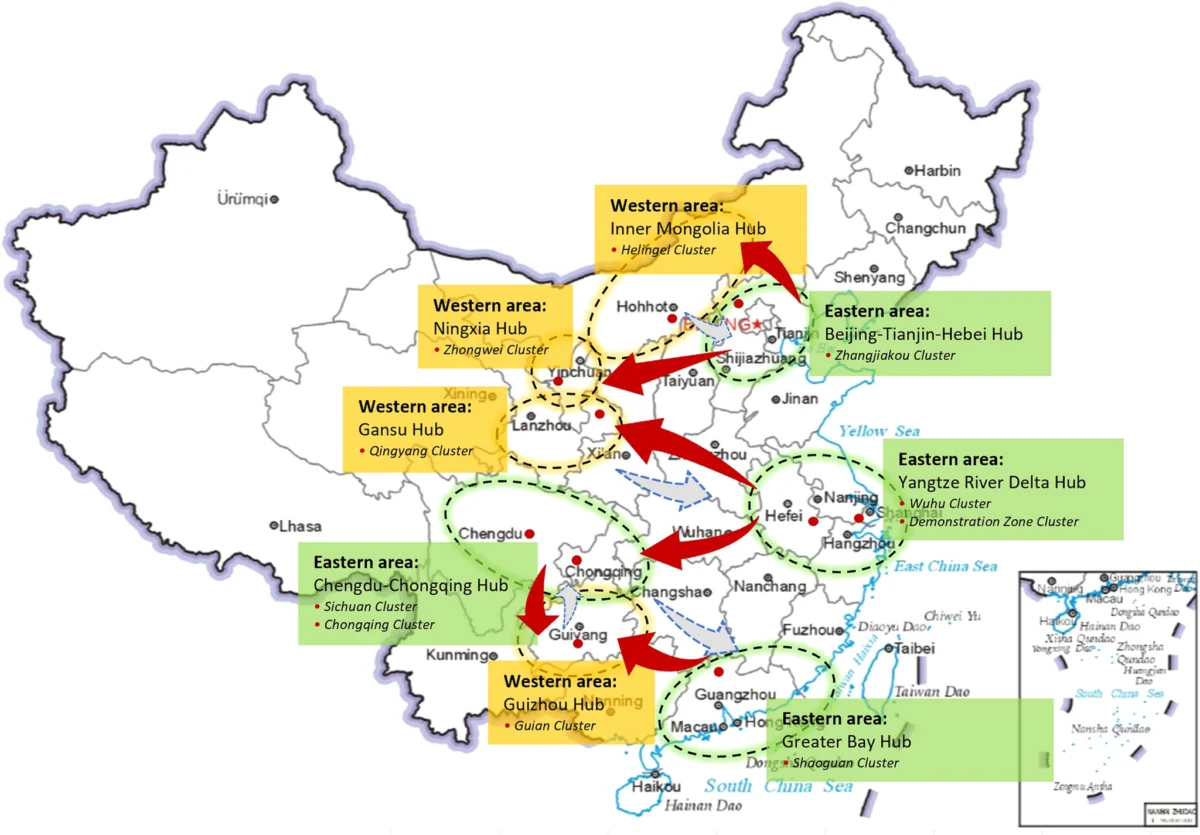
Managing Climate Change and the Environment: This remains a paramount concern, aligning with China’s commitment to ecological civilization. This theme encompasses two flagship programs of immense national importance: the Beijing-Tianjin-Hebei air pollution control initiative and the comprehensive development of the Yangtze River Economic Belt. The Beijing-Tianjin-Hebei region, a major industrial hub, has grappled with severe air quality issues, and ADB’s support aims to introduce cleaner technologies, improve energy efficiency, and promote renewable energy sources to mitigate pollution. Similarly, the Yangtze River Economic Belt, a crucial ecological corridor and economic powerhouse, requires integrated approaches to address water pollution, biodiversity loss, and sustainable resource management. Beyond these flagship projects, ADB supports sustainable urbanization efforts and a range of other environment-related programs, including wastewater treatment, solid waste management, and ecological restoration.
-
Promoting Regional Cooperation and Integration: Recognizing China’s pivotal role in Asia, the ADB actively supports China’s participation in various sub-regional programs. These include the Central Asia Regional Economic Cooperation (CAREC) Program and the Greater Mekong Subregion (GMS) Program, which facilitate cross-border trade, infrastructure development, and economic integration among participating countries. Crucially, the ADB will also collaborate closely with China’s ambitious Belt and Road Initiative (BRI), a massive global infrastructure development strategy. This collaboration aims to promote regional connectivity, enhance trade and investment flows, and deliver regional public goods, such as improved transportation networks and energy grids. The ADB sees synergy between its long-standing regional integration mandate and the BRI’s objectives, fostering a more interconnected and prosperous Asia.
-
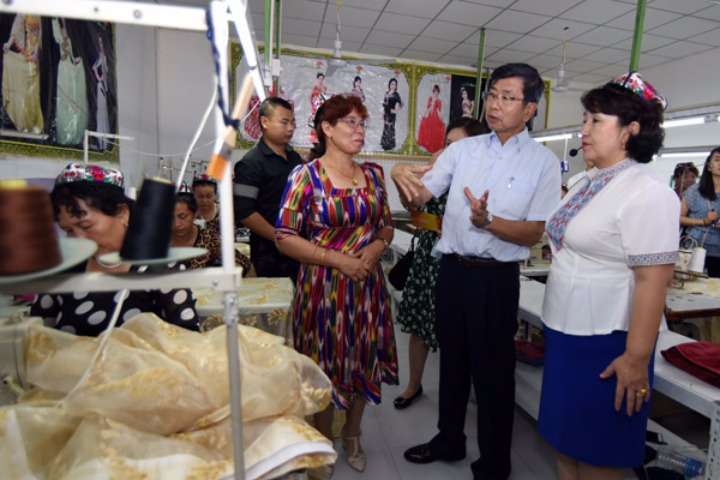
Supporting Inclusive Growth: Despite its economic prowess, China still faces challenges related to inclusive growth, particularly in rural areas and among vulnerable populations. This theme covers several key areas: rural transformation, aimed at bridging the urban-rural divide by improving rural infrastructure, services, and economic opportunities; the revitalization of Northeast China, a traditional industrial base facing economic restructuring challenges; demographic transition, addressing issues related to China’s aging population and the need for improved education and healthcare systems; and other social inclusion programs designed to reduce poverty and inequality. The ADB supports initiatives that empower marginalized groups, enhance access to essential services, and create more equitable opportunities across different regions and demographics. The image of ADB President Takehiko Nakao meeting beneficiaries of the Turpan Women’s Ethnic Minority Cultural Tourism Development Project in Xinjiang on September 6, 2017, serves as a tangible example of the bank’s commitment to grassroots, inclusive development. Such projects aim to empower local communities, especially women and ethnic minorities, by leveraging their cultural heritage for economic benefit and sustainable tourism.
-
Fostering Institutional and Governance Reform: Effective governance and robust institutions are foundational for sustainable development. This theme covers a range of initiatives aimed at strengthening China’s public sector management. This includes support for the development of Public-Private Partnerships (PPPs), which can leverage private capital and expertise for public infrastructure and services; reforms in central-local fiscal relations to ensure equitable resource allocation and efficient public spending; and the implementation of eco-compensation mechanisms, which incentivize environmental protection through financial transfers. Additionally, the ADB supports other institution-building activities, such as legal and judicial reform, to enhance transparency, accountability, and the rule of law.
Expanding Private Sector and Non-Sovereign Operations
In response to requests from China’s Ministry of Finance, the ADB is also committed to expanding its private sector and non-sovereign operations in the coming years. This shift reflects China’s growing maturity as an economy and its desire to engage more private capital in development initiatives. The focus for these operations will be on inclusive environmental projects within key sectors such as infrastructure, agribusiness, and financial institutions.
In 2017, the bank’s private sector operations department financed seven projects totaling $790 million, excluding loans offered by commercial banks based on ADB credit guarantees. This expansion signifies a recognition that private capital has a crucial role to play in achieving sustainable development goals, especially in areas where public funding alone may be insufficient. Indu Bhushan highlighted the exploration of "public-private partnership opportunities with new concession scope, such as water, energy and food security nexus, cross-jurisdiction along the Belt and Road Initiative," indicating a strategic move towards innovative financing models that can address complex, interconnected development challenges.
Collaboration in a Evolving Multilateral Landscape
The ADB’s strategy in China is not pursued in isolation. The bank has explicitly stated its intention to collaborate closely with the China-led Belt and Road Initiative and other development partners. This includes working with newer multilateral development banks (MDBs) such as the Asian Infrastructure Investment Bank (AIIB) and the New Development Bank (NDB), both of which China played a pivotal role in establishing. This collaborative approach underscores a recognition of the evolving landscape of global development finance, where multiple institutions are working towards common goals of regional connectivity, trade facilitation, and investment promotion. By pooling resources, expertise, and coordinating strategies, these MDBs can achieve a greater impact than working independently, particularly on large-scale, cross-border initiatives like the BRI. This collaboration can also help standardize best practices, ensure environmental and social safeguards, and promote debt sustainability across projects.
Broader Implications and Future Outlook
The ADB’s sustained and evolving commitment to China carries significant implications. For China, it means continued access to crucial financial resources and specialized knowledge, particularly in areas critical for its transition to an environmentally sustainable, high-income economy. The focus on innovation, environmental protection, and inclusive growth directly supports China’s 13th Five-Year Plan (2016-2020) and subsequent national development strategies, which emphasize quality over quantity.
For the broader Asian region, the partnership between ADB and China serves as a model for how multilateral development banks can adapt their strategies to the changing needs of developing economies. China’s experience in leveraging ADB support for its development, and now its own increasing role as a global development actor, offers valuable lessons. The collaboration on the Belt and Road Initiative also highlights a growing trend of MDBs aligning with national and regional initiatives to maximize development impact.
Ultimately, the ADB’s proposed $6.17 billion investment program for China from 2018 to 2020 underscores a dynamic and mature partnership. It reflects a shared vision for a more sustainable, inclusive, and interconnected Asia, with China playing an increasingly central role in both its own development and the broader regional development agenda. This strategic alignment promises to deliver tangible benefits, not just for China, but for the entire Asia-Pacific region, fostering economic prosperity, environmental resilience, and social equity for years to come.

 Evan Lee Salim
 Suro Senen