Asep Darmawan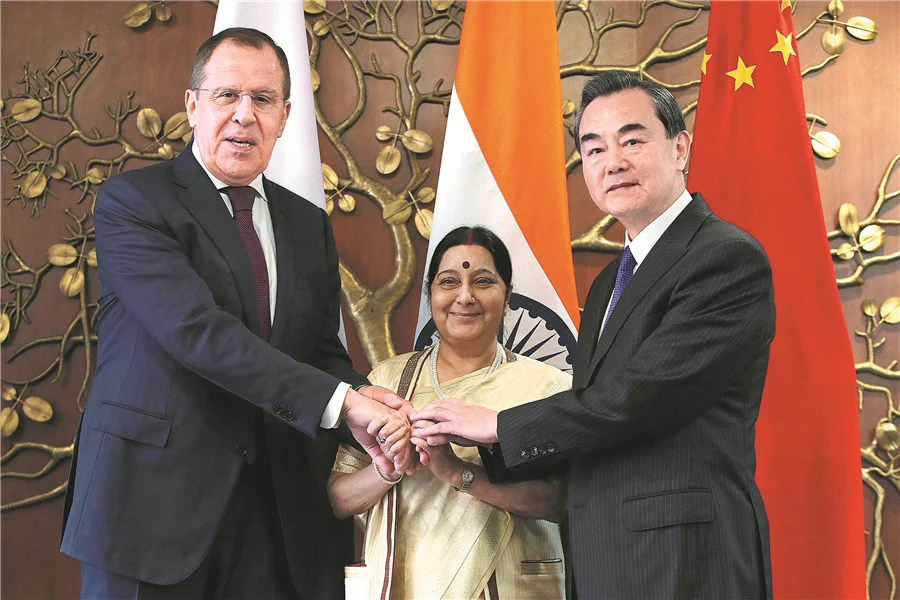
NEW DELHI – In a significant diplomatic gathering aimed at bolstering regional stability and economic cooperation, the foreign ministers of China, Russia, and India convened in New Delhi on Monday for their 15th trilateral meeting. The high-level discussions, which spanned a comprehensive agenda of global and regional issues, underscored a shared commitment to maintaining an open, inclusive, and multilateral security and economic architecture in the Asia-Pacific.
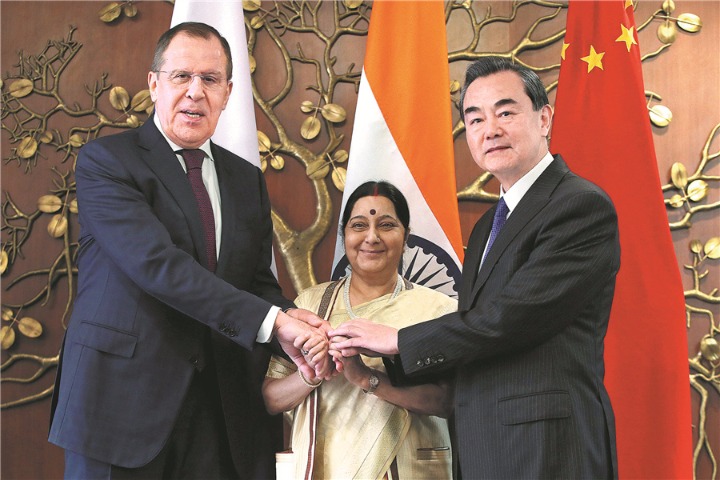
The joint statement released following the day-long deliberations emphasized the imperative of upholding principles of international law and multilateralism as cornerstones for enduring peace and stability across the region. This sentiment reflects a growing strategic alignment among the three major Asian powers, seeking to shape a regional order that is both equitable and conducive to sustained development.
Strengthening Regional Governance and Multilateralism
A key focus of the meeting was the enhancement of coordination and cooperation within established regional forums and organizations, notably the East Asia Summit. Ministers acknowledged the critical role these platforms play in fostering dialogue, addressing shared challenges, and promoting collective prosperity. The agreement to work more closely within such frameworks signals a unified approach to navigating the complex geopolitical landscape of the Asia-Pacific.

The trilateral format itself was lauded as a vital mechanism for deepening dialogue and advancing practical cooperation in areas of mutual interest. The ministers explicitly stated that their collaborative efforts are not intended to be adversarial towards any other nation, underscoring a desire for constructive engagement rather than bloc formation. This assertion is particularly pertinent in a region marked by evolving power dynamics and competing interests.
Deepening BRICS and SCO Cooperation
The foreign ministers reaffirmed the paramount importance of their strategic partnership within BRICS (Brazil, Russia, India, China, and South Africa). The joint statement highlighted a commitment to diligently implement all outcomes of BRICS summits, with a particular emphasis on strengthening cooperation across economic, political, security, and people-to-people spheres. This renewed dedication aims to usher in a "second golden decade" of BRICS cooperation, building upon the successes of the organization.

The meeting also commended China’s successful hosting of the Ninth BRICS Summit in Xiamen in September, recognizing it as a crucial step in advancing the bloc’s agenda. The shared commitment to BRICS reflects a broader aspiration among these nations to create a more balanced global governance system, where emerging economies have a greater voice and influence.
Equally significant was the emphasis placed on joint work within the Shanghai Cooperation Organization (SCO). The ministers recognized the SCO as a pivotal instrument for advancing multilateral political, security, economic, and people-to-people interactions within the Eurasian heartland. This highlights the strategic convergence between the China-Russia-India (CRI) trilateral and the SCO, suggesting a coordinated effort to enhance regional security and economic integration across a vast geographical expanse.

A New Era of Strategic Dialogue
The 15th CRI ministerial meeting in New Delhi represents a continuation and deepening of a diplomatic engagement that began in 2002. The initial impetus for this trilateral dialogue was a shared recognition of the need for greater coordination on issues of mutual concern, particularly in the wake of evolving global security paradigms and the rise of new economic opportunities.
Chronology of Key Developments:

- 2002: The first trilateral meeting of the foreign ministers of China, Russia, and India was held in Moscow. This marked the formal establishment of the CRI dialogue mechanism.
- 2006: The CRI engagement began to focus more explicitly on regional security and economic issues, with discussions on counter-terrorism and economic cooperation becoming more prominent.
- 2009: The ministers began to issue joint statements more consistently, outlining areas of agreement and future cooperation.
- 2014: Amidst shifting geopolitical landscapes, the CRI dialogue intensified its focus on issues such as regional connectivity and the reform of global financial institutions.
- 2017 (December 11): The 15th trilateral meeting in New Delhi reiterated commitments to regional security, multilateralism, and enhanced cooperation within BRICS and the SCO.
Supporting Data and Context
The strategic importance of the CRI dialogue can be understood within the broader context of global economic and geopolitical shifts. As major players in the global economy and significant contributors to international security, the coordinated actions of China, Russia, and India carry considerable weight.
- Economic Significance: Together, these three nations represent a substantial portion of the global population and a significant share of global GDP. Their collective economic power, particularly through BRICS, allows them to influence global trade, investment, and financial policy.
- Geopolitical Influence: Their geographical proximity and shared interests in regional stability make them key actors in shaping the future of Eurasia and the Asia-Pacific. Their cooperation can significantly impact regional security dynamics, counter-terrorism efforts, and the development of crucial infrastructure projects.
- Multilateral Frameworks: The continued emphasis on BRICS and the SCO reflects a desire to strengthen alternative multilateral frameworks that can complement or, in some instances, offer alternatives to existing Western-dominated institutions. The New Development Bank (NDB), established by BRICS nations, serves as a concrete example of this ambition, aiming to finance infrastructure and sustainable development projects in emerging economies.
Official Statements and Reactions
The joint statement issued after the meeting provided a clear articulation of the ministers’ shared vision.

- Foreign Minister Wang Yi (China): While not directly quoted in the provided text, China’s consistent emphasis on multilateralism and the Belt and Road Initiative suggests a strong endorsement of the regional architecture discussed. China views such cooperation as vital for its own economic development and its role in global governance.
- Foreign Minister Sergei Lavrov (Russia): Russia has long advocated for a multipolar world order and has actively sought to strengthen ties with China and India as a counterbalance to perceived Western dominance. Lavrov’s participation underscores Russia’s commitment to deepening strategic partnerships in Asia.
- Minister of External Affairs Sushma Swaraj (India): India, under its "Act East" policy, has been actively seeking to enhance its economic and strategic engagement with Southeast Asia and the broader Asia-Pacific. The CRI meeting aligns with India’s broader foreign policy objectives of promoting regional connectivity and multipolar engagement.
Broader Impact and Implications
The outcomes of the 15th China-Russia-India trilateral meeting hold significant implications for the broader international landscape.
- Shaping Regional Order: The reaffirmed commitment to an "open, inclusive and based on multilateralism" regional architecture suggests a concerted effort by these three powers to influence the future governance of the Asia-Pacific. This could lead to a more diversified and potentially less Western-centric regional order.
- Economic Integration: The focus on implementing BRICS outcomes and strengthening cooperation within the SCO signals a drive towards greater economic integration among these nations. This could involve enhanced trade, investment, and joint infrastructure development initiatives, potentially creating new economic hubs and trade routes.
- Geopolitical Dynamics: The strengthening of the CRI dialogue, coupled with their roles in BRICS and the SCO, presents a significant geopolitical bloc. While not explicitly an alliance, their coordinated approach to regional and global issues can exert considerable influence on international affairs and potentially counterbalance the strategic initiatives of other major global powers.
- Challenges Ahead: Despite the apparent convergence of interests, the three nations also face their own distinct foreign policy challenges and competitive dynamics. Managing these internal complexities while pursuing a unified regional agenda will be crucial for the long-term success of their collaborative endeavors. Issues such as border disputes, economic competition, and differing strategic priorities will require ongoing diplomatic navigation.
The meeting in New Delhi served as a clear indication of the growing strategic convergence between China, Russia, and India. Their shared commitment to multilateralism, regional stability, and enhanced economic cooperation within established frameworks like BRICS and the SCO positions them as key architects of the evolving global order. The coming years will reveal the extent to which this trilateral partnership can effectively translate its stated objectives into tangible outcomes that shape the future of Asia and beyond.


 Nana Wu
 Suro Senen