Azzam Bilal Chamdy
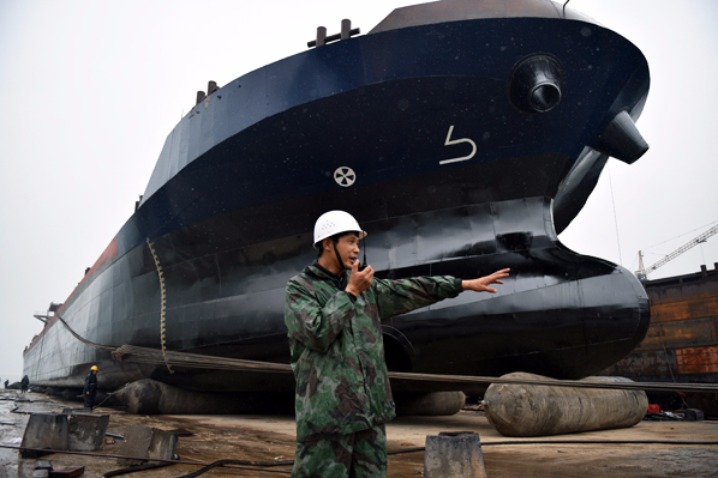
China’s shipbuilding industry achieved a significant milestone in the first eleven months of 2017, securing the top position globally in terms of new orders and thereby surpassing its formidable competitor, South Korea. This landmark accomplishment marks the first time in seven years that Chinese shipyards have outpaced their South Korean counterparts, signaling a profound shift in the global maritime manufacturing landscape. The comprehensive data, released by the esteemed British shipbuilding and marine analysis agency, Clarkson Research Services, on a Friday in late 2017, revealed China’s dominant performance. From January to November of that year, China’s accumulated shipbuilding order volume reached an impressive 7.13 million compensated gross tons (CGT), encompassing 324 individual vessels. In contrast, South Korea, a traditional titan in the sector, recorded 5.74 million CGT during the same period.
This pivotal shift in market leadership underscores China’s escalating influence and strategic advancements within the highly competitive global shipbuilding arena. The Clarkson data further illustrated China’s commanding market share, capturing 36.3 percent of global orders, a substantial 7 percentage points higher than South Korea’s 29.4 percent. This ascendancy is not merely a testament to increased volume but also reflects a strategic pivot towards higher-value, technologically sophisticated, and environmentally sustainable vessels, a transformation long championed by Chinese industrial policy.
Historical Context and the Global Shipbuilding Arena
The global shipbuilding industry has historically been characterized by dynamic shifts in regional dominance. Following World War II, Europe held sway, particularly countries like the United Kingdom, Germany, and Scandinavia. However, by the 1960s and 1970s, Japan emerged as the preeminent shipbuilding nation, leveraging advanced manufacturing techniques, efficient production lines, and robust government support to capture a significant share of the global market. This dominance was eventually challenged and then overtaken by South Korea in the late 1990s and early 2000s. South Korea’s rise was fueled by massive investments in modern shipyards, a highly skilled workforce, and a strategic focus on complex, high-value vessels such as Liquefied Natural Gas (LNG) carriers, Ultra-Large Crude Carriers (ULCCs), and advanced offshore structures.
China’s entry into the global shipbuilding scene gained momentum in the early 21st century. Initially, Chinese shipyards focused on simpler, lower-value vessels like bulk carriers and tankers, competing primarily on cost and sheer production capacity. This strategy allowed China to rapidly expand its market share, often at the expense of both Japanese and South Korean builders, particularly during periods of high global shipping demand. However, this period of quantitative growth was always intended as a foundation for a more ambitious qualitative transformation. The "compensated gross tonnage" (CGT) metric, used by Clarkson, is crucial in understanding this shift. Unlike simple gross tonnage, CGT accounts for the labor and material input required to build a ship, effectively weighting more complex vessels (like cruise ships or LNG carriers) higher than simpler ones (like bulk carriers). China’s climb in CGT orders, therefore, indicates its increasing capability in constructing more sophisticated and value-added ships.
China’s Strategic Ascent and "Made in China 2025"
The recent success in 2017 was not an isolated event but the culmination of years of strategic planning and massive investment. The Chinese government identified shipbuilding as a critical pillar of its industrial modernization and national economic security. Policy frameworks, such as the "Made in China 2025" initiative launched in 2015, explicitly targeted advanced manufacturing sectors, including high-tech shipbuilding. The goal, as articulated by Sun Licheng, President of the China Classification Society, was not just to maintain growth but to achieve "production mode transformation, structural adjustment and transformation, and upgrading, and reinforcing China’s shipbuilding status in the world." He further stated that the ambitious objective was for China to become a "strong shipbuilding country by 2020," emphasizing the acceleration of advanced intelligent manufacturing and industrial equipment capability. This vision involved moving beyond basic vessel construction to mastering the design and production of complex, intelligent, and environmentally friendly ships.
The government’s support extended to various aspects, including financial subsidies, research and development funding, and fostering collaboration between shipyards, research institutions, and equipment suppliers. This holistic approach aimed at developing an entire ecosystem capable of competing at the highest levels of global maritime technology. The 2017 figures from Clarkson serve as a tangible indicator that these strategic investments and policy directives were beginning to yield significant returns.
Shifting Towards High-Value and Complex Vessels
A significant factor in China’s rise in CGT rankings is its increasing success in securing orders for high-value-added vessels, traditionally the stronghold of South Korean and European shipyards. The year 2017 provided compelling examples of this strategic shift:
-
Ultra-Large Container Vessels: In August 2017, French shipping giant CMACGM SA placed a landmark order for nine colossal 22,000 twenty-foot equivalent units (TEU) container vessels. These massive ships, among the largest in the world, were commissioned from two prominent Chinese shipbuilders: Shanghai Waigaoqiao Shipbuilding Co and Hudong Zhonghua Shipbuilding Co. The construction of such ultra-large container ships requires sophisticated design, advanced manufacturing techniques, and rigorous quality control, demonstrating China’s enhanced capabilities in a highly competitive segment. This order was a clear signal to the industry that Chinese shipyards were now capable of delivering vessels at the pinnacle of maritime engineering and capacity.
-
Luxury Cruise Ships: Perhaps an even more symbolic breakthrough occurred in October 2017. China State Shipbuilding Corp, in collaboration with China Investment Corp and Carnival Corp (the world’s largest cruise operator), signed an agreement to invest a substantial 25.5 billion yuan (approximately $3.85 billion at the time) for the construction of a super luxury cruise ship. This order represented a monumental achievement, being the first of its kind ever received by Chinese shipbuilding companies. Cruise ship construction is widely regarded as the most complex segment of shipbuilding, demanding expertise in naval architecture, interior design, hospitality infrastructure, safety systems, and entertainment facilities, all integrated into a single vessel. Securing such an order not only validates China’s technical prowess but also opens up a lucrative new market segment that has historically been dominated by a handful of European shipyards. Dong Liwan, a shipbuilding industry researcher at Shanghai Maritime University, rightly observed that "with the orders for high-value-added ships continuing to go to Chinese shipyards, their South Korean competitors will definitely feel the pinch," highlighting the direct competitive impact of this strategic advancement.
Technological Innovation and "Smart" Shipbuilding
Beyond mere capacity and value, China’s shipbuilding business is undergoing a profound transformation towards intelligence and environmental friendliness. This shift aligns perfectly with the broader "Made in China 2025" goals of fostering advanced manufacturing.
-
The World’s First Smart Ship: A testament to this technological leap was the delivery of the "Great Intelligence," hailed as the world’s first smart ship, by China State Shipbuilding Corporation at the All China Maritime Conference and Exhibition. With a loading capacity of 38,800 metric tons, this vessel integrates advanced features such as intelligent navigation systems, real-time performance monitoring, optimized route planning, and predictive maintenance capabilities powered by big data analytics and artificial intelligence. These "smart" features are designed to enhance operational efficiency, reduce fuel consumption, improve safety, and lower maintenance costs, setting a new benchmark for future vessel design and operation. The concept of intelligent ships involves extensive sensor networks, integrated communication systems, and data processing capabilities that allow for automated decision-making and remote control, potentially paving the way for autonomous shipping in the future.
-
Environmentally Friendly Solutions: The industry’s commitment to sustainability is also evident in new orders and technological adoptions. COSCO Dalian shipyard, for instance, signed orders with Thordon Bearings, a Canadian marine industry solution provider, for its water-lubricated propeller shaft bearings. This innovative technology uses seawater as the lubrication medium instead of traditional oil, which poses a significant risk of pollution in marine environments. The adoption of such solutions reflects a proactive stance by Chinese shipbuilders in addressing global environmental regulations and demands for greener shipping. Alex Li, managing director of CY Engineering Co Ltd, Thordon Bearings’ partner in China, emphasized that "the latest order is a significant sign showing Chinese shipbuilders’ commitment to reducing industry-borne emissions and pollutants." This focus on eco-friendly solutions is crucial as the global maritime industry faces increasingly stringent environmental regulations, such as the IMO 2020 sulfur cap and forthcoming measures to reduce greenhouse gas emissions.
Competitive Dynamics and Broader Implications
The 2017 market leadership shift had immediate and long-term implications for the global shipbuilding industry. For South Korea, a nation that had enjoyed consistent leadership for years, China’s ascendancy presented a formidable challenge. South Korean shipyards, such as Hyundai Heavy Industries, Samsung Heavy Industries, and Daewoo Shipbuilding & Marine Engineering, had traditionally dominated high-tech segments like LNG carriers, drillships, and specialized offshore platforms. While South Korea continues to hold a strong position in these niches, China’s inroads into ultra-large container ships and, critically, luxury cruise ships, directly threaten their competitive edge. This intensifying rivalry is expected to drive further innovation and specialization from all major shipbuilding nations.
Economically, China’s leading position reinforces its status as a global manufacturing powerhouse. The shipbuilding industry is a significant employer, a major consumer of steel and other industrial materials, and a catalyst for technological development in related sectors like marine equipment, electronics, and automation. This success contributes to China’s economic diversification and reduces its reliance on lower-end manufacturing. Geopolitically, a strong domestic shipbuilding industry supports China’s growing maritime interests, including its commercial shipping fleet, naval expansion, and ambitions in deep-sea resource exploration.
The Road Ahead: Challenges and Opportunities
While the 2017 achievement was a landmark, the global shipbuilding industry remains volatile, subject to fluctuating global trade volumes, commodity prices, and geopolitical tensions. Oversupply, fierce competition, and the constant need for technological upgrades pose ongoing challenges. However, the future also presents numerous opportunities, particularly in emerging areas:
- Decarbonization and Alternative Fuels: The drive towards a carbon-neutral shipping industry will necessitate massive investments in new vessel designs powered by alternative fuels like ammonia, hydrogen, methanol, or advanced battery technologies. Chinese shipyards are well-positioned to become leaders in this transition.
- Autonomous Shipping: The development of fully autonomous or remotely operated vessels represents the next frontier in maritime technology, requiring significant R&D in AI, sensors, and communication systems.
- Offshore Wind and Renewable Energy: The expansion of offshore wind farms creates demand for specialized installation vessels, maintenance ships, and support infrastructure, a sector where shipbuilders can diversify.
- Digitalization and Smart Ports: The integration of smart ship technologies with smart port logistics will further enhance efficiency and connectivity across the maritime supply chain.
In conclusion, China’s ascent to the top of global shipbuilding orders in 2017 was a watershed moment, reflecting years of strategic investment, technological innovation, and a determined pivot towards high-value and environmentally conscious manufacturing. It underscored China’s successful execution of its long-term industrial ambitions and firmly established its position as a dominant force in the complex and critical global maritime industry, setting the stage for continued evolution and intense competition in the years to come.

 Evan Lee Salim
 Suro Senen