Lina Irawan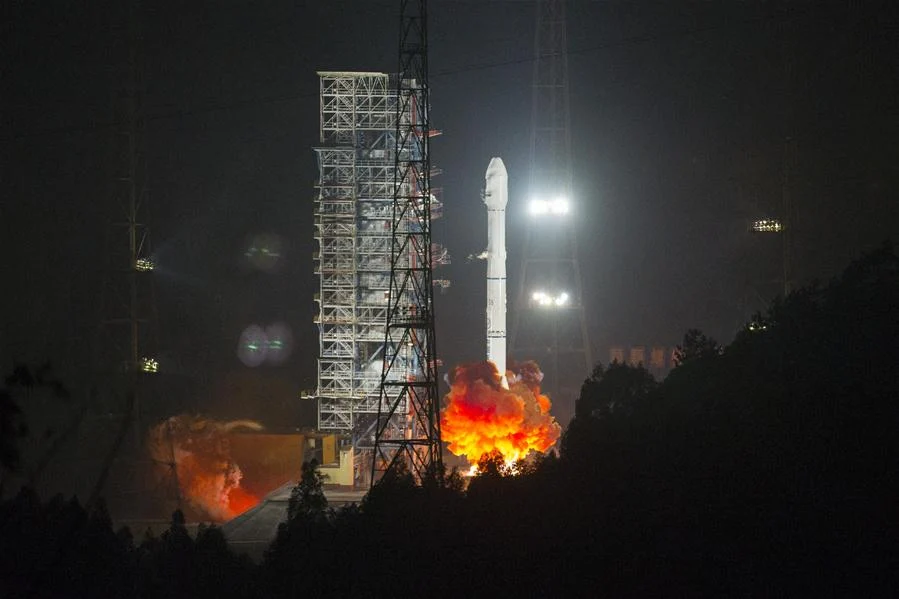
BEIJING – In a significant milestone for both China-Algeria relations and African space capabilities, China successfully launched Algeria’s first communications satellite, Alcomsat-1, into its predetermined orbit from the Xichang Satellite Launch Center in the southwestern province of Sichuan on Monday, December 11, 2017. This historic launch, conducted in the early hours of the morning, signifies a new chapter in the comprehensive strategic partnership between the two nations and underscores China’s growing role in supporting the technological advancement of developing countries.
The successful deployment of Alcomsat-1 was met with widespread congratulations from the highest echelons of both governments. President Xi Jinping of China and his Algerian counterpart, Abdelaziz Bouteflika, exchanged congratulatory messages, highlighting the profound significance of the project. President Xi emphasized that the Alcomsat-1 initiative stands as a pivotal manifestation of the robust China-Algeria comprehensive strategic partnership. He further noted that this endeavor sets a precedent for aerospace cooperation between China and Arab nations, anticipating its crucial role in fostering Algeria’s economic development, enhancing the quality of life for its citizens, and driving social progress across the nation.
Looking ahead, President Xi pointed out the significance of the upcoming year, 2018, which marks the 60th anniversary of the establishment of diplomatic relations between China and Algeria. He expressed Beijing’s strong willingness to collaborate closely with Algeria, aiming to deepen exchanges and cooperation across a multitude of sectors. The ultimate goal, as articulated by President Xi, is to propel the in-depth development of their comprehensive strategic partnership, thereby bringing tangible benefits to both countries and their respective peoples.
President Bouteflika, in his message, echoed the sentiment of success and mutual achievement. He characterized the successful launch of Alcomsat-1 as a remarkable accomplishment in the realm of aerospace collaboration between Algeria and China. This achievement, he stated, serves as a clear reflection of the deep-seated, traditional friendship that has long characterized the relationship between the two nations. President Bouteflika affirmed Algeria’s keenness to work hand-in-hand with China to jointly advance cooperation in various fields, with the aspiration of realizing even more substantial and impactful outcomes in the future.
A New Dawn in Algerian Telecommunications and Beyond
The Alcomsat-1 satellite, a testament to advanced Chinese satellite technology, is designed to provide a wide range of communication services across Algeria and potentially beyond. Its capabilities are expected to significantly bolster Algeria’s telecommunications infrastructure, enabling enhanced internet access, television broadcasting, and other vital communication services. This technological leap is anticipated to bridge the digital divide, particularly in remote and underserved areas of the country, fostering greater connectivity and inclusion.
The satellite’s operational life is projected to be substantial, with a design life typically spanning 15 years or more, depending on the specific model and operational conditions. This long-term deployment ensures sustained benefits for Algeria’s development goals. The successful launch is a direct outcome of a collaborative effort that has spanned several years, involving rigorous planning, design, manufacturing, testing, and training.
Chronology of a Landmark Achievement
The journey to Alcomsat-1’s successful launch can be traced back to earlier agreements and phases of collaboration between China and Algeria. While specific dates for all preceding stages are not publicly detailed in the initial report, the typical lifecycle of such a project involves:
- Early Discussions and Agreement: Initial proposals and agreements for satellite cooperation between China and Algeria likely began several years prior to the launch. These discussions would have involved defining Algeria’s specific needs and China’s capabilities in satellite development and launch services.
- Design and Manufacturing Phase: Following the agreement, a dedicated period would have been allocated for the design, engineering, and manufacturing of the Alcomsat-1 satellite. This phase involves intricate processes, quality control, and adherence to international standards.
- Testing and Integration: Rigorous testing of the satellite’s various components and systems would have been conducted to ensure its functionality and resilience. This would also include integration with the launch vehicle.
- Pre-Launch Preparations: In the weeks and months leading up to the launch, the satellite would have been transported to the launch site, prepared for its journey into space, and integrated with the rocket. Extensive checks and simulations would have been performed.
- Launch Day (December 11, 2017): The culmination of years of effort, the successful launch from the Xichang Satellite Launch Center marked the beginning of Alcomsat-1’s operational journey.
- Orbit Insertion and In-Orbit Testing: Following the launch, the satellite would have been guided into its designated orbit. A period of in-orbit testing would then commence to verify all systems and ensure optimal performance before operational deployment.
Supporting Data and Technological Backbone
The successful launch of Alcomsat-1 relies on China’s advanced Long March rocket series, known for their reliability and capability in delivering payloads to various orbits. While the specific model of the Long March rocket used for this launch is not detailed, China has a proven track record with these vehicles for both domestic and international satellite deployments.
Alcomsat-1 itself is a sophisticated piece of technology. Communication satellites typically operate in geostationary orbit (GEO) or medium Earth orbit (MEO), depending on their intended function. For broadcasting and broad coverage, GEO is often preferred due to its ability to remain in a fixed position relative to a point on Earth. The satellite is equipped with a suite of transponders that receive signals from Earth, amplify them, and retransmit them back to different locations. These transponders operate on various frequency bands, such as C-band and Ku-band, which are standard for telecommunications.
The development and launch of such a satellite represent a significant investment, both in terms of financial resources and human capital. China’s expertise in satellite technology has been steadily growing, positioning it as a key player in the global space industry. This collaboration with Algeria not only benefits Algeria but also strengthens China’s international partnerships and its position as a provider of advanced space solutions.
Official Responses and Diplomatic Significance
The exchange of congratulatory messages between President Xi Jinping and President Bouteflika underscores the high level of importance both nations attach to this achievement. The language used – "comprehensive strategic partnership," "important manifestation," "remarkable achievement," and "deep traditional friendship" – points to a relationship that extends far beyond a simple commercial transaction.
President Xi’s emphasis on the satellite’s role in Algeria’s economic development and social progress highlights China’s foreign policy objective of supporting developing nations through technological assistance and infrastructure development. This aligns with China’s broader Belt and Road Initiative, which aims to foster global connectivity and economic cooperation.
President Bouteflika’s acknowledgment of the "deep traditional friendship" and willingness to "jointly promote cooperation in various fields to achieve more results" indicates a strong desire to build upon this success. This opens avenues for future collaborations in areas such as Earth observation satellites, scientific research, and further telecommunications advancements.
Broader Impact and Implications
The launch of Alcomsat-1 has several significant implications:
-
For Algeria:
- Enhanced Connectivity: Improved access to telecommunications, internet, and broadcasting services will have a transformative effect on daily life, education, healthcare, and economic activities.
- Economic Diversification: A robust telecommunications infrastructure is a prerequisite for modern economic development, attracting investment and fostering new industries.
- National Security and Governance: Reliable communication systems are crucial for effective governance, disaster management, and national security.
- Regional Leadership: Algeria’s achievement positions it as a leader in space technology within the African continent, potentially inspiring and facilitating similar initiatives by other African nations.
-
For China:
- Global Space Power: The successful deployment reinforces China’s standing as a major global player in the space sector, capable of delivering complex projects for international partners.
- Strengthening Diplomatic Ties: Such collaborative projects are powerful tools for building trust and deepening strategic relationships with countries in Africa and the Middle East.
- Market Expansion: It demonstrates China’s capacity to compete in the international market for satellite manufacturing and launch services.
- Technological Advancement: Continued engagement in such projects drives innovation and further development of China’s own space technologies.
-
For Africa:
- Increased Space Capabilities: This event contributes to the growing trend of African nations developing their own space capabilities, reducing reliance on external providers and fostering self-sufficiency.
- Potential for Pan-African Cooperation: The success of Alcomsat-1 could serve as a model for increased intra-African space collaboration.
- Bridging the Digital Divide: Similar projects across the continent are essential for realizing the full potential of Africa’s growing digital economy and improving the lives of its citizens.
The successful launch of Alcomsat-1 is more than just a technical feat; it is a powerful symbol of international cooperation, technological empowerment, and the shared aspirations for progress and development. As China and Algeria look towards the future, this achievement lays a strong foundation for continued collaboration and mutual prosperity, not only between the two nations but also within the broader context of global space exploration and utilization. The satellite’s journey into orbit marks a new horizon for Algerian communications and a testament to the enduring strength of China-Algeria relations.


 Nana Wu
 Suro Senen