Reynand Wu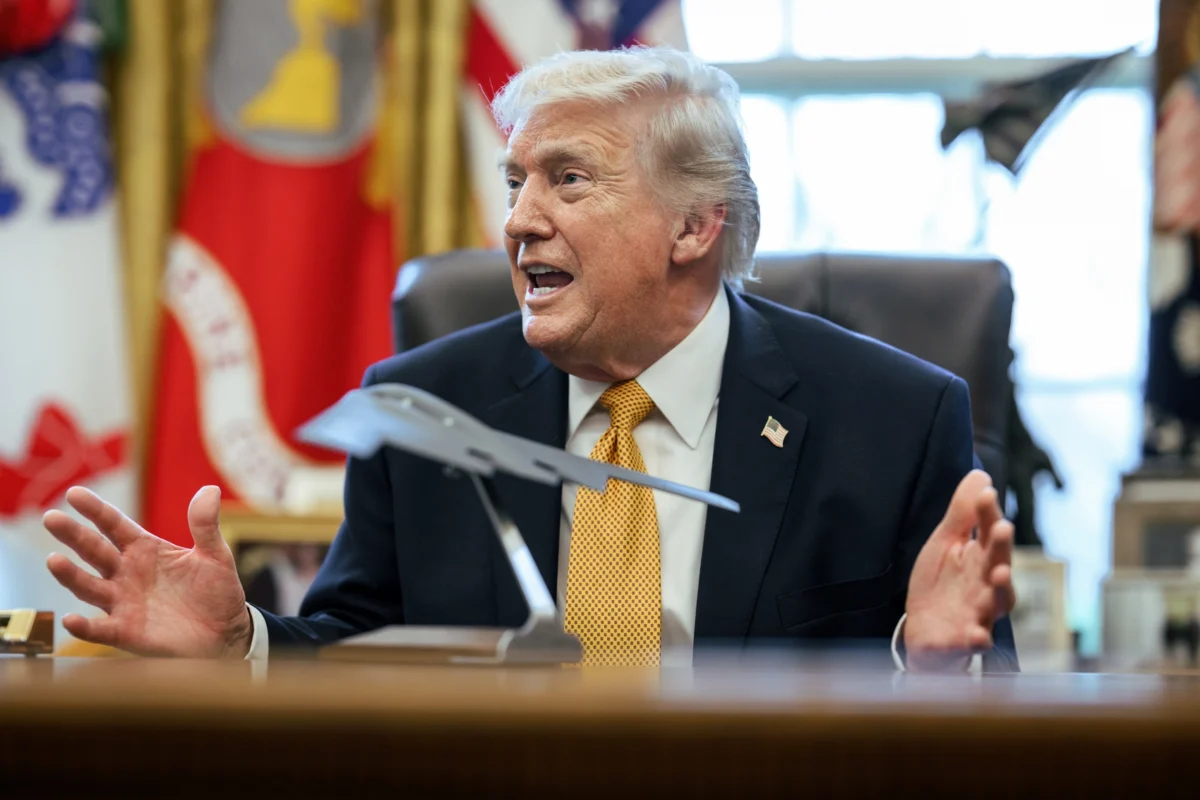
Beijing has expressed staunch opposition to a bipartisan sanctions bill proposed by US senators and supported by President Donald Trump, which aims to penalize countries continuing to purchase Russian energy. China, a significant buyer of Russian oil and gas, condemned the move on Wednesday, accusing Washington of employing "double standards and coercion" and vowing to protect its enterprises’ legitimate interests. This legislative initiative signals a potential escalation in US efforts to curtail Moscow’s revenue streams, critical for funding its ongoing military operations in Ukraine, and further strains the already tense geopolitical landscape between Washington and Beijing.
The proposed legislation, details of which are expected to be unveiled "very soon" according to US senators spearheading the effort, would grant the US president authority to impose tariffs and sanctions on nations that persist in acquiring Russian energy products. This includes oil, gas, and uranium, all vital sources of income for the Kremlin. An earlier iteration of the bill reportedly envisioned tariffs as high as 500 percent on such imports, indicating the severe economic pressure the US seeks to exert.
China’s Vehement Rejection of Unilateral Sanctions

During a regular news briefing, Chinese foreign ministry spokesperson Lin Jian articulated Beijing’s position unequivocally. "China firmly opposes illegal unilateral sanctions that have no basis in international law and are not authorised by the UN Security Council," Lin stated. He added a stern warning, asserting, "China will take all necessary measures to resolutely safeguard the legitimate rights and interests of its enterprises and citizens." This declaration underscores China’s long-standing policy of rejecting extraterritorial sanctions imposed by individual nations without a UN mandate, viewing them as infringements on national sovereignty and international trade norms.
China’s robust stance is rooted in its expanding strategic partnership with Russia, particularly in the energy sector. Since Russia’s full-scale invasion of Ukraine in February 2022, and the subsequent imposition of widespread Western sanctions, Beijing has become Moscow’s most crucial economic lifeline, especially for its energy exports. This pivot has seen Russia become China’s top oil supplier, with significant increases in gas and coal deliveries as well, often at discounted prices, benefiting China’s energy security while providing Russia with much-needed revenue outside Western markets.
The US Legislative Push and its Motivations
The bipartisan nature of the proposed US bill, which has garnered support from lawmakers across the political spectrum, highlights a shared commitment in Washington to pressure Russia. Among the reported supporters were the late Senator Lindsey Graham, a vocal advocate for Ukraine, along with Republican Roger Wicker and Democrats Richard Blumenthal and Jeanne Shaheen. The agreement on the bill’s updated version with President Trump is particularly significant, as administration backing could remove a major political hurdle that has delayed its passage for months.

President Trump’s reported frustration with Moscow’s unwillingness to negotiate an end to the conflict in Ukraine is seen as a key factor in his endorsement of the bill. While details of his specific engagement remain undisclosed by the White House, his support could lend considerable momentum to the legislation. The underlying objective for US lawmakers is to further isolate Russia economically, deplete its financial resources for the war, and ultimately compel a cessation of hostilities in Ukraine.
Background: The Russia-Ukraine War and Global Energy Dynamics
The conflict in Ukraine, which commenced with Russia’s full-scale invasion in February 2022, triggered an unprecedented wave of sanctions from the United States, the European Union, the United Kingdom, and other allies. These measures targeted Russia’s financial sector, key individuals, technology imports, and, crucially, its vast energy industry. Europe, historically heavily reliant on Russian gas, moved to drastically reduce its dependence, leading to a reorientation of global energy flows.
In response, Russia sought new markets, primarily in Asia, with China and India emerging as the largest beneficiaries of discounted Russian crude oil. Data from the International Energy Agency (IEA) and various analytics firms consistently show that Russia’s oil exports to China and India surged in 2022 and 2023, largely offsetting the decline in sales to European nations. For instance, China’s imports of Russian crude oil reportedly rose by over 20% in 2023 compared to the previous year, reaching record levels. This trade has allowed Russia to maintain significant revenue, despite Western price caps and embargoes, mitigating the intended impact of sanctions.

The G7 nations, along with Australia and the EU, introduced a price cap mechanism on seaborne Russian crude oil in December 2022, aiming to limit Moscow’s profits while keeping Russian oil flowing to avoid global supply shocks. This was followed by similar caps on refined petroleum products. However, Russia has largely circumvented these caps by developing a "shadow fleet" of tankers and engaging in direct deals with non-Western buyers, including China, often without relying on Western insurance or shipping services.
China-Russia Energy Ties: A Deepening Partnership
The energy relationship between China and Russia has been steadily deepening for over a decade, driven by shared geopolitical interests, including a desire to counter perceived Western hegemony, and China’s insatiable demand for energy resources. The "Power of Siberia" gas pipeline, which began operations in 2019, is a flagship project symbolizing this growing energy interdependence. Plans for a second major pipeline, "Power of Siberia 2," are also underway, aiming to deliver gas from Russia’s Yamal peninsula to China via Mongolia, further cementing long-term supply agreements.
For China, access to Russian energy provides diversification away from potentially vulnerable sea lanes and suppliers, enhancing its energy security. For Russia, China represents a vast and reliable market that is less susceptible to Western political pressure, providing an essential outlet for its energy exports in the face of European efforts to decouple. This mutually beneficial arrangement is a cornerstone of their broader "no-limits" partnership, announced just weeks before the Ukraine invasion, which has seen increased cooperation across various sectors, from defense to technology.

Broader Implications and Potential Repercussions
The proposed US sanctions bill carries significant diplomatic, economic, and geopolitical implications.
- US-China Relations: The bill could further exacerbate tensions between Washington and Beijing, already strained over issues such as trade, technology, human rights, and Taiwan. China views such sanctions as an unwarranted interference in its sovereign economic decisions and a violation of international trade principles. Retaliatory measures from China, though unspecified, could involve counter-tariffs, restrictions on US businesses operating in China, or further strengthening economic ties with Russia and other non-Western partners.
- Global Energy Markets: The imposition of tariffs or sanctions on major energy buyers like China could disrupt global energy markets. While the intent is to reduce Russia’s revenue, it could also lead to increased energy prices for consumers worldwide if supply chains are significantly altered or if China seeks alternative, potentially more expensive, sources. This could create inflationary pressures globally, complicating economic recovery efforts.
- Effectiveness of Sanctions: The effectiveness of extraterritorial sanctions often hinges on the willingness of other nations to comply, the strength of enforcement mechanisms, and the ability of targeted countries to find alternative trade routes and partners. Given China’s economic might and its strategic alignment with Russia, fully enforcing such sanctions could prove challenging. China’s declaration of taking "all necessary measures" suggests it is prepared to actively resist the US bill.
- International Law and Sovereignty: China’s consistent argument against "illegal unilateral sanctions" resonates with a broader sentiment in parts of the Global South that view such measures as an overreach of national jurisdiction and a violation of state sovereignty. This bill could therefore be seen by some as another instance of economic coercion by a powerful nation, potentially undermining the multilateral trading system.
- Impact on Russia: While China has diversified Russia’s energy markets, the sheer volume of trade makes it irreplaceable in the short to medium term. If the US sanctions significantly impede China’s ability or willingness to purchase Russian energy, it could indeed inflict a more substantial blow to Moscow’s finances, potentially impacting its ability to sustain the war effort in Ukraine. However, the exact mechanisms for achieving this, given China’s determination to resist, remain unclear.
Looking Ahead: The Legislative Path and Global Reactions
The path for the US sanctions bill through Congress is not guaranteed, despite bipartisan and presidential support. Legislative processes can be complex, and lawmakers may debate the precise scope, trigger mechanisms, and potential unintended consequences of such far-reaching sanctions. Concerns about the impact on US allies, global energy prices, and the broader international economic order could influence its final form.

Beyond China, other countries like India, Turkey, and various nations in the Middle East and Africa have also increased their purchases of Russian energy since 2022. While the current focus of the US bill is broad, targeting "countries buying Russian energy," the primary intent is undoubtedly to target major buyers, of which China is the largest. Reactions from these other nations, if they perceive themselves as potential targets, could add further layers of complexity to the international response.
Ultimately, this proposed US legislation represents a critical juncture in the ongoing economic warfare against Russia and a significant test for the US-China relationship. It underscores the challenges of imposing a global consensus on sanctions when major economic powers like China have differing strategic interests and a strong philosophical opposition to unilateral coercive measures. The coming weeks, as the bill’s details are finalized and debated, will shed more light on the potential for a new phase of economic confrontation on the global stage.

 Sagoh
Sagoh
 Asro
Asro