Evan Lee Salim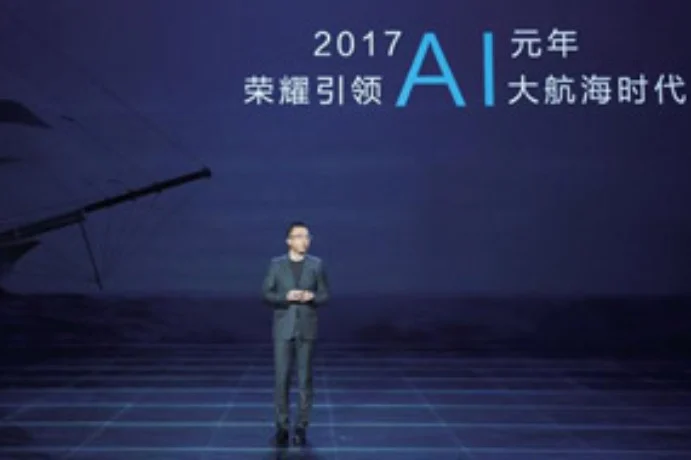
The year 2017 emerged as a pivotal period, widely heralded by industry commentators as "year one" for the artificial intelligence (AI) smartphone. This designation followed the high-profile launches of Apple’s iPhone X and Huawei’s Honor V10, devices that signalled a profound strategic pivot within the intensely competitive, yet increasingly homogenized, global cellphone market. The burning question on the minds of consumers and industry observers alike was whether these intelligent handsets represented the next great breakthrough, capable of revitalizing a segment grappling with saturation and diminishing returns from traditional hardware enhancements.
For years, the smartphone battlefield was characterized by an unrelenting pursuit of physical supremacy: devices grew progressively super-slim, camera systems proliferated into dual and even triple lenses, charging speeds became breakneck, and displays expanded to fill entire front panels. These incremental hardware innovations, while impressive, ultimately failed to provide sustainable core competitiveness for manufacturers. Zhao Ming, president of Honor – a prominent phone brand under the Huawei umbrella – articulated this sentiment clearly, explaining that none of these hardware features, including the then-latest full-screen designs, truly lay at the heart of long-term competitive differentiation.
This quest for distinctiveness became particularly urgent in a market exhibiting clear signs of contraction and commoditization. According to a report from the China Academy of Information and Communications Technology, cellphone shipments by domestic brands in October 2017 experienced a significant year-on-year decline of 15.4 percent, totaling 3.19 million units. This downturn underscored a broader industry challenge: an abundance of devices offering strikingly similar features and designs. This phenomenon plunged domestic smartphone players into what strategists term a "Red Ocean" – a highly competitive space characterized by cutthroat pricing, margin erosion, and a relentless struggle for market share. The imperative was clear: manufacturers needed to transcend mere specification upgrades and offer something fundamentally new and transformative.
The Dawn of the AI-Powered Assistant
The smartphone market’s future, as envisioned by leading innovators, lies in the prospect of an intelligent handset evolving beyond a mere communication device to serve as a deeply integrated personal assistant for users’ daily lives. This vision hinges on the seamless integration of state-of-the-art AI technology, empowering devices to anticipate and cater to user needs, effectively allowing amateurs to achieve professional-level results in various tasks.
This paradigm shift gained tangible form with the successive launches of flagship devices. In November 2017, Honor unveiled its full-screen V10 smartphone in Beijing, powered by an AI-enabled chipset. The device promised a suite of fresh and exciting AI features designed to enhance user interaction and functionality. Among its standout capabilities was an advanced face-unlock technology, allowing the screen to light up automatically upon recognizing its owner’s gaze. Furthermore, the V10 was capable of intelligently identifying 13 different photographic scenes, dynamically adjusting camera parameters to optimize photo and video shooting. The underlying principle was adaptive learning: the more consumers engaged with the AI-empowered phone, the more data it collected, enabling the handset to progressively understand its user better and function in a more nuanced, personalized manner, thereby simplifying everyday tasks.
Globally, Apple had already made its bold entry into this new frontier with the iPhone X, launched earlier in September 2017. While the original article mentions the iPhone X’s launch, its critical role in popularizing on-device AI, particularly facial recognition, deserves deeper exploration. The iPhone X’s "TrueDepth camera system" was a landmark innovation, achieving highly secure and precise facial recognition (Face ID) by projecting and analyzing more than 30,000 invisible IR dots to create a detailed depth map of the user’s face. This technology, processed by Apple’s A11 Bionic chip with its dedicated neural engine, represented a significant leap in bringing sophisticated AI processing to the edge – directly on the device, rather than solely relying on cloud computation. The implications were vast, not just for security and convenience, but for opening up new avenues for augmented reality and personalized user experiences.
Honor’s Strategic Trajectory and Youth Appeal
Honor, established just four years prior in 2013, had rapidly carved out a significant niche by leveraging its parent company Huawei’s well-established brand reputation and technological prowess. Operating primarily through an online sales model, Honor had successfully launched several flagship phones that resonated strongly with consumers, progressively positioning itself as a pioneer in the intelligent phone segment.
Zhao Ming elaborated on the distinct brand identities cultivated within the Huawei ecosystem: "We give unique identities to Huawei and Honor. Huawei Mate are our flagship phones that boast upscale business style, while many of the functions we put in Honor are appealing to young people." This strategic segmentation allowed Honor to focus specifically on the dynamic, tech-savvy youth market, offering innovative features at competitive price points.
The Honor V10, for instance, integrated features designed to appeal directly to this demographic. Highlights included the ability for 30 sets of mobile phones to synchronize WLAN co-broadcast music, creating a shared audio experience. Crucially, it also boasted optimized performance for popular mobile games, such as the smash-hit "King of Glory," a critical factor for younger users. The cost-effective internet business model enabled Honor to offer these advanced models to its target demographic within a price range of 1,000 yuan ($151) to 3,000 yuan. Specifically, the Honor V10 was priced at 2,699 yuan for the 4GB RAM/64GB internal storage variant and 3,499 yuan for the 6GB RAM/128GB internal storage variant, making advanced AI technology accessible to a broader consumer base.
Defining the AI Smartphone: A Technical Revolution
The emergence of AI-enabled devices sparked considerable debate within the industry regarding the precise definition of an "AI smartphone." While no single, universally accepted definition existed at the time, a growing consensus among researchers and developers began to coalesce around a set of core capabilities. An AI smartphone, it was argued, should possess end-to-end AI capabilities, encompassing:

- AI Chips: Dedicated hardware (Neural Processing Units or NPUs) capable of conducting AI processing efficiently on the mobile device itself, moving beyond reliance on general-purpose CPUs or GPUs for AI tasks.
- AI Algorithms: Advanced machine learning and deep learning algorithms that enable the device to learn, adapt, and make intelligent decisions based on data.
- Cloud Services: Integration with powerful cloud-based AI platforms for more complex computations, data storage, and broader AI model updates.
- AI System: A cohesive operating system or software layer that orchestrates the interaction between the AI hardware, algorithms, and cloud services to deliver a seamless intelligent user experience.
Honor V10’s Kirin 970 AI chip was a prime example of this dedicated AI hardware. Custom-designed for smartphones, the Kirin 970 integrated a dedicated NPU specifically optimized for AI tasks such as image classification and sorting, real-time text translation, and nuanced speech understanding. This on-device processing capability was crucial, as it allowed for faster responses, enhanced privacy by reducing the need to send all data to the cloud, and more efficient power consumption for AI workloads.
Zhao Ming acknowledged the nascent and highly specialized nature of this new competitive arena: "It’s a game with very few players." This statement underscored the significant investment in research and development required to enter and succeed in the AI chip and system space, effectively creating high barriers to entry for many traditional smartphone manufacturers.
Honor’s journey into AI was not an overnight phenomenon. The company had commenced its AI research as early as 2012, a foresight that provided them with a substantial head start. This foundational work culminated in the release of their first AI cellphone, the Honor Magic, in 2016. The Honor V10, launched a year later, represented a "complete upgrade" to the Magic, incorporating more advanced hardware and refined AI capabilities. Zhao Ming exuded confidence at the V10’s launch, stating, "The Honor V10 we launched today has functions and capacity that no other phone can even achieve in half a year," highlighting their perceived first-mover advantage and technological lead.
The V10 leveraged the EMUI 8.0 AI system, which was based on AI 2.0. This revolutionary system utilized homogeneous multi-core context switching, a technique designed to significantly improve system fluency and responsiveness by intelligently allocating tasks to the most suitable processing units. The marketing campaigns around the V10 prominently featured slogans like "AI knows you better" and "AI speed revolution," encapsulating Honor’s belief that AI phones represented the future trajectory of the market.
Beyond Hardware: The AI Speed Revolution
Zhao Ming’s perspective on the evolution of smartphone performance offered a profound insight into the industry’s shift. "For the past years, when we talk about the speed of smartphones, we are thinking about hardware," he observed. This focus led to a relentless pursuit of faster processors, more RAM, and quicker storage. However, Zhao Ming argued that this improvement in hardware had reached a critical bottleneck. Even when processing speeds doubled, the tangible difference for users often amounted to negligible fractions of a second, failing to deliver a truly transformative experience.
The true "AI speed revolution," as envisioned by Honor, transcended raw processing power. It aimed to redefine speed not in terms of clock cycles, but in terms of user intent and seamless interaction. "The moment we had an idea in mind, we are already operating our phone," Zhao Ming explained. "If we respond to such a request from the users’ minds, we can streamline the process significantly." This vision speaks to an intuitive, almost telepathic interaction where the phone anticipates needs and executes commands before explicit input is even fully articulated.
Practical applications of this AI-driven experience were immediately evident. Taking camera settings as a prime example, Zhao Ming highlighted how AI could empower individuals with no prior knowledge of photography to capture images that rivaled those taken by professional photographers. The AI system would intelligently analyze the scene, lighting conditions, and subject matter, automatically applying optimal settings and post-processing enhancements. "I think that is the beauty of AI smartphone," Zhao Ming concluded, "that you can be more engaged in many facets of life effortlessly."
Broader Market Implications and the Road Ahead
The shift towards AI-centric smartphones heralded significant implications for the broader technology landscape. For one, it intensified the "game with very few players" dynamic, favoring large corporations with substantial R&D budgets and established ecosystems, such as Apple, Huawei, Samsung (with its Bixby AI assistant and Exynos chips), and Google (with its Pixel phones and Tensor chips). These companies possessed the resources to invest in bespoke AI hardware, develop sophisticated algorithms, and build comprehensive cloud AI services, creating a formidable barrier to entry for smaller competitors.
The move to AI also promised to unlock new revenue streams and avenues for differentiation in a market that had become increasingly commoditized. Instead of competing solely on price and marginal hardware gains, manufacturers could now offer truly unique, personalized, and intelligent experiences, potentially justifying premium pricing and fostering greater brand loyalty. This shift was critical for reversing the trend of declining smartphone shipments and eroding profit margins observed in the "Red Ocean" scenario.
However, the proliferation of AI in smartphones also raised pertinent challenges. Privacy concerns surrounding the vast amounts of user data collected by AI systems became a critical ethical and regulatory consideration. Manufacturers had to navigate the delicate balance between personalization and data security, ensuring transparency and user control over their information. The ethical implications of AI, including potential biases in algorithms and the need for robust oversight, also loomed large. Furthermore, successful consumer adoption hinged not just on technological prowess but on clearly communicating the tangible benefits of AI in everyday life, overcoming potential skepticism or confusion.
Looking ahead, the AI smartphone was positioned not as a terminal innovation but as a foundational step towards a more interconnected and intelligent future. Its evolution would likely intertwine with advancements in the Internet of Things (IoT), where the smartphone could serve as an intelligent hub for controlling smart home devices and wearables. Augmented Reality (AR) experiences, already nascent in devices like the iPhone X, stood to gain significantly from enhanced on-device AI processing, enabling more realistic and interactive virtual overlays. The trend towards hyper-personalization, driven by increasingly sophisticated AI, would continue to redefine how users interact with their devices, transforming them from tools into indispensable, intuitive companions.
In essence, 2017 marked the beginning of a profound transformation, moving beyond the physical attributes of smartphones to their cognitive capabilities. The race for intelligence had begun, promising to redefine not just the devices themselves, but the very fabric of how humans interact with technology in their daily lives. The long-term impact would be measured not merely in faster processors or better cameras, but in the seamless, effortless integration of intelligent assistance that makes complex tasks simple and enriches the user’s engagement with the world.


 Sagoh
Sagoh
 Asro
Asro