Raul Delapena Setiawan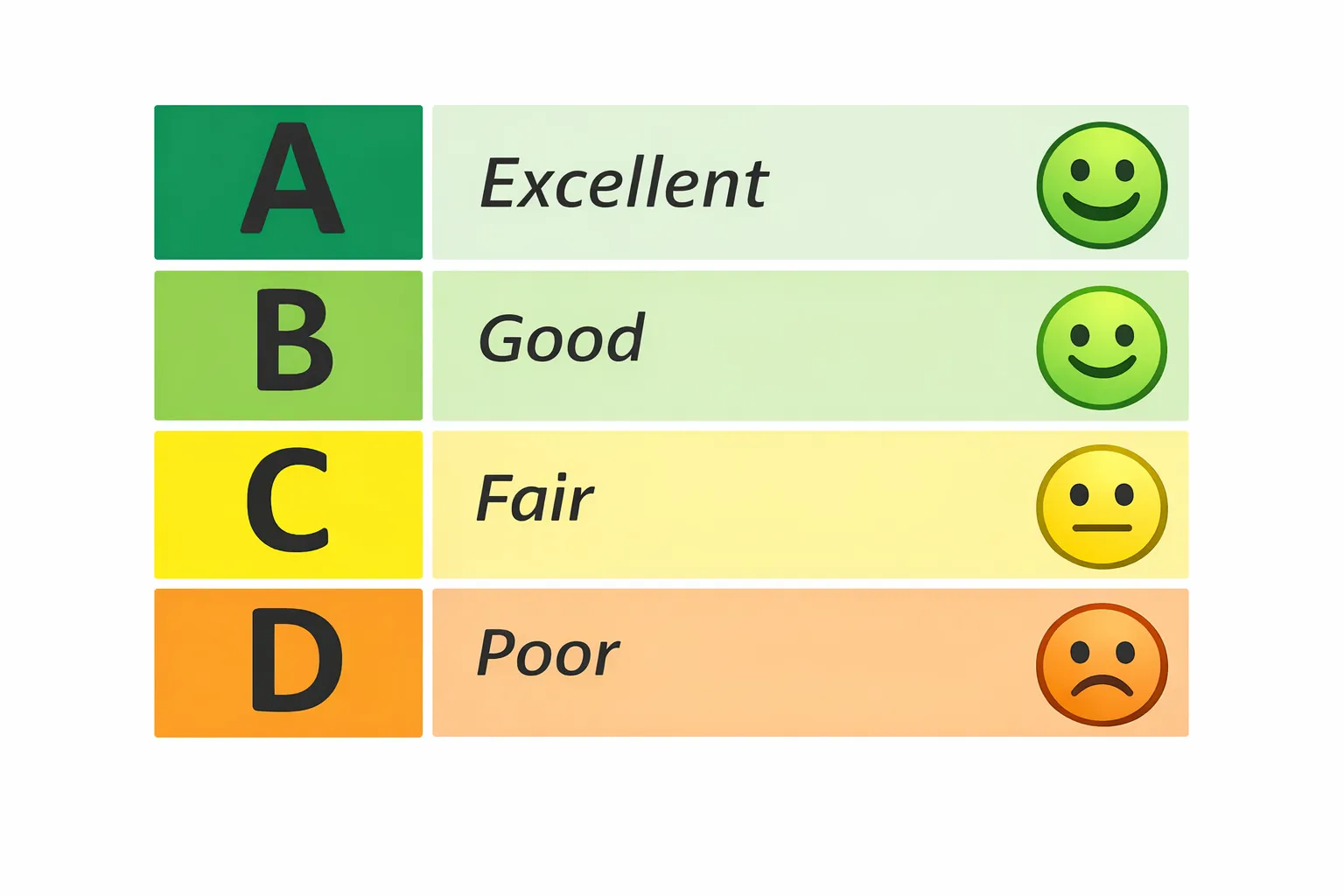
The implementation of the Comprehensive Enterprise Credit Status Assessment System marks a pivotal evolution in China’s regulatory landscape, effectively steering the nation’s social credit ambitions away from the speculative realm of individual citizen ranking and toward a structured, data-driven framework for business oversight. While international discourse once fixated on the "social credit score" as an all-encompassing digital panopticon for the private lives of citizens, the reality on the ground has consistently prioritized the regulation of market actors. This new plan, spearheaded by the National Development and Reform Commission (NDRC), provides the most detailed blueprint to date for how the Chinese state intends to grade, monitor, and discipline the millions of enterprises operating within its borders.
The "social credit" myth—a singular, life-defining score for every individual—has largely been relegated to the status of a social media trope. In its place, a sophisticated regulatory mechanism has emerged. The real Social Credit System (SCS) is a tripartite structure designed to enhance market integrity, legal compliance, and social responsibility. By formalizing the relationship between public credit assessments and market credit assessments, the Chinese government is attempting to create a "unified, comprehensive enterprise credit assessment" that bridges the gap between administrative compliance and financial reliability.
The Three Pillars of Chinas Social Credit Framework
To understand the recent policy shifts, it is essential to recognize that China’s Social Credit System is not a monolith but a collection of three distinct yet overlapping pillars.
First is Credit Regulation, or credit-based regulation. This is the primary tool for government agencies to differentiate their oversight. Instead of conducting uniform inspections across all businesses, agencies use credit records to determine the frequency and intensity of scrutiny. Enterprises with a high compliance record enjoy "green channels" and reduced inspections, while those with a history of violations face heightened monitoring.

Second is Credit Reporting, which mirrors Western financial credit systems. Managed primarily under the auspices of the People’s Bank of China (PBOC), this pillar focuses on the likelihood of an entity defaulting on loans or contractual obligations. It relies on a network of private and state-authorized credit reporting institutions to assess the financial health of both businesses and individuals.
The third pillar is Creditworthiness, a more subjective element tied to China’s "Core Socialist Values." This pillar aims to foster a culture of honesty and integrity through morality campaigns. While it is the most difficult to quantify, it remains a significant ideological component, though the law currently restricts punitive measures primarily to legal violations rather than perceived moral failings.
A Chronology of Social Credit Development
The trajectory of the Social Credit System reveals a steady march toward institutionalization and the narrowing of its focus to corporate entities.
- 2014: The State Council releases the "Planning Outline for the Construction of a Social Credit System (2014–2020)," which set the initial, broad goals for the system.
- 2019: The government shifts focus toward "Credit-based Regulation," advancing the idea that public credit assessments should be the cornerstone of enterprise oversight.
- 2021: The central government begins publishing official "Basic Catalogs of Public Credit Information," standardizing the types of data that can be used to judge a company’s standing.
- 2022: A draft "Social Credit Law" is released for public comment, signaling an attempt to provide a unified legal basis for the various regional and sectoral experiments.
- 2024–2026: The rollout of the Implementation Plan for the Establishment of a Comprehensive Enterprise Credit Status Assessment System begins, focusing on the integration of public and market data.
Public vs Market Credit Assessments: The Core Distinction
The new implementation plan clarifies the distinction between public and market assessments, which have often been conflated in external reporting.
Public Credit Assessments are generated by government agencies based on information acquired during the performance of their legal duties. This includes data on administrative permits, penalties, judicial judgments, and tax compliance. These assessments are divided into "Industry Public Credit Assessments"—conducted by sector-specific regulators like the Ministry of Transport or the State Administration for Market Regulation—and "Comprehensive Public Credit Assessments," which provide a global view of an entity’s legal standing across all jurisdictions.

Market Credit Assessments, by contrast, are produced by private or quasi-governmental credit reporting institutions. These are commercial products designed for lenders, investors, and business partners. They incorporate government data but also include information from industry associations, creditors, and the businesses themselves. Their primary goal is to predict the risk of default in market activities.
The current plan encourages a "feedback loop" where market credit assessments consider public credit ratings as a foundational factor. This integration suggests that a company’s history of legal compliance is increasingly seen as an indicator of its financial reliability.
Data Inputs and the Grading Scale
Under the new plan, the output of public credit assessments is standardized into a four-grade scale: A, B, C, and D. Grade A represents the highest level of compliance, while Grade D indicates a history of serious violations. The data used to determine these grades is strictly governed by the Public Credit Information Catalog, which includes six primary categories:
- Judicial Information: Includes records of judgment defaulters, case numbers, and enforcement status.
- Contract Violation Information: Tracks judicial findings of breach of contract and corporate accounts in arrears.
- Enterprise Registration Information: Covers basic data like registered capital, staff size, and entry into "irregular business" lists.
- Administrative Management Information: Details on administrative permits granted and penalties imposed.
- Incentives for Trustworthiness: Lists of "Class A" taxpayers and enterprises with high-level Customs certification.
- Seriously Untrustworthy Entities: A blacklist for entities that have committed severe violations of law or regulation.
This data is shared through the National Credit Information Sharing Platform and is accessible via the "Credit China" website, providing a degree of transparency that allows businesses to monitor their own standing and that of their competitors.
Remedies: Credit Repair and the Right to Object
A critical component of the maturing system is the mechanism for "credit repair." Recognizing that permanent blacklisting can stifle economic activity, China has developed rules that allow entities to purge records of past non-compliance. Generally, a violation remains visible for a minimum period. Once the problem is remedied and the penalty served, the enterprise can apply for credit repair. If granted, the information is removed from the public record and regulators must cease using it as a basis for heightened scrutiny.

The new plan also formalizes the process for objecting to assessment results. Enterprises can challenge public assessments through the department that issued them. Similarly, they can object to third-party market assessments regarding inaccurate or incomplete information. Notably, the plan stipulates that third-party institutions cannot demand compensation for correcting or updating an entity’s information, a measure intended to prevent predatory practices in the private credit market.
Broader Impact and Policy Implications
The move toward a unified enterprise assessment system has profound implications for both domestic and foreign firms operating in China.
For the Chinese state, the system provides a high-tech solution to the perennial problem of local protectionism and fragmented regulation. By centralizing data and standardizing grades, Beijing can ensure that a company penalized in one province faces similar scrutiny in another. It also allows for more efficient allocation of regulatory resources; the government can "supervise those who need it" while leaving compliant businesses alone.
For businesses, the system increases the cost of non-compliance. A single administrative penalty is no longer just a fine; it is a mark on a permanent record that can affect loan interest rates, bidding for government contracts, and the frequency of tax audits. International observers and business chambers have noted that while the system increases transparency, it also creates a significant compliance burden, requiring firms to monitor their credit standing across multiple platforms and jurisdictions.
However, questions remain regarding the "Creditworthiness" pillar. While the current plan focuses on legal and financial data, the inclusion of "Core Socialist Values" in the broader Social Credit Law suggests that the government has not entirely abandoned the idea of using the system for social steering. If "creditworthiness" indicators—such as charitable giving or participation in state-sponsored initiatives—begin to influence market assessments, the line between legal compliance and political loyalty may become blurred.

Conclusion
China’s Comprehensive Enterprise Credit Status Assessment System represents a shift from the "mythical" citizen score to a very real and functioning corporate regulatory framework. By categorizing assessments into public and market domains and providing clear pathways for data input and credit repair, the Chinese government is building a system designed to stabilize and discipline its market economy. As the NDRC and other agencies move toward further integration of these assessments, the "score" for businesses in China will become an inescapable reality of doing business in the world’s second-largest economy. The challenge for the state will be balancing the efficiency of this data-driven oversight with the need for fairness, due process, and market autonomy.

 Reynand Wu
 Nila Kartika Wati