Rifan Muazin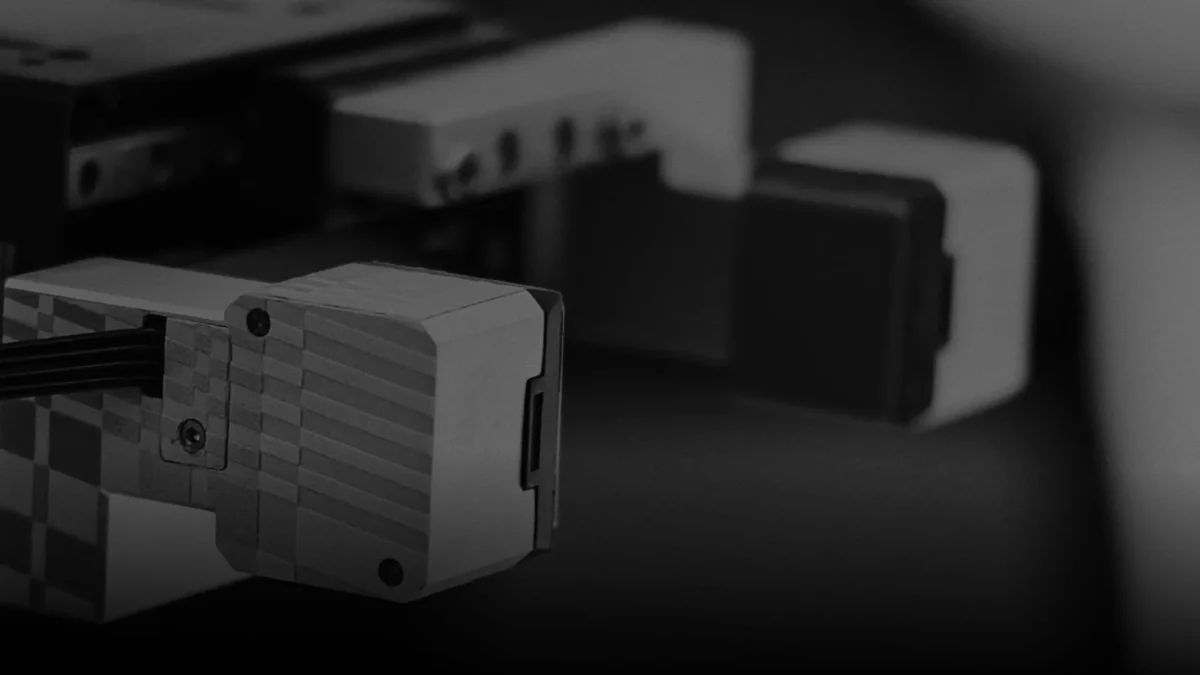
Yimu Tech, a prominent Chinese innovator specializing in tactile sensing hardware and software for advanced embodied-intelligence systems, has successfully concluded a Series E financing round, raising in excess of RMB1 billion (approximately USD 138 million at current exchange rates). This substantial investment propels the company’s valuation past the RMB10 billion (approximately USD 1.38 billion) mark, underscoring significant investor confidence in its groundbreaking technology and market potential. The funding round garnered robust support from a diverse consortium of investors, including leading RMB funds, international USD funds, and strategic industrial investors, signaling a broad-based endorsement of Yimu Tech’s strategic direction and technological prowess in the rapidly evolving field of artificial intelligence and robotics.
The Strategic Imperative of Tactile Sensing in Embodied AI
Yimu Tech operates at the vanguard of embodied intelligence, a burgeoning domain of artificial intelligence focused on creating AI systems that can learn and interact with the physical world through a body, senses, and actions. While traditional AI has excelled in cognitive tasks such, embodied AI aims to bridge the gap between digital intelligence and physical interaction, allowing robots and intelligent machines to perform complex tasks in unstructured environments, much like humans do. A critical component for achieving this level of interaction is sophisticated tactile sensing. Just as humans rely on their sense of touch to manipulate objects, navigate spaces, and understand their surroundings, embodied AI systems require advanced haptic capabilities to grasp delicate items, assess material properties, exert appropriate force, and safely interact with humans.
Current robotic systems predominantly rely on visual perception, often falling short when confronted with tasks requiring fine motor control, object recognition through touch, or adaptation to variable contact conditions. Yimu Tech’s development focus on tactile sensing materials, specialized chips, advanced algorithms, and comprehensive models directly addresses this critical gap. Their innovations aim to provide robots with a "sense of touch" that can rival human dexterity and sensitivity, unlocking new frontiers in automation, human-robot collaboration, and intelligent manufacturing. This technological advancement is not merely incremental but foundational, promising to redefine the capabilities and applications of next-generation intelligent machines.
Yimu Tech’s Technological Prowess and Product Development
At the core of Yimu Tech’s offerings is an integrated approach to tactile sensing. The company is meticulously developing:
- Tactile Sensing Materials: These are the foundational elements, often involving novel composite materials or micro-structured surfaces that can accurately detect pressure, force, vibration, temperature, and even texture. Developing materials that are durable, sensitive, flexible, and scalable for mass production presents significant engineering challenges.
- Specialized Chips: Custom-designed application-specific integrated circuits (ASICs) are crucial for processing the vast amounts of data generated by an array of tactile sensors in real-time. These chips must be energy-efficient, compact, and capable of high-speed data acquisition and initial interpretation, translating raw sensor signals into meaningful information for the robot’s control system.
- Advanced Algorithms: Beyond raw data, sophisticated algorithms are required to interpret tactile inputs, filter noise, identify patterns, and correlate touch data with actions. These algorithms enable robots to learn from tactile experiences, refine their manipulation strategies, and adapt to unforeseen circumstances, moving beyond pre-programmed responses to genuinely intelligent interaction.
- Comprehensive Models: Yimu Tech is also building comprehensive models that integrate tactile data with other sensory inputs (like vision) to create a holistic understanding of the robot’s environment and interaction. These models often leverage deep learning and machine learning techniques to enable robots to "understand" what they are touching, how to grip it, and what forces to apply, facilitating tasks ranging from assembling intricate components to safely handling fragile objects.
The new capital infusion is earmarked to significantly bolster these core areas. A substantial portion will be directed towards accelerating research and development initiatives, expanding the company’s scientific and engineering teams, and exploring new material science breakthroughs and AI modeling techniques. Furthermore, a crucial objective is to scale up the mass production capabilities of Yimu Tech’s existing production lines, ensuring efficient and timely delivery of orders. This dual focus on innovation and industrialization positions Yimu Tech to not only advance the state-of-the-art but also to meet growing market demand for its critical components.
A Chronology of Growth and Strategic Milestones (Inferred)
While specific details of Yimu Tech’s earlier funding rounds and precise timelines prior to this Series E announcement remain undisclosed in the public domain, reaching a valuation exceeding RMB10 billion and securing a Series E round typically signifies a multi-year journey of sustained innovation, strategic execution, and progressive investor confidence. A plausible chronology for a company of Yimu Tech’s scale and ambition would unfold as follows:
- Early Stages (Seed/Angel Round – ~2018-2019): Yimu Tech likely began with initial seed funding from angel investors or very early-stage venture capital firms. This phase would have focused on foundational research, proof-of-concept development for its core tactile sensing technologies, and assembling a foundational team of experts in materials science, robotics, and AI. The initial valuation would have been in the tens of millions of RMB, based on intellectual property and potential.
- Series A/B Rounds (~2019-2021): Subsequent Series A and B rounds would have followed successful demonstrations of core technology, perhaps leading to early prototypes and the filing of key patents. Funding would have supported expansion of R&D efforts, refinement of sensor designs, and the development of initial software algorithms. During this period, the company would have aimed to move from laboratory-scale prototypes to more robust, engineering-ready samples, with valuations likely growing into the hundreds of millions of RMB.
- Series C/D Rounds (~2021-2023): As Yimu Tech matured, Series C and D rounds would have been crucial for transitioning from advanced prototypes to product development and market entry preparation. This would involve significant investment in scaling up manufacturing processes, forging partnerships with early adopter clients in industries such as industrial automation or logistics, and attracting high-profile talent. During these stages, the company would have begun generating revenue and demonstrating clear market traction, pushing its valuation into the low single-digit billions of RMB, attracting larger venture capital funds.
- Current Series E Round (~2024): The successful completion of the Series E round, bringing in over RMB1 billion and elevating the valuation beyond RMB10 billion, marks a pivotal moment. It indicates that Yimu Tech has not only validated its technology and product roadmap but is also demonstrating significant commercial potential and a clear path to market leadership. This round is specifically aimed at accelerating mass production and meeting substantial order backlogs, transitioning the company from a high-potential R&D powerhouse to a major industrial player.
This inferred timeline highlights a consistent progression from theoretical concept to market-ready solutions, a trajectory typical for deep technology companies poised for significant disruption.
Investor Confidence and Strategic Backing
The diverse composition of investors in Yimu Tech’s Series E round — comprising leading RMB funds, USD funds, and industrial investors — speaks volumes about the perceived value and strategic importance of the company’s technology.
- Leading RMB Funds: The participation of prominent Chinese domestic funds underscores the alignment of Yimu Tech’s mission with China’s national strategic priorities. Beijing has explicitly championed the development of indigenous AI capabilities, robotics, and advanced manufacturing under initiatives like "Made in China 2025" and the "New Generation Artificial Intelligence Development Plan." Investing in companies like Yimu Tech is seen as crucial for achieving technological self-sufficiency and leadership in key emerging sectors. These funds often bring deep connections to the domestic industrial ecosystem and policy landscape.
- Leading USD Funds: The involvement of international USD funds signifies a recognition of Yimu Tech’s global market potential and technological competitiveness on an international scale. These funds are typically attracted to companies with disruptive technologies, strong intellectual property, and the ability to scale beyond national borders. Their participation lends an international validation to Yimu Tech’s innovations and potentially opens doors to global partnerships and markets.
- Industrial Investors: The inclusion of industrial investors is particularly strategic. These are often established corporations operating in sectors that stand to benefit directly from Yimu Tech’s tactile sensing solutions, such as robotics manufacturers, automation integrators, or advanced materials companies. Their investment is not purely financial but often entails strategic partnerships, providing Yimu Tech with potential customers, distribution channels, and invaluable industry insights, while giving the industrial investors early access to cutting-edge technology that can enhance their own product offerings. This type of investment provides a strong validation of the practical applicability and commercial viability of Yimu Tech’s technology.
This blend of financial and strategic capital provides Yimu Tech with not only the necessary funds but also a robust network of expertise, resources, and market access, crucial for navigating the complex landscape of high-tech development and commercialization.
Broader Implications and Future Outlook for Embodied AI
Yimu Tech’s significant funding round is a bellwether for the broader embodied AI and robotics market, especially within China and globally. The global robotics market, including industrial, service, and collaborative robots, is projected to grow substantially, with some estimates placing its value well over USD 200 billion by the end of the decade. Within this, the market for AI-enabled robotics and sophisticated sensing technologies is expanding at an even faster clip.
The development of advanced tactile sensing is paramount for several key applications:
- Advanced Manufacturing and Logistics: Robots equipped with human-like touch can perform highly precise assembly tasks, handle delicate components without damage, and adapt to variations in product dimensions or material properties, greatly enhancing automation efficiency and flexibility.
- Service Robotics: In healthcare, hospitality, or elder care, robots require sensitive touch for safe and effective interaction with humans. Tactile sensors enable robots to gently assist patients, serve food, or provide companionship without causing discomfort or injury.
- Surgical Robotics: Precision tactile feedback is crucial for surgeons operating remotely or with robotic assistance, allowing them to "feel" tissues and organs, thereby improving surgical outcomes and reducing risks.
- Prosthetics and Human-Machine Interfaces: Advanced tactile sensing can enhance the functionality of prosthetic limbs, providing amputees with a more natural sense of touch and control, and improving the intuitiveness of human-machine interactions in various fields.
China’s aggressive pursuit of AI and robotics leadership means that domestic champions like Yimu Tech are critical. The nation’s strategic investments in R&D, talent development, and industrial policy are creating a fertile ground for innovation in these sectors. The success of companies like Yimu Tech contributes directly to building a robust indigenous supply chain for critical AI components, reducing reliance on foreign technology, and fostering a competitive ecosystem.
However, challenges remain. The commercialization of advanced tactile sensing still faces hurdles related to cost, durability, integration complexity, and the sheer volume of data processing required. The ability to produce these sophisticated sensors at scale, while maintaining high performance and reliability, will be a key differentiator. Furthermore, the development of universal standards for tactile data interpretation and robot interaction will be crucial for broader industry adoption.
Looking ahead, Yimu Tech’s success in securing this substantial funding positions it as a pivotal player in the global race for embodied intelligence. By pushing the boundaries of tactile sensing, the company is not only enhancing the capabilities of individual robots but also contributing to a future where intelligent machines can interact with the physical world with unprecedented dexterity, sensitivity, and intelligence, ultimately transforming industries and human-robot collaboration paradigms across the globe. This investment signifies a strong belief that Yimu Tech holds a critical piece of the puzzle for unlocking the full potential of next-generation AI systems.


 Ali Ikhwan