Ali Ikhwan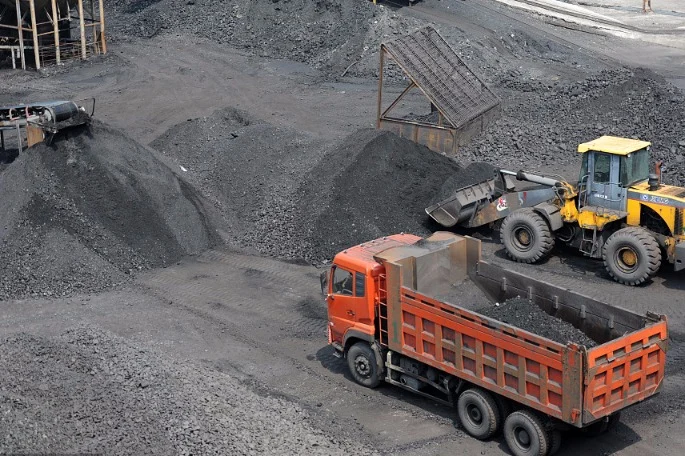
China is on track to achieve its ambitious goal of reducing coal capacity by 500 million metric tons well ahead of the originally planned three to five-year target, a testament to the nation’s intensified commitment to supply-side structural reform and environmental protection. This significant acceleration, alongside parallel efforts in the steel sector, underscores a profound shift in China’s industrial landscape, moving away from heavy, polluting industries towards a more sustainable and efficient economic model. The strategic push, initiated under the 13th Five-Year Plan (2016-2020), has seen rapid progress, exceeding annual targets and signaling a durable commitment to address long-standing issues of overcapacity and environmental degradation.
Accelerating Capacity Reduction in the Coal Sector
The nation’s drive to prune its vast coal capacity is proceeding at an unprecedented pace. Jiang Zhimin, vice-president of the China National Coal Association, recently indicated that the country is poised to meet its 500 million metric ton reduction target as early as next year, significantly shortening the initial timeline. This rapid progress is vividly illustrated by the dramatic consolidation of the coal mining industry. By the end of 2017, the number of operational coal mines in China is projected to fall to approximately 7,000, a substantial decrease from the 10,800 mines recorded in 2015. This consolidation reflects a deliberate policy to shut down smaller, less efficient, and often more polluting mines in favor of larger, modern operations.
In 2016, China successfully slashed coal capacity by more than 290 million tons, setting a strong precedent for subsequent efforts. The target for 2017 was a further reduction of 150 million tons, a goal that was notably accomplished by November, according to data from the National Bureau of Statistics (NBS). This consistent over-performance highlights the effectiveness of central government directives and provincial-level implementation. The emphasis is now squarely on efficiency and scale; currently, more than 1,200 coal mines in China boast an annual production capacity exceeding 1.2 million tons. These larger, more technologically advanced mines collectively account for over 75 percent of the country’s total coal capacity, indicating a strategic shift towards higher productivity and better environmental standards within the remaining operational base. The closure of smaller mines, often plagued by safety issues and outdated technology, not only reduces overall capacity but also enhances industry safety and environmental performance.
The Steel Industry’s Transformation and De-Capacity Efforts
Parallel to the coal sector’s overhaul, China’s steel industry has also undergone a profound transformation. The country has successfully cut its steel capacity by more than 115 million tons, bringing it remarkably close to the upper limit of its 13th Five-Year Plan target of 150 million tons for the steel sector. This achievement, as highlighted by Xu Wenli, head of the Iron and Steel Division at the Ministry of Industry and Information Technology, signifies a robust commitment to reining in an industry that has long been a source of both economic growth and significant environmental challenges. The primary focus of these cuts has been on "outdated steel capacity" and the prevention of "shuttered or illegal steel mills from returning to the market." This latter point is crucial, as the profitability of steel production can often tempt dormant facilities back into operation, undermining capacity reduction efforts.
A key component of this reform was the decisive elimination of low-quality steel production, particularly that made from scrap metal using induction furnaces, which are often less efficient and more polluting. By the end of June, China had phased out the production of 140 million tons of such low-quality steel, a significant victory in the battle against substandard and environmentally damaging manufacturing processes. The chronological progress in the steel sector mirrors that of coal: over 65 million tons of steel production capacity were eliminated in 2016. The 2017 capacity reduction goal of 50 million tons was met by the end of August, underscoring the rapid and effective implementation of these policies. These efforts have not only reduced environmental pollution but also aimed to improve the overall quality and competitiveness of China’s steel industry, aligning it with international standards and fostering more sustainable growth.
Background and Strategic Imperatives: China’s Supply-Side Reforms
These sweeping industrial reforms are integral to China’s broader "supply-side structural reform" agenda, a key economic strategy introduced in 2015 by President Xi Jinping. The overarching goal is to address structural imbalances in the economy, moving away from an investment-driven, export-heavy model towards one driven by domestic consumption, innovation, and higher-quality growth. The reform agenda is multifaceted, focusing on five key tasks: de-capacity (reducing overcapacity in industries like coal and steel), de-stocking (reducing housing inventory), de-leveraging (controlling corporate debt), reducing costs (for businesses), and strengthening weak links (improving public services and infrastructure).
The environmental imperative is equally potent. President Xi Jinping’s declaration of a "war on pollution" has elevated environmental protection to a national priority. China’s rapid industrialization over the past decades led to severe air, water, and soil pollution, particularly in its industrial heartlands. The dense smog that frequently blankets major cities has become a public health crisis and a source of widespread public discontent. By targeting heavy industries like coal and steel, which are major emitters of greenhouse gases and particulate matter, the government aims to significantly improve air quality and fulfill its commitments under international climate agreements. The capacity cuts are thus not merely economic adjustments but fundamental components of a broader strategy for sustainable development and ecological civilization. The 13th Five-Year Plan explicitly sets targets for reducing energy intensity and carbon emissions, making the capacity reduction efforts a critical mechanism for achieving these environmental benchmarks.
Shifting Dynamics in Iron Ore Imports
Paradoxically, while China is reducing its domestic production capacity in coal and steel, it is simultaneously increasing its reliance on imported raw materials like iron ore. This seemingly contradictory trend is directly linked to the environmental clean-up campaign. Lei Pingxi, chief engineer at the Metallurgical Mines Association of China, explained that the country is aggressively closing small, polluting domestic iron ore mines to improve air quality. These closures, driven by stringent environmental regulations and a crackdown on illegal operations, are leading to a projected increase in iron ore imports.
Forecasts indicate that iron ore imports are expected to rise by 5.5 percent year-on-year to 1.08 billion tons in 2017, with a further increase of 3 percent to 1.12 billion tons anticipated for 2018. This sustained demand for imported iron ore underscores China’s role as the world’s largest consumer and importer of this crucial commodity. The environmental crackdown is particularly severe on domestic mining operations; an estimated one-third of China’s iron ore mining licenses are slated for cancellation, primarily affecting small, environmentally non-compliant mines. Over 1,000 mining licenses are set to be revoked under this government-led initiative targeting smog and outdated steelmaking capacity. These closures are significant, potentially eliminating 15 to 20 percent of the country’s total iron ore production capacity. This policy effectively shifts the environmental burden of raw material extraction to other nations, while allowing China to focus on processing higher-quality, imported ore more cleanly and efficiently within its modernized steel mills.
Broader Economic and Environmental Implications
The implications of China’s accelerated industrial capacity reduction are far-reaching, impacting not only its domestic economy and environment but also global commodity markets and international trade relations. Environmentally, the benefits are beginning to manifest. Reduced coal consumption directly translates to lower carbon emissions and fewer airborne pollutants, contributing to improved air quality in industrial regions and major cities. The closure of outdated steel mills and coal mines, often significant sources of pollution, is a direct step towards mitigating environmental degradation. This aligns with China’s commitment to peak its carbon emissions before 2030 and increase its share of non-fossil fuels in primary energy consumption.
Economically, the reforms represent a strategic rebalancing. By eliminating inefficient "zombie enterprises" and overcapacity, China aims to improve the overall profitability and competitiveness of its remaining industrial base. This move away from quantity-driven growth to quality-driven development is intended to foster more sustainable economic expansion. However, the process is not without challenges. Job displacement in affected industries is a significant social concern. The Chinese government has allocated substantial funds for re-employment programs, retraining initiatives, and social safety nets to cushion the impact on workers. The long-term goal is to reallocate labor towards higher-value manufacturing, services, and the burgeoning green economy.
Globally, these reforms have had a tangible impact on commodity markets. Reduced coal production in China has supported global coal prices, while the massive cuts in steel capacity have helped to stabilize international steel prices, which had long been depressed by Chinese oversupply. This has been welcomed by steel producers in other countries, who have often accused China of dumping cheap steel on international markets. The increased demand for imported iron ore, conversely, provides a boost to major iron ore exporters like Australia and Brazil. These shifts underscore China’s immense influence on global supply chains and commodity flows.
International Reactions and Future Outlook
China’s capacity reduction efforts have garnered mixed reactions internationally. While many nations, particularly those with domestic steel industries, have lauded China’s commitment to tackling overcapacity – a topic frequently discussed at G20 summits – some have expressed concerns about the potential for market manipulation or the speed of the transition. Nevertheless, the general consensus acknowledges the necessity and ambition of China’s reforms. The transparent reporting of capacity cuts by Chinese officials and state media also helps to build confidence in the authenticity of these efforts.
Looking ahead, China is expected to maintain its stringent policies on industrial capacity and environmental protection. The 14th Five-Year Plan (2021-2025) is anticipated to further embed principles of green development and industrial upgrading. The focus will likely shift from broad capacity cuts to more refined measures, such as promoting ultra-low emission technologies, fostering innovation in advanced materials, and continuing the consolidation of industries into fewer, larger, and more environmentally responsible entities. The challenge will be to sustain the momentum of reform while ensuring social stability and achieving continued economic growth, navigating the complexities of transitioning a vast industrial economy towards a cleaner, more efficient, and sustainable future.

 Evan Lee Salim
 Suro Senen