Neng Nana
China’s annual imports from the Yamal liquefied natural gas (LNG) project in the resource-rich Arctic region are poised to significantly bolster the nation’s energy security, providing crucial and increasing supplies of natural gas, especially vital during periods of severe shortage in northern China. This strategic collaboration, highlighted by an executive from China National Petroleum Corp. (CNPC), underscores a deepening energy partnership between China and Russia, with profound implications for global energy markets, Arctic shipping routes, and China’s industrial technological prowess.
The Yamal LNG project, a cornerstone of this energy alliance, is anticipated to supply China with more than 4 million metric tons of LNG annually once it achieves full operational capacity. This substantial influx of super-chilled fuel is instrumental in fortifying China’s oil and gas reserves, ensuring a steady, long-term supply crucial for the nation’s burgeoning energy demands. Jiang Qi, general manager of CNPC Russia, a key subsidiary of China’s largest oil and gas producer by annual output, emphasized the project’s pivotal role in enhancing China’s long-term energy resilience. The recent loading of the project’s first export cargo, a substantial 173,000 cubic meters of LNG from its Arctic terminal, marked a significant milestone, transitioning the ambitious venture from development to active supply.
Background: China’s Pressing Energy Demands and the "Blue Sky" Initiative
China’s relentless pursuit of cleaner energy sources has dramatically reshaped its energy landscape, leading to an escalating demand for natural gas. The government’s ambitious "Blue Sky" campaign, initiated to combat severe air pollution, particularly in industrial heartlands and major urban centers, has mandated a sweeping transition from coal-fired heating and industrial processes to cleaner alternatives like natural gas. This policy, while environmentally beneficial, has created unprecedented pressure on the nation’s gas supply infrastructure, especially during peak winter heating seasons.
The winter of 2017-2018, coinciding with the initial operations of Yamal LNG, saw northern China grappling with severe natural gas shortages. Reports indicated disruptions to heating services in residential areas and temporary shutdowns for industrial facilities as demand outstripped available supply. This crisis underscored the urgent need for diversified, reliable, and large-scale natural gas imports. Beijing’s commitment to phasing out coal-fired boilers and promoting gas-fired alternatives has propelled natural gas consumption to record highs, with annual growth rates often exceeding 10-15%. In 2020, China’s natural gas consumption reached approximately 326 billion cubic meters (bcm), with imports accounting for roughly 40-45% of this total. The Yamal project, therefore, arrives at a critical juncture, offering a substantial new source to alleviate these domestic pressures and support China’s long-term environmental and energy security objectives.
The Yamal LNG Project: A Testament to International Collaboration and Arctic Engineering
The Yamal LNG project, situated on the remote Yamal Peninsula in the Russian Arctic, represents a monumental feat of engineering and international cooperation. Led by Russia’s Novatek, the project involves a consortium of global energy players. CNPC secured a significant 20 percent stake in the $27 billion venture in September 2013, investing $5.4 billion. Other key partners include France’s Total and China’s Silk Road Fund, each holding stakes, thereby distributing the financial burden and leveraging diverse expertise.
The project’s location in the harsh Arctic environment, characterized by permafrost, extreme temperatures, and year-round ice cover, necessitated innovative solutions. Modular construction, with large components prefabricated in warmer climates and then shipped to the site for assembly, was a key strategy. This approach allowed for significant contributions from Chinese enterprises, which were responsible for an impressive 85 percent of the project’s module construction. This involvement provided Chinese manufacturing with invaluable experience in large-scale, complex engineering tailored for extreme conditions.
The Yamal project’s design includes three liquefaction trains, each with a capacity of 5.5 million metric tons per annum (mtpa), bringing the total planned capacity to 16.5 mtpa. The first train commenced production in late 2017, followed by the second and third trains in subsequent years, gradually bringing the project to its full operational potential. The strategic importance of the Yamal project extends beyond its production capacity; it pioneers the use of specialized Arc7 ice-class LNG carriers designed to navigate the icy waters of the Northern Sea Route, delivering gas to both European and Asian markets.
A Timeline of Strategic Engagement and Development
- Early 2000s: Conception of the Yamal LNG project by Novatek, recognizing the vast gas reserves in the Yamal Peninsula.
- 2010: Novatek and Total sign a strategic partnership agreement for the project.
- September 2013: China National Petroleum Corporation (CNPC) acquires a 20% stake in Yamal LNG for $5.4 billion, solidifying China’s direct involvement. This marked a significant deepening of Sino-Russian energy ties.
- 2014: The Silk Road Fund, a Chinese state-owned investment fund, also invests in the project, acquiring a 9.9% stake later, further diversifying the ownership structure and China’s commitment.
- 2015-2017: Intensive construction phase, involving thousands of workers and hundreds of vessels. Chinese enterprises play a crucial role in module fabrication and infrastructure development.
- December 2017: The first liquefaction train of the Yamal LNG project commences production. The inaugural cargo of 173,000 cubic meters of LNG is loaded onto the Arc7 ice-class tanker "Christophe de Margerie" and dispatched to Europe, marking the official start of exports.
- August 2018: The second liquefaction train begins operations, increasing the project’s output.
- December 2018: The third and final liquefaction train comes online, bringing Yamal LNG to its full design capacity of 16.5 mtpa.
- Ongoing: Continuous shipments to global markets, including growing volumes destined for China via both the Northern Sea Route (during summer) and transshipment hubs.
Russia-China Energy Complementarities and Broader Cooperation
Jiang Qi’s assertion of "natural complementarities" in China-Russia energy cooperation is well-founded. Russia, possessing the world’s largest natural gas reserves and being a major oil producer, finds a ready and expanding market in China, the world’s largest energy consumer. This symbiotic relationship has fostered a robust, long-term energy cooperation framework that extends beyond Yamal LNG.
A prime example is the Sino-Russia crude oil transmission pipeline, often referred to as the Eastern Siberia-Pacific Ocean (ESPO) pipeline’s spur line to China, which has been operational for years, ensuring a steady supply of Russian crude to Chinese refineries. Additionally, the "Power of Siberia" natural gas pipeline, also known as the East Route gas pipeline, which commenced deliveries in December 2019, represents another monumental achievement. This pipeline is set to deliver up to 38 billion cubic meters of natural gas annually from Russia’s Far East to northeastern China, further diversifying China’s gas import portfolio and strengthening its energy security. These infrastructure projects, combined with joint ventures like Yamal LNG, illustrate a comprehensive, multi-faceted energy partnership designed for long-term strategic benefits for both nations.
The Northern Sea Route: A New Frontier for Global Trade
The Yamal project’s operational success is inextricably linked to the development and utilization of the Northeast Passage, also known as the Northern Sea Route (NSR). This Arctic sea route, which directly links China and Europe, offers a significantly shorter transit time compared to the traditional Suez Canal route. While the original article noted 54 freight vessels having traversed the passage, this number has steadily increased over recent years, driven by melting Arctic ice making the route more navigable for longer periods of the year.
The economic advantages are substantial. Reduced sailing distances translate into lower fuel consumption, decreased freight costs, and faster delivery times for goods between Asia and Europe. For LNG, this means quicker turnaround times for carriers and potentially more competitive pricing. While the route presents challenges such as seasonal navigability (requiring icebreaker escort during certain months), insurance costs, and limited infrastructure, its strategic importance is undeniable. China has actively promoted the "Polar Silk Road" as an extension of its Belt and Road Initiative, viewing the Arctic as a critical maritime corridor for future trade and resource development. The regular movement of specialized Arc7 LNG carriers from Yamal through the NSR will further promote its development, potentially leading to increased investment in supporting infrastructure and services along the route.
Technological Leap and Industrial Empowerment for China
The involvement in the Yamal LNG project has served as a powerful catalyst for technological advancement and industrial upgrading within China. Jiang Qi highlighted how the project has enabled Chinese enterprises in the manufacturing sector to gain invaluable experience and technology for working in the extreme Arctic environment.
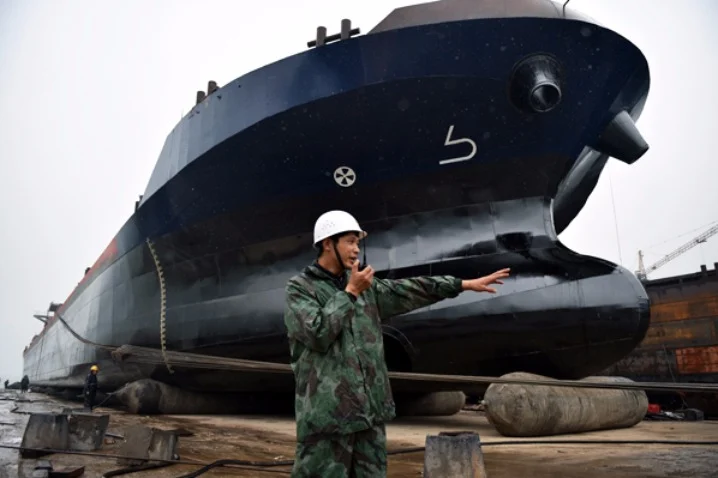
This includes not only the aforementioned 85 percent contribution to module construction, demonstrating high-precision engineering and manufacturing capabilities, but also significant participation in the specialized shipping fleet. Chinese shipyards have been instrumental in building seven of the advanced Arc7 ice-class transport ships specifically designed for Yamal. Furthermore, Chinese enterprises are responsible for the operation of 14 out of the 15 LNG carriers that form the core of Yamal’s logistics backbone. This deep involvement in both the construction and operational aspects of such a sophisticated project has allowed China to accumulate critical knowledge and expertise in Arctic oil and gas exploration, development, and transportation.
The sheer scale of financial commitments also underscores the project’s significance for Chinese industry. The construction contract for the project totaled $7.8 billion, with the shipping contract amounting to an additional $8.5 billion. These figures represent massive opportunities for Chinese companies, fostering innovation in materials science, shipbuilding, logistics, and extreme-weather engineering. This acquired expertise positions China as a more formidable player in future global energy projects, particularly those in challenging environments.
Diversifying Supply and Future Energy Security Strategies
While Yamal LNG provides a significant boost, China’s energy security strategy remains multi-faceted. To further ease the rising demand for natural gas, CNPC spokesman Qu Guangxue indicated that the company plans to continue negotiating with Central Asian nations for additional pipeline gas supplies. Countries like Turkmenistan, Uzbekistan, and Kazakhstan are crucial sources of pipeline gas for China, and expanding these agreements remains a priority.
China’s overall approach involves a three-pronged strategy: maximizing domestic natural gas production, securing long-term pipeline imports from multiple sources (Russia, Central Asia, Myanmar), and diversifying LNG imports from various global suppliers (Australia, Qatar, the United States, and now Russia’s Arctic). This diversification reduces reliance on any single supplier or transit route, enhancing the nation’s energy resilience. Furthermore, significant investments are being made in domestic gas infrastructure, including expanding pipeline networks, building more LNG regasification terminals along its coastline, and developing strategic underground gas storage facilities to buffer against seasonal demand fluctuations.
Broader Implications and Outlook
The Yamal LNG project and China’s deep involvement carry far-reaching implications. Geopolitically, it solidifies the strategic energy alignment between Russia and China, creating a formidable partnership that influences global energy dynamics. Economically, it provides China with a crucial, long-term energy source and opens up new trade routes, while offering Russia a vital market for its vast Arctic resources. Environmentally, while natural gas is cleaner than coal, the project’s operations in the fragile Arctic ecosystem raise concerns about potential ecological impacts and the broader implications of Arctic resource development in an era of climate change.
For China, Yamal LNG is more than just a gas supply; it’s a testament to its expanding global reach, its growing technological capabilities, and its unwavering commitment to securing its energy future. As the project reaches full capacity and its specialized carriers routinely navigate the Northern Sea Route, China’s Arctic energy lifeline will continue to play an increasingly central role in its national development and its aspirations on the global stage.

 Evan Lee Salim
 Suro Senen