Pevita Pearce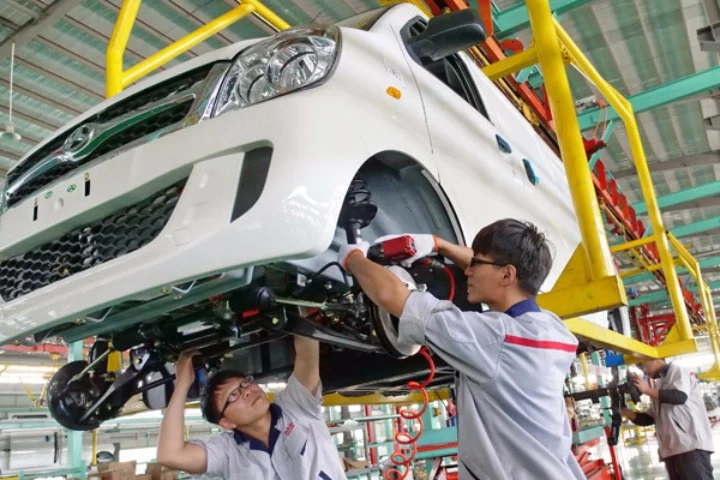
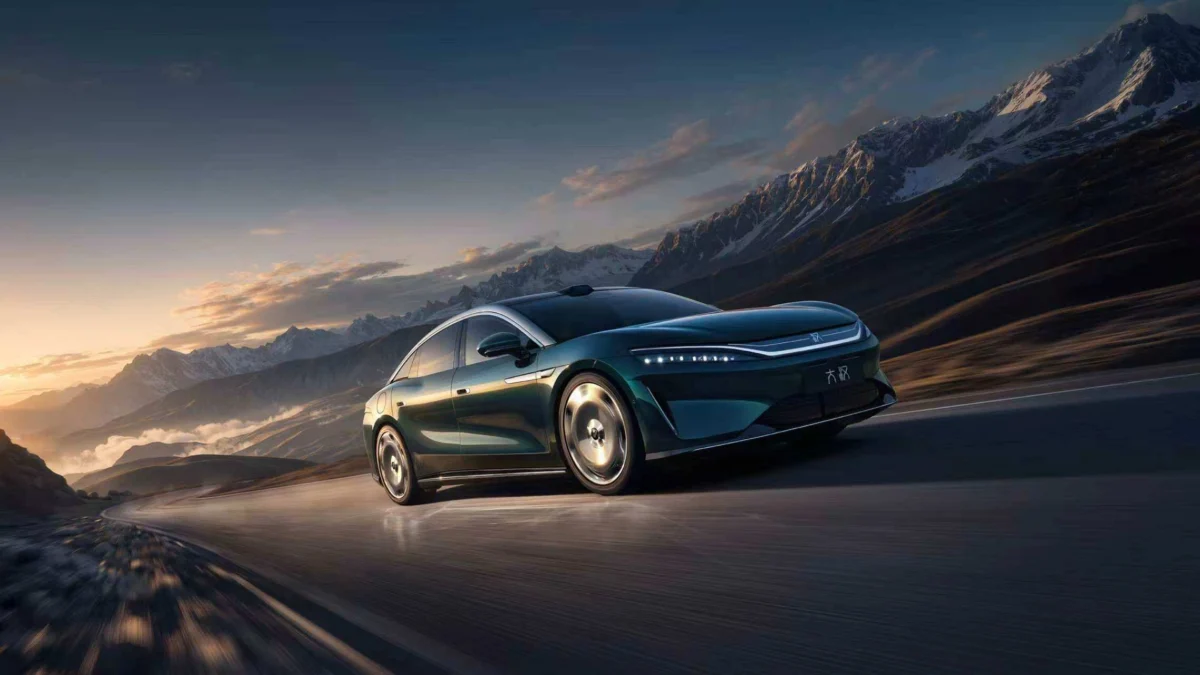
Beijing Automotive Group Co (BAIC Group), one of China’s prominent state-owned automobile manufacturers, has declared a groundbreaking strategic shift, committing to a complete cessation of conventional fuel-powered vehicle production and sales under its proprietary brands by 2025. This audacious move, unveiled in December 2017, underscores the automaker’s profound dedication to an electrified future, aligning with China’s broader national agenda to dominate the global new energy vehicle (NEV) market and combat escalating environmental challenges.
BAIC’s Strategic Pivot and the 2025 Mandate
The definitive timeline for this transition was articulated by BAIC Group Chairman Xu Heyi during a significant industry event. Xu Heyi outlined a phased approach, targeting an initial halt to sales of self-developed conventional fuel-powered vehicles within Beijing by 2020. This local initiative served as a crucial precursor to the more expansive, nationwide mandate to cease both the production and sale of internal combustion engine (ICE) vehicles under BAIC’s own brands across China by 2025. This ambitious declaration immediately positioned BAIC Group at the forefront of global automakers embracing electrification, particularly among traditional manufacturers.
It is important to delineate BAIC’s diverse portfolio. While the 2025 commitment specifically pertains to its indigenous BAIC-branded cars, the group also maintains significant joint ventures with international automotive giants, including South Korean carmaker Hyundai (Beijing Hyundai) and Germany’s Daimler AG, the parent company of the illustrious Mercedes-Benz brand (Beijing Benz). These joint ventures operate under separate strategic frameworks, often dictated by their global partners’ electrification roadmaps, though they are increasingly influenced by China’s stringent NEV policies and market demand. The focus on its self-developed brands allows BAIC to exert direct control over its technological trajectory and market positioning in the burgeoning NEV sector.
The Nexus of Innovation: Beijing’s New Energy Car Technology and Innovation Center
The announcement by Chairman Xu Heyi was made during the inauguration of a pivotal new energy car technology and innovation center in Beijing. This collaborative initiative signifies a concerted effort to consolidate and accelerate advancements in NEV technology. The center was established through a robust partnership involving 14 institutions, prominently including BAIC’s dedicated new energy vehicle arm, Beijing Electric Vehicle Co (BJEV), the esteemed Tsinghua University, and Contemporary Amperex Technology Co Ltd (CATL), a global leader in battery manufacturing.
This state-of-the-art facility is envisioned as an open platform designed to harness global innovative resources, fostering unprecedented collaboration across various stakeholders. By bringing together companies like BJEV and CATL, academic powerhouses like Tsinghua University, dedicated research facilities, and even incorporating user feedback mechanisms, the center aims to create a dynamic ecosystem for innovation. BJEV, in an official news release, emphasized the center’s role in facilitating synergy between industry, academia, research institutions, and end-users, thereby accelerating the development and deployment of cutting-edge NEV technologies.
Xu Qiang, head of the Beijing Municipal Science and Technology Commission, lauded the establishment of the center as a "practical and important move." He underscored its critical role in promoting cooperation, enhancing innovative capabilities, and bolstering the core competitiveness of China’s new energy vehicle industry. The convergence of such influential entities under one roof signals a strategic intent to not only keep pace with global NEV advancements but to lead them, leveraging China’s vast market and policy support.
China’s Dominance in the Global NEV Landscape
BAIC’s bold move unfolded against the backdrop of China’s ascendance as the undisputed global leader in the new energy vehicle market. By 2017, China had already solidified its position as the largest market for such vehicles, driven by robust government incentives, increasingly stringent emission standards, and a growing public awareness of environmental issues.
Statistics from the China Association of Automobile Manufacturers (CAAM) vividly illustrate this growth trajectory. From January to November 2017, China recorded impressive sales of 609,000 new energy cars, marking a substantial year-on-year growth of 51.4 percent. CAAM’s projections at the time estimated that overall sales in the NEV category could reach an unprecedented 700,000 units by the close of 2017. This exponential growth was fueled by a comprehensive suite of national and local policies, including direct purchase subsidies, tax exemptions, preferential licensing and traffic access in congested cities, and the impending implementation of a dual-credit system designed to compel automakers to produce more NEVs.
The dual-credit system, formally announced in September 2017 for implementation in 2019, mandates that automakers must earn a certain percentage of NEV credits relative to their conventional fuel vehicle sales. Companies failing to meet these quotas would face penalties or be required to purchase credits from other manufacturers, thereby creating a powerful market mechanism to push electrification. This policy framework provided a strong impetus for traditional automakers like BAIC to accelerate their transition strategies.
BAIC’s Ascendancy in the NEV Sector
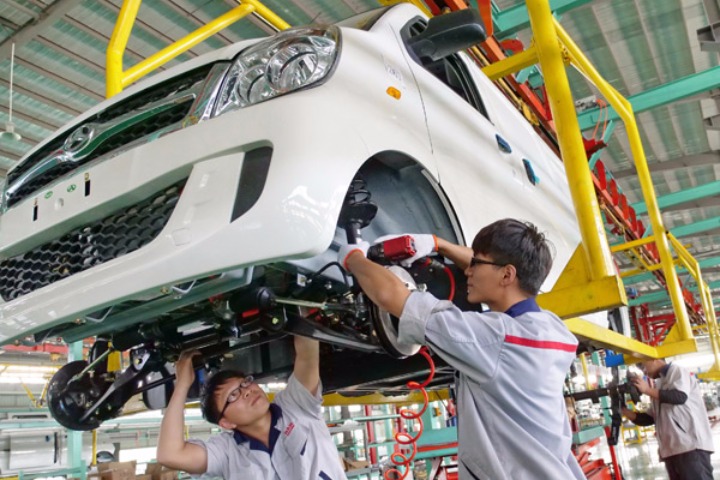
Within this dynamic market, BAIC Group, through its subsidiary BJEV, had already established itself as one of the country’s leading new energy carmakers. BJEV’s performance in late 2017 was particularly stellar, with sales reaching 21,598 units in November alone – an impressive 85 percent surge from October. This strong monthly performance contributed to its cumulative sales of over 88,000 units in the first 11 months of that year, underscoring its significant market share and growth momentum in the rapidly expanding NEV segment.
BJEV’s success was not merely a reflection of market growth but also a testament to its strategic focus on developing a diverse range of electric vehicles, catering to both individual consumers and fleet operators. Its models, often characterized by competitive pricing and practical features, had resonated well with a consumer base increasingly open to electric mobility solutions, especially in urban environments where range anxiety was mitigated by accessible charging infrastructure.
BJEV’s Vision: Investment, Models, and Infrastructure
Looking ahead, BJEV outlined an ambitious roadmap for future growth and innovation. During the Guangzhou auto show in November 2017, Zhang Yong, BJEV’s Deputy General Manager, disclosed plans for a substantial investment of approximately 10 billion yuan ($1.5 billion) into research and development over the subsequent three to five years. This significant capital injection was earmarked to drive technological advancements, particularly in areas like battery technology, electric powertrains, intelligent connectivity, and autonomous driving features, which were becoming increasingly crucial differentiators in the NEV market. This investment was also intended to support an aggressive product launch strategy, with the company aiming to introduce two to three new models annually, ensuring a fresh and competitive product lineup.
Beyond product development, BJEV also articulated a grand vision for expanding its presence in the burgeoning mobility services sector. The company planned to deploy 500,000 new energy vehicles specifically for taxi and ride-sharing services across 1,000 cities by 2022. This strategy aimed to capitalize on the high utilization rates of fleet vehicles, which not only contribute significantly to sales volumes but also serve as prominent showcases for electric vehicle capabilities, accelerating public acceptance and familiarity.
Crucially, addressing one of the most significant barriers to widespread EV adoption – slow charging times and range anxiety – BJEV had earlier announced a colossal investment of 10 billion yuan dedicated to infrastructure development. This unprecedented commitment aimed to construct 3,000 solar-powered battery changing stations. This innovative approach sought to circumvent traditional charging limitations by enabling rapid battery swaps, potentially reducing the "refueling" time for an electric vehicle to mere minutes, comparable to pumping gasoline. The integration of solar power into these stations also highlighted a commitment to sustainable energy sources, aligning with the broader environmental goals associated with electric mobility. This infrastructure push was a strategic move to provide a seamless and convenient experience for EV owners, particularly for high-utilization fleet vehicles.
Broader Policy Landscape and Driving Factors
BAIC’s bold electrification strategy was intrinsically linked to China’s overarching national policies aimed at transforming its automotive industry and addressing critical environmental and energy security concerns. The government’s "Made in China 2025" strategic plan explicitly identified NEVs as one of the ten priority sectors for advanced manufacturing, aiming for China to become a global leader in innovation and production.
Environmental imperatives played a significant role. China’s major cities frequently grappled with severe air pollution, largely attributable to vehicle emissions. Promoting NEVs was a direct strategy to improve urban air quality and meet ambitious carbon emission reduction targets under international climate agreements. Furthermore, China’s heavy reliance on imported oil for its transportation sector posed a strategic vulnerability. The widespread adoption of NEVs, powered by domestically sourced electricity (increasingly from renewable sources), offered a pathway to enhanced energy security and reduced dependence on foreign fossil fuels.
Market Dynamics and Competitive Environment
BAIC’s announcement sent ripples through the competitive Chinese automotive landscape. While BAIC was a leader, other domestic players were also making significant strides. BYD, for instance, had long been a pioneer in electric vehicles and batteries, often dubbed the "Tesla of China." Automakers like Geely, SAIC, and Guangzhou Automobile Group (GAC) were also aggressively investing in their NEV divisions, launching new models, and forging partnerships. The entry of global players like Tesla, with its Shanghai Gigafactory, further intensified competition, pushing domestic manufacturers to innovate faster and more efficiently. BAIC’s 2025 commitment served as a clear signal of its intent to not merely participate in this race but to lead with a decisive transition away from ICE vehicles.
Challenges and Opportunities on the Road Ahead
The ambitious goal set by BAIC Group, while commendable, presented a myriad of challenges and opportunities. On the challenge front, significant technological advancements were still required to improve battery energy density, reduce costs, and enhance charging speeds. The supply chain for critical raw materials like lithium, cobalt, and nickel also needed to be secured and managed sustainably. Scalability of charging infrastructure, particularly outside major urban centers, remained a hurdle, despite BJEV’s innovative battery swap plans. Consumer acceptance, while growing, still contended with issues like range anxiety, initial purchase cost, and the perception of residual value. The profitability of NEV divisions, often reliant on subsidies in the early stages, also needed to mature as the market evolved.
However, the opportunities were immense. BAIC’s early and decisive move positioned it to capture a larger share of the rapidly expanding domestic NEV market. It also opened doors for potential export markets as global demand for electric vehicles grew. The transition fostered innovation in related fields such as smart mobility solutions, autonomous driving, and new business models like battery-as-a-service (BAAS), which BJEV’s battery swap stations could facilitate. Furthermore, the commitment could attract top talent and investment, cementing BAIC’s reputation as a forward-thinking and environmentally responsible automaker.
Impact on the Automotive Ecosystem
The decision to phase out conventional fuel cars has profound implications for BAIC’s entire automotive ecosystem. This includes a massive retooling of production lines, retraining of the workforce to adapt to EV manufacturing processes, and a fundamental shift in its research and development priorities. Suppliers traditionally focused on ICE components (engines, transmissions, fuel systems) would need to pivot towards electric vehicle components (electric motors, inverters, battery packs, charging modules) or face obsolescence. This industrial transformation would create new jobs in battery manufacturing, software development, and charging infrastructure deployment, while potentially displacing some traditional roles. The shift also necessitates closer collaboration with energy providers and urban planners to integrate NEVs seamlessly into smart city ecosystems.
In conclusion, BAIC Group’s declaration in December 2017 to phase out conventional fuel-powered cars under its own brand by 2025 was a landmark moment, reflecting a deep alignment with China’s national strategic vision for new energy vehicles. Supported by significant investments in R&D and infrastructure, and anchored by a collaborative innovation center, BAIC was not merely adapting to market trends but actively shaping the future of mobility. This bold commitment underscored the profound transformation underway in the global automotive industry, with China and its leading automakers like BAIC at the vanguard of the electric revolution.

 Evan Lee Salim
 Suro Senen