 Lina Hope
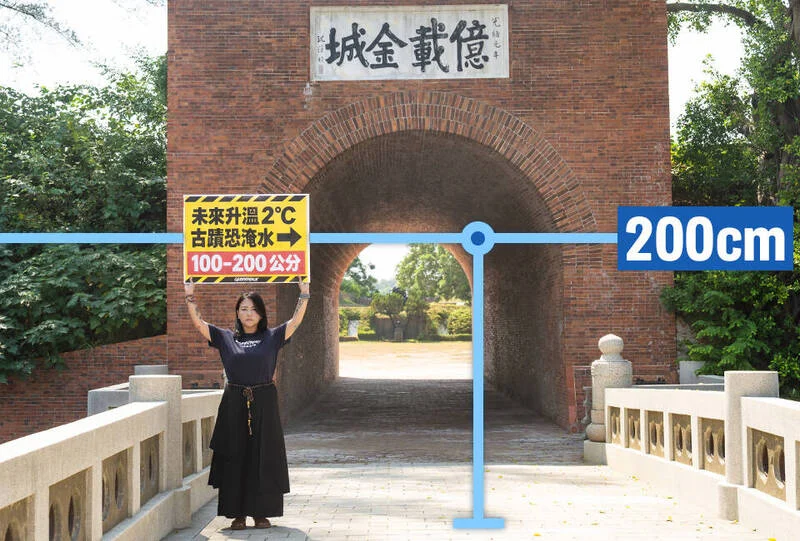
Tainan, Taiwan – October 20, 2026 – A stark warning has been issued regarding the vulnerability of Tainan’s rich historical heritage to the escalating impacts of climate change. A comprehensive flooding risk study released today by Greenpeace reveals that several iconic historical sites, particularly those clustered along the Anping Canal, are at significant risk of inundation during short-duration heavy rainfall events, a scenario projected to intensify under a global 2°C warming scenario. The findings underscore a potential devastating blow to the city’s vibrant tourism economy and its identity as Taiwan’s cultural capital, boasting an impressive 142 registered historical sites.
The press conference, held at the Tainan City Council, highlighted the urgent need for increased investment and proactive measures to safeguard these invaluable cultural assets. Yi-Hsin, a campaigner with Greenpeace’s Climate and Energy Project, articulated the gravity of the situation. "Last year, Typhoon Danas caused the collapse of the archway at Nan Kun Shan Dai Tian Temple," she stated, referencing a recent incident that brought the fragility of historical structures into sharp focus. "And just this August, the southwestern monsoon brought short-duration heavy rainfall, leading to the collapse of the East Gate wall. These historical sites are not merely stones and mortar; they are the lifeline of Tainan citizens’ lives, faith, and local economy."
Greenpeace’s analysis, which meticulously examined all 142 historical sites across Tainan through public data analysis, extensive field visits, and on-site inspections, paints a concerning picture. The study simulated flooding scenarios ranging from 6-hour short-duration heavy rain to 24-hour continuous downpours, factoring in both current climate conditions and a projected 2°C global warming scenario. The results indicate that significant portions of the Anping historical district could experience water accumulation and flooding.
Key Sites at High Risk of Flooding
The Greenpeace study specifically identified several prominent historical landmarks within the Anping area as being particularly susceptible:
- Former Tainan Anping Customs House (Riverside Cafe): In some sections, the estimated flooding depth could reach a concerning 1 to 2 meters. This iconic building, a testament to Taiwan’s colonial past, is a popular tourist destination.
- Eternal Golden Castle: This historic fortress, a crucial defense structure in its time, is also projected to face flood depths of 1 to 2 meters in certain areas. Its historical significance attracts numerous visitors annually.
- Anping Small Artillery Battery: This site, crucial for understanding Tainan’s historical military defenses, could experience water accumulation or flooding with depths ranging from 0.5 to 1 meter.
- Anping Lu Jing-tang Ancestral House: As a significant example of traditional Tainan architecture and a place of ancestral worship, this ancestral house is estimated to face water accumulation or flooding of 0.5 to 1 meter in some areas.
Economic Ramifications for Anping’s Tourism
The potential flooding of these well-known historical attractions in Anping carries significant economic implications. These sites are not only repositories of collective memory for the people of Taiwan but also critical drivers of Tainan’s local tourism industry. Greenpeace estimates that historical attractions along the Anping Canal alone generate approximately NT$2.06 billion in direct annual tourism consumption.
When extreme rainfall events lead to canal overflows, the resulting inundation of surrounding roads can directly impede access to these historic areas. This disruption can deter visitors, leading to a decline in tourism revenue, impacting local businesses such as restaurants, souvenir shops, and guesthouses that rely heavily on the steady flow of tourists. Furthermore, damage to historical park areas and infrastructure could necessitate costly repairs and prolonged closures, exacerbating the economic fallout.
Public Opinion Underscores Climate Concerns
To gauge public sentiment on climate change and extreme weather, Greenpeace commissioned a telephone poll of Tainan City registered voters aged 20 and above. Conducted between September 5 and 6, the survey garnered 1,068 valid samples, offering a confidence level of 95% with a sampling error of ±3.00%. The results reveal a clear public prioritization of climate-related issues.
When asked about their usual concerns, "economic livelihood" ranked highest at 47.9%. However, "issues such as high temperatures and heavy rainfall flooding" emerged as the second most pressing concern, cited by 41.3% of respondents. This figure significantly surpasses concerns about current political events (29.3%) and international trends (25.2%), indicating that the tangible impacts of climate change are increasingly resonating with Tainan’s residents.
A Mandate for Climate Action
The survey further highlights a strong public mandate for climate action. An overwhelming 85.8% of Tainan voters agree that the next mayor should prioritize solving the threat of extreme weather and place it at the forefront of their policy agenda. This sentiment suggests that candidates who address climate resilience and adaptation are likely to find favor with the electorate.
The poll also indicated that climate policies could significantly influence voting intentions. When presented with the prospect of mayoral candidates Chen Ting-fei and Hsieh Lung-chung promising to implement "people-first" climate adaptation policies, a substantial 66.8% of respondents stated that it would increase their willingness to vote for those candidates. This data point underscores the political leverage that effective climate policy can offer in the upcoming elections.
Tainan’s Climate Adaptation Plan: A Budgetary Gap
Despite Tainan being the only local government in Taiwan to independently include "cultural asset / historical site protection" within its climate change adaptation plan, Greenpeace pointed out a critical flaw: the plan currently has a zero budget allocation. This stark discrepancy between policy ambition and financial commitment raises serious questions about the city’s preparedness and its commitment to safeguarding its heritage.
Yi-Hsin emphasized this point: "Tainan is the only local government in Taiwan to independently include ‘cultural asset / historical site protection’ in its climate change adaptation plan, yet it has invested zero budget. This is a critical oversight. We must increase the budget for historical site restoration, strengthen prior prevention measures, and work collaboratively with local residents to discuss and implement effective solutions. Only through such concerted efforts can we truly protect Tainan’s unique cultural assets for future generations."
Broader Implications and Greenpeace’s Calls to Action
The Greenpeace study serves as a critical wake-up call, not just for Tainan, but for other cities worldwide grappling with the dual challenges of climate change and the preservation of cultural heritage. The economic reliance on tourism, coupled with the intrinsic value of historical sites, makes their vulnerability a matter of both cultural and financial consequence.
The implications extend beyond Anping. Tainan’s 142 historical sites represent a significant portion of Taiwan’s national heritage. The potential for widespread damage from increasingly frequent and intense extreme weather events necessitates a paradigm shift in how climate adaptation is integrated into urban planning and heritage management.
Greenpeace’s calls to action are clear and actionable:
- Increased Budgetary Allocation: A substantial increase in the budget dedicated to the restoration and ongoing maintenance of historical sites is imperative. This funding should specifically address climate resilience measures.
- Strengthened Prior Prevention: Proactive measures, such as improved drainage systems, flood barriers, and early warning systems tailored for historical districts, need to be implemented.
- Community Engagement: Collaborative efforts with local residents, heritage experts, and community groups are crucial for developing and implementing effective, context-specific adaptation strategies. This includes incorporating traditional knowledge and local insights into climate resilience planning.
- Policy Integration: Climate adaptation measures for cultural heritage must be fully integrated into all relevant city planning documents and budgetary processes, moving beyond symbolic inclusion.
- Public Awareness Campaigns: Continued efforts to educate the public about the risks posed by climate change to cultural heritage and the importance of adaptation are vital to garner sustained support for necessary investments.
As Tainan navigates the complexities of a changing climate, the future of its invaluable historical sites hangs in the balance. The findings of the Greenpeace study provide a data-driven impetus for urgent action, urging policymakers to bridge the gap between climate awareness and concrete, funded solutions to protect the city’s irreplaceable cultural legacy. The economic stability and unique identity of Tainan are inextricably linked to its historical fabric, a fabric that is now demonstrably under threat from the intensifying forces of global warming. The time for robust, financially supported, and community-driven adaptation is now.

 Asep Darmawan
 Asro