Jia Lissa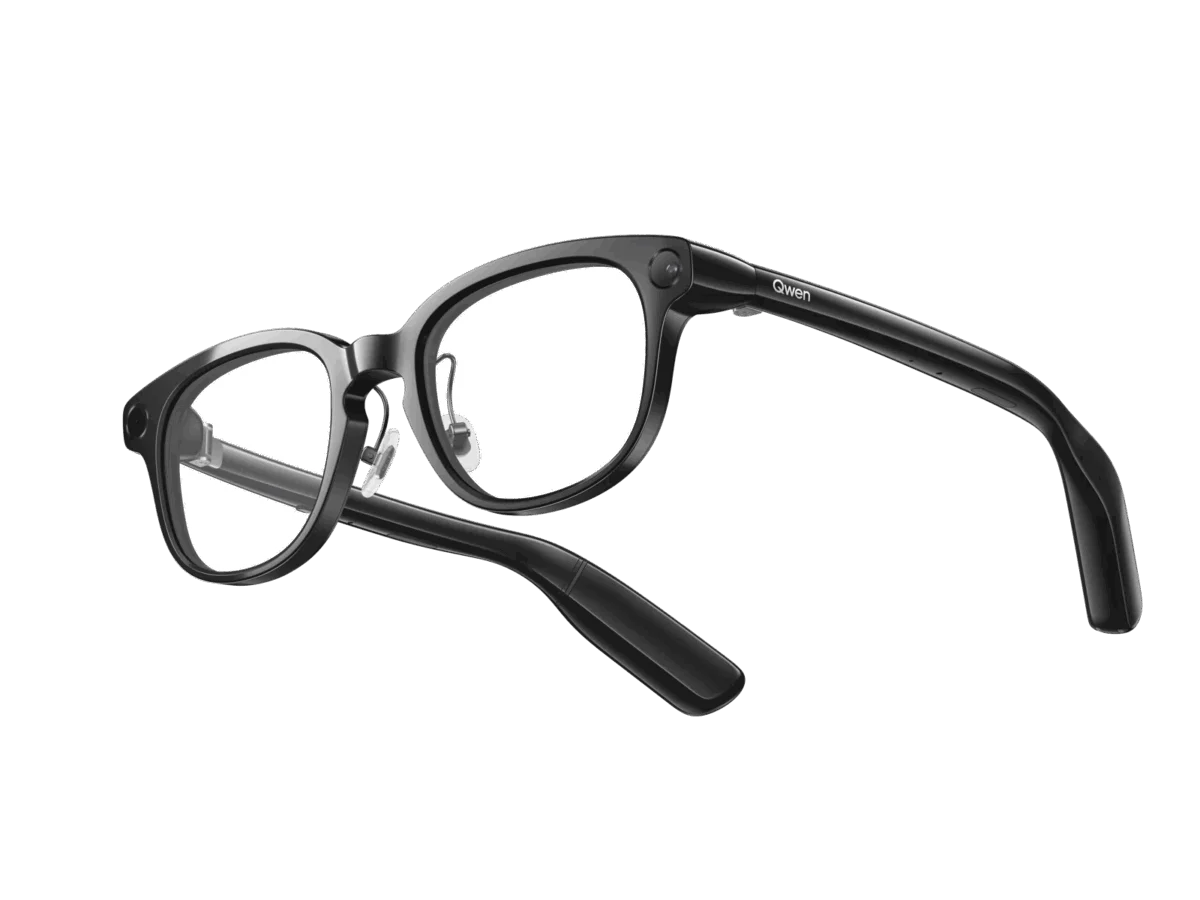
Alibaba, the Chinese e-commerce and technology conglomerate, officially launched its highly anticipated Qwen N1 and N1 Pro AI glasses in China on October 13, marking a significant foray into the burgeoning market of smart wearables infused with artificial intelligence. The standard package for the Qwen N1 is priced from RMB 2,899, while the more advanced N1 Pro model starts at RMB 3,399. Both iterations distinguish themselves with a user-centric design feature: replaceable batteries ingeniously integrated into the temples, allowing for seamless battery swaps during prolonged use, a notable innovation aimed at mitigating one of the primary limitations of wearable electronics.
This launch represents a strategic pivot for Alibaba, extending its vast AI capabilities, particularly its proprietary large language model (LLM) Qwen (also known as Tongyi Qianwen), from cloud-based services and software applications into tangible consumer hardware. The Qwen N1 and N1 Pro are not merely smart glasses; they are positioned as sophisticated AI assistants designed to augment daily life, blending advanced optical technology with intelligent software.
Alibaba’s Deep Dive into AI and Wearables
Alibaba’s journey into artificial intelligence has been robust and progressive, primarily driven by its Alibaba Cloud division, which has long been a leader in cloud computing and AI infrastructure within China and increasingly globally. The development of Tongyi Qianwen, the foundational LLM underpinning the Qwen glasses, was a major milestone for the company, positioning it as a key player in the global AI race alongside tech giants like OpenAI, Google, and Microsoft. Tongyi Qianwen was initially unveiled in April 2023, showcasing capabilities in understanding, generation, summarization, translation, and question answering, quickly being integrated into various Alibaba products and services. The decision to embed this powerful AI directly into a wearable device signifies Alibaba’s ambition to make AI ubiquitous and personally assistive.
The concept of smart glasses is not new, with previous attempts like Google Glass facing challenges related to privacy concerns, aesthetic appeal, and perceived utility. However, advancements in miniaturization, battery technology, and crucially, the explosion of generative AI, have reignited interest in the category. Companies like Meta with their Ray-Ban Stories and various augmented reality (AR) headset manufacturers have been exploring this space. Alibaba’s approach with the Qwen series seems to lean heavily into practical, everyday AI assistance rather than pure AR immersion, aiming for a broader consumer appeal by focusing on productivity, communication, and real-time information access.
Unpacking the Qwen N1 and N1 Pro: Features and Differentiators
Both the Qwen N1 and N1 Pro models share a formidable core set of hardware and AI-powered functionalities, designed to enhance user interaction with their environment and digital information. At the heart of their visual capabilities is a high-resolution 50-megapixel camera, capable of recording crisp 4K video. This positions the glasses not just as a passive display device but as an active capture tool, enabling users to document their experiences from a first-person perspective with exceptional clarity.
The true innovation, however, lies in the integration of Qwen-powered AI functions. These include:
- Real-time Translation: Leveraging Qwen’s advanced language processing capabilities, the glasses can likely offer real-time or near real-time translation of spoken language, breaking down communication barriers in travel or international business contexts. While specific language support was not detailed, given Alibaba’s global aspirations and China’s diverse linguistic landscape, a broad array of languages can be expected.
- AI Memos and Automatic Meeting Notes: This feature transforms the glasses into an intelligent personal assistant for productivity. By actively listening and processing conversations, the AI can automatically transcribe, summarize, and extract key action points from meetings or personal reflections, significantly streamlining note-taking and information retention. This capability is particularly appealing for professionals, students, and anyone needing to keep track of detailed discussions without manual effort.
- Travel Reminders: Utilizing contextual awareness and potentially integrating with user calendars, location data, and travel itineraries, the glasses can provide proactive reminders and information relevant to a user’s journey. This could range from gate changes at an airport to historical facts about a landmark, enhancing the travel experience.
A standout hardware feature shared by both models is the inclusion of replaceable batteries in the temples. This addresses a critical pain point for wearable electronics: limited battery life. By allowing users to quickly swap out depleted batteries for fully charged ones, Alibaba aims to provide virtually uninterrupted usage, a distinct advantage over competitors with fixed power sources. Alibaba lists a battery life of nine hours for the N1 and eight hours for the N1 Pro, which, combined with the hot-swappable battery design, promises extended operational periods. The slight difference in battery life likely stems from the additional power requirements of the N1 Pro’s advanced sensors and processing.
The N1 Pro: Elevating the Smart Glasses Experience
The Qwen N1 Pro model takes the capabilities a significant step further, incorporating advanced features that push the boundaries of wearable technology:
- Eye-tracking Controls: This sophisticated input method allows users to interact with the glasses’ interface and functions simply by looking at specific elements. Eye-tracking enhances hands-free operation, making interaction more intuitive and efficient, especially in situations where physical gestures or voice commands might be impractical or cumbersome. It also offers potential benefits for accessibility.
- Iris Verification for Payments: A cutting-edge security and convenience feature, iris verification allows users to authorize payments with a glance. This biometric authentication method is highly secure and offers a seamless payment experience, integrating the glasses directly into the digital payment ecosystem prevalent in China and beyond. This move signifies Alibaba’s ambition to link its vast payment network (Alipay) directly to its wearable hardware.
- Health Monitoring: The N1 Pro integrates a suite of health sensors capable of measuring heart rate, blood oxygen levels, and skin temperature. This transforms the glasses into a discreet health tracker, providing users with continuous, non-invasive insights into their well-being. This feature places the N1 Pro in direct competition with smartwatches and dedicated fitness trackers, offering health data from a different form factor. The potential for continuous monitoring, especially for subtle changes in skin temperature or blood oxygen, could have significant implications for early detection of health issues or general wellness tracking.
In contrast, the standard N1 model focuses primarily on first-person photography and video capture, alongside the core AI assistant features, offering a more streamlined and perhaps more accessible entry point into Alibaba’s AI glasses ecosystem for users prioritizing media capture and basic AI support.
Market Positioning and Competitive Landscape
Alibaba’s entry into the smart glasses market comes at a time of renewed interest and significant technological advancements. The pricing strategy, with the N1 starting around $400 USD (at current exchange rates) and the N1 Pro around $465 USD, positions them as a premium yet potentially accessible option compared to high-end AR/VR headsets like the Apple Vision Pro (which targets a different, much higher-end market segment) or more basic smart glasses.
Direct competitors include Meta’s Ray-Ban Stories, which prioritize social media sharing, integrated audio, and hands-free photography, but lack the deep AI integration and health monitoring features of the Qwen series. Other players like XREAL (formerly Nreal) focus more on augmented reality displays, offering a different value proposition. Alibaba’s Qwen glasses differentiate themselves through a strong emphasis on AI-powered productivity tools, real-time translation, and the unique combination of health monitoring and iris-based payments.
The Chinese market, known for its rapid adoption of new technologies and fierce domestic competition, provides a fertile ground for such innovations. Alibaba’s extensive ecosystem, encompassing e-commerce (Taobao, Tmall), digital payments (Alipay), cloud computing, and logistics, gives it a unique advantage in integrating these glasses into a broader user experience. For instance, payment integration with Alipay through iris verification could be a significant draw.
Implications and Future Outlook
The launch of the Qwen N1 and N1 Pro AI glasses has several significant implications. Firstly, it signals Alibaba’s unwavering commitment to leading the charge in applied AI, moving beyond foundational models to practical, consumer-facing applications. This aggressive push could accelerate the mainstream adoption of AI-powered wearables, much like smartphones revolutionized personal computing.
Secondly, the comprehensive feature set, particularly in the N1 Pro, suggests a vision for smart glasses as a multi-functional hub for productivity, communication, health, and security. The integration of iris verification for payments is particularly forward-thinking, potentially setting a new standard for convenient and secure transactions in wearable tech. Health monitoring capabilities also tap into the growing global trend of personal health management.
However, challenges remain. User adoption of smart glasses has historically been slow due to concerns about aesthetics, social acceptance, battery life, and privacy. While Alibaba has addressed battery life with replaceable units, the form factor and public perception of recording devices worn on the face will need careful management. Privacy implications, particularly with a 50MP camera and biometric data collection (iris, heart rate), will undoubtedly be a point of discussion. Alibaba will need to clearly articulate its data handling policies and ensure robust security measures to build user trust in a regulatory environment increasingly focused on data protection.
Market analysts are likely to view this as a bold and well-calculated move by Alibaba. While the smart glasses market is still nascent compared to smartphones, the integration of advanced generative AI could be the "killer app" that finally drives widespread adoption. Success will depend on the seamlessness of the AI experience, the practical utility of its features in daily life, and Alibaba’s ability to market these devices effectively within and outside its existing ecosystem. The Qwen N1 and N1 Pro represent not just new products, but a vision for a future where artificial intelligence is seamlessly integrated into our physical world, enhancing human capabilities and interactions in unprecedented ways.


 Evan Lee Salim
 Iffa Jayyana