Sagoh
Sagoh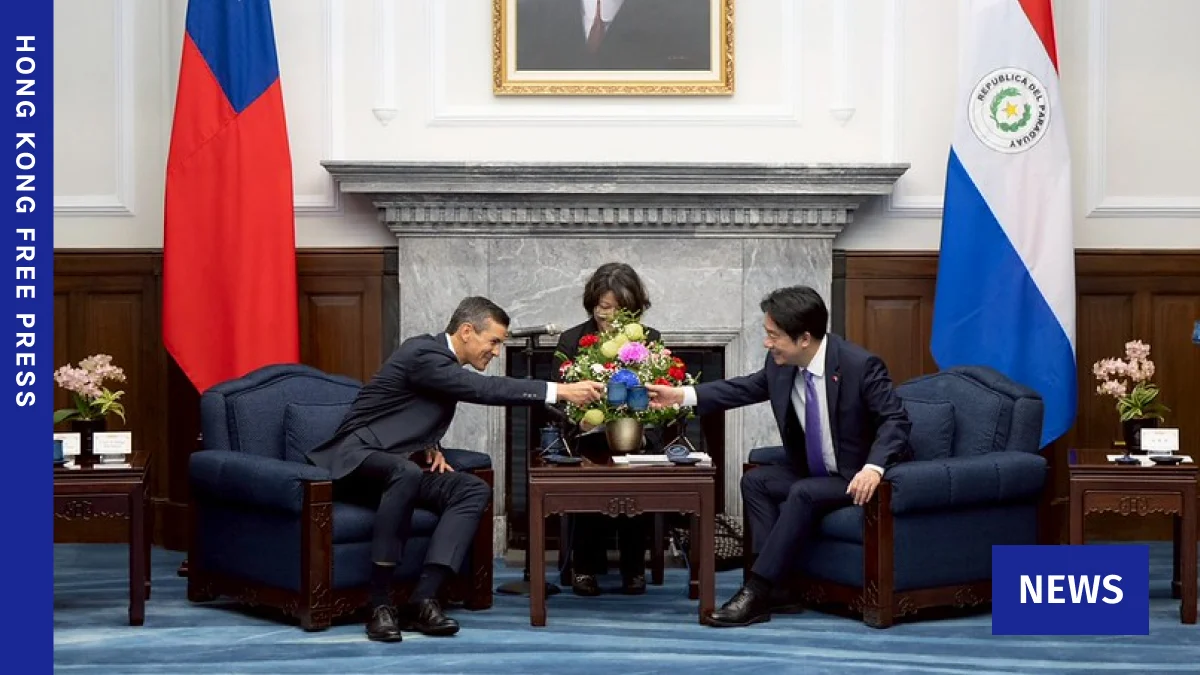
Beijing, China – China announced on Monday the imposition of sanctions against key ministers from Paraguay and Belize, Gustavo Villate, Paraguay’s Communications Minister, and Francis Fonseca, Belize’s Foreign Minister, citing their countries’ continued diplomatic relations with Taiwan. These punitive measures, which took immediate effect, represent a significant escalation in Beijing’s relentless campaign to isolate Taiwan, the self-ruled democratic island that China claims as an inviolable part of its territory.
The sanctions against Ministers Villate and Fonseca are comprehensive, targeting their personal and professional dealings within mainland China. Specifically, the measures include the freezing of their property and assets held in China, outright visa denials, and a stringent ban on any Chinese organizations or individuals from conducting business with them. China’s Ministry of Foreign Affairs articulated its rationale in online statements, condemning "certain anti-China politicians" who, "driven by self-interest, have stubbornly supported" Paraguay and Belize’s diplomatic relations with Taiwan. Beijing further asserted that these ministers had "taken a series of egregious actions and statements… damaging China’s core interests," and that the sanctions were necessary to "safeguard national security" and "oppose separatist activities."
Beijing’s Stance and the ‘One China’ Principle
At the heart of this diplomatic dispute lies China’s unwavering "One China" principle, which posits that there is only one sovereign state under the name China, and that Taiwan is an inseparable part of it. The People’s Republic of China (PRC), established in 1949 after the Chinese Civil War, views the Republic of China (ROC) government, which retreated to Taiwan, as a renegade provincial authority with no legitimate claim to statehood. Under this principle, any nation seeking diplomatic relations with Beijing must sever official ties with Taipei. China has consistently leveraged its growing economic and political influence to pressure countries worldwide to switch their diplomatic recognition from Taiwan to the PRC.

For decades, this geopolitical contest has played out on the global stage, with both Beijing and Taipei vying for international recognition. However, as China’s economic might has surged, its ability to sway nations has dramatically increased, leaving Taiwan with a rapidly diminishing number of official diplomatic allies. These sanctions underscore China’s zero-tolerance policy towards any perceived challenge to its sovereignty claims over Taiwan, signaling a readiness to impose direct consequences on foreign officials who publicly champion Taiwan’s diplomatic standing.
Taiwan’s Shrinking Diplomatic Landscape
Taiwan’s diplomatic isolation has been a long-standing challenge, systematically exacerbated by Beijing’s diplomatic offensives. In the early 1970s, Taiwan had official relations with dozens of countries. However, following the PRC’s admission to the United Nations in 1971 and the subsequent recognition by major powers like the United States in 1979, Taiwan’s diplomatic space began to shrink dramatically. Today, Taiwan maintains formal diplomatic ties with only 12 sovereign states, a stark reduction from over 20 allies just two decades ago. These remaining allies are predominantly smaller nations in Latin America, the Caribbean, and Oceania, often described as vulnerable to China’s "dollar diplomacy"—a strategy where Beijing offers substantial economic aid, investment, and trade opportunities in exchange for diplomatic recognition.
The timing of these latest sanctions is particularly noteworthy, coming just two days after Taiwan celebrated its National Day, also known as Double Ten Day. This annual observance commemorates the Wuchang Uprising of October 10, 1911, which led to the collapse of the Qing Dynasty and the establishment of the Republic of China. For Taiwan, it is a significant demonstration of its sovereign identity and democratic values. Beijing often views such celebrations, especially when attended or acknowledged by foreign dignitaries, as provocations that undermine its "One China" policy.

The Case of Paraguay: A ‘Fundamental Partner’ in South America
Paraguay holds a unique and significant position as Taiwan’s last major diplomatic ally in South America, maintaining ties with Taipei for over six decades. This enduring relationship is rooted in shared historical experiences and a mutual commitment to democratic governance. For Taiwan, Paraguay represents a crucial foothold in a continent where China has aggressively expanded its economic and political influence. For Paraguay, the relationship with Taiwan has often been framed around shared democratic values and a commitment to human rights.
The recent activities of Paraguayan officials highlight their steadfast support for Taiwan. President Santiago Peña, who assumed office earlier this year, has explicitly described Taiwan as a "fundamental partner" for the South American nation. His commitment was underscored by a high-profile visit to Taipei earlier this year, where he met with Taiwanese leaders to deepen bilateral cooperation. During this visit, President Peña signed a raft of agreements, encompassing mutual legal assistance on criminal matters, cybersecurity cooperation, and crucial investments in artificial intelligence and computing. These agreements signify a concrete strengthening of ties beyond mere diplomatic recognition, extending into areas of strategic importance for Paraguay’s development.
Minister Gustavo Villate’s actions on social media during Taiwan’s National Day further solidified Paraguay’s position. He publicly affirmed, "Paraguay reaffirms its relationship of friendship and cooperation, based on shared values and principles: the self-determination of peoples, human rights and democracy." Such a statement, directly challenging Beijing’s narrative of Taiwan as a mere province, clearly triggered the swift retaliatory measures from China. The sanctions against Villate, therefore, serve as a direct rebuke not only to the minister but also to Paraguay’s sovereign decision to maintain its diplomatic alignment.

Belize’s Steadfast Ties Amidst Caribbean Shifts
Belize, a small nation in Central America with a Caribbean coastline, is another one of Taiwan’s enduring allies, particularly significant in a region where China has successfully swayed several nations. Taiwan’s embassy in Belize City stands as a symbol of this relationship, which has seen continuous engagement and cooperation.
Just last month, Taiwan’s Foreign Minister Lin Chia-lung visited Belize, holding discussions with his Belizean counterpart, Francis Fonseca. The visit concluded with both sides agreeing to deepen their bilateral ties across various sectors. While specific details of Minister Fonseca’s statements or actions that directly provoked the sanctions were not as explicitly detailed as Villate’s, his role as Foreign Minister and his active participation in strengthening ties with Taipei are undoubtedly the basis for Beijing’s punitive action. China’s foreign ministry statement referenced “egregious actions and statements” by both ministers, suggesting a pattern of diplomatic engagement and public support for Taiwan that Beijing deems unacceptable.
Taiwan’s other allies in the Americas include Guatemala and Haiti, alongside several Caribbean island nations. These smaller states often receive significant development aid, technical assistance, and educational opportunities from Taiwan, fostering deep relationships that extend beyond mere diplomatic recognition. However, the increasing pressure from China, often accompanied by substantial economic inducements, makes maintaining these alliances a continuous diplomatic challenge for Taipei.

Chronology of Recent Events
- Earlier this year: Paraguayan President Santiago Peña visits Taipei, signing various cooperation agreements and reiterating Taiwan as a "fundamental partner."
- Last month: Taiwan’s Foreign Minister Lin Chia-lung visits Belize, agreeing with Belizean Foreign Minister Francis Fonseca to deepen bilateral ties.
- October 10 (Date inferred from context): Taiwan celebrates its National Day.
- Around October 10: Paraguay’s Communications Minister Gustavo Villate posts on social media, reaffirming Paraguay’s "relationship of friendship and cooperation" with Taiwan, based on "shared values and principles: the self-determination of peoples, human rights and democracy."
- Monday (following Taiwan’s National Day): China announces sanctions against Gustavo Villate and Francis Fonseca.
Broader Geopolitical Implications and Analysis
These sanctions against Paraguayan and Belizean ministers are not isolated incidents but rather a continuation and intensification of Beijing’s broader strategy to isolate Taiwan internationally. The move sends a clear message to Taiwan’s remaining allies: maintaining official diplomatic relations with Taipei will incur direct and tangible costs from Beijing.
Escalation of Pressure Tactics: The targeted nature of these sanctions—personally impacting ministers rather than just issuing diplomatic condemnations—marks an escalation. It demonstrates China’s willingness to go beyond traditional diplomatic reprimands, directly affecting the individuals involved in promoting ties with Taiwan. This could potentially create a chilling effect on other officials in Taiwan’s allied nations.

Economic vs. Diplomatic Leverage: China employs a two-pronged approach. On one hand, it uses its immense economic power to offer attractive incentives for countries to switch recognition. On the other hand, it uses punitive measures, like these sanctions, to punish those who resist or actively support Taiwan. This dual strategy makes the diplomatic tightrope walk for Taiwan’s allies increasingly perilous.
Impact on Taiwan’s International Standing: For Taiwan, these sanctions represent another blow in its struggle for international recognition and space. Each time an ally is targeted, it underscores the difficulty of its position. Taiwan’s government is likely to condemn these sanctions as an infringement on sovereign diplomatic relations and an act of intimidation. Taipei will likely reaffirm its commitment to its allies and may seek to rally support from democratic nations, particularly the United States, which maintains robust unofficial relations with Taiwan and has frequently criticized Beijing’s pressure tactics.
Regional Dynamics in Latin America and the Caribbean: China has significantly increased its presence and influence in Latin America and the Caribbean through trade, investment, and infrastructure projects under initiatives like the Belt and Road. Many countries in these regions have shifted allegiance to Beijing in recent years (e.g., Panama, El Salvador, Dominican Republic, Nicaragua, Honduras). The sanctions against Paraguay and Belize could serve as a warning to other potential defectors, but also potentially harden the resolve of those who view China’s actions as bullying. It puts regional governments in a difficult position, forcing them to weigh potential economic benefits from China against their existing diplomatic relationships and perceived national sovereignty.
International Reaction: While immediate official reactions from other nations were not detailed, it is highly probable that democratic countries, particularly the United States and its allies, will view China’s sanctions with concern. They are likely to reiterate support for Taiwan’s right to maintain international relations and criticize Beijing’s attempts to coerce sovereign nations. However, direct intervention beyond rhetorical support remains unlikely for most.

In conclusion, China’s sanctions against ministers from Paraguay and Belize mark a significant, and perhaps predictable, escalation in the long-standing diplomatic struggle over Taiwan. By directly targeting foreign officials, Beijing is signaling a heightened resolve to enforce its "One China" principle and further isolate Taipei on the global stage. This development not only puts increased pressure on Taiwan’s remaining diplomatic allies but also highlights the ongoing geopolitical tensions surrounding the self-ruled island, underscoring the delicate balance of power and influence in contemporary international relations. The incident serves as a stark reminder of the costs associated with navigating the complex and often contentious landscape of cross-Strait diplomacy.

 Asro
Asro
 Evan Lee Salim