Azzam Bilal Chamdy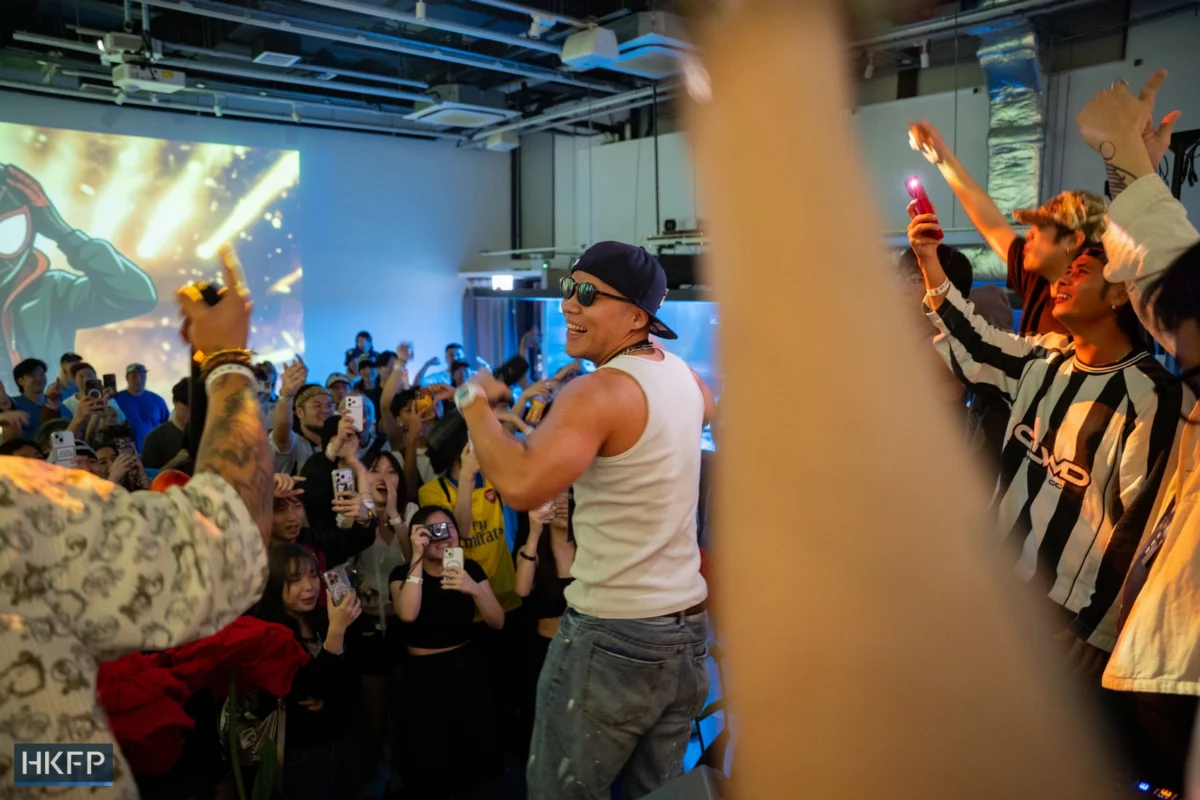
Hong Kong’s vibrant local rap scene, once a dynamic force that rallied communities during the pandemic, is currently experiencing a period of contraction. The independent music landscape, like many other cultural sectors, has seen a noticeable decline in the size and frequency of live performances since the peak of COVID-19. Promoters who could once fill large venues like the now-demolished Star Hall, with a capacity of 3,600, are now largely reliant on smaller club gigs, often bolstered by bar sales, to keep artists and the scene afloat.

Emerging artists such as Cheeseekit, Le Shing, and DRG represent a new wave of talent grappling with the complexities of building a music career in this evolving environment. Their journey is characterized by a constant negotiation between artistic expression and the pragmatic realities of survival, navigating the digital sphere, and addressing the inherent sensitivities within Hong Kong’s socio-political context.
The Hustle: Balancing Art and Livelihood
The economic pressures facing young musicians in Hong Kong are significant, compelling artists like Cheeseekit, Le Shing, and DRG to pursue demanding day jobs to sustain their passion. These often include roles such as delivery personnel or pastry sales assistants. The financial imperative is starkly illustrated by Le Shing’s retort to Cheeseekit’s lighthearted remark about delaying employment: “We have rent!” This highlights the fundamental need for financial stability to continue creating music.

Cheeseekit, despite his youth, has achieved a notable level of commercial traction, commanding performance fees that, while modest, can equate to a waiter’s monthly salary for a mere 15-minute set. This success, however, is tempered by a critical perspective on materialism, a theme often explored within hip-hop culture. He observes, “Traditionally, in the world of hip-hop, you’d be considered cool if you have lots of money, girls, and chains. But to the rest of the world, that’d be considered crass. You need to repackage that as something like the notion of winning big. This is the brand of money-worship that mainstream society easily accepts.” This nuanced view reflects an awareness of how artistic messaging is perceived and accepted by broader audiences.
The artists’ commitment to a do-it-yourself (DIY) ethos is a direct response to these economic constraints and a desire for creative autonomy. Unlike mainstream artists who often benefit from the resources of major labels, Cheeseekit, Le Shing, and DRG are deeply involved in every facet of their music production. This includes beat selection, recording, mixing, mastering, and promotion. This hands-on approach not only reduces overhead costs but also grants them complete creative control. Cheeseekit elaborates on the benefits of this control, noting, “When I hear the track, I might decide that I don’t want piano in that part. But by then, the beat might have already been finished for more than a month,” referencing his limited involvement in a mainstream production. Le Shing, a member of the independent label Yack Studio, adds, “The overheads are also lower when you do it yourself.”

Taming the Algorithm: The Digital Marketing Gauntlet
In today’s digital landscape, a significant portion of an artist’s time and effort is dedicated to marketing and promotion, particularly on social media platforms. For these young rappers, transforming social media impressions into tangible outcomes like streaming numbers or ticket sales is a formidable challenge. Cheeseekit articulates this difficulty: “Impressions are easy – it’s the conversion rate that’s tricky.” Directing users from ephemeral content, such as a short-form video featuring him lip-syncing to a lo-fi beat, to his artist pages on platforms like Spotify requires strategic planning and execution.
The creation of promotional material is a labor-intensive process. Each new song release necessitates the production of over a dozen short-form vertical video clips, which the artists film and edit themselves. These clips are meticulously crafted to appeal to the algorithmic preferences of platforms like TikTok and Instagram Reels, catering to a Gen Z audience. Alarmingly, nearly 70 percent of their time is consumed by marketing and promotion, leaving the remaining portion for the actual creation of music and live performances.

Comparing Hong Kong’s promotional ecosystem to that of mainland China, Cheeseekit points out its relative nascency. He recalls performing in Guangzhou, where a more established marketing pipeline exists. This system typically begins with tracking impressions on Douyin (the Chinese version of TikTok) and progresses to curating top-performing content for distribution on streaming services like QQ Music. “The problem is just that Hong Kong’s market is too small,” he laments, underscoring the challenge of scaling marketing efforts in a limited consumer base. This often leaves independent artists feeling discouraged by the relentless demands of self-promotion in an algorithm-driven environment.
Navigating the Currents: Cultural Sensitivities and Artistic Expression
The online environment in Hong Kong can be particularly challenging, marked by what Le Shing describes as “toxic internet culture.” He recounts instances where local rappers have faced intense backlash, such as one artist being severely criticized for performing in Mandarin at a festival, deviating from the expected Cantonese delivery. While Le Shing acknowledges that the situation might have improved, the memory of such incidents highlights the linguistic and cultural sensitivities prevalent in public discourse.

The use of Mandarin, often perceived by Hongkongers as a symbol of broader demographic and socio-political shifts, has become a point of contention. However, Cheeseekit maintains that “language has never been a limitation” within the hip-hop community itself. “Within the scene, we don’t have any biases against any particular language, though I can’t speak for the listeners.” This suggests a divide between the artists’ inclusive artistic vision and the potential reception from a broader audience.
These three musicians, all around 23 years old, came of age during periods of significant social and political upheaval in Hong Kong, including the 2019 protests and the COVID-19 pandemic. Their formative years were shaped by these turbulent events, which have undoubtedly influenced their perspectives and artistic output. They are acutely aware of political polarization and the often petty online disputes that characterize social media interactions. However, they have learned to disengage from unproductive debates, particularly with anonymous online commenters.

Instead, they view cultural and linguistic diversity as a catalyst for creative exploration. Code-mixing, blending Cantonese and Mandarin, has been a common practice in freestyle rap battles and cyphers for years, a tradition that continues to evolve. As hip-hop historically serves as a platform for social commentary and criticism, these artists, to varying degrees, infuse their music with their personal beliefs and observations. Yet, they operate with a heightened awareness of the risks involved, a sentiment shared by many creatives in Hong Kong.
DRG, whose music often features a boom-bap sound reminiscent of 1990s East Coast hip-hop, is particularly mindful of the potential impact of his work. His recent releases are titled after Cantonese slang terms, such as “laau2gaau6” (meaning messy or chaotic), reflecting a deep connection to local vernacular. He states, “Far be it for me to have that effect,” downplaying any aspiration for mass influence, acknowledging the genre’s relatively limited reach. Nevertheless, he adds a crucial caveat: “But we’re aware that whatever we release onto the internet can be seen by the entire world, and you have to take responsibility for whatever happens.” This statement underscores a mature understanding of their role as public figures in the digital age, where every release carries potential consequences.

The resilience and adaptability of Hong Kong’s rap scene, embodied by artists like Cheeseekit, Le Shing, and DRG, demonstrate a commitment to artistic integrity and survival against a backdrop of economic challenges and evolving cultural norms. Their journey highlights the intricate balance between creative passion, entrepreneurial necessity, and navigating the complex digital and social landscapes of contemporary Hong Kong. As they continue to hone their craft and find their voice, their story offers a compelling glimpse into the future of independent music in the city.

 Siti Muinah
 Sagoh
Sagoh