Evan Lee Salim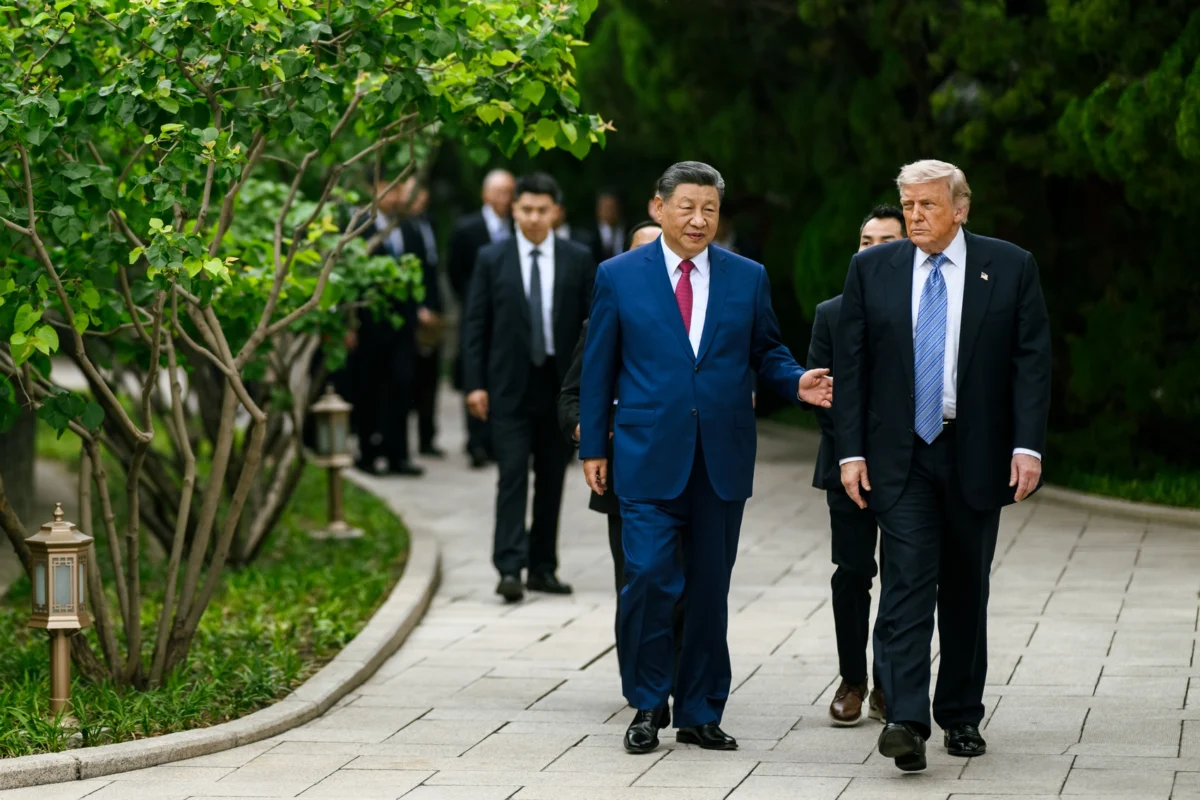
Beijing, China – China on Tuesday issued a strong condemnation of what it termed "illegal" unilateral US sanctions targeting Iranian airlines, a move that signals growing geopolitical friction just days before a crucial summit between US President Donald Trump and Chinese leader Xi Jinping. The rebuke from Beijing followed explicit threats made by US Treasury Secretary Scott Bessent, who indicated in a televised interview that all Iranian airlines would soon be globally incapacitated under the weight of American punitive measures. This diplomatic flashpoint unfolds against a backdrop of severely escalating conflict between the United States and Iran, which has already seen significant military action and economic disruption in the Middle East.
Secretary Bessent, speaking to CNBC, declared that "all the Iranian airlines will be shut down around the world" within a matter of days. He further elaborated on the draconian enforcement mechanisms, stating that any entity providing services to these airlines – including fuel, landing services, or ticket sales – would risk being "knocked out of the dollar system." This assertion underscores the Trump administration’s "maximum pressure" campaign against Tehran, aimed at crippling its economy and curtailing its regional influence. Bessent had previously vowed to declare "economic D-Day" on Iran, pledging to financially choke the Islamic republic. His remarks came just a day after he concluded economic talks with Chinese Vice Premier He Lifeng, discussions that were intended to lay the groundwork for the upcoming leaders’ summit.
Beijing, a steadfast economic partner and significant diplomatic backer of Iran, was quick to denounce these threats. Foreign ministry spokesman Guo Jiakun, addressing a news conference, articulated China’s principled opposition: "China consistently opposes illegal unilateral sanctions that lack a basis in international law or authorisation from the UN Security Council." This statement reflects China’s long-standing position against extraterritorial application of national laws and its preference for multilateral frameworks in international relations. The timing of China’s rebuke is particularly sensitive, preceding President Trump’s summit with Chinese leader Xi Jinping, scheduled to commence on Thursday, where myriad pressing global issues, including trade and regional stability, are expected to dominate the agenda.

The Intensifying US-Iran Conflict: A Regional Powder Keg
The current diplomatic standoff over airline sanctions is inextricably linked to the dramatically worsening relationship between the United States and Iran. The article notes that the two nations have been "at war" since late February, following a series of events that profoundly reshaped the regional security landscape. According to reports, this period of intense hostility began with "US-Israeli strikes" that resulted in the unprecedented deaths of "the Islamic republic’s supreme leader and senior military officials." While such an event would represent an extraordinary escalation in real-world geopolitical terms, within the context of this news report, it signifies a direct and profound military confrontation.
The assassination of Iran’s supreme leader and top military officials would undeniably be perceived as an act of war, triggering severe retaliatory measures from Tehran. The immediate consequence, as reported, was Iran’s decision to block the Strait of Hormuz. This narrow waterway, situated between the Persian Gulf and the Gulf of Oman, is a critical chokepoint through which approximately one-fifth of the world’s total oil consumption, and a significant portion of its liquefied natural gas, passes daily. Its closure would inevitably lead to a catastrophic surge in global oil prices and severe disruptions to international energy markets, reverberating through economies worldwide. Indeed, the article confirms that the blockade caused "global oil prices to surge as the conflict spread in the Middle East," highlighting the immediate and far-reaching economic ramifications of the military escalation.
The Trump administration’s strategy, widely known as "maximum pressure," was initiated following its withdrawal from the Joint Comprehensive Plan of Action (JCPOA), the multilateral nuclear deal with Iran, in 2018. The administration argued that the deal was insufficient in curbing Iran’s ballistic missile program and its support for regional proxy groups. The subsequent re-imposition and expansion of sanctions targeted various sectors of the Iranian economy, including oil exports, banking, and shipping, aiming to force Tehran to renegotiate a more comprehensive agreement. The targeting of Iranian airlines and the broader aviation sector represents a further tightening of this economic noose, designed to isolate Iran from the global financial system and hinder its ability to conduct international trade and travel.

Mechanics of US Secondary Sanctions and Their Global Reach
The US Treasury Department’s actions against Iranian airlines leverage the immense power of the dollar-denominated global financial system. Secretary Bessent’s warning that companies providing services to Iranian airlines would be "knocked out of the dollar system" refers to the concept of secondary sanctions. These sanctions target non-US entities that engage in certain transactions with sanctioned Iranian entities, even if those transactions do not directly involve US persons or the US financial system. The threat is that such non-US entities could face penalties, including being cut off from access to the US financial system, which is vital for international trade and banking.
The justification for targeting Iran’s aviation sector often stems from allegations that certain Iranian airlines, such as Mahan Air and Iran Air, have been used by the Islamic Revolutionary Guard Corps (IRGC) to transport weapons, personnel, and illicit goods to conflict zones in the Middle East, thereby supporting terrorist activities or destabilizing regional actors. The US Treasury Department had, earlier this month, announced sanctions on "all remaining Iranian airlines" that had not yet faced such penalties, alongside entities found to be supporting Iran’s aviation sector, including firms based outside Iran. This broad approach aims to create a comprehensive blockade, making it virtually impossible for Iranian carriers to operate internationally.
The implications for international businesses are severe. Airlines, airports, fuel suppliers, maintenance providers, and even travel agencies in third countries would face a stark choice: cease all dealings with Iranian airlines or risk incurring the wrath of US sanctions, potentially leading to asset freezes, restrictions on dollar transactions, and reputational damage. This extraterritorial application of US law is a frequent source of contention with allies and adversaries alike, as it can force companies to choose between complying with US regulations and maintaining business relationships with sanctioned countries, or even adhering to their own national laws.

China’s Strategic Alignment with Iran and Opposition to Unilateralism
China’s swift and unequivocal opposition to the US sanctions against Iranian airlines is rooted in its deep economic and strategic ties with Iran, as well as its broader foreign policy principles. Iran has historically been a significant supplier of oil to China, although the volume has fluctuated due to previous rounds of sanctions. Beyond energy, China has invested heavily in Iran’s infrastructure projects as part of its ambitious Belt and Road Initiative, fostering extensive trade and economic cooperation. Iran’s geostrategic location also makes it an important partner for China in Central Asia and the Middle East.
Diplomatically, China has consistently advocated for multilateralism and adherence to international law, often contrasting it with what it perceives as US unilateralism. Beijing views sanctions not authorized by the UN Security Council as infringements on national sovereignty and international legal norms. This stance is not unique to Iran; China has similarly opposed unilateral sanctions imposed by the US on other countries, such as Venezuela or North Korea, whenever they are deemed to lack UN backing. As a permanent member of the UN Security Council, China holds veto power and has historically resisted attempts by the US to pass resolutions that it believes overstep international legal boundaries or serve narrow national interests.
For China, acceding to US secondary sanctions on Iranian airlines would not only undermine its long-standing relationship with Tehran but also set a precedent that could potentially be applied to Chinese entities in other contexts. Chinese companies that continue to do business with Iran, particularly in the energy and aviation sectors, could themselves become targets of US penalties. This presents a complex challenge for Beijing, balancing its economic interests and diplomatic principles with the potential repercussions of directly challenging US financial might. The "dollar system" leverage mentioned by Bessent is a powerful tool, capable of disrupting global supply chains and financial flows, including those involving China.

Geopolitical Tensions Ahead of the Trump-Xi Summit
The timing of China’s public condemnation just before the Trump-Xi summit adds another layer of complexity to already strained US-China relations. The two global powers have been embroiled in a multifaceted rivalry encompassing trade disputes, technological competition, human rights issues, and geopolitical influence in regions like the South China Sea. The impending summit was widely anticipated to be a high-stakes affair, with both sides seeking to de-escalate tensions or find common ground on critical issues.
Secretary Bessent’s meeting with Chinese Vice Premier He Lifeng, preceding the leaders’ summit, would likely have included discussions on global economic stability and regional flashpoints. Bessent’s subsequent televised threats against Iranian airlines, however, inject a new element of contention directly into the diplomatic calculus. It forces China to publicly reaffirm its position on unilateral sanctions, potentially hardening its stance in subsequent negotiations with the US. It signals that even as Washington seeks cooperation on some fronts, it is unwilling to compromise on its "maximum pressure" campaign against Iran, regardless of its impact on key partners like China.
For President Trump, raising the pressure on Iran is a core foreign policy objective, and demonstrating resolve on this front might be seen as a strength. For President Xi, China’s public opposition to the sanctions serves multiple purposes: it upholds China’s image as a defender of international law against unilateralism, signals solidarity with a strategic partner (Iran), and subtly pushes back against US hegemonic power. The issue of Iran sanctions could become a significant point of friction or a bargaining chip during the summit, potentially complicating efforts to address other pressing matters, such as ongoing trade negotiations.

Broader International Implications and the Path Forward
The escalating US-Iran conflict, exacerbated by the latest round of US sanctions and China’s strong reaction, carries profound implications for global stability and economic prosperity. The initial military strikes and Iran’s retaliatory blockade of the Strait of Hormuz have already demonstrated the potential for rapid escalation and severe economic disruption, particularly in the energy sector. Should the situation deteriorate further, the ripple effects on global trade, investment, and security could be immense.
The international community remains largely divided on the efficacy and legality of unilateral sanctions. While some US allies might tacitly support the goals of the "maximum pressure" campaign, many European nations, still committed to the JCPOA, have expressed concerns about the extraterritorial reach of US sanctions and their impact on legitimate trade. Efforts by the European Union to create mechanisms to circumvent US sanctions and facilitate trade with Iran (such as INSTEX) highlight this divergence in approach.
Moreover, the humanitarian consequences of a prolonged and intensified economic blockade on Iran cannot be overlooked. While sanctions are often aimed at pressuring governments, they frequently have a disproportionate impact on ordinary citizens, limiting access to essential goods, medicines, and international travel. The complete grounding of Iranian airlines, as threatened by Bessent, would further isolate the Iranian populace from the rest of the world.

Looking ahead, the Trump-Xi summit will be a critical juncture. While a direct resolution to the US-Iran conflict is unlikely to emerge from these talks, China’s firm stance on sanctions could influence the broader diplomatic landscape. It underscores the limitations of unilateral pressure in an increasingly multipolar world and highlights the need for broader international consensus to address complex geopolitical challenges. The world watches to see if the two leaders can navigate these treacherous diplomatic waters without further escalating global tensions.

 Jia Lissa
 Reynand Wu