Jia Lissa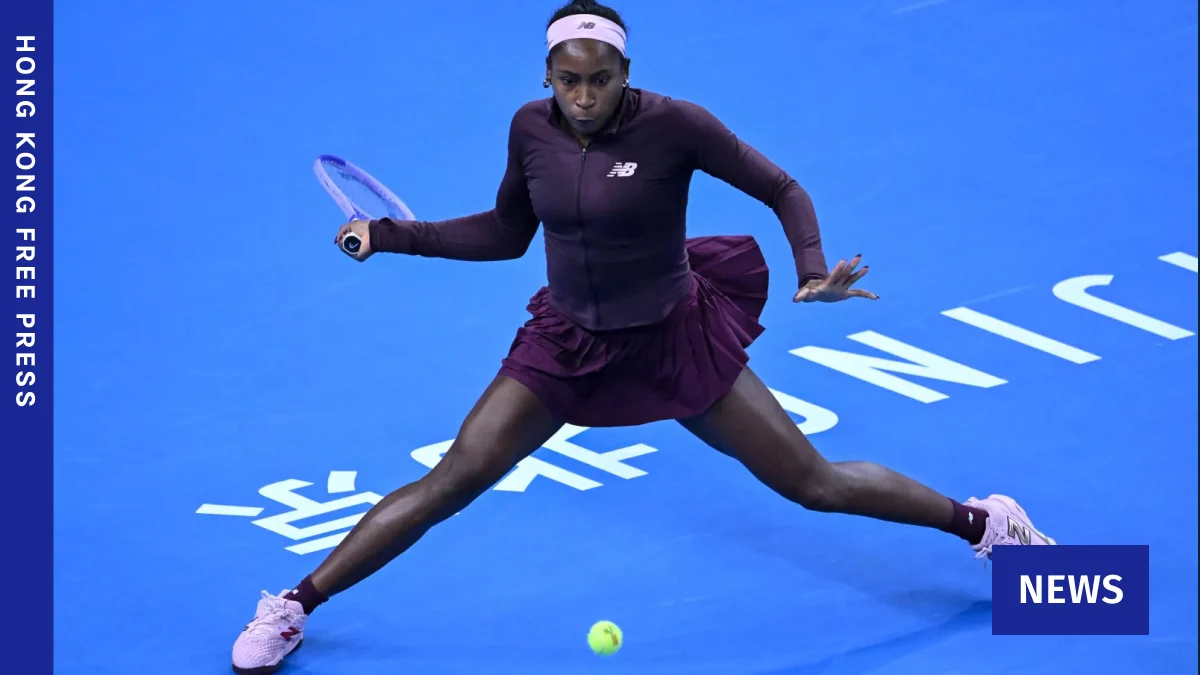
American tennis sensation Coco Gauff has publicly denounced what she described as an "insane" torrent of online racist abuse directed at her after her recent victory over Chinese teenager Sun Xinran at the China Open. The controversy erupted following a match in Beijing that featured a contentious video review initiated by Gauff, a decision that drew boos from the crowd and subsequently ignited a firestorm of hateful comments across social media platforms. The incident has thrust the critical issues of sportsmanship, racial prejudice in online discourse, and the evolving landscape of sports officiating into sharp focus, prompting a wider discussion on athlete welfare and the responsibilities of digital platforms in mitigating online toxicity.
The encounter unfolded on Monday, October 5, 2026, during a women’s singles match at the prestigious China Open in Beijing. Gauff, currently ranked world No. 4 and a formidable force in women’s tennis, faced the promising 16-year-old local talent, Sun Xinran. The match itself was a compelling display of skill, characteristic of a high-stakes tournament that annually attracts top players. However, a pivotal moment in the first set led to the contentious video review that would later trigger the online backlash. Gauff, a seasoned professional at 22, requested the review after observing flickering LED lights during a crucial point. The rules of tennis, particularly those governing technological aids like video review, permit players to challenge points under specific circumstances, including external interference or equipment malfunction. In this instance, Gauff noticed the lights flicker a second time just before Sun’s return, prompting her to exercise her legitimate right to challenge the point. The umpire, after careful consultation and review of the video evidence, agreed with Gauff’s assessment, leading to the point being replayed. This decision, while entirely within the rules, was met with audible displeasure from sections of the Beijing crowd, who expressed their disagreement with boos. Despite the momentary disruption, Gauff maintained her composure to ultimately win the match with a convincing score of 7-5, 6-1, securing her progression to the next round.

However, the on-court disagreement quickly escalated into a far more sinister issue offline. Following the match, Gauff took to X (formerly Twitter) to address the escalating online negativity she was experiencing. In a direct and poignant post, she wrote, "Hey everyone, you can dislike me or disagree about what happened without being racist. The amount of racist comments and messages I’ve received in the last few hours is insane." Her statement underscored the distressing nature of the abuse, highlighting a clear distinction between legitimate criticism of a match decision and targeted racial attacks. She further clarified her actions in a separate post, responding directly to a comment flagged as potential "hateful content" that regrettably contained a racial slur. Gauff explained, "I think it’s weird I’m getting hate for following the rules," reiterating that players are explicitly instructed that they can challenge points even after play has momentarily concluded if they perceive an issue that affected the rally. She also emphasized her respect for her opponent, stating, "Xinran is an incredible talent and player. I apologised for the situation at the end of the match, and she completely understood." This gesture of sportsmanship on Gauff’s part, even amidst the torrent of online vitriol, speaks volumes about her character and commitment to fair play.
The Rising Tide of Online Abuse and its Impact on Athletes
Gauff’s experience is unfortunately not an isolated incident but rather a stark reflection of a growing and alarming trend of online abuse targeting athletes, particularly women and athletes of color. Social media platforms, while offering unparalleled avenues for connection between athletes and fans, have also become breeding grounds for anonymity-fueled hate speech. Research conducted by various sports integrity organizations and academic institutions consistently shows that female athletes, and especially Black female athletes, are disproportionately subjected to racist, sexist, and misogynistic abuse. A 2022 study by the World Athletics found that female athletes receive 87% of all abuse in athletics, with Black female athletes facing the most severe and targeted attacks. The intensity and volume of such attacks can have profound psychological impacts, affecting mental health, performance, and overall well-being. Athletes like Gauff are not only contending with the immense pressure of elite competition but also with the added burden of navigating hostile online environments that can erode their confidence and passion for the sport.

The incident at the China Open draws parallels with numerous other cases where athletes have been targeted after contentious moments or even routine performances. The perceived anonymity of the internet often emboldens individuals to post comments they would never utter in person, leading to a breakdown of civility and respect. While social media companies have made significant efforts to implement content moderation policies and utilize artificial intelligence to detect hate speech, the sheer volume of user-generated content and the evolving nature of abusive language make comprehensive policing an ongoing challenge. Critics argue that platforms often react to high-profile cases after the fact rather than proactively preventing such abuse, leaving athletes vulnerable to unchecked harassment.
The Mechanics of Video Review in Modern Tennis
The video review system, commonly referred to as electronic line-calling or "Hawk-Eye Live" in tennis, has been incrementally integrated into the sport to enhance fairness and accuracy. Its primary purpose is to rectify clear and obvious errors that human officials might miss, thereby minimizing controversies and ensuring correct rulings on critical points in high-stakes matches. In tennis, challenges are typically used for line calls, but the system’s application can extend to other unique on-court situations, such as interference from external factors or unexpected disruptions to play. The rules governing such challenges are complex but designed to allow players to seek clarification without unduly disrupting the flow of the match.

Gauff’s decision to challenge the point due to flickering LED lights falls under the category of "hindrance" or "disruption," where an external factor beyond the players’ control affects the play. Such challenges are legitimate and are explicitly outlined in the sport’s rulebook. It is noteworthy that a similar incident occurred just days prior at the same tournament during a men’s quarter-final match between German star Alexander Zverev and Serbian legend Novak Djokovic, where the umpire also agreed to replay a point after Zverev complained about flickering panels. This precedent underscores the validity of Gauff’s challenge and indicates a recognized issue with the arena’s lighting system, rather than an arbitrary or unsportsmanlike decision on her part. The boos from the crowd, while understandable as a spontaneous reaction from fans perhaps unfamiliar with the nuances of the rulebook or protective of their home player, do not invalidate the correctness of the ruling. This highlights a persistent challenge in sports: educating spectators on the intricacies of rules that are becoming increasingly complex with technological integration.
Reactions, Advocacy, and Broader Implications
The fallout from Gauff’s experience quickly reverberated across the tennis world and beyond. By Tuesday morning, the hashtag "Gauff apologised to Sun Xinran after the match" had garnered over 4.5 million views, becoming the sixth top trend on the prominent Chinese social media platform Weibo. This rapid amplification suggests significant public interest and discussion within China, ranging from those who might have perceived Gauff’s challenge as unsportsmanlike to those who appreciated her clarification and apology. The fact that her apology resonated so widely indicates a desire for mutual understanding and respect, even if the initial online reaction was fraught with hostility. The sentiment on Weibo appeared to shift towards a more nuanced understanding of the situation following Gauff’s explanation, illustrating the power of direct communication from athletes.

While the Women’s Tennis Association (WTA) did not immediately issue a public statement in response to AFP’s inquiries, it is anticipated that the governing body will address the matter in due course. Sports organizations globally are increasingly being pressed to take stronger stances against online abuse and provide more robust support mechanisms for athletes. In similar past incidents, governing bodies have often condemned racist abuse, offered psychological support to affected athletes, and engaged with social media platforms to remove offensive content and identify perpetrators. The WTA, having previously navigated sensitive issues such as the Peng Shuai case – a situation Gauff herself commented on in 2023, stating that "questions" remained regarding the Chinese player’s well-being – understands the complexities of athlete welfare and international relations. Gauff’s consistent advocacy on such matters adds another layer to her current predicament, showcasing her commitment to speaking out on difficult issues that extend beyond the court. Her previous triumph at the China Open in 2024 further solidifies her connection to the tournament and the region, making the current situation particularly poignant.
The incident carries several significant implications. For Coco Gauff, it represents another challenge in her burgeoning career, requiring resilience not just on the court but also in the public eye. As a prominent Black American athlete, she carries the weight of representation, and racist attacks disproportionately affect her and other athletes from marginalized communities. Her courageous decision to call out the abuse directly, rather than suffer in silence, sets an important precedent for other athletes and highlights the urgent need for systemic change. This act of speaking out can be mentally taxing, yet it is crucial for driving broader awareness and action.
For the sport of tennis, it underscores the ongoing battle against racism and hate speech within its community. While tennis prides itself on its global reach and diverse talent pool, incidents like this serve as a stark reminder that no sport is immune to societal prejudices. It also reignites discussions about fan behavior, both in physical arenas and online, and the responsibility of spectators to uphold the spirit of sportsmanship. The dynamic between home crowds and visiting athletes in international competitions often adds a layer of complexity, but it should never descend into racial abuse.

More broadly, this event further illuminates the critical role and responsibility of social media platforms. The ease with which hate speech can proliferate and target individuals online necessitates more rigorous enforcement of community guidelines, greater transparency in moderation practices, and potentially more severe consequences for users who engage in abusive behavior. The debate over free speech versus the right to be free from harassment continues to rage, but incidents involving targeted racist attacks clearly fall outside the bounds of acceptable discourse. Technology companies are under increasing pressure from governments, advocacy groups, and the public to create safer online environments.
As Gauff prepares for her round of 16 match against Belgium’s Elise Mertens on Wednesday, the focus will undoubtedly be on her performance, but also on the wider implications of this incident. Her strength in speaking out serves as a powerful message that such abuse will not be tolerated. The tennis community and society at large are challenged to reflect on how to better protect athletes and foster environments where sportsmanship, respect, and inclusion are paramount, both on and off the court. The expectation is that this unfortunate episode will galvanize stronger collective action against online hate, ensuring that the achievements and integrity of athletes like Coco Gauff are celebrated, not overshadowed by prejudice.


 Nana Wu
 Lina Hope