Raul Delapena Setiawan
In 2006, the same year Macau’s burgeoning casino industry eclipsed Las Vegas as the world’s largest gambling hub, Donald J. Trump harbored ambitions to establish a significant presence in the then-Portuguese enclave. However, his path was immediately obstructed by a peculiar hurdle: the very company name he sought to leverage was already registered by local residents, setting the stage for a protracted legal and diplomatic struggle that would span over a decade.

The entity in question, Trump Companhia Limitada, meaning "Trump Company Limited" in Portuguese, was officially incorporated in August 2005 by Maria Cecilia Bastos Xavier and Wong Un Chon. This preemptive registration sparked a legal challenge from the future 45th President of the United States, who took his bid to claim exclusive rights to the "Trump" name in Macau to the territory’s courts. The initial outcome of this legal battle proved deeply dissatisfying for Trump, a prominent reality television personality at the time. His frustration escalated to the point where he directly appealed to the leader of the former Portuguese enclave, then-Chief Executive Fernando Chui, to rectify what he characterized as an "outrageous miscarriage of justice."
Trump’s legal strategy extended beyond the local courts. He also sought assistance from the United States State Department, ensuring that his correspondence with the U.S. government and the supporting documents he provided became part of the official record. These crucial communications were later obtained by journalist Timothy McLaughlin through a Freedom of Information Act (FOIA) request and shared exclusively with HKFP. The unearthed letters reveal Trump’s impassioned plea to Macau’s Chief Executive Fernando Chui to overturn the court’s ruling.

A "Terrible Thing" in Macau’s Courts
The gravity of Trump’s dismay was palpable in his missive to the then-Chief Executive of Macau, Fernando Chui. "A terrible thing has recently happened to me in Macao," the future U.S. President began his letter, expressing his profound disappointment with a decision handed down by Macau’s courts. He decried the ruling that, in his view, delivered an unfathomable verdict: "that neither I nor my company name is well known in your country."
This statement directly referenced the Macau Civil Court’s decision to dismiss Trump’s request. He had sought to have Wong and Xavier stripped of their rights to the "Trump" name and demanded compensation of five million Macanese patacas (equivalent to HK$5 million) for his alleged "pain and suffering." The court’s reasoning, as articulated by the president of the Collegiate Court of the Judicial Court of Macau in March 2010, underscored the perceived lack of public recognition for Trump and his enterprises within Macau. "The core of [the Trump Organization’s] activities is in the United States, where it operates the vast majority of its business," the judicial official wrote. "In Macau, [Trump] is not well known by the public in general."

Trump vehemently rejected this assessment. He characterized the court’s decision as a "ludicrous result" and alleged that Macau’s justice system was "tainted and being controlled by corrupt individuals." His impassioned rebuttal further detailed his perceived global renown: "My company name resonates throughout the entire world, including China and Macao; whether it is from my world class buildings, my rated television show ‘The Apprentice,’ my dozens of best-selling books, or any of the other products and services which bear my name… I, as well as my surname, am well known in Macao especially due to the fact that The Apprentice is one of the top rated television shows in China and Macao and that I had numerous best selling books in your locale."
To substantiate his claims of widespread recognition, Trump appended television ratings to his correspondence. However, these Nielsen ratings primarily showcased the success of "The Celebrity Apprentice" in the United States, detailing its dominance in its primetime slots across various demographic groups, rather than providing concrete evidence of its popularity in Macau or mainland China.

Accusations of a "Deceitful Culture"
The legal setbacks and perceived injustices fueled Trump’s rhetoric, leading to increasingly strident accusations. A year after his appeal to Chief Executive Chui, Trump penned another letter, this time to then-U.S. Commerce Secretary and future ambassador to China, Gary Locke. In this correspondence, he launched a scathing attack on the judicial systems of China and Macau, labeling them as "faithless, corrupt and tainted."
His sentiments intensified with the remark, "Who could expect anything different from a deceitful culture? Their behavior should be a clear warning to the rest of the world to refrain from any trade practice or business relationship with them!"

Trump’s personal lawyer and associate, Michael Cohen, also engaged with U.S. authorities on the matter. Cohen brought the case to the attention of the State Department’s Office of Chinese and Mongolian Affairs. Cohen, who would later face scrutiny in investigations related to Russian interference in the 2016 U.S. presidential election and plead guilty to campaign finance violations orchestrated to influence that election, underscored the global recognition of the "Trump brand," describing it as "an internationally recognized mark that stands for the highest quality of goods and services." He further characterized the Macau court’s ruling as "this terrible injustice" and a "theft by the Macao citizen, who used [the Trump name] to open a kabob [sic] stand," referring to the registered owners of the company.
Trump’s purported interest in establishing a business in Macau transcended mere financial gain, according to his communications. Known for his penchant for opulent development, he expressed a desire to "bring first class Western design, construction and services to your Country." He argued that inviting him to do business would bolster Macau’s economy by creating jobs through the development of "world class projects that will bear my Trump name."

Despite Trump’s persistent appeals and calls for "justice," his efforts to secure a foothold in Macau’s lucrative market, both through the courts and diplomatic channels in Washington, initially proved unsuccessful.
A Reversal of Fortune and Renewed Ambitions
Six years after his legal defeat in Macau, Donald Trump found himself in an entirely different position: President of the United States of America. This significant shift in his public profile coincided with a remarkable reversal in his fortunes concerning Macau’s business landscape.
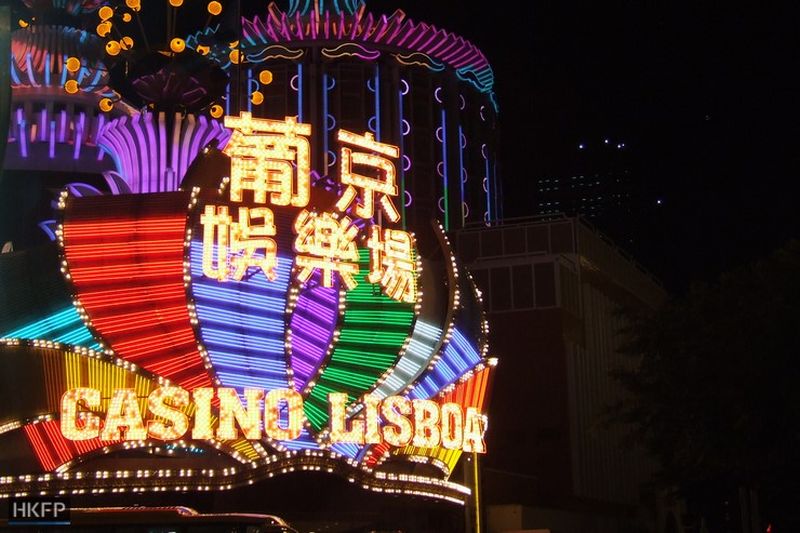
In June 2017, mere months into his first term as president, a company linked to Donald Trump was granted approval for four new trademarks in Macau. These trademarks covered a broad spectrum of services, including real estate, construction and development, hotel properties, casino operations, food and beverage services, and conference facilities. This development occurred shortly after the expiration of his local rival’s "Trump" trademark the previous year.
This timing was particularly noteworthy, as it preceded by three years the scheduled expiration of casino licenses in Macau and the anticipated opening of a new bidding process. The trademark approvals appeared to signal a renewed pathway for Trump to realize his long-held ambition of operating a casino in Macau, a dream he had nurtured for at least fifteen years.

Trump’s initial foray into the Macau gaming scene dates back to 2001, when he was part of a consortium of billionaires that unsuccessfully bid for one of the three gaming licenses then available. Two of his partners in that bid, Macau’s David Ng and Hong Kong property tycoon Joseph Lau, were later convicted of bribery and money laundering in unrelated cases. Trump’s proposal, described as landing in the "bottom half" of 18 submitted bids, failed to secure a license.
His prior casino ventures in Atlantic City, New Jersey, which began in the 1980s, were fraught with financial difficulties. These establishments reportedly incurred substantial losses year after year, leading to multiple bankruptcy filings before eventual rebranding or demolition. Reports from The New York Times indicated that Trump’s casinos had faltered significantly even before the broader economic downturn in Atlantic City, and his business practices had led to financial distress for numerous local contractors and suppliers who were allegedly not paid. This history of financial instability may have influenced Macau authorities’ decision to reject his earlier bid, notwithstanding his grand promises of economic contributions.

The news of Trump’s Macau trademarks in 2017 inevitably raised questions about the potential for conflicts of interest between his presidential duties and his business dealings. Critics and observers pondered whether the newly inaugurated president would leverage his office to further enrich himself and his family. While these concerns seemed significant at the time, they have since been overshadowed by subsequent, larger scandals that have engulfed the Trump White House, and numerous documented instances of the Trump family reportedly profiting from the presidency during both of his terms. The intricate interplay between Trump’s personal business interests and his political power continues to be a subject of scrutiny and analysis.

 Reynand Wu
 Lina Irawan