Laily UPN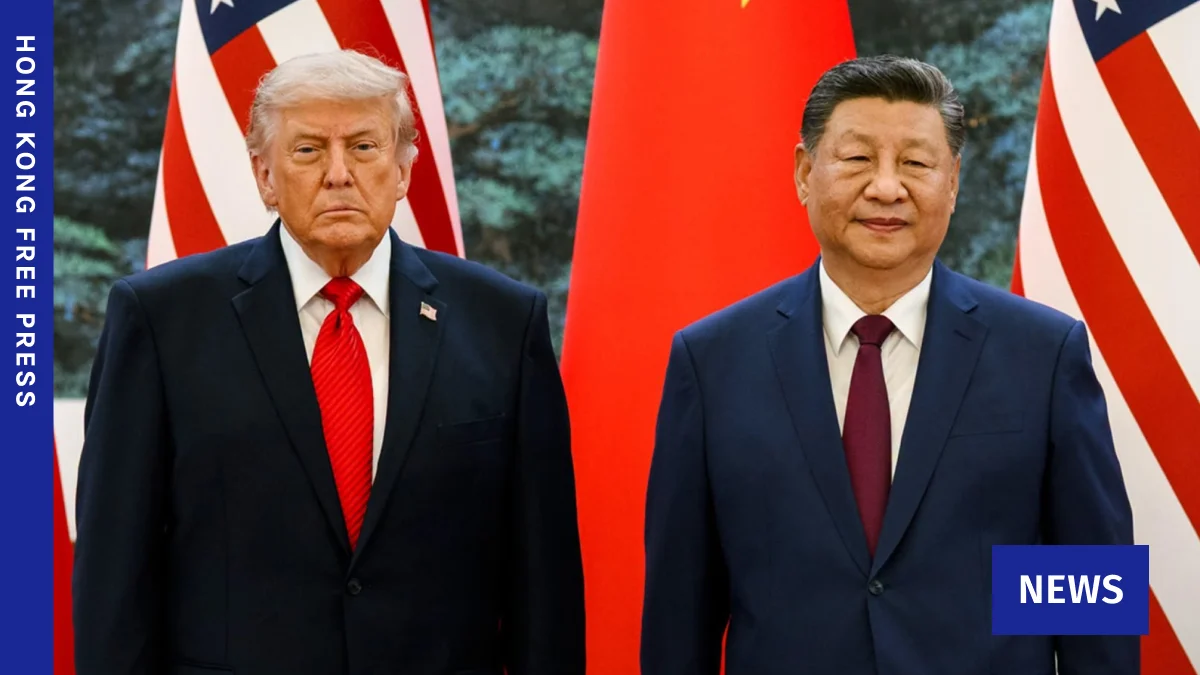
Washington and Beijing have managed to secure a temporary reprieve in their escalating economic conflict, with an extended trade truce providing a much-needed breathing space. However, this fragile calm belies a deepening strategic rivalry between the world’s two largest economies, prompting experts to caution that time is rapidly dwindling for a more substantive resolution to their multifaceted disputes. The latest development follows a series of high-level engagements, including a recent pomp-filled summit, where leaders aimed to de-escalate tensions but ultimately deferred fundamental structural issues.
A Precarious Pause: The Latest Summit and Truce Extension
The recent diplomatic overtures culminated in a summit where President Donald Trump and his Chinese counterpart, Xi Jinping, concluded a series of discussions on Friday. President Trump confirmed that he and President Xi would meet twice more this year, signalling a continued, albeit cautious, engagement at the highest levels. This engagement led to the extension of a critical trade truce, initially agreed upon last year during a meeting in South Korea. The original pact, which saw both sides dial back a bitter tit-for-tat tariff war that had driven duties on some goods to over 100 percent, was set to expire in November. Under the terms of the extension, confirmed by US Treasury Secretary Scott Bessent, the truce will now remain in effect until January 10 of the following year.
As part of the initial agreement, Beijing had committed to increasing its purchases of US agricultural products, particularly soybeans, and to temporarily suspend restrictions on rare earth exports for a year. These concessions were aimed at alleviating some of the economic pressure and fostering goodwill, yet the underlying competitive dynamics remain potent.
The Genesis of Conflict: A Deep Dive into the Trade War’s Origins

The protracted trade conflict between the United States and China did not emerge in a vacuum but rather from long-standing grievances regarding trade imbalances, intellectual property theft, and forced technology transfers. The Trump administration formally initiated the trade war in early 2018, citing findings from a Section 301 investigation into China’s trade practices. This investigation concluded that China engaged in "unfair, unreasonable, and discriminatory" practices that harmed American businesses and workers.
The initial salvo came in March 2018 with US tariffs on steel and aluminum imports, which quickly expanded to cover a wide array of Chinese goods. Washington imposed duties on over $360 billion worth of Chinese imports, citing concerns over state-backed subsidies, cyber theft of trade secrets, and barriers to market access for American companies. China swiftly retaliated, levying tariffs on more than $110 billion worth of US products, targeting politically sensitive sectors such as agriculture, which significantly impacted American farmers. The economic fallout was immediate and widespread, disrupting global supply chains, dampening business confidence, and prompting warnings from international bodies like the International Monetary Fund (IMF) and the World Trade Organization (WTO) about the detrimental effects on global economic growth. The average tariff rate on US imports from China jumped from around 3% in 2018 to over 19% by mid-2019, while China’s average tariff rate on US goods rose similarly.
Beyond Commerce: The Deepening Strategic Rivalry
While trade remains a primary flashpoint, analysts emphasize that the competition between Washington and Beijing extends far beyond tariffs and market access. Daniel Russel of the Asia Society Policy Institute articulated this broader struggle, noting that even as Trump and Xi "are making nice," their countries "remain locked in a bitter competition over trade, tech, Taiwan, defense, rare earths and industrial policy." This comprehensive rivalry encompasses economic, technological, geopolitical, and ideological dimensions, reflecting a fundamental contest for global influence and leadership.
Technological Supremacy: The race for technological dominance, particularly in cutting-edge fields like 5G wireless technology, artificial intelligence (AI), and semiconductor manufacturing, is a central pillar of this rivalry. The US has implemented export controls and sanctions against Chinese tech giants like Huawei and SMIC, citing national security concerns and aiming to curb China’s ascent in critical technologies. China, in turn, has redoubled its efforts to achieve technological self-sufficiency through ambitious industrial policies such as "Made in China 2025," which aims to upgrade its manufacturing capabilities in ten strategic sectors.

Geopolitical Flashpoints: Long-standing geopolitical tensions, notably over Taiwan and the South China Sea, continue to simmer. The US maintains an unofficial relationship with Taiwan, including arms sales, which Beijing views as an infringement on its sovereignty. In the South China Sea, China’s expansive territorial claims and militarization of artificial islands are challenged by the US and its allies, raising concerns about freedom of navigation and regional stability.
Rare Earths as a Strategic Lever: The control over rare earth elements, a group of 17 minerals crucial for high-tech industries ranging from electric vehicles to advanced weaponry, represents another critical strategic dimension. China dominates the global supply chain for these minerals, and its past threats to restrict exports have underscored their geopolitical leverage. The US anxiety regarding the reliable delivery of rare earth magnets, as highlighted by Mary Lovely of the Peterson Institute for International Economics, demonstrates Washington’s desire "to keep this on a short leash" and reduce dependency.
Industrial Policy and State Capitalism: The fundamental disagreement over economic models—US-led free-market capitalism versus China’s state-directed capitalism—underpins much of the trade and technology conflict. US officials frequently criticize China’s extensive state subsidies, intellectual property theft, and forced technology transfer as unfair trade practices that distort global markets. The issue of "excess capacity," particularly in Chinese industries like steel and aluminum, which Washington argues floods global markets and harms foreign competitors, is expected to be a key topic at upcoming international trade discussions, including the G20 trade ministers meeting in Wisconsin, hosted by US top trade official Jamieson Greer.
Analyst Perspectives: Compliance, Frustration, and a "Short Leash"
The sentiment among many analysts and US officials is one of caution and deep-seated frustration regarding China’s adherence to past commitments. Daniel Kritenbrink, a former US official now with The Asia Group consultancy, observed that while both leaders undoubtedly seek stability in the relationship, "you’d have to see further tangible outcomes for this truce to extend in the long run." He pointed out that some feel Beijing has "largely not lived up to the commitments it made" at earlier meetings, leading many US officials to "articulate their profound frustration with the Chinese."

Jamieson Greer echoed this sentiment, stating that Washington views such extensions primarily as "compliance periods." Kritenbrink elaborated, suggesting that "US officials would say China is doing just barely enough to maintain the agreement and no more," a strategy he deems "unsustainable over the long run." The brevity of the current extension until January 10 was reportedly "the preferred position of the Americans," according to Mary Lovely. This preference, she noted, stems from Washington’s concerns about the reliability of rare earth supplies and a desire to maintain leverage, hence the "short leash" approach. Lovely also raised doubts about the efficacy of tariff threats, remarking, "It’s not clear anymore how much their threats of high tariffs actually move China."
Economic Implications and Global Ripple Effects
The ongoing US-China rivalry casts a long shadow over the global economy. The uncertainty generated by trade tensions has led businesses worldwide to reconsider supply chain strategies, with many exploring diversification away from China—a phenomenon often referred to as "decoupling" or "friend-shoring." This shift, while potentially reducing risks associated with single-country reliance, also entails significant costs and complexities, including increased production expenses and logistical challenges.
According to a report by the WTO, the cumulative impact of tariffs imposed by both sides has shaved an estimated 0.5% off global GDP growth over the past two years, translating to hundreds of billions of dollars in lost economic output. The agricultural sector in the US, for instance, bore the brunt of Chinese retaliatory tariffs, leading to substantial government aid packages to support affected farmers. Conversely, Chinese export-oriented industries faced reduced demand from the US, prompting Beijing to seek new markets and boost domestic consumption. The global investment landscape has also been affected, with foreign direct investment (FDI) flows showing increased caution and strategic realignment.
The Technological Frontlines: AI and the Race for Innovation

Beyond trade, the strategic competition is most acutely felt in the realm of advanced technologies, particularly artificial intelligence. While the summit did little to curb the competitive instincts of both sides on AI, as Kritenbrink noted, there was a significant agreement to establish "some kind of notification system for artificial intelligence threats" between the two countries, as confirmed by Treasury Secretary Bessent.
This initiative represents a nascent attempt to create guardrails in a rapidly evolving and potentially destabilizing domain. However, its practical implementation faces considerable challenges. Peter Richardson of Counterpoint Research highlighted the complexity of defining what constitutes an "AI incident" and, crucially, determining its origin. "It is often very difficult to tell quickly whether an AI incident was state-directed, a rogue actor or an accident," Richardson explained. He tempered expectations, stating, "Given the rivalry, we don’t expect this to lead to any comprehensive international framework for AI regulation, but it would be the first practical guardrail." Despite this tentative step towards communication, the fundamental competitive drive in AI remains unabated, with both nations pouring vast resources into research, development, and deployment.
Official Stances and the Path Forward
While details of specific economic outcomes were expected to be released, US trade official Jamieson Greer indicated that both countries had made "progress" and agreed on "some subset of goods that we can trade with the Chinese on a more preferential basis." Furthermore, both sides reportedly agreed on products that can be "left aside in future trade disputes," suggesting an attempt to carve out areas of managed cooperation even amid broader rivalry.
From the US perspective, a lasting resolution would entail significant structural changes from China, including stronger intellectual property protections, an end to forced technology transfers, reduced state subsidies, and greater market access for foreign companies. The mantra of "fair and reciprocal trade" continues to guide Washington’s demands. Beijing, on the other hand, emphasizes its sovereign right to pursue its own development model, stressing "win-win cooperation" while staunchly resisting what it perceives as interference in its internal affairs. China’s leadership prioritizes national stability and economic growth, seeing any de-escalation of trade tensions as conducive to these goals.

The upcoming G20 trade ministers meeting will serve as another critical platform for these discussions, particularly concerning US tariff threats and the contentious issue of Chinese "excess capacity." The international community, through organizations like the WTO, continues to advocate for a rules-based multilateral trading system, warning that unilateral actions and bilateral disputes undermine global economic governance.
Conclusion: The Clock is Ticking
The extended trade truce between the United States and China offers a momentary pause, preventing an immediate re-escalation of tariffs and providing some predictability for businesses. However, it is fundamentally a tactical maneuver that buys time rather than resolves the deep-seated strategic rivalry. The core disagreements—over technological supremacy, geopolitical influence, economic models, and fundamental values—remain unaddressed.
Analysts are unanimous: the clock is ticking. Without a more comprehensive framework for managing their competition, or a genuine commitment to addressing the structural issues that fuel the rivalry, the current truce risks becoming merely a prelude to future, potentially more severe, confrontations. The challenge for both Washington and Beijing is to move beyond temporary de-escalation tactics and forge a modus vivendi that acknowledges their competitive instincts while establishing robust mechanisms to prevent rivalry from spiralling into outright conflict, thereby safeguarding global stability and prosperity.

 Siti Muinah
 Nana
Nana