Nana Wu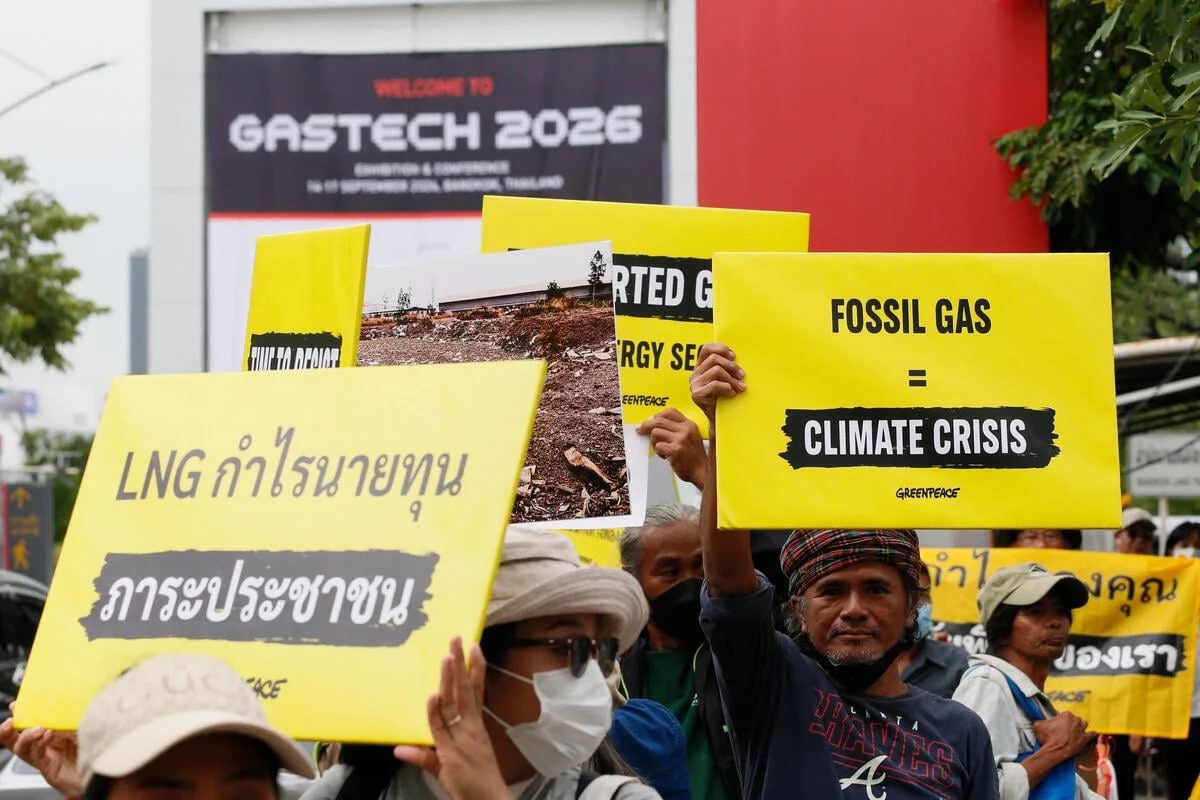
BANGKOK, THAILAND (17 September 2026) – As the global energy sector convenes for the AixEnergy Summit at Gastech 2026 in Bangkok, a stark warning has been issued by Greenpeace East Asia: the burgeoning demand for artificial intelligence (AI) is driving a dangerous reliance on fossil gas, a strategy that jeopardizes global climate targets and disproportionately impacts frontline communities. The environmental organization contends that energy majors, hyperscale computing providers, and government ministers are overlooking the profound climate implications of using natural gas and liquefied natural gas (LNG) to power the next wave of technological advancement.
The urgency of the situation is underscored by the projected surge in AI-driven data center capital expenditure, which is anticipated to exceed US$700 billion in 2026, according to analysis from PwC. This unprecedented financial investment is creating a powerful impetus for tech corporations and utility providers to leverage the escalating energy needs of AI as a justification for locking in multi-decade fossil gas and LNG infrastructure. During the ongoing Gastech 2026 conference, a prevailing narrative has been promoted by industry leaders, who frame natural gas as an "indispensable baseline" power source essential to avert a potential AI energy crisis.
Greenpeace’s detailed analysis of the AI and energy discussions at Gastech 2026 reveals significant shortcomings in the industry’s proposed solutions for powering next-generation compute capacity. While the exact details of these critical flaws were not itemized in the initial release, the organization’s core argument centers on the long-term environmental consequences and the missed opportunity to transition to cleaner energy sources.
The Call for a Renewable Future
In response to these concerns, Greenpeace is issuing a direct and unequivocal demand: hyperscalers, chip manufacturers, energy developers, and governments must immediately cease using the expansion of AI as a pretext for developing new fossil gas infrastructure. The organization insists that technology companies, in particular, must implement stringent 100% renewable energy procurement policies across their entire supply chains and data network operations. This includes ensuring that all components and services, from semiconductor fabrication to data center operations, are powered by clean energy sources.
Yeonho Yang, Senior Climate & Energy Campaigner at Greenpeace East Asia, articulated the gravity of the situation with a pointed statement: "Asia cannot afford to let its digital growth pull the plug on its energy transition. Tech giants like Nvidia, Microsoft and Google claim to be climate leaders and point to their net-zero targets, yet they are turning a blind eye as their suppliers and data center hosts construct massive gas plants to fuel compute power. From East Asian semiconductor hubs to Southeast Asian data center clusters, powering AI with fossil gas is a total climate failure. This is no longer a matter of voluntary targets. Policymakers must mandate 100% renewable procurement across big tech’s supply chains, and block energy suppliers from exploiting AI power demand to lock in new LNG infrastructure."
Yang’s statement highlights a perceived hypocrisy within the tech industry, where ambitious net-zero goals are juxtaposed with the reality of their supply chains relying on fossil fuel infrastructure. The implication is that current sustainability claims are undermined by the very energy sources being used to meet the burgeoning demands of AI.
Frontline Communities Bear the Brunt
The human cost of this energy strategy is a central theme in Greenpeace’s critique. Manun Wongmasoh, Climate and Energy Campaigner at Greenpeace Thailand, emphasized the immediate and tangible impacts on communities in Southeast Asia: "In Thailand and across Southeast Asia, communities are already suffering the frontline impacts of extreme weather, facing severe flood and heat impacts driven by the climate crisis. Watching utility companies and tech firms lock our energy systems into decades of gas under the badge of AI progress is deeply frustrating. Gas is not a transition fuel—it drives climate disruption. Southeast Asia has abundant solar and wind potential that can power our digital future safely. The energy for tomorrow’s technology must be built on 100% clean, renewable systems."
Wongmasoh’s remarks underscore the disproportionate burden faced by regions already vulnerable to the effects of climate change. The push for gas infrastructure in these areas not only exacerbates existing environmental challenges but also perpetuates a cycle of dependence on fossil fuels, hindering the development of truly sustainable energy solutions.
Global Climate Negotiations and Regional Responsibilities
The debate over fossil gas and AI also intersects with broader international climate governance. Joe Rafalowicz, Head of Climate and Energy at Greenpeace Australia Pacific, linked the issue to Australia’s upcoming role in global climate negotiations: "The impacts of the climate crisis are escalating: As Australia takes the reins of global climate negotiations at COP31, it should be leading the region in phasing out coal and gas exports so we have a chance at avoiding the most extreme impacts of a hotter world—not opening up new gas projects to power hyperscale data centres running AI applications. Prolonging the life of polluting fossil fuels simply puts the profits of big tech and gas corporations ahead of communities and the natural world. It is indefensible. AI data centres should run on 100% renewable energy no matter where they are located, not serve as an excuse to fast-track new gas and keep polluting."
Rafalowicz’s statement positions the AI energy demand as a critical juncture, particularly for countries like Australia that are expected to play a leading role in climate action. The argument is that prioritizing new fossil fuel projects for AI infrastructure directly contradicts the urgent need to transition away from these energy sources to meet global climate goals.
Asia Pacific: A Crucible for AI and Energy Policy
The Asia Pacific region is identified as a critical nexus in the global AI expansion, making the energy choices made there particularly significant. East Asia is a powerhouse in semiconductor manufacturing, accounting for approximately three-quarters of global capacity, with Taiwan and South Korea at the forefront of advanced chip production. Simultaneously, Southeast Asia, encompassing countries like Malaysia, Thailand, Indonesia, Vietnam, and the Philippines, is experiencing a substantial influx of investment in data center development, reportedly in the tens of billions of dollars.
This concentrated growth in AI infrastructure within the Asia Pacific region presents a unique set of challenges and risks. The reliance on fossil gas to meet the burgeoning energy demands of these data centers and semiconductor facilities poses severe threats to local environments, air quality, and the livelihoods of communities in these key markets.
Environmental and Health Ramifications
The environmental consequences of expanding fossil gas infrastructure are multifaceted and far-reaching. These include:
- Increased Greenhouse Gas Emissions: Methane, a potent greenhouse gas, is a primary component of natural gas. Leaks during extraction, transportation, and combustion contribute significantly to global warming, directly undermining efforts to limit temperature rise to 1.5 degrees Celsius above pre-industrial levels.
- Air Pollution: The combustion of fossil fuels releases harmful pollutants such as sulfur dioxide, nitrogen oxides, and particulate matter. These pollutants contribute to respiratory illnesses, cardiovascular problems, and other severe health issues, particularly impacting communities located near power plants and industrial facilities.
- Water Scarcity and Contamination: The extraction of natural gas, particularly through hydraulic fracturing (fracking), can consume vast amounts of water and poses risks of groundwater contamination. This is a significant concern in regions already facing water stress.
- Land Use and Ecosystem Disruption: The development of gas infrastructure, including pipelines and processing facilities, often requires extensive land clearing, leading to habitat destruction and biodiversity loss.
Greenpeace’s research has previously highlighted specific instances of these concerns. For example, a Health Impact Assessment conducted by Greenpeace Korea on a proposed semiconductor cluster LNG power plant in Yongin revealed potential adverse health effects on local populations. Similarly, a joint report by the Center for Research on Energy and Clean Air (CREA) and Greenpeace East Asia examined the health impacts of electricity consumption by the electronics industry in Taiwan, indicating significant health burdens associated with the current energy mix.
Furthermore, concerns about the proximity of data centers to residential areas have been raised by Greenpeace Southeast Asia, advocating for stricter regulations to protect community health and well-being. In Australia, a report titled "Energy Vampires" by Greenpeace Australia Pacific has detailed the substantial energy drain of AI data centers, raising alarms about their impact on the national energy grid and the push for continued fossil fuel reliance.
The Path Forward: A Mandate for Renewables
The AixEnergy Summit at Gastech 2026 is occurring at a critical juncture, with the exponential growth of AI presenting both an opportunity for innovation and a significant challenge to global climate commitments. Greenpeace’s urgent appeal underscores the need for a paradigm shift in how the energy sector and the technology industry approach the future of computing power. The organization’s stance is clear: the pursuit of AI advancement must not come at the expense of a livable planet.
The references provided in the original release point to a broader body of research and analysis supporting Greenpeace’s claims. These include industry outlooks on data center investments, expert opinions on the impact of AI on energy markets, and reports detailing the environmental and health consequences of fossil fuel infrastructure in key regions. This collective evidence forms the basis of Greenpeace’s advocacy for immediate policy interventions and corporate accountability.
As the discussions at Gastech 2026 unfold, the pressure is mounting for industry leaders and policymakers to move beyond the narrative of fossil gas as an inevitable necessity. The future of AI, and indeed the planet, hinges on the collective decision to prioritize clean, renewable energy solutions and to resist the temptation of short-term fixes that carry long-term environmental and social costs. The call for 100% renewable energy for AI is not merely an environmental aspiration; it is presented as a fundamental requirement for responsible technological progress and climate justice.
Media Contact:
Yujie Xue
International Communications Officer
Greenpeace East Asia
+852 5127 3416
[email protected]


 Pevita Pearce
 Jia Lissa