 Dwi Wanna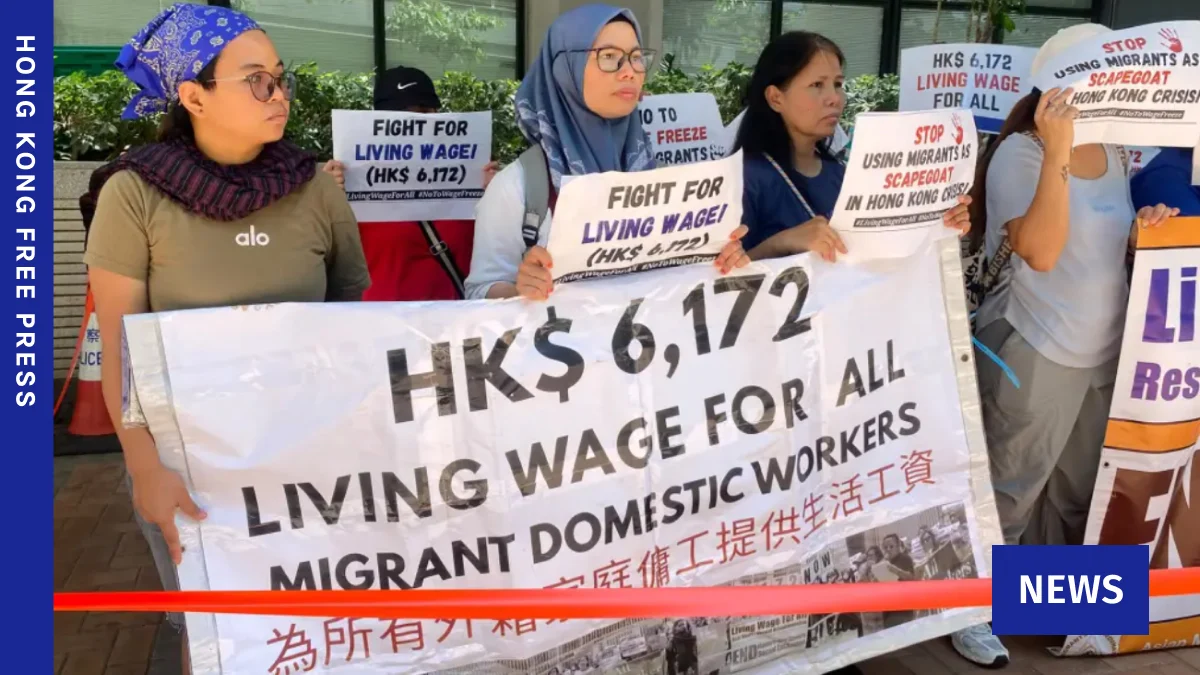
Domestic workers, a cornerstone of Hong Kong’s functioning households, staged a protest outside the Labour Department on Friday, September 25, 2026, demanding a substantial increase to their Minimum Allowable Wage (MAW). The current MAW of HK$5,100 per month is deemed insufficient by advocacy groups, who are calling for it to be raised to HK$6,172. This proposed increase reflects growing concerns over the escalating cost of living in the city and the stagnant wage growth experienced by this vital segment of the workforce over the past quarter-century.

The rally, organized by the Asian Migrants Coordinating Body (AMCB), also highlighted the inadequacy of the current monthly food allowance, which stands at HK$1,236. The AMCB is advocating for this allowance to be increased to HK$3,123. This allowance, mandated for employers who do not provide free meals, currently translates to a mere HK$41 per day, a sum considered by many to be insufficient to cover the nutritional needs of an individual in Hong Kong’s high-priced market.
Sringatin, a spokesperson for the AMCB, articulated the core of the workers’ grievances. "Increasing our wage will ensure we can cope with the unending inflation in Hong Kong, which heavily impacts the majority of [domestic workers] who are striving to live decently and with dignity," she stated in a press release. Her sentiment underscores the precarious financial situation many domestic workers find themselves in, balancing their earnings against the persistent rise in prices for essential goods and services.

A stark statistic presented by the AMCB illustrates the long-term stagnation of wages for domestic workers. "Since 2000, the Minimum Allowable Wage has only increased from HK$3,670 per month to the current HK$5,100 – a cumulative increase of just 39% (HK$1,430) spanning 25 years. This is an incredibly low wage for a territory that proudly brands itself as ‘Asia’s World City,’" Sringatin emphasized. This meagre increment over two and a half decades stands in stark contrast to Hong Kong’s image as a global financial hub and raises questions about the equitable distribution of economic prosperity.
The Indispensable Role of Domestic Workers
For decades, domestic workers have been the invisible backbone supporting countless Hong Kong households, particularly enabling the prevalence of dual-income families. The AMCB, representing a coalition of migrant worker unions and associations, stressed that these individuals provide essential "round-the-clock household and caregiving support for children and the elderly." Their tireless efforts in managing homes, caring for vulnerable family members, and performing daily chores allow other members of the household to participate fully in the formal economy. Without this critical support system, the productivity and economic output of a significant portion of Hong Kong’s workforce would be severely hampered.

Countering Employer Concerns and the Push for a Pay Freeze
In response to the AMCB’s demands, certain employer groups have voiced concerns that wage increases could lead to job losses and have even called for a wage freeze. A petition launched in August by the International Domestic Service Industry Development Federation and the Quadripartite Alliance for Harmonious Employment (QAHEP) explicitly requested a freeze on domestic worker wages. A survey released by QAHEP indicated that a staggering 97% of employers were "strongly opposed" to any pay rises for their domestic staff.
The AMCB has vehemently refuted these claims, arguing that the care services provided by domestic workers are "irreplaceable." They contend that any increase in wages would not necessarily lead to mass layoffs, as employers would still benefit from the essential services rendered. Furthermore, the AMCB highlighted that a significant portion of the earnings of domestic workers are "recycled back into the local economy" through remittances, consumption, and other economic activities, thus contributing to Hong Kong’s economic vitality.

Historical Context and Wage Stagnation
The current MAW of HK$5,100 was last adjusted in September 2023, representing a modest increase from HK$4,730. Prior to that, the wage had remained stagnant at HK$4,730 for two years. Looking further back, the MAW stood at HK$4,310 from 2019 to 2021, and at HK$4,190 before that. This pattern of minimal adjustments over extended periods underscores the long-standing struggle for fair compensation.
The call for a significant increase is also framed within the context of Hong Kong’s inflation rate. While specific figures for September 2026 are not yet available, historical data from the Census and Statistics Department shows a persistent upward trend in the Consumer Price Index (CPI). For instance, in 2025, the CPI recorded a year-on-year increase, driven by rising costs of food, housing, and transportation. This inflationary environment erodes the purchasing power of fixed incomes, making the current MAW even more untenable for domestic workers who often send a substantial portion of their earnings back to support their families in their home countries.

The Broader Issues: Job Insecurity and Vulnerability
Beyond the immediate concern of wages, the AMCB also shed light on a range of systemic issues that plague the domestic worker community. These include "job insecurity, excessively long working hours, heightened vulnerability to abuse due to the mandatory live-in arrangement, and ongoing exploitation by erring recruitment agencies." The mandatory live-in arrangement, a legal requirement in Hong Kong, has been a persistent point of contention for advocacy groups. While intended to facilitate household management, critics argue that it blurs the lines between professional and personal time, potentially leading to exploitation and making it difficult for workers to seek assistance or escape abusive situations.
The AMCB pointed to instances where domestic workers are compelled to work for extended hours without adequate rest, often exceeding legal limits. Furthermore, the reliance on recruitment agencies, while often necessary for securing employment, can expose workers to exorbitant fees and unfair contractual terms, further exacerbating their financial vulnerability. The lack of robust legal protections and effective enforcement mechanisms for these issues compounds the challenges faced by domestic workers.

A Call for Dignity and Decent Working Conditions
Sringatin concluded her statement with a resolute commitment to the ongoing struggle for better conditions. "We will continue the fight for a living wage, full legal protection, and decent working conditions until these deep-seated issues are resolved," she declared. This statement reflects a unified front among domestic workers and their advocates, who are determined to achieve not just a fair wage but also comprehensive improvements in their overall welfare and rights.
The protest outside the Labour Department serves as a crucial reminder of the vital contributions of domestic workers to Hong Kong society and the urgent need for policy reforms that reflect their indispensable role and ensure their basic rights and dignity. The government’s response to these demands will be closely watched, as it holds the potential to significantly impact the lives of hundreds of thousands of individuals and the broader social fabric of the city. The outcome of these negotiations will likely shape the future of domestic work in Hong Kong, setting a precedent for how the city values and supports its essential workforce.

 Rifan Muazin
 Nana Muazin