Pevita Pearce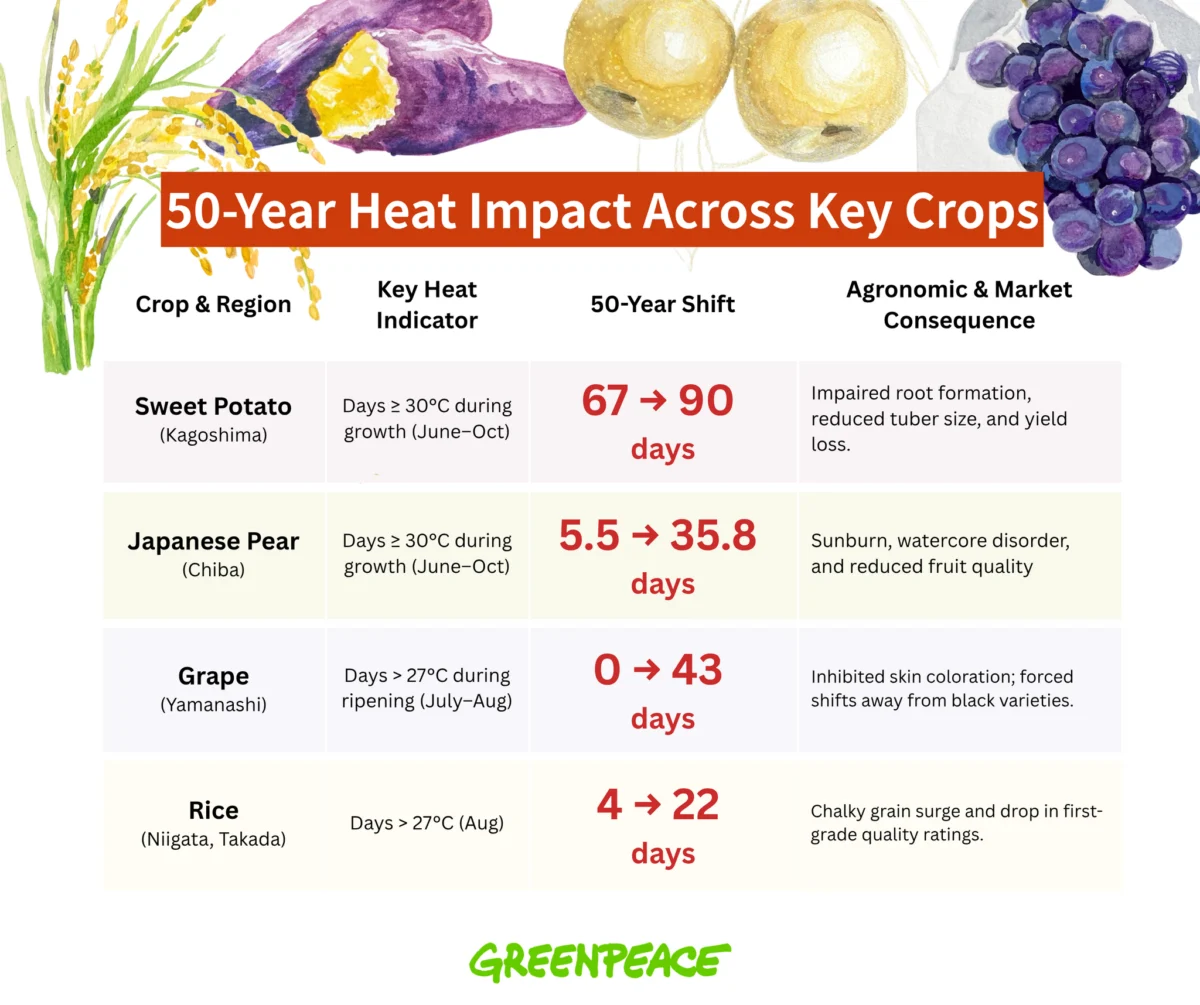
TOKYO (Sept. 17, 2026) — Japan’s vital agricultural regions are experiencing a stark increase in crop-damaging heat days, with some areas seeing up to a 43-day surge over the past five decades. This alarming trend poses significant risks to the growth, quality, and stability of four of Japan’s most cherished autumn harvests: sweet potatoes, Japanese pears, grapes, and rice. A comprehensive report released today by Greenpeace Japan, titled Climate Change as Told by Autumn Flavours, meticulously details these findings, painting a grim picture of the agricultural sector’s vulnerability to a rapidly changing climate.
The report, a culmination of extensive research and analysis, scrutinizes 50 years of climate shifts by comparing decadal temperature averages between 1966-1975 and 2016-2025. The study focused on four major agricultural hubs renowned for specific crops: Kagoshima for its sweet potatoes, Chiba for its Japanese pears, Yamanashi for its grapes, and Niigata for its rice. Researchers specifically tracked the number of days where physiological heat thresholds were breached, disrupting critical growth stages such as fruit coloration and grain filling. These thresholds, when exceeded, can lead to physiological stress in plants, impacting their ability to develop properly and produce high-quality yields.
A Deepening Crisis: Escalating Heat Exposure
The findings reveal a dramatic surge in crop heat exposure during crucial developmental periods. This increase is attributed to a confluence of factors, including hotter summers, warmer winters, and a significant rise in the occurrence of tropical nights – nights where temperatures fail to drop below 20 degrees Celsius. These prolonged periods of elevated heat stress plants, hindering essential biological processes. For instance, the delicate process of grain filling in rice, crucial for plump and nutritious grains, is highly sensitive to heat. Similarly, the development of sugars and pigments that give pears and grapes their characteristic flavour and colour can be severely compromised by excessive heat.
Researchers warn that these escalating climate impacts directly threaten harvest stability, a cornerstone of Japan’s food supply. Fluctuations in yield can lead to significant income volatility for farmers, many of whom are already facing demographic challenges. The report highlights that 69.5% of core agricultural workers in Japan are aged 65 or older, a statistic that underscores the aging demographic within the farming community. This demographic reality means that fewer younger individuals are available to adapt to or manage the increasing complexities brought on by climate change, further exacerbating the risks to farm incomes and the broader food system.
The consequences extend beyond the farm gate, with potential ramifications for retail food prices. Reduced yields and compromised quality can lead to increased import reliance and higher costs for consumers. This compounding of structural risks, from an aging workforce to the direct impacts of climate change on production, creates a precarious situation for Japan’s food security.
Nationwide Heat Extremes Mirror Agricultural Stress
The heightened crop heat exposure is not an isolated phenomenon but rather a symptom of intensifying nationwide heat extremes driven by global climate change. The year 2025 marked a grim milestone for Japan, recording its hottest summer since meteorological records began in 1898. This was the third consecutive year to break previous summer temperature records, highlighting a persistent and escalating warming trend. Across the nation, temperatures reached or exceeded a scorching 40 degrees Celsius in 25 locations. The term kokushobi – meaning "intense heat days" – has become a common part of household discourse, reflecting the pervasive reality of extreme heat.
The scientific consensus, as articulated by the Intergovernmental Panel on Climate Change (IPCC), unequivocally states that these extreme weather events pose a direct threat to global food security and the livelihoods of farmers worldwide. The Japanese experience, as detailed in the Greenpeace report, serves as a stark local manifestation of this global crisis.
A Look at the Impact on Iconic Autumn Flavours
The Climate Change as Told by Autumn Flavours report meticulously details the specific impacts on the four key crops:
- Kagoshima Sweet Potatoes: These tubers are susceptible to heat stress during their tuberization phase. Excessive heat can lead to smaller tuber sizes, reduced starch content, and an increased incidence of internal defects. The report likely indicates an increase in days where temperatures exceed the optimal range for tuber development, impacting both yield and quality.
- Chiba Japanese Pears: The development of crisp texture and sweet flavour in Japanese pears is highly dependent on moderate temperatures. High temperatures during fruit set and maturation can lead to sunburn, internal browning, and a reduction in sugar accumulation, affecting the characteristic juicy sweetness of this beloved fruit.
- Yamanashi Grapes: Grapevines are particularly sensitive to heat, especially during the veraison stage – when grapes begin to ripen and change colour. Excessive heat can disrupt the synthesis of anthocyanins (pigments responsible for colour) and sugars, leading to uneven ripening, reduced flavour complexity, and a higher risk of sunscald.
- Niigata Rice: Rice cultivation, a staple of the Japanese diet, is critically impacted by heat. High temperatures during the flowering and grain-filling stages can lead to sterility in pollen, reduced grain filling, and a decrease in the overall starch content, affecting both yield and the palatability of cooked rice. The report likely quantifies the increase in days where temperatures soar above the critical threshold for these sensitive developmental windows.
Farmers on the Front Lines: Beyond the Data
The Greenpeace report goes beyond statistical analysis, incorporating insights from field interviews with farmers. These firsthand accounts reveal a multifaceted crisis that extends beyond temperature charts. Local farmers are grappling with a relentless storm of extreme heat, increasingly frequent water shortages due to altered rainfall patterns, shifting seasonal windows that disrupt traditional planting and harvesting cycles, and sudden surges in pest populations that thrive in warmer conditions.
While producers are demonstrating remarkable resilience and ingenuity, implementing strategies such as adjusting planting dates and experimenting with heat-tolerant crop varieties, the report emphasizes that farm-level adaptations are increasingly insufficient to counteract the systemic shocks of climate change. Individual efforts, however commendable, are often overwhelmed by the scale and intensity of these environmental shifts.
A Call to Action: Addressing the Systemic Challenge
Ikumi Toyota, Climate and Energy Campaigner at Greenpeace Japan, underscored the gravity of the situation. "Over 50 years of accelerating heat waves have pushed Japan’s most iconic agricultural hubs past their thermal limits, placing both crop viability and supermarket prices on the line," Toyota stated. "While farmers are showing incredible ingenuity to adapt, single operations cannot outrun systemic climate disruption. When the people who feed us run out of options, national food security becomes everyone’s crisis."
This sentiment highlights the urgent need for a coordinated and comprehensive response from the Japanese government. Greenpeace Japan is urging swift action on four key fronts:
- Accelerated Climate Mitigation: A significant and rapid reduction in greenhouse gas emissions is paramount to slow the pace of global warming and mitigate future extreme weather events. This includes transitioning away from fossil fuels and investing heavily in renewable energy sources.
- Enhanced Support for Climate-Resilient Agriculture: The government must provide increased financial and technical support to farmers to help them adapt to changing climate conditions. This could include investments in water management infrastructure, the development and dissemination of climate-resilient crop varieties, and training programs on sustainable farming practices.
- Strengthening Food Security Measures: A comprehensive review and strengthening of national food security strategies are needed to address potential supply chain disruptions and ensure stable access to affordable food for all citizens. This may involve diversifying food sources, supporting domestic production, and building strategic food reserves.
- Investing in Research and Development: Increased investment in scientific research is crucial to better understand the complex interactions between climate change and agricultural systems. This includes developing early warning systems for extreme weather events, researching new pest and disease management strategies, and exploring innovative agricultural technologies.
The Broader Implications for Japan’s Future
The findings of Climate Change as Told by Autumn Flavours serve as a stark warning not only for Japan’s agricultural sector but for its entire society. The nation’s rich culinary heritage, deeply intertwined with its agricultural bounty, is under threat. The economic stability of rural communities, often reliant on agriculture, is at risk. Furthermore, the very concept of national food security, a fundamental pillar of any nation’s resilience, is being challenged by the relentless march of climate change.
The report’s call for government action is a plea for foresight and decisive leadership. By addressing the systemic nature of climate change and supporting its agricultural backbone, Japan can strive to safeguard its food future, preserve its cultural heritage, and ensure the continued prosperity of its citizens in the face of an increasingly uncertain climate. The time for incremental measures has passed; a bold and transformative approach is now essential.
Notes:
The full report in Japanese, Climate Change as Told by Autumn Flavours, is available for review.
[1] Ministry of Agriculture, Forestry and Fisheries (MAFF). Statistics on Agricultural Workforce. This data highlights the demographic challenges facing Japan’s agricultural sector.
[2] Japan Meteorological Agency (JMA). (March 11, 2026). Climate Change Monitoring Report. This report provides official data on Japan’s warming trends and record-breaking temperatures.
[3] New York Times. (July 23, 2026). It’s So Hot That Japan Needs a New Word for It. This article illustrates the societal impact and recognition of extreme heat in Japan.
[4] Intergovernmental Panel on Climate Change (IPCC) Special Report on Climate Change, Land, and Food Security. This seminal report provides the global scientific consensus on the links between climate change, land use, and food systems.
Media Contacts:
Yujie Xue, International Communications Officer, Greenpeace East Asia, +852 5127 3416, [email protected]
Kahoko Sato, Communications Officer, Greenpeace Japan, +81 70 1228 7611, [email protected]

 Siti Muinah
 Azzam Bilal Chamdy