Lina Irawan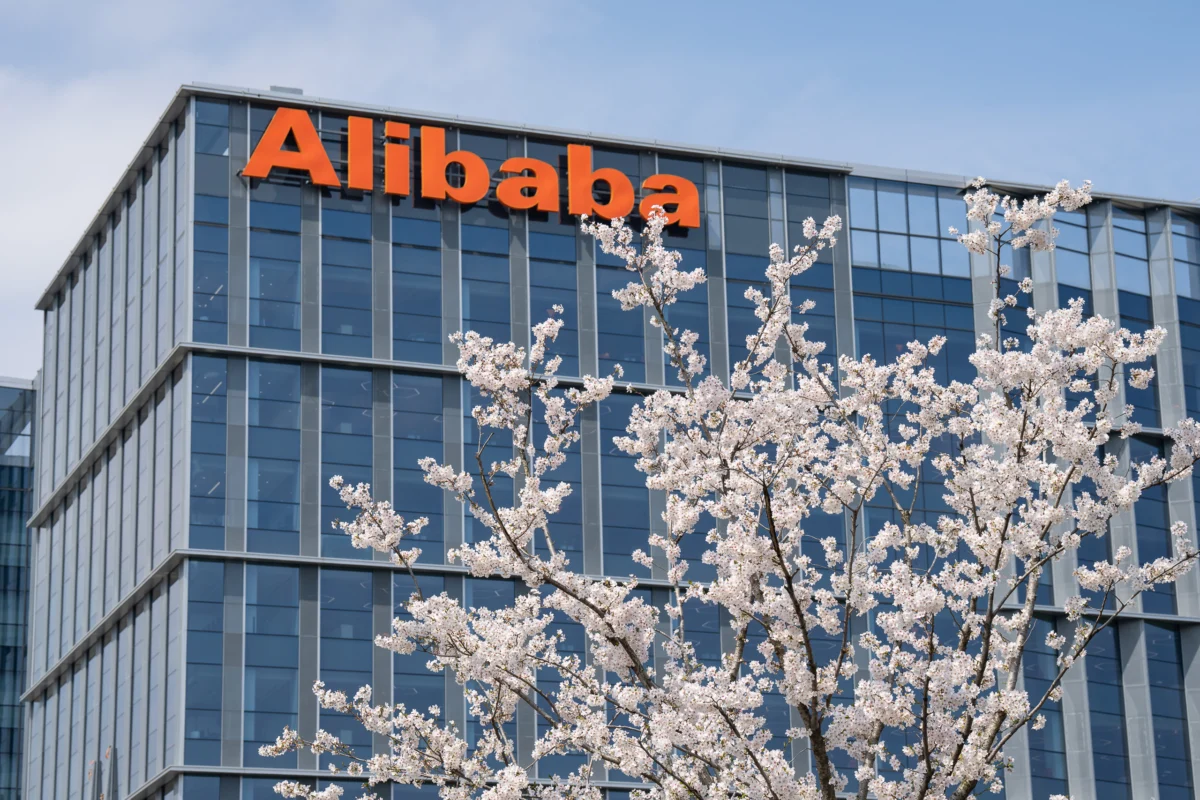
Alibaba’s Qwen team has announced the release of Qwen3.8-Omni-Flash, a groundbreaking native omni-modal model engineered to process and understand text, images, audio, and video within a unified workflow. This latest iteration in the Qwen series boasts an impressive 1-million-token context window, significantly expanding its capacity for long-form content analysis and complex reasoning. The model is now immediately accessible to developers and enterprises through the comprehensive Qwen AI platform, marking a pivotal moment in the advancement of general artificial intelligence capabilities. Alibaba reports that Qwen3.8-Omni-Flash has achieved an average score improvement of over 26% across 30 diverse evaluations when compared to its predecessor, Qwen3.5-Omni-Plus, signaling substantial progress in its core functionalities. These enhancements are particularly evident in critical areas such as audio-video agents, advanced coding tasks, sophisticated long-context understanding, and seamless real-time multimodal interaction, underscoring the model’s versatility and robust performance across a spectrum of demanding applications. To further facilitate its adoption and integration into various ecosystems, Alibaba has also introduced Qwen-MM-Plugins and Qwen-Live Harness, designed to support long-running and real-time workflows respectively. Concurrently, in a strategic move to democratize access to advanced AI, the company has drastically reduced API input pricing to as low as RMB 0.8 per million tokens, making cutting-edge multimodal AI more affordable for a broader user base.
Alibaba’s Strategic Ascent in the Global AI Landscape
Alibaba’s journey into the forefront of artificial intelligence has been characterized by aggressive investment, continuous innovation, and a clear strategic vision to leverage AI across its vast e-commerce, cloud computing, logistics, and fintech ecosystems. The company’s commitment to AI intensified significantly with the emergence of large language models (LLMs) and generative AI, recognizing their transformative potential. Alibaba Cloud, the technology backbone of the conglomerate, has been instrumental in this push, providing the computational infrastructure and research capabilities necessary to develop and deploy models at scale.
The Qwen series, officially known as Tongyi Qianwen (meaning "thousand questions through truth" or "querying the truth"), first emerged as a formidable challenger in the LLM space. Initially launched as a text-only generative AI model, it quickly evolved to incorporate visual understanding, transforming into a multimodal entity. This progression mirrored the industry-wide trend towards AI systems that can interpret and generate content across different data types, moving beyond mere text processing to a more holistic understanding of the world. Alibaba’s strategy has often involved a dual approach: open-sourcing certain foundational models to foster an extensive developer community and drive innovation, while simultaneously offering more advanced, proprietary versions through its cloud services to cater to enterprise clients requiring top-tier performance and specific functionalities. This balance allows Alibaba to contribute to the open-source movement while also monetizing its cutting-edge research and development.
The Evolution of Qwen: A Timeline Towards Omni-Modality
The development of the Qwen series has been a rapid and iterative process, reflecting the intense competition and fast-paced advancements in the AI sector.
- Early 2023: Alibaba officially unveils Tongyi Qianwen (Qwen), its flagship large language model, initially focusing on text generation, summarization, and conversational AI. This marked Alibaba’s major entry into the LLM race, competing directly with global players like OpenAI and Google, and domestic rivals such as Baidu (Ernie Bot) and Tencent.
- Mid-2023: Recognizing the increasing demand for visual intelligence, Alibaba quickly iterated, introducing multimodal capabilities to Qwen. This allowed the model to process and understand both text and images, paving the way for applications requiring visual comprehension alongside linguistic analysis. This phase saw models like Qwen-VL (Vision Language) gain prominence.
- Late 2023 / Early 2024: The Qwen team began integrating audio and video processing into its models, moving towards a truly "omni-modal" architecture. This transition was crucial for enabling AI to interact with the world in a more human-like manner, understanding spoken language, analyzing dynamic visual content, and processing non-textual cues. The Qwen-Omni series began to take shape during this period, with models like Qwen3.5-Omni-Plus setting new benchmarks.
- June 2024: The release of Qwen3.8-Omni-Flash signifies the culmination of these efforts, representing a significant leap in native omni-modal processing, marrying efficiency with advanced capabilities. The "Flash" moniker likely indicates an emphasis on speed and real-time performance, critical for modern AI applications.
This chronological progression highlights Alibaba’s methodical approach to building increasingly sophisticated AI systems, constantly expanding the sensory inputs and processing capabilities of its models.
Unpacking Qwen3.8-Omni-Flash: Features and Transformative Capabilities
Qwen3.8-Omni-Flash distinguishes itself through several key technological advancements that position it as a leading-edge AI model.
Native Omni-Modality: A Unified Understanding
Unlike models that might string together separate modules for text, image, audio, and video processing, Qwen3.8-Omni-Flash is described as "native omni-modal." This implies a deeper, more integrated architecture where different modalities are processed and understood in a unified semantic space from the outset, rather than being translated into a common format at a later stage. This integrated approach allows for a richer, more contextual understanding of complex inputs.
- Use Case Example: Imagine feeding the model a video of a product demonstration. It can simultaneously process the spoken words (audio), the visual actions and features of the product (video), any on-screen text or labels (image/text), and accompanying product descriptions (text). The model can then answer questions about the product’s functionality, summarize its key benefits, or even identify potential issues shown in the video, all while maintaining a coherent understanding across modalities.
1-Million-Token Context Window: Unprecedented Depth of Analysis
The 1-million-token context window is a monumental achievement, dramatically increasing the amount of information the model can consider at any given time. To put this into perspective, a typical book contains around 50,000 to 100,000 tokens. A 1-million-token window means the model can process and retain context from approximately 10-20 full-length books or several hours of video content in a single interaction.
- Implications: This capability is transformative for tasks requiring extensive context, such as:
- Long-Video Analysis: Summarizing entire documentaries, analyzing lengthy lectures, or conducting forensic analysis of surveillance footage, identifying specific events or patterns across extended periods.
- Meeting Summaries: Generating comprehensive summaries from multi-hour meetings, including transcribing spoken words, identifying speakers, capturing key decisions from visual aids (whiteboards, presentations), and noting action items.
- Legal and Academic Research: Sifting through voluminous legal documents, research papers, or entire literary works to extract specific information, identify thematic connections, or summarize complex arguments.
- Codebase Understanding: Analyzing entire software projects, understanding dependencies, generating documentation, or assisting in debugging by grasping the full context of a large codebase.
Performance Gains Across 30 Evaluations
The reported 26% average score improvement over Qwen3.5-Omni-Plus across 30 evaluations is a strong indicator of Qwen3.8-Omni-Flash’s enhanced capabilities. While specific benchmarks are not detailed, these evaluations likely encompass a broad range of tasks designed to test multimodal understanding, reasoning, and generation.
- Audio-Video Agents: This implies significant advancements in AI systems that can interact with the world through sound and sight. Potential applications include intelligent virtual assistants that can understand nuanced voice commands and visual cues, automated content moderation systems that can detect inappropriate content in videos and audio streams, or sophisticated security systems that analyze live feeds for anomalies.
- Coding: Improved coding capabilities suggest the model can generate more accurate and efficient code, debug complex programs, translate between programming languages, and even assist in software design by understanding high-level requirements.
- Long-Context Tasks: Beyond general summarization, this includes tasks like complex question-answering over vast datasets, identifying subtle patterns in extended narratives, and performing multi-step reasoning based on information spread across numerous documents or long videos.
- Real-time Multimodal Interaction: This is crucial for applications requiring immediate responses, such as customer service chatbots that handle voice, video calls, and text simultaneously, or interactive educational tools that adapt to a user’s verbal and visual cues in real-time. The "Flash" in its name likely underscores its efficiency in these real-time scenarios.
Qwen-MM-Plugins and Qwen-Live Harness: Extending Functionality
- Qwen-MM-Plugins: These extend the model’s capabilities by allowing it to interact with external tools and APIs. This "tool-use" functionality is critical for AI models to move beyond mere information processing to actual task execution. For example, a plugin might enable Qwen3.8-Omni-Flash to search the web for real-time information, execute code, control external software, or interact with databases, effectively turning the AI into a powerful agent capable of acting in the digital world.
- Qwen-Live Harness: This component is specifically designed for long-running and real-time workflows. It addresses the challenges of maintaining context and performance over extended interactions or continuous data streams. This is vital for applications like ongoing surveillance analysis, continuous customer support monitoring, or interactive virtual reality environments where the AI needs to process and respond to dynamic inputs without interruption.
Democratizing AI: Strategic Pricing Reduction
The decision to reduce API input pricing to as low as RMB 0.8 per million tokens (approximately $0.11 USD at current exchange rates) is a significant strategic move. This makes Qwen3.8-Omni-Flash highly competitive in terms of cost, especially within the Chinese and broader Asian markets.
- Impact on Developers and Businesses: Lowering the cost of access to advanced AI models significantly reduces the barrier to entry for startups, small and medium-sized enterprises (SMEs), and independent developers. It encourages experimentation, fosters innovation, and accelerates the integration of AI into a wider array of products and services.
- Alibaba’s Ecosystem Play: This pricing strategy also serves to drive usage on Alibaba Cloud’s infrastructure, reinforcing its position as a leading cloud provider. By making its most advanced AI models accessible and affordable, Alibaba aims to attract a massive user base, which in turn fuels the growth of its entire cloud ecosystem. This aligns with a broader industry trend where leading AI developers are increasingly competing on both capability and cost-effectiveness to capture market share.
Broader Impact and Implications
The release of Qwen3.8-Omni-Flash carries profound implications for various industries and the future trajectory of artificial intelligence.
Transformation Across Industries:
- Media and Entertainment: Revolutionizing content creation, video editing, personalized recommendations, and even generating entire narratives from multimodal inputs. Imagine an AI that can review raw footage, identify key moments, suggest edits, and even draft voiceovers based on a prompt.
- Education: Creating highly interactive learning experiences, summarizing complex textbooks and lectures, providing personalized tutoring that responds to a student’s verbal and visual cues, and even generating educational content in multiple formats.
- Healthcare: Assisting in medical diagnostics by analyzing patient records, medical images (X-rays, MRI), and even audio from consultations. It could help researchers sift through vast amounts of scientific literature and clinical trial data.
- Manufacturing and Robotics: Enhancing quality control through visual inspection, optimizing production processes by analyzing sensor data and video feeds, and improving human-robot interaction with more natural communication.
- Customer Service: Powering next-generation customer service agents that can handle inquiries across voice, video, and text channels, understand complex issues, and provide comprehensive solutions in real-time.
Competitive Landscape and Alibaba’s Position:
This release solidifies Alibaba’s position as a major contender in the global AI race, directly challenging established players like OpenAI (GPT-4o), Google (Gemini), and Anthropic (Claude). By offering a native omni-modal model with a large context window and aggressive pricing, Alibaba is strategically positioning itself to capture a significant share of the enterprise AI market, particularly in Asia. The competition is not just about raw model performance but also about ecosystem integration, developer tools, and cost-effectiveness. Alibaba’s comprehensive approach addresses all these facets.
The Future of AI: Towards General Intelligence:
Qwen3.8-Omni-Flash represents a significant step towards general artificial intelligence (AGI). By seamlessly integrating multiple modalities, the model mimics human cognitive processes more closely, allowing for a more nuanced and holistic understanding of complex information. This move from specialized AI (e.g., image recognition or natural language processing) to versatile, general-purpose AI is a critical development. It suggests a future where AI systems can adapt to a wider range of tasks and environments with minimal retraining, leading to more flexible and powerful applications.
Ethical Considerations and Responsible AI:
As AI models become more powerful and capable of processing sensitive multimodal data, ethical considerations become paramount. Issues such as data privacy, algorithmic bias, the potential for misuse (e.g., deepfakes), and ensuring transparency and explainability are critical. Alibaba, like other leading AI developers, faces the responsibility of developing and deploying these technologies responsibly, incorporating ethical guidelines, robust security measures, and mechanisms for accountability to prevent harm and build trust. The widespread adoption of models like Qwen3.8-Omni-Flash will necessitate ongoing dialogue and collaboration between researchers, policymakers, and the public to navigate these complex challenges.
Inferred Statements from Related Parties:
While no direct quotes beyond the initial press release are available, the strategic importance of this launch allows for plausible inferences regarding official statements and industry reactions.
A spokesperson from Alibaba Cloud’s AI division, potentially the head of the Qwen team, could have stated: "The launch of Qwen3.8-Omni-Flash marks a monumental stride in our relentless pursuit of advanced artificial intelligence. This model is not just an incremental update; it represents a foundational shift towards truly unified intelligence, capable of perceiving and reasoning across text, image, audio, and video as never before. Our commitment to empowering developers and enterprises is further exemplified by the significant reduction in API pricing, democratizing access to these powerful capabilities and fueling a new wave of innovation across industries."
An independent industry analyst, specializing in AI and cloud computing, might offer: "Alibaba’s Qwen3.8-Omni-Flash is a formidable entry into the rapidly evolving multimodal AI arena. The combination of native omni-modality, an expansive 1-million-token context window, and highly competitive pricing positions Alibaba as a serious global contender. This move not only enhances Alibaba Cloud’s AI-as-a-service offerings but also significantly lowers the barrier for businesses, particularly within the Asia-Pacific region, to adopt sophisticated AI solutions. We anticipate this will accelerate the development of groundbreaking applications in sectors like media, education, and enterprise productivity, setting a new benchmark for what’s possible with integrated AI."
In conclusion, Qwen3.8-Omni-Flash represents a significant leap for Alibaba in the global AI race. By delivering a highly capable, efficient, and cost-effective omni-modal model, Alibaba is not only enhancing its technological prowess but also actively shaping the future landscape of accessible and integrated artificial intelligence. Its impact is poised to resonate across numerous industries, driving innovation and setting new standards for AI interaction and understanding.


 Suro Senen
 Neng Nana