
 Neng Nana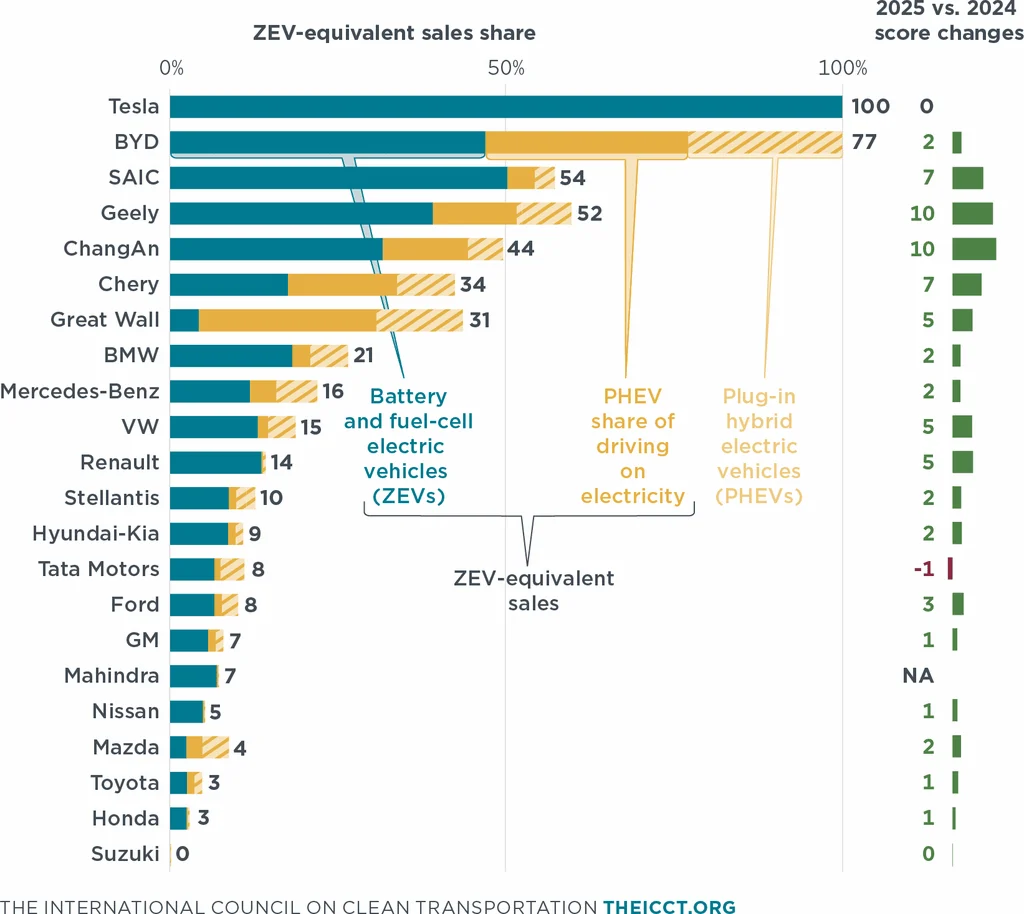
The global automotive industry stands at a critical juncture, undergoing a rapid and irreversible transition towards zero-emission transportation. However, the pace and strategy of this monumental shift are far from uniform across all major car manufacturers. A recent webinar hosted by Greenpeace Japan on July 13th, featuring insights from Dale Hall of the International Council on Clean Transportation (ICCT) and Erin Eunseo Choi of Greenpeace East Asia, illuminated these starkly different trajectories, particularly highlighting the evolving landscape in Southeast Asia and the broader global competitive arena. The session delved into how leading automakers are performing in the critical race to electrify their fleets, with particular attention paid to the adoption of battery-electric vehicles (BEVs).
The webinar, held against a backdrop of increasing global concern over climate change and escalating regulatory pressures, served as a platform to dissect the latest data on EV adoption and manufacturer strategies. Experts emphasized that while the overarching trend is towards electrification, the success and speed of this transition are heavily influenced by corporate decision-making, investment priorities, and regional market dynamics. The findings underscore a growing divide between companies aggressively embracing electrification and those perceived as lagging, with significant implications for market share, environmental impact, and future profitability.
Southeast Asia: A Strategic Battleground for Electric Mobility
Southeast Asia has emerged as a crucial battleground for the future of mobility, with Indonesia playing a particularly pivotal role. As one of the region’s largest automotive markets and a nation actively positioning itself as an electric vehicle (EV) hub, Indonesia’s market dynamics offer a microcosm of the broader global shift. By 2025, Indonesia’s BEV market experienced a significant surge, becoming the third-largest in Southeast Asia, with sales exceeding 103,000 units by year-end. This rapid growth presents both immense opportunities and significant risks for legacy automakers, especially those from Japan, whose long-standing dominance in the region is now under threat.
Erin Eunseo Choi of Greenpeace East Asia highlighted how the strategies employed by automakers from China, Japan, and South Korea are yielding vastly different outcomes in this dynamic market. The contrasting performance of these automotive powerhouses provides a clear illustration of how strategic choices in product development, investment, and market focus directly translate into market gains or losses.
China’s Electrifying Ascent
Chinese automakers, spearheaded by industry giants BYD and Geely, have embarked on an aggressive expansion of their electric vehicle sales, demonstrating remarkable agility and market penetration. Despite a general contraction in Indonesia’s overall automotive market, Chinese brands achieved an astonishing year-on-year sales increase of 153%, effectively tripling their market share to a notable 10%. This surge signifies a substantial shift in consumer preference and market accessibility for Chinese EVs.
BYD, in particular, has solidified its position as the undisputed leader in Indonesia’s BEV segment, capturing more than half of the market share. Furthermore, Chinese EV brands collectively dominated Indonesia’s electric vehicle sales in the first half of 2025, securing over 90% of the market. This overwhelming success is attributed to their competitive pricing, rapid innovation cycles, and a strategic focus on meeting the burgeoning demand for affordable and accessible electric vehicles in emerging markets.
Japan’s Eroding Dominance
While Japanese brands have historically enjoyed a strong legacy advantage in Southeast Asia, their once unshakeable dominance is showing clear signs of erosion. In the first quarter of 2025, a majority of Japanese automotive brands, with the notable exception of Toyota, experienced sales declines. This downturn occurred even as their Chinese competitors were rapidly expanding their footprint.
Choi attributed this weakening grip to a fundamental strategic issue: Japanese manufacturers have remained heavily reliant on internal combustion engine (ICE) vehicles and hybrid technology, rather than prioritizing a clear and accelerated roadmap for BEV deployment in the crucial Southeast Asian market. This strategic delay not only impacts their market share but also exacerbates regional climate inequities. Vehicles sold in Southeast Asia, particularly those powered by combustion engines, emit significantly higher amounts of carbon dioxide equivalent per unit compared to those sold in markets with high EV adoption rates, such as Europe. Consequently, climate-vulnerable communities in regions like Southeast Asia are disproportionately bearing the brunt of climate change impacts.
South Korea’s Troubling Decline
The trajectory of South Korean automakers, specifically Hyundai, serves as a stark warning for the industry. In the BEV segment in Indonesia, Hyundai witnessed a dramatic decline in sales, plummeting from 7,590 units in 2023 to just 1,828 units in 2025 – a staggering 75.9% decrease.
While Hyundai has publicly committed to phasing out combustion engines in developed markets like Europe and the United States, it has conspicuously lacked similar concrete timelines for the Southeast Asian region. This disparity between its ambitious pledges in established markets and its comparatively slower actions in the Global South poses a significant risk to its regional competitiveness and brand perception. Choi commented, "This is not simply a story of government policy succeeding or failing in isolation. It’s a story about which companies adapted their business models fast enough to meet that policy environment – and which didn’t."
The ICCT Global Automaker Rating 2025: A Performance Benchmark
Adding further weight to the discussion, Dale Hall from the ICCT presented findings from the organization’s comprehensive "Global Automaker Rating 2025." This extensive report evaluates the environmental performance and EV transition strategies of the 22 largest global auto manufacturers across six key markets, which collectively account for approximately 80% of global new car sales. The rating provides a crucial benchmark for assessing industry progress and identifying leaders and laggards in the race towards zero-emission mobility.
Overall Ranking: Leaders and Laggards Identified
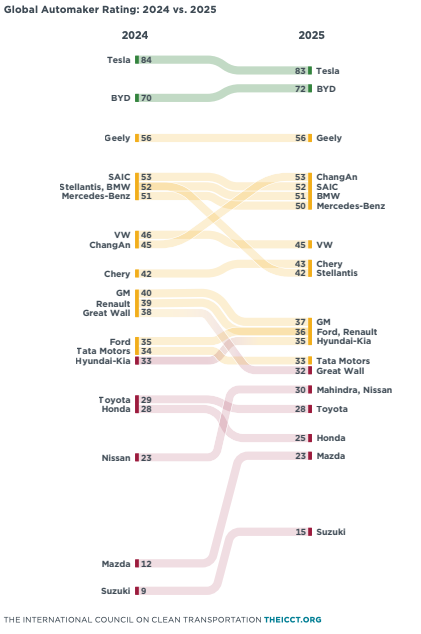
The ICCT’s 2025 Global Automaker Rating revealed a clear hierarchy in the industry’s transition to electric vehicles. Tesla and BYD emerged as the undisputed leaders, occupying the top tier of the overall ranking. Their consistent innovation, significant investment in EV technology, and rapid scaling of production have positioned them at the forefront of the zero-emission revolution.
In stark contrast, Japanese manufacturers collectively occupied the bottom five spots in the overall ranking. This significant underperformance places them considerably behind their global peers in terms of EV adoption and strategy. The report suggests that their continued reliance on hybrid technology and a slower pivot to full electrification are key factors contributing to their lagging position in the global race.
ZEV-Equivalent Sales Share: A Measure of Progress
The report also analyzed the Zero-Emission Vehicle (ZEV)-equivalent sales share for these automakers. The data indicated that almost all evaluated automakers saw an increase in their electric sales share. Chinese brands such as Geely, Changan, and SAIC were at the forefront of this growth, demonstrating a strong commitment to expanding their electric offerings.
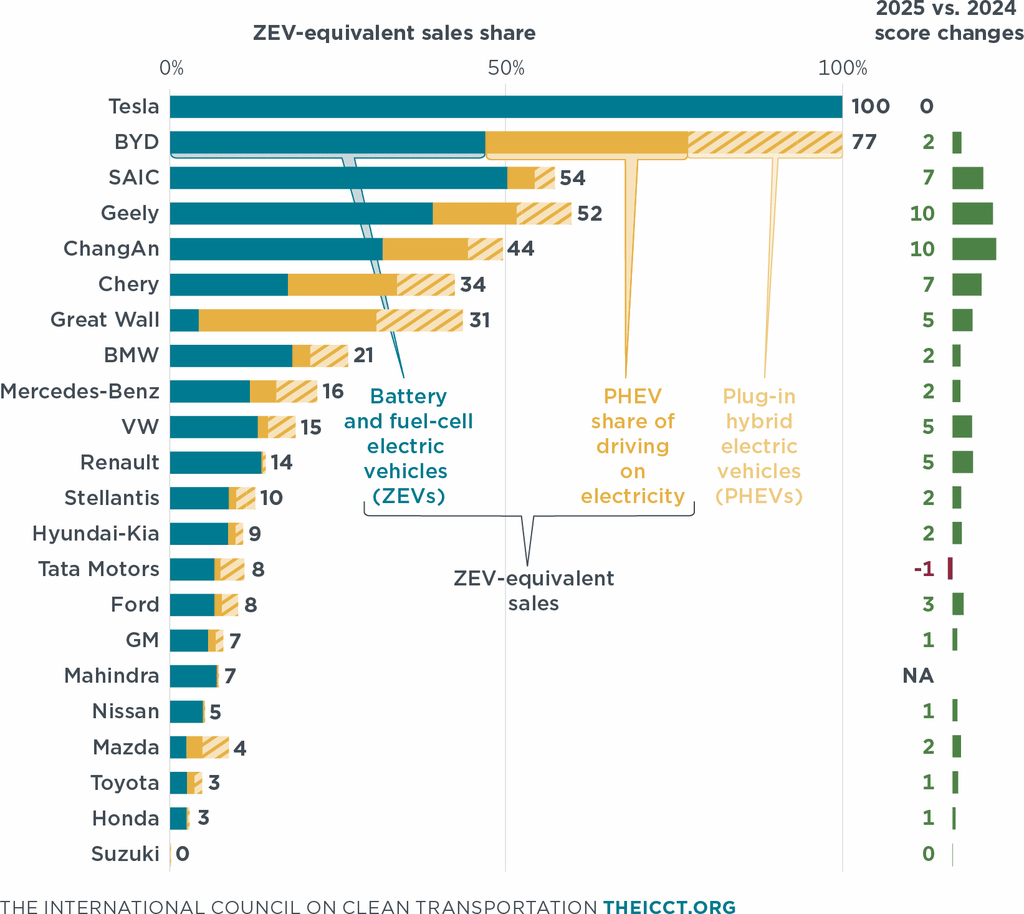
However, legacy foreign automakers, particularly those from Japan and South Korea, still lag significantly behind. The ICCT’s analysis suggests that these companies will need to dramatically accelerate their EV sales volumes and production capabilities to meet upcoming climate standards and regulatory requirements. The gap between their current sales share and the ambitious targets set by various governments and environmental bodies is considerable, indicating a substantial challenge ahead.
ZEV Investment: Fueling Future Growth
A critical component of the ICCT’s analysis focused on Zero-Emission Vehicle (ZEV) investment trends. The findings indicated a proactive approach by Chinese manufacturers, who are substantially increasing their capital investments per vehicle. This strategic investment is aimed at expanding their production capacity and global reach, with a particular focus on emerging markets like Southeast Asia and Latin America.
Conversely, legacy automakers in the United States, Europe, and Japan have shown a tendency to either pull back on their planned EV investments or maintain them at stagnant levels. This cautious approach, potentially influenced by short-term market fluctuations or a hedging strategy involving hybrid technologies, risks weakening their future market position. As Chinese companies aggressively invest and expand, they are poised to gain greater economies of scale and establish stronger footholds in the world’s fastest-growing automotive markets.
ZEV Targets: Ambition vs. Reality
The ICCT report also critically examined the stated ZEV targets of major automakers. While leading companies like Changan and BYD have demonstrably strengthened their EV production and sales goals, a concerning trend has emerged among several major legacy brands. These companies have reportedly rolled back or significantly lowered their 2030 EV targets, often by pivoting their focus back towards hybrid vehicles.
This strategic retreat from ambitious electrification goals is a significant concern for global climate action. By reducing their commitment to BEVs, these automakers risk undermining the progress needed to meet international climate targets, such as those outlined in the Paris Agreement. The shift towards hybrids, while offering some improvement over traditional ICE vehicles, does not represent the same level of emissions reduction as a full transition to ZEVs.
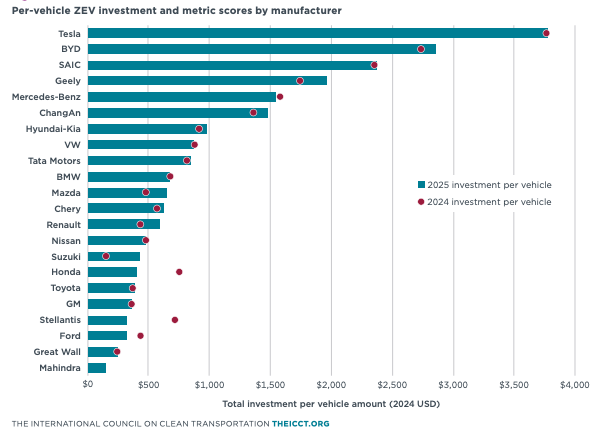
Dale Hall elaborated on these strategic divergences: "In terms of long-term strategic vision, we see a clear divergence across regional lines. Several of the legacy brands – like Stellantis in Europe, Ford in the US, and Honda in Japan – reduced their mid-term targets amid short-term policy changes and are trying to hedge their investments by adopting more flexible platforms and hybrids, reducing their EV investments. Whereas the market leaders – like BYD, Geely, and SAIC, all from China – are aggressively increasing their EV investments and expanding their production capacity into new markets, again like Southeast Asia and Latin America. That will continue to give them more economies of scale and further footholds in the fastest-growing car markets in the world."
Implications for the Future of Automotive Manufacturing
The findings presented by Greenpeace Japan and the ICCT paint a clear picture of a rapidly bifurcating automotive industry. Companies that are aggressively investing in and prioritizing BEV technology, particularly those from China, are gaining significant market share and establishing themselves as future leaders. Their strategic foresight, coupled with competitive product offerings and a willingness to invest in emerging markets, positions them for sustained growth.
Conversely, automakers that are perceived as hesitant or are strategically hedging their bets with a continued emphasis on hybrids risk falling behind. Their legacy advantages may not be sufficient to overcome the momentum of their more agile competitors. The implications extend beyond market share, impacting global efforts to combat climate change. A slower transition to ZEVs by major manufacturers could delay the achievement of crucial emissions reduction targets and prolong the environmental burden on vulnerable populations.
The coming years will be decisive. As governments worldwide continue to implement stricter emissions regulations and incentivize EV adoption, the strategic choices made by automakers today will determine their success or failure in the evolving automotive landscape. The global race to zero emissions is not just about technological innovation; it is increasingly about strategic vision, investment commitment, and the willingness to adapt to a rapidly changing world.

 Azzam Bilal Chamdy
 Lina Irawan