 Rifan Muazin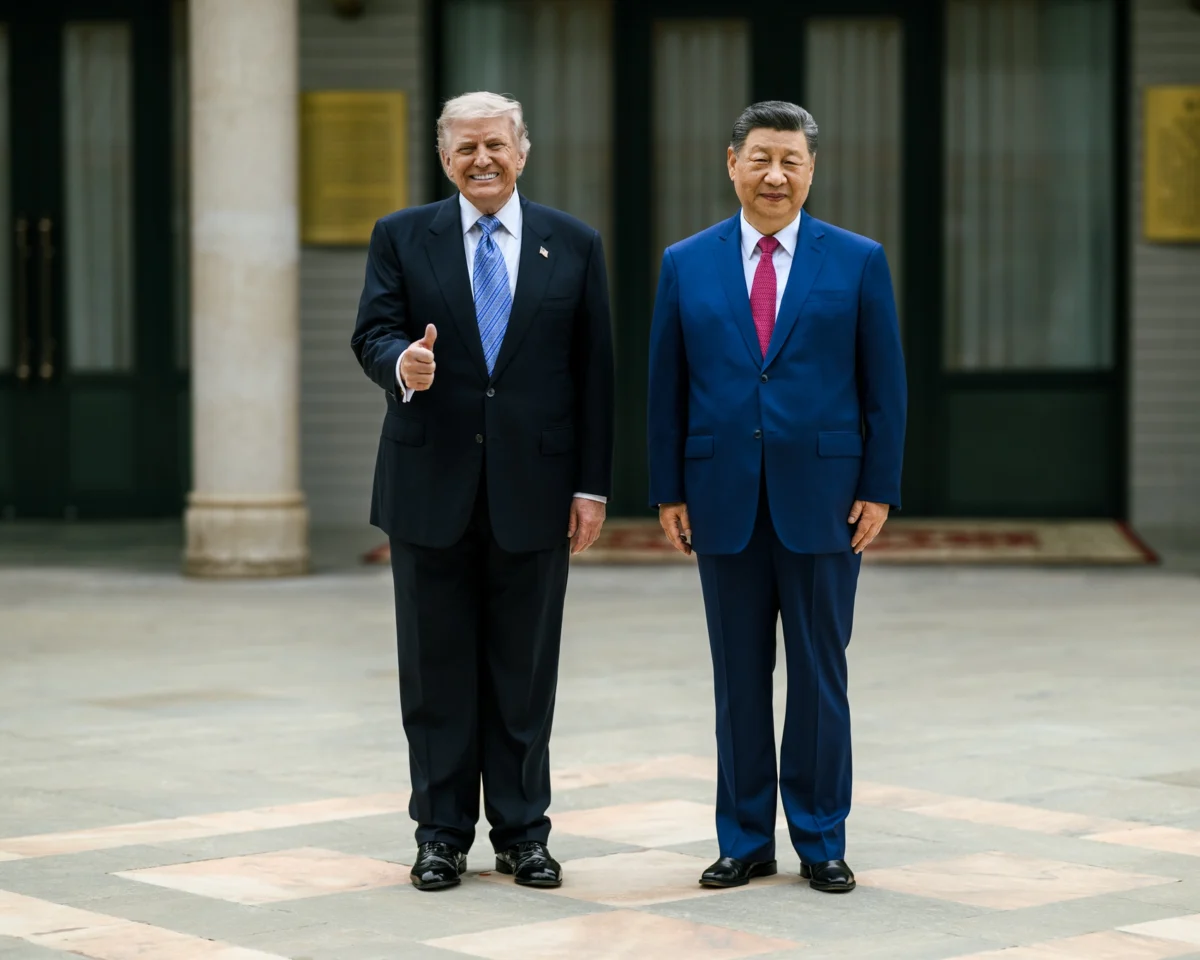
China on Wednesday vehemently denied accusations from the United States that its artificial intelligence (AI) laboratories were systematically stealing capabilities from American models, labeling the claims as "groundless" and a "typical case of using the crackdown on distillation as a pretext to achieve industrial monopoly." This sharp rebuttal comes amid an intensifying technological rivalry between the two global powers, with AI emerging as a critical battleground, and precedes an anticipated high-stakes meeting between US President Donald Trump and Chinese counterpart Xi Jinping this month.
Unpacking the US Advisory: Allegations of Industrial-Scale Knowledge Distillation

The specific allegations were outlined in an advisory released on Tuesday by the US cyber defense agency, the Cybersecurity and Infrastructure Security Agency (CISA). The advisory accused several prominent Chinese AI labs, including DeepSeek and Moonshot AI, of engaging in "industrial-scale knowledge distillation campaigns" to illicitly acquire the advanced capabilities of leading American AI systems. According to the US, these Chinese entities have allegedly deployed sophisticated methods to mimic and absorb the functionalities of models developed by US pioneers such as OpenAI, Anthropic, Google, and xAI.
Knowledge distillation, in the context of AI, is a technique where a smaller, simpler AI model is trained to replicate the performance and output of a larger, more complex "teacher" model. While this method has legitimate applications—such as creating more efficient models for deployment on devices with limited computational resources—the US advisory contends that Chinese firms have leveraged it at an unprecedented scale and with malicious intent. The advisory detailed how companies like DeepSeek, Moonshot AI, Alibaba, MiniMax, StepFun, and Z.AI purportedly made millions of exchanges and requests to these US models, effectively extracting their inherent intelligence and functionalities. This systematic approach, the advisory claimed, allowed Chinese companies to achieve "significantly shorter AI development timelines and reduced financial expenditures in training a frontier model." The US also suggested that these actions have been ongoing since at least late 2024 and were "likely with Chinese government awareness," implying state involvement or endorsement.
Beijing Strikes Back: "Groundless Accusations" and Claims of Industrial Monopoly

Beijing’s response was swift and unequivocal. The Chinese Ministry of Commerce issued a strong statement on Wednesday, dismissing the US accusations as entirely unfounded. The Ministry argued that the American approach constituted "double standards" and was a thinly veiled attempt to stifle competition and consolidate US dominance in the burgeoning AI sector. "The US approach is a typical case of using the crackdown on distillation as a pretext to achieve industrial monopoly," the statement read, implying that the US was weaponizing intellectual property concerns to protect its market lead.
Further reinforcing China’s stance, Foreign Ministry spokeswoman Mao Ning addressed the allegations at a regular press briefing. She urged the United States to "refrain from making unfounded accusations against and smearing China." Mao underscored China’s commitment to indigenous innovation, stating, "The development of artificial intelligence in China is the result of achieving high-level self-reliance and strength in science and technology." While defending China’s advancements, she also offered an olive branch of sorts, adding, "Both China and the United States are major countries in the field of AI. We should strengthen cooperation." This duality—asserting independence while calling for collaboration—highlights the complex diplomatic tightrope Beijing seeks to walk.
A New Front in the US-China Tech War: The Race for AI Dominance

These latest accusations mark a significant escalation in the ongoing technological rivalry between the United States and China, transforming AI into a critical battleground. The broader context of this dispute is the struggle for global tech supremacy, which has seen previous skirmishes over semiconductors, 5G network technology, and data security concerns surrounding apps like TikTok. For years, the US has expressed concerns over intellectual property theft by Chinese entities across various sectors, leading to trade disputes and economic sanctions. The current focus on AI, however, represents a new and potentially more impactful front.
Artificial intelligence is widely recognized as a foundational technology that will reshape global economies, national security landscapes, and geopolitical influence in the 21st century. Its applications range from advanced military systems and cybersecurity to economic productivity, healthcare, and scientific research. Both the US and China view leadership in AI as paramount to their respective national interests and future prosperity. China, through initiatives like "Made in China 2025" and ambitious national AI development plans, has explicitly stated its goal to become a world leader in AI by 2030, investing heavily in research, talent, and infrastructure. The US, in turn, has sought to maintain its technological edge through export controls, investment restrictions, and now, direct accusations of illicit IP acquisition. This dynamic creates an environment where every advance, every technical methodology, becomes a point of contention.
Understanding Knowledge Distillation: Legitimate Use vs. Illicit Copying

To fully grasp the nature of the US accusations, it is important to understand knowledge distillation. In machine learning, knowledge distillation is a technique where a smaller, simpler model (the "student") is trained to mimic the behavior of a larger, more complex, and typically more accurate model (the "teacher"). The teacher model’s "knowledge" – often in the form of soft targets (probabilities) rather than hard labels – is transferred to the student model. This process allows the student model to achieve performance comparable to the teacher model, but with significantly fewer parameters, making it faster, smaller, and less computationally expensive. It is widely used for model compression and deployment in resource-constrained environments like mobile devices or embedded systems.
The crux of the US advisory’s argument lies not in the technique itself, but in its alleged "industrial-scale" application for "illicitly" copying. The advisory implies that Chinese firms are not merely using distillation to optimize their own legitimately developed models but are systematically querying and analyzing the outputs of proprietary US frontier models to reverse-engineer their capabilities or bypass the extensive and costly research and development required to build such models from scratch. While training an AI model on publicly available data or outputs from other models can be a grey area in terms of intellectual property, the US claims suggest a level of systematic extraction that crosses the line into infringement, particularly when the intent is to shortcut the innovation process and gain an unfair competitive advantage. This distinction between legitimate research and alleged theft is central to the ongoing debate.
Spotlight on Accused Chinese AI Firms and Industry Reaction

The US advisory specifically named six Chinese AI companies: DeepSeek, Moonshot AI, Alibaba, MiniMax, StepFun, and Z.AI. These firms represent a cross-section of China’s burgeoning AI ecosystem, from established tech giants like Alibaba to relatively newer, high-profile startups like DeepSeek and Moonshot AI, which have garnered significant investment and attention for their rapid advancements. When contacted for comment, Moonshot AI reportedly declined, while DeepSeek did not immediately respond, and StepFun was not reachable. This lack of detailed response from the accused firms leaves the specifics of their AI development processes open to further scrutiny.
The broader industry reaction to the intensifying tech rivalry has been mixed. In July of the previous year, a group of dozens of US AI startups penned a letter to the Trump administration, urging caution against implementing outright bans or overly strict curbs on foreign-made AI models. These companies argued that such measures should only be considered for government use of the technology, highlighting concerns that broad restrictions could hinder innovation, limit market access, and ultimately harm the US AI ecosystem by cutting off valuable collaborations or competitive alternatives. This indicates a segment of the US industry that prefers a more open approach, contrasting with the national security focus of the government.
Interestingly, Beijing has also previously turned the tables on the US. In the same month (July of the previous year), Chinese officials accused US AI models of utilizing Chinese examples and data to train their systems. This tit-for-tat exchange underscores the complex and often reciprocal nature of data usage and model training in the global AI landscape, where the origins and ownership of digital "knowledge" are increasingly difficult to delineate.

Escalating Tensions: A Timeline Leading to the Summit
The sequence of events highlights the rapid escalation of this particular AI-centric dispute.
- Late 2024: US intelligence suggests alleged "industrial-scale knowledge distillation campaigns" by Chinese firms began.
- July (Previous Year): A period of heightened debate, with US startups lobbying against foreign AI bans and Beijing counter-accusing US AI models of using Chinese data.
- Tuesday: The US Cybersecurity and Infrastructure Security Agency (CISA) releases its advisory, publicly naming Chinese AI labs and detailing the alleged theft.
- Wednesday: China’s Ministry of Commerce and Foreign Ministry issue strong denials, calling the accusations "groundless" and politically motivated.
- This Month: An anticipated meeting between President Donald Trump and President Xi Jinping at the White House is expected. Given the timing of these accusations and China’s strong reaction, AI and intellectual property protection are now almost certain to be significant, and potentially contentious, discussion topics at the summit. The allegations inject a new layer of tension into an already complex diplomatic agenda, where both leaders will likely seek to project strength while navigating a path towards de-escalation or at least managed competition.
Geopolitical Ripples and the Future of AI Collaboration

The accusations and subsequent denials carry significant geopolitical implications, further straining an already fraught US-China relationship. Beyond the immediate diplomatic fallout, these developments could pave the way for new rounds of US sanctions, export controls, or investment restrictions specifically targeting China’s AI sector. The US has already demonstrated its willingness to use such tools to limit China’s access to critical technologies, particularly advanced semiconductors essential for AI development. Expanding these restrictions to AI software models or related services could have far-reaching consequences for global supply chains and the international AI research community.
The incident also highlights the profound challenges in defining and enforcing intellectual property rights in the rapidly evolving field of artificial intelligence. Traditional IP laws, designed for tangible inventions or clearly demarcated software code, struggle to adapt to the fluid nature of AI model training, where "knowledge" is absorbed from vast datasets and interactions. Establishing clear international norms and legal frameworks for AI intellectual property will be crucial, yet inherently difficult given the differing national interests and technological philosophies of leading nations.
Ultimately, the escalating rhetoric underscores the intense global race for AI leadership. While both China and the US acknowledge the potential benefits of cooperation, the current environment is characterized by deep distrust and fierce competition. The future of AI development, and indeed the broader trajectory of US-China tech relations, will heavily depend on how these accusations are addressed, whether through diplomatic engagement, further unilateral actions, or the challenging endeavor of forging new international standards for AI innovation and governance. The stakes are immense, impacting not just economic competitiveness but also national security and the very shape of the future digital world.

 Basiran
 Jia Lissa