
 Nila Kartika Wati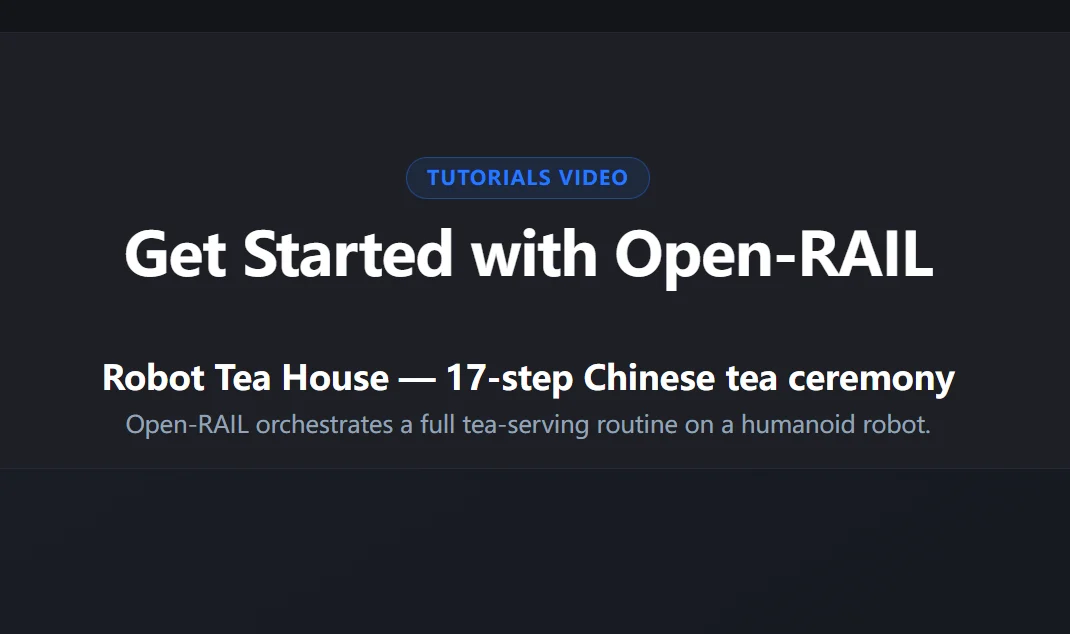
China Mobile, one of the world’s largest telecommunications operators, has made a significant stride in the field of artificial intelligence and robotics by open-sourcing Open-RAIL. This innovative engineering base is meticulously designed to connect sophisticated vision-language-action (VLA) and world-action-model (WAM) systems directly with a wide array of robot bodies. Its core innovation lies in its ability to integrate model inference, real-robot execution, continuous data feedback, and iterative model refinement into a single, cohesive workflow. This initiative marks a pivotal moment in the quest to overcome the persistent challenge of deploying advanced AI models onto heterogeneous robotic platforms, promising to accelerate the development and widespread adoption of intelligent autonomous systems.
The Genesis of Open-RAIL: Addressing the "Last Mile" Problem in Robotics
For years, the robotics industry has grappled with what is often referred to as the "last mile" problem. While remarkable progress has been made in developing highly intelligent AI models, particularly in areas like computer vision, natural language processing, and complex decision-making, translating these capabilities into robust, real-world actions on diverse physical robots has remained a formidable hurdle. Each robot platform, with its unique hardware specifications, control interfaces, and sensor configurations, typically requires extensive, bespoke integration efforts. This fragmentation has significantly slowed down the deployment of cutting-edge AI research into practical applications, limiting the scalability and versatility of robotic systems.
The emergence of Vision-Language-Action (VLA) and World-Action-Model (WAM) systems represents a paradigm shift in AI for robotics. VLA models, exemplified by projects from leading AI research labs globally, enable robots to interpret complex human instructions in natural language, perceive their environment through visual inputs, and translate these understandings into a sequence of physical actions. WAM models, on the other hand, build a more comprehensive understanding of the physical world, allowing robots to reason about objects, their properties, and potential interactions, thereby facilitating more intelligent and adaptive behaviors. These models leverage the power of large-scale neural networks, often pre-trained on vast datasets, to develop a generalized understanding that can be fine-tuned for specific robotic tasks. Companies like Google, Meta, and OpenAI have been at the forefront of this research, demonstrating robots capable of performing complex tasks from open-ended commands, often learning from relatively small amounts of robot interaction data by leveraging pre-existing knowledge from internet-scale data. However, bringing these powerful, abstract models into consistent operation across different robot brands, types, and kinematics has been the bottleneck Open-RAIL now seeks to alleviate.
China Mobile’s Strategic Vision and Open-Source Commitment
China Mobile’s foray into open-source robotics through Open-RAIL is not merely a technical undertaking but a strategic move reflecting broader national and corporate ambitions. As a telecommunications giant, China Mobile is deeply invested in the future of 5G and 6G technologies, edge computing, and the Internet of Things (IoT). Robotics, particularly intelligent, connected robots, represent a critical application layer for these advanced network infrastructures. By enabling seamless integration of advanced AI with robotics, China Mobile positions itself at the nexus of connectivity and intelligent automation, fostering an ecosystem that can drive demand for its core services while also contributing to the broader digital economy.
The decision to open-source Open-RAIL aligns with a growing global trend in AI and robotics development, where collaborative, community-driven efforts are recognized as powerful accelerators of innovation. Open-source platforms lower the barrier to entry for researchers, startups, and smaller enterprises, enabling them to build upon existing foundations rather than starting from scratch. For China Mobile, this approach can foster a vibrant developer community around Open-RAIL, leading to faster iteration, wider adoption, and the emergence of new applications that might not have been envisioned internally. It also allows for the establishment of de facto industry standards, positioning China Mobile as a key enabler in the intelligent robotics space. This move can be seen as part of China’s broader national strategy to achieve global leadership in AI and advanced manufacturing, as outlined in initiatives like "Made in China 2025" and the "New Generation Artificial Intelligence Development Plan," which emphasize fostering innovation and building robust domestic ecosystems for critical technologies.
Technical Prowess: Unpacking Open-RAIL’s Architecture
At its heart, Open-RAIL is an intricate engineering base designed for robust interoperability. It currently boasts support for four heterogeneous robot platforms, demonstrating its ability to abstract away hardware-specific complexities. Furthermore, it integrates seamlessly with 10 different VLA or WAM models, providing a versatile framework for AI researchers and roboticists. The project documentation highlights a remarkable efficiency metric: integrating a new model into Open-RAIL can be achieved with as little as 50 to 100 lines of code. This drastically reduces the development overhead typically associated with model deployment and porting.
The cornerstone of Open-RAIL’s technical innovation is its sophisticated hardware-abstraction layer. This layer serves as a universal translator, standardizing critical functions across diverse robot platforms. It provides a unified interface for control commands, facilitating consistent action execution regardless of the robot’s underlying mechanics or proprietary software. Simultaneously, it standardizes state reading, ensuring that feedback from various sensors (e.g., joint positions, force sensors, camera feeds) is presented in a consistent format to the AI models. This standardization is crucial for the "data feedback" and "model iteration" components of Open-RAIL’s workflow. By offering a consistent operational environment, Open-RAIL streamlines the process of gathering real-world interaction data, which is essential for refining and improving VLA/WAM models through continuous learning and adaptation. This workflow creates a virtuous cycle: improved models lead to better robot performance, which in turn generates higher-quality data for further model enhancement.
Implications for the Robotics Landscape and Beyond
The introduction of Open-RAIL carries profound implications for the global robotics industry.
- Accelerated Development and Deployment: By simplifying the integration of advanced AI models with physical robots, Open-RAIL can significantly reduce the time and cost associated with developing new robotic applications. This acceleration means that innovations in AI research can be translated into real-world robotic capabilities much faster, shortening the research-to-product cycle.
- Democratization of Advanced Robotics: The reduced complexity and open-source nature of Open-RAIL can lower the barriers to entry for smaller companies, startups, and academic institutions. They no longer need to invest heavily in developing bespoke integration solutions for each robot and AI model, allowing them to focus resources on specific application development and novel AI research. This could foster a more diverse and innovative robotics ecosystem globally.
- Enhanced Interoperability and Standardization: Open-RAIL’s hardware-abstraction layer has the potential to become a de facto standard for connecting AI models to robotic hardware. Increased interoperability would allow different manufacturers to develop robots that are readily compatible with a wider range of AI systems, and vice-versa, fostering a more interconnected and efficient industry.
- Broadening Application Areas: With easier deployment of intelligent robots, new applications across various sectors are likely to emerge or become more viable. In manufacturing, robots could adapt more readily to changes in product lines or factory layouts. In logistics, intelligent robots could navigate and interact more effectively in complex warehouse environments. In healthcare, assistant robots could perform a wider array of tasks with greater adaptability. Service robots could offer more personalized and sophisticated interactions in retail, hospitality, and elderly care.
- Economic Impact and Competitive Dynamics: This initiative could stimulate economic growth by creating new markets for intelligent robotics solutions and fostering job creation in related fields. From a geopolitical perspective, Open-RAIL underscores China’s commitment to leading in critical technologies. By developing and open-sourcing foundational platforms, China aims to establish its influence in shaping global technology standards and accelerating its domestic technological self-reliance, potentially challenging the dominance of Western platforms in certain areas.
Challenges and Future Outlook
While Open-RAIL presents a compelling vision, its path to widespread adoption and sustained impact will face several challenges. Scalability is paramount; as the number of supported robots and AI models grows, the platform must maintain its efficiency and ease of integration. The robustness and reliability of the system, especially for mission-critical applications, will be continuously tested. Ensuring the safety of autonomous systems, particularly those operating in human environments, requires rigorous testing and adherence to evolving ethical guidelines. Furthermore, the global robotics community’s willingness to adopt a platform developed by a Chinese state-owned enterprise will be a key factor in its international success. Data security and privacy considerations, especially given China Mobile’s telecommunications background, will also be under scrutiny.
Despite these challenges, Open-RAIL represents a significant leap forward in bridging the chasm between advanced artificial intelligence and the practical realities of robotic deployment. By simplifying the complex interplay between sophisticated VLA/WAM models and diverse robot hardware, China Mobile’s open-source initiative promises to unlock new frontiers in intelligent automation. As the platform matures and its community grows, Open-RAIL is poised to play a crucial role in shaping the next generation of adaptable, intelligent, and widely deployable robots, fundamentally transforming industries and human-robot interaction in the decades to come. Its success will be a testament not only to technical ingenuity but also to the power of open collaboration in advancing the frontiers of artificial intelligence and robotics.


 Jia Lissa
 Laily UPN