Iffa Jayyana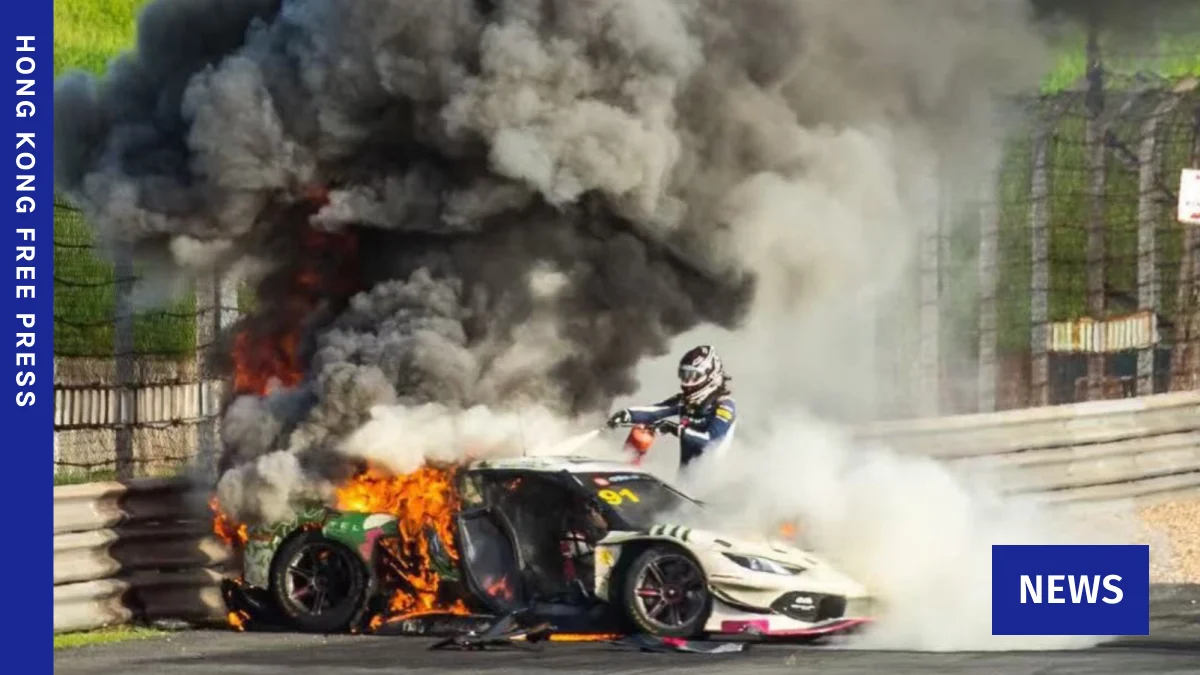
In a dramatic display of courage and sportsmanship that transcended the fierce competition of motorsport, Dutch racing driver Loek Hartog has been hailed as a "superhero" after he pulled British rival Ollie Millroy from the fiery wreckage of his car during a horror crash at the China GT Championship in Shanghai. The swift, selfless act, captured on video, is credited with saving Millroy’s life, though it has simultaneously cast a critical spotlight on the safety standards and emergency response protocols at the prestigious Shanghai International Circuit. The incident, which occurred on Saturday, September 5, 2026, during a high-stakes race, has not only united the racing community in admiration for Hartog but has also ignited a contentious debate about the responsibilities of race organizers in ensuring the immediate safety of competitors.
A Fiery Crash and a Heroic Intervention
The terrifying sequence of events unfolded during the China GT Championship race, held at the sprawling Shanghai International Circuit, a venue renowned for hosting the Chinese Formula One Grand Prix. Ollie Millroy, a 36-year-old British racer, was involved in a multi-car collision that left his vehicle, a Ferrari, instantly engulfed in flames. The severity of the impact was immense, rendering Millroy disoriented and trapped inside the burning cockpit. Crucially, in the critical moments immediately following the crash, there were no flag marshals or fire crews visibly on the scene to provide immediate assistance, leaving Millroy’s life hanging precariously in the balance as the blaze intensified around him.
It was at this harrowing juncture that Loek Hartog, a 23-year-old Dutch competitor, made a split-second decision that would define the day. Without hesitation, Hartog brought his own racing machine to a halt, abandoning his position in the race. Leaping from his car, he sprinted towards Millroy’s inferno. Armed with a fire extinguisher, he battled the raging flames, attempting to douse the most immediate threats to the trapped driver. His efforts, however, went beyond firefighting. Displaying remarkable presence of mind and physical strength, Hartog managed to yank open the driver’s door of the burning Ferrari and, against the backdrop of intense heat and smoke, physically dragged Millroy from the mangled cockpit to relative safety. This heroic intervention, undertaken with complete disregard for his own personal safety, prevented what could have been a catastrophic outcome, providing precious seconds until official emergency services could eventually arrive.

The Scene at Shanghai International Circuit
The Shanghai International Circuit, a state-of-the-art facility designed by Hermann Tilke, is typically lauded for its modern infrastructure and capacity to host top-tier international motorsport events. However, the events of September 5th have raised serious questions about the operational readiness of its emergency response systems during a China GT Championship event. The circuit, with its distinctive ‘Shang’ character layout, covers a vast area, and the deployment of marshals and fire crews at every strategic point is paramount for rapid intervention in high-speed incidents. The reported delay in the arrival of official rescue personnel at Millroy’s crash site suggests a significant lapse, potentially indicating issues with marshal placement, communication protocols, or the overall speed of deployment for critical resources. In motorsport, where every second can mean the difference between life and death, the absence of immediate professional aid for over a minute in a burning vehicle is a severe concern that demands urgent attention and a comprehensive overhaul of existing safety protocols.
Ollie Millroy: A Lucky Escape and Lingering Injuries
Following the harrowing ordeal, Ollie Millroy was rushed to a local hospital, where he was assessed for his injuries. Despite the dramatic rescue, the impact of the crash and the subsequent fire had taken a heavy toll. Millroy reported sustaining five broken ribs, a broken collarbone, a broken hand and finger, and a bruised lung. While severe, these injuries are considered a testament to the safety features built into modern racing cars and, more critically, to Hartog’s rapid intervention, which prevented more life-threatening burns or smoke inhalation.
From his hospital bed, Millroy took to Instagram to express his profound gratitude, acknowledging the near-fatal nature of the incident. "I am still alive tonight entirely thanks to one man," Millroy posted, his words echoing the gravity of the situation. He continued, "Loek Hartog stopped instantly with no flag marshals or fire crews in sight and risked his own life to get me out of the car." The British driver confessed to having no recollection of the crash itself but vowed to remember Hartog’s "incredible act of bravery for the rest of my life." He added a deeply personal touch, stating, "One day I will tell our three kids this story and Loek will be the biggest superhero in history in their eyes too." This sentiment underscored not only his immense appreciation but also the lasting psychological impact of the incident.
Loek Hartog: The Unassuming Hero
In stark contrast to the dramatic narrative unfolding around him, Loek Hartog, the 23-year-old Dutch driver, remained remarkably humble about his actions. After visiting Millroy in the hospital, Hartog shared his perspective on social media, downplaying his heroics. "It was terrifying and there were moments when I didn’t know if I’d ever manage to get Ollie out," he admitted, offering a glimpse into the intense pressure of the moment. However, he quickly deflected praise, stating, "But it’s not about what I did. I’m sure many people in my position would have reacted exactly the same way." His primary concern, he emphasized, was Millroy’s well-being: "The most important thing is that Ollie is okay. Things could have turned out very differently today and I’m truly grateful that they didn’t." Hartog’s response embodies the quiet courage often seen in high-stakes environments, where professional athletes, despite their competitive nature, often share a profound bond and an unspoken commitment to each other’s safety. His actions have garnered widespread acclaim across the international motorsport community, cementing his status as a beacon of sportsmanship.

A Deep Dive into Motorsport Safety Protocols
The incident has inevitably triggered a critical examination of motorsport safety protocols, particularly within regional championships like the China GT. Top-tier global motorsport, such as Formula 1, FIA World Endurance Championship, or IMSA, operates under stringent safety regulations mandated by the FIA (Fédération Internationale de l’Automobile). These protocols include, but are not limited to:
- Rapid Intervention Teams: Highly trained medical and fire crews strategically positioned around the track, equipped with specialized vehicles and tools for immediate response.
- Marshal Posts: Experienced marshals at regular intervals, equipped with flags and communication devices to signal dangers and summon aid.
- Safety Car and Medical Car: Vehicles on standby, ready to deploy instantly to control the pace of the race and provide immediate medical attention.
- Vehicle Safety Standards: Mandatory fire suppression systems, HANS (Head and Neck Support) devices, robust chassis construction, and fuel cell integrity designed to withstand extreme impacts and prevent fires.
- Driver Equipment: Fire-resistant overalls, helmets, gloves, and boots offering critical protection against heat and flames.
- Communication Systems: Seamless communication networks between race control, marshals, and medical teams to ensure coordinated and rapid responses.
The fact that Loek Hartog, a fellow competitor, had to be the first responder and initiate the rescue with a standard fire extinguisher raises serious questions about the adherence to these globally recognized best practices at the China GT Championship race. While no motorsport event can be entirely risk-free, the expectation is that a robust safety infrastructure is in place to mitigate risks and respond effectively to emergencies.
AAI Motorsport’s Stinging Critique and Withdrawal
The most vocal condemnation of the perceived safety shortcomings came from Millroy’s team, AAI Motorsport. In a strongly worded statement, the team announced its immediate withdrawal from "any races organised by China GT," citing grave concerns about the safety standards at the circuit. The statement highlighted the crucial period after the crash, noting that Millroy’s car "continued to burn for more than a minute" and, critically, that "no timely and effective firefighting and rescue operations were seen."
This direct accusation from a participating team is a significant blow to the reputation of the China GT Championship and the Shanghai International Circuit. AAI Motorsport’s decision to withdraw underscores a deep-seated lack of confidence in the organizing body’s ability to protect its drivers. Such a move by a prominent team could potentially trigger a wider reassessment by other teams and drivers regarding their participation in future events, forcing the championship to address these issues with utmost urgency and transparency. The implications for the championship’s credibility and future viability are substantial if other teams follow suit.

China GT Championship’s Pledge for Review
In response to the escalating criticism and the gravity of the incident, the China GT Championship organizing committee issued a statement via Weibo. The committee expressed its "sincere apology for this accident and for the subsequent shock and distress it has caused." Acknowledging the seriousness of the situation, they pledged to "conduct a thorough review and investigation into this accident, and draw up more comprehensive plans to address any shortcomings."
The statement also extended sympathies to Ollie Millroy and the other drivers involved, wishing them a speedy recovery. Crucially, the committee formally acknowledged and expressed "deep gratitude and respect to Loek Hartog, who was the first driver to arrive at the scene of the accident and provide assistance." While this official response is a necessary first step, the motorsport community will be closely watching for concrete actions and tangible improvements. A thorough investigation would likely encompass:
- Review of Marshal Deployment: Examining the number, positioning, training, and equipment of marshals around the circuit.
- Emergency Response Timelines: Scrutinizing the time taken for medical and fire crews to reach the incident site, from initial notification to on-scene arrival.
- Communication Protocols: Assessing the effectiveness of communication channels between race control, marshals, and emergency services.
- Equipment Readiness: Verifying the functionality and accessibility of firefighting equipment at various points on the track.
- Post-Crash Procedures: Evaluating the adherence to established safety car and red flag procedures.
The outcome of this investigation and the subsequent reforms will be pivotal in restoring confidence in the China GT Championship and in the overall safety management of events at the Shanghai International Circuit.
Historical Perspective: The Evolution of Racing Safety
The incident serves as a stark reminder of the inherent dangers of motorsport, even in an era of advanced safety technology. Historically, racing was a far more perilous endeavor. The 1960s and 70s, for instance, were marred by numerous fatalities, leading to a concerted global effort to enhance driver and track safety. Iconic figures like Jackie Stewart became outspoken advocates for safety, pushing for reforms in car design, track barriers, and medical response. Landmark changes included the introduction of fire-resistant clothing, the mandatory use of safety harnesses, improved cockpit integrity, and the development of crash-absorbing barriers.

More recent tragedies, such as Ayrton Senna’s death in 1994, prompted another wave of revolutionary safety enhancements, including the HANS device, stricter crash test requirements, and the evolution of circuit design to incorporate larger run-off areas and safer gravel traps. Fire safety has also seen significant advancements, with onboard automatic fire suppression systems becoming standard in many categories, alongside the development of specialized fire-resistant materials for car components and driver gear.
The events in Shanghai underscore that while technology and regulations have vastly improved safety, human vigilance, rapid response, and adherence to protocols remain absolutely critical. The gap in immediate professional response highlighted by Millroy’s incident suggests that while the cars themselves may be safer, the operational safety infrastructure may not always meet the highest international standards, especially in regional series.
Beyond the Checkered Flag: Sportsmanship and Solidarity
Beyond the crucial safety concerns, Loek Hartog’s act of heroism has resonated deeply within the racing community and with the wider public. It serves as a powerful testament to the enduring spirit of sportsmanship and solidarity that often underpins even the most fiercely competitive sports. In a world increasingly focused on individual achievement and rivalry, Hartog’s selflessness reminded everyone that human life and well-being transcend any race outcome or championship points.
His actions echo similar instances of heroism in motorsport history, where drivers have risked their lives for fellow competitors, cementing a narrative of camaraderie amidst danger. These moments often become legendary, shaping the public perception of racers not just as athletes pushing the limits of speed, but as individuals capable of extraordinary courage and compassion. Millroy’s description of Hartog as a "superhero" perfectly encapsulates this sentiment, elevating the Dutch driver beyond a mere competitor to an emblem of motorsport’s better angels.

The Road Ahead for China GT and Driver Safety
The incident involving Ollie Millroy and Loek Hartog marks a critical juncture for the China GT Championship and potentially for other regional motorsport series. The immediate aftermath has seen a team withdraw and the organizing committee commit to a thorough investigation. The true measure of the championship’s commitment to driver safety will be seen in the concrete reforms implemented following this review. This could include significant investments in marshal training, emergency vehicle upgrades, communication system enhancements, and potentially even an independent audit of their safety protocols by an international body like the FIA.
For Ollie Millroy, the road to recovery will be long, but his gratitude for Loek Hartog will undoubtedly last a lifetime. For Loek Hartog, his act of bravery will forever be etched into the annals of motorsport history. This dramatic incident in Shanghai serves as a powerful reminder that while racing will always carry inherent risks, the collective responsibility to mitigate those risks and ensure prompt, professional emergency response is paramount, safeguarding not just the lives of the drivers, but the integrity and future of the sport itself. The focus now shifts from the heroics of one man to the systemic changes required to prevent such a reliance on individual bravery in the face of institutional shortcomings.

 Laily UPN
 Rifan Muazin