Jia Lissa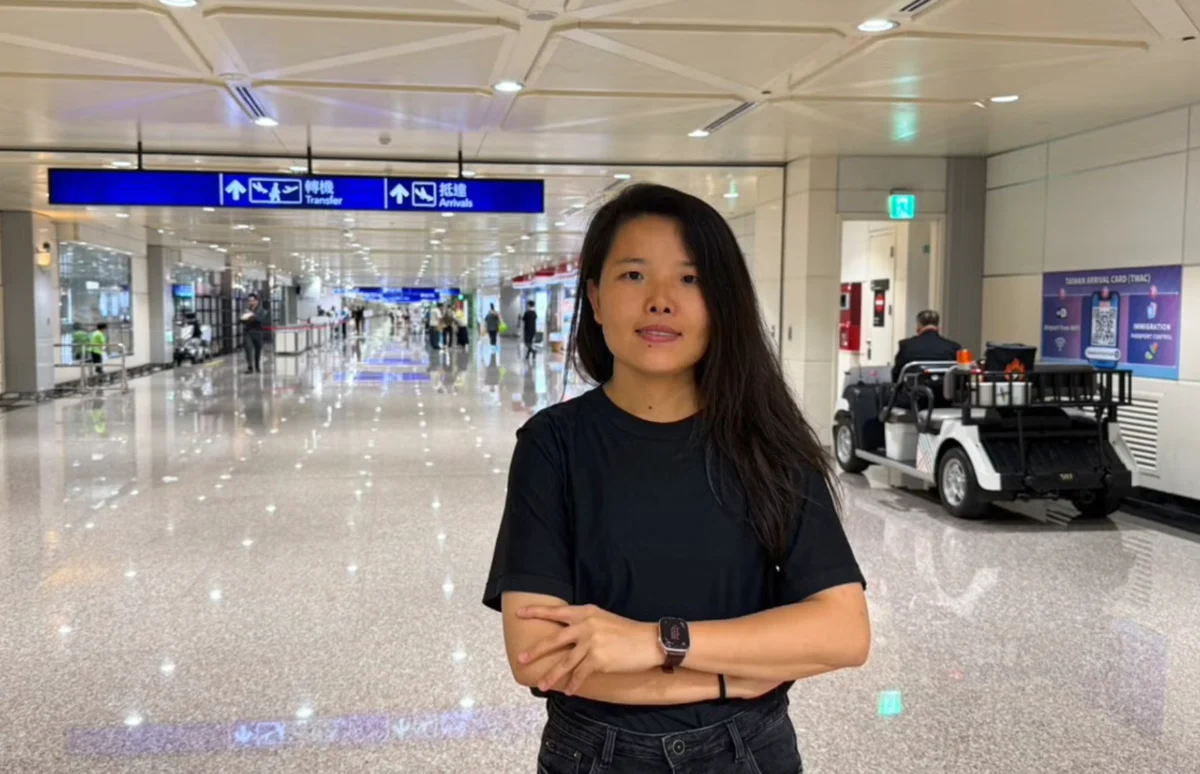
Taiwan announced on Friday that it has granted "temporary accommodation" to a Chinese citizen, a development confirmed by a prominent rights organization that identified the individual as a lawyer representing leaders of an unregistered church in Beijing who has reportedly fled to the island. This move underscores Taiwan’s evolving role as a potential haven for Chinese dissidents, while simultaneously highlighting Beijing’s intensifying crackdown on religious freedom and civil society, particularly affecting human rights lawyers.
The individual, whose identity was not initially disclosed by Taiwanese authorities, was later identified by the U.S.-based human rights group ChinaAid as Ruth Wang. A partner at Beijing’s Vdoor Law Firm, Wang arrived in Taiwan on Wednesday, actively "seeking protection from Taiwanese authorities," according to ChinaAid. Her flight from mainland China, accompanied by her family, is reportedly a direct consequence of escalating government pressure related to her legal work, specifically her representation of detained leaders of the Beijing Zion Church.
Taiwan’s Humanitarian Response and Diplomatic Nuance

Taiwan’s Mainland Affairs Council (MAC), the government body responsible for cross-strait policy, issued a concise statement on Friday acknowledging media reports concerning a "Chinese lawyer seeking assistance in Taiwan." The MAC confirmed that it had provided a "Chinese national transferring through a Taiwanese airport" with "temporary accommodation on humanitarian grounds and is following up on the matter." This carefully worded statement reflects the delicate diplomatic tightrope Taiwan walks. While asserting its commitment to human rights, particularly for those facing political or religious persecution, Taipei must also manage its highly sensitive relationship with Beijing, which views Taiwan as a renegade province and routinely condemns any actions it perceives as interfering in its internal affairs. The phrase "transferring through a Taiwanese airport" suggests a transit arrangement, offering a degree of ambiguity that could mitigate direct accusations of granting political asylum, a move that would undoubtedly provoke Beijing’s ire.
The Persecution of Zion Church and its Leadership
Ruth Wang’s perilous journey to Taiwan is directly linked to her legal defense of the Beijing Zion Church, one of China’s largest and most prominent unregistered Protestant congregations. Unlike state-sanctioned religious bodies that operate under the strict control of the Communist Party – such as the Three-Self Patriotic Movement for Protestants or the Chinese Patriotic Catholic Association for Catholics – unregistered churches, often referred to as "house churches," choose to worship independently. This independence is increasingly seen as a direct challenge to the Party’s authority, which demands absolute loyalty and control over all aspects of public life, including religion.

The Zion Church, known for its intellectual vibrancy and significant urban following, has been under intense pressure for years. Its defiance of government demands, including refusing to install surveillance cameras inside its premises and rejecting registration under state-controlled religious associations, ultimately led to its forced closure in September 2018. Authorities sealed the church, confiscated its property, and even demolished parts of its facilities. Subsequently, in October of the same year, several members of the Zion Church, including its founder Pastor Ezra Jin (also known by his Chinese name Mingri), were detained on "suspicion of the illegal use of information networks." These charges are frequently employed by Chinese authorities to suppress dissenting voices and religious groups deemed problematic.
Pastor Jin, a vocal advocate for religious freedom, was eventually released in July, a development widely believed to be a direct result of international pressure. Notably, U.S. President Donald Trump had raised Jin’s case with Chinese President Xi Jinping during high-level discussions, underscoring the global attention and concern surrounding the crackdown on religious communities in China. However, despite Jin’s release, ChinaAid reports that at least eight other Zion Church members detained in October remain in custody, highlighting the ongoing plight of the congregation and its adherents.
Broader Context: China’s Intensifying Religious Crackdown

The case of Ruth Wang and the Zion Church is not an isolated incident but rather emblematic of a systemic and increasingly severe crackdown on religious freedom across China under President Xi Jinping. Since coming to power, Xi has spearheaded a campaign of "sinicization" of religion, demanding that all faiths align with the Communist Party’s ideology and Chinese culture. This policy has translated into widespread suppression, impacting various religious communities:
- Protestant and Catholic Churches: Unregistered "house churches" face closures, demolitions, and detentions of leaders and congregants. Even state-sanctioned churches have seen crosses removed from steeples, restrictions on minors attending services, and mandatory installation of surveillance equipment. The Vatican-China agreement on bishop appointments, while aimed at improving relations, has done little to alleviate the pressure on underground Catholic communities.
- Uyghur Muslims in Xinjiang: The most egregious example of religious persecution is the mass detention of over a million Uyghurs and other Turkic Muslims in so-called "re-education camps" in Xinjiang. Here, individuals are subjected to political indoctrination, forced labor, and cultural erasure, with their religious practices, language, and traditions systematically suppressed. Mosques have been destroyed or repurposed, and religious symbols banned.
- Tibetan Buddhists: Tibetan monasteries face intense surveillance and political control. Monks and nuns are forced to undergo patriotic education, and their veneration of the Dalai Lama is severely punished. Tibetan language and culture are being eroded through government policies.
- Falun Gong: The spiritual practice of Falun Gong has been brutally suppressed since 1999, with practitioners facing arbitrary detention, torture, and even death in custody.
- Other Minority Faiths: Smaller, less-known religious groups also face increasing scrutiny and suppression, often labeled as "evil cults" by the state.
The revised Regulations on Religious Affairs, implemented in February 2018, significantly tightened state control over all religious activities, imposing severe penalties for unregistered gatherings, unauthorized teaching, and online religious content. These regulations provide the legal framework for the widespread suppression observed today.
The Perilous Path of Human Rights Lawyers in China

Ruth Wang’s decision to flee China also shines a spotlight on the increasingly dangerous environment for human rights lawyers within the country. Lawyers who take on politically sensitive cases – such as those involving religious freedom, land rights, free speech, or ethnic minority issues – face immense pressure, harassment, disbarment, detention, and even torture. The infamous "709 crackdown" of July 2015 saw over 300 lawyers, legal assistants, and human rights activists detained or questioned, with many subsequently imprisoned or disbarred. This crackdown effectively decimated a nascent human rights legal community that had been bravely challenging state abuses.
Lawyers like Wang operate in a system where the "rule of law" is often subservient to the "rule of the Party." Their efforts to provide legal defense for dissidents are frequently met with obstruction from authorities, denial of access to clients, and the fabrication of charges against them. Their families are also often targeted, creating an unbearable burden that forces many to abandon their work or seek refuge abroad. Wang’s flight is a stark reminder of the personal cost borne by those who dare to defend fundamental rights in China.
Taiwan as a Beacon of Hope: A Complex Role

Taiwan’s offer of "temporary accommodation" to Ruth Wang reinforces its image as a democratic counterpoint to authoritarian China and a potential sanctuary for those fleeing persecution. While Taiwan has historically offered refuge to Chinese dissidents, such actions are usually conducted with discretion to avoid direct confrontation with Beijing. The island’s government, particularly under President Tsai Ing-wen, has increasingly emphasized its commitment to universal human rights and democratic values, often in implicit contrast to mainland China.
This stance gained particular prominence during the 2019 Hong Kong pro-democracy protests, when Taiwan expressed solidarity with the demonstrators and explored mechanisms to offer humanitarian assistance to Hong Kongers seeking refuge. Although specific asylum laws for Chinese citizens are not explicitly codified, Taiwan has often relied on existing legal frameworks or ad hoc humanitarian considerations to provide temporary shelter, particularly to high-profile cases. This policy serves not only humanitarian objectives but also aligns with Taiwan’s broader geopolitical strategy of differentiating itself from Beijing and asserting its sovereign identity.
International Scrutiny and Implications

The flight of Ruth Wang and Taiwan’s response will likely draw further international attention to China’s deteriorating human rights record and its suppression of religious freedom. International human rights organizations, various governments, and the United Nations have repeatedly expressed concerns over these issues. The United States, in particular, has been vocal in condemning China’s treatment of religious minorities and its human rights lawyers, often imposing sanctions on officials deemed responsible.
For cross-strait relations, this incident, while framed on humanitarian grounds by Taipei, is unlikely to improve already strained ties. Beijing views any form of official interaction or assistance from Taiwan to Chinese citizens as an act of interference and a challenge to its sovereignty. While an immediate, severe diplomatic rupture is unlikely given Taiwan’s cautious phrasing, the event will contribute to the ongoing narrative of mistrust and antagonism between the two sides. It highlights the fundamental ideological divergence between democratic Taiwan and authoritarian China, a divide that continues to shape regional dynamics and global human rights discourse. The ultimate disposition of Ruth Wang’s case and her family remains to be seen, but her story serves as a poignant illustration of the profound human cost of religious and political repression in China.

 Nana Wu
 Evan Lee Salim