Azzam Bilal Chamdy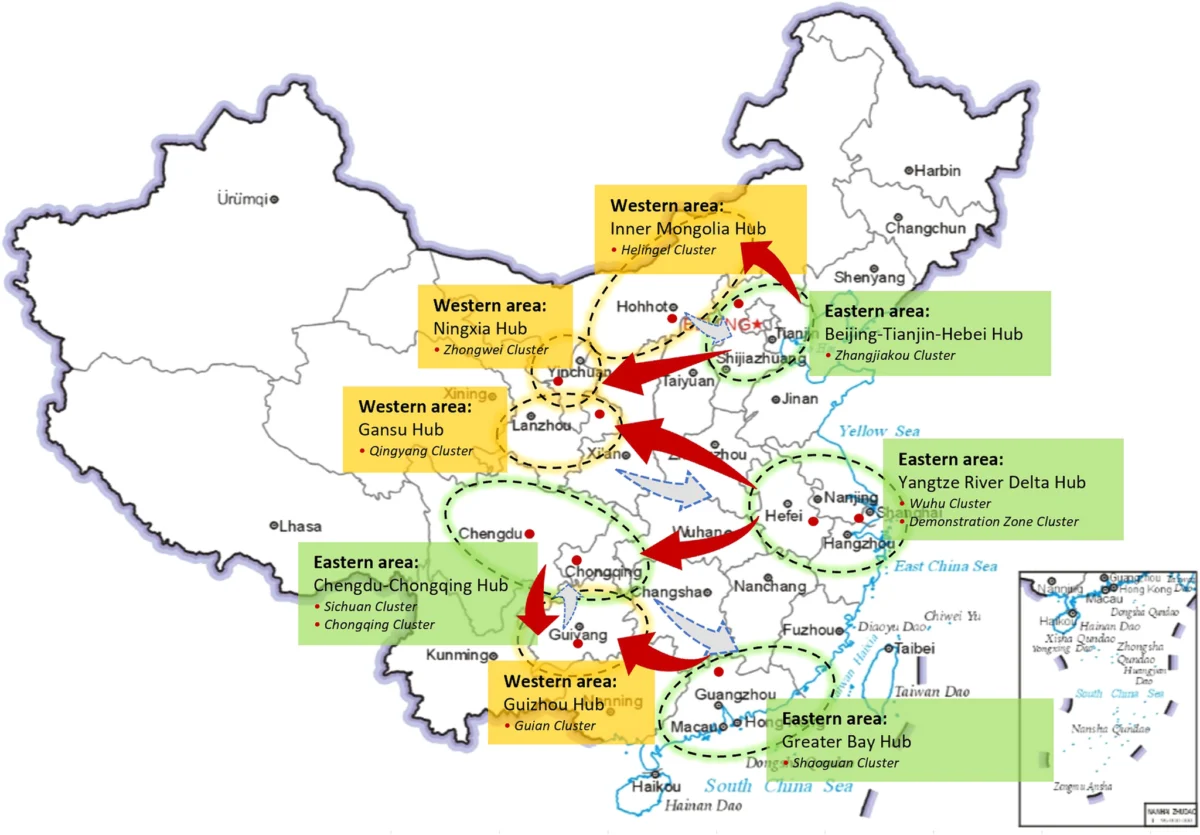
The insatiable demand for artificial intelligence (AI) is colliding with a fundamental physical constraint: the global electricity grid. As technology giants relentlessly pursue more powerful AI models and deploy increasingly vast computing infrastructures, the digital revolution is precipitating an unprecedented surge in energy consumption. At the epicenter of this escalating challenge lies East Asia, the industrial powerhouse driving the world’s hardware supply chain. This dynamic region, encompassing Mainland China, Taiwan, and South Korea, finds itself at a critical juncture, balancing its pivotal role in AI advancement with the immense environmental and infrastructural demands it entails.
Mainland China stands as a colossus in the digital infrastructure landscape, boasting the world’s second-largest market for data centers and serving as the preeminent global hub for electronics manufacturing, accounting for approximately 36% of worldwide electronics output. Complementing this industrial might, Taiwan dominates the production of the most sophisticated semiconductors, the foundational building blocks of modern AI, and is also the primary manufacturing base for AI servers. South Korea, meanwhile, leads the global memory chip industry, with industry titans Samsung Electronics and SK hynix holding dominant positions in DRAM and NAND flash memory. Together, these three East Asian economies form an indispensable nexus across the critical sectors of data centers, semiconductor fabrication, server manufacturing, and memory chip production, all of which are indispensable to the continued growth and deployment of AI technologies.
However, this digital and computational expansion carries a significant environmental burden. In 2024 alone, global data centers consumed an estimated 415 terawatt-hours (TWh) of electricity, a figure representing roughly 1.5% of total global electricity consumption. According to the International Energy Agency (IEA), this demand has been escalating at an approximate rate of 12% annually over the preceding five years. Projections from Greenpeace East Asia paint an even more startling picture, estimating that global electricity demand for AI chip manufacturing could surge by an astonishing 170-fold between 2023 and 2030. Given the concentration of logic and memory chip production for AI hardware in East Asia, a substantial portion of this amplified manufacturing load is poised to fall upon Taiwan, South Korea, and Japan, intensifying the energy pressures already being experienced.
Recognizing the urgency of this challenge and the imperative to forge a cleaner pathway forward, Greenpeace East Asia convened a pivotal global webinar on August 6. This virtual forum brought together leading experts in energy policy and climate technology from the United States, Taiwan, and South Korea. The primary objective was to pivot the discourse from a theoretical discussion of AI decarbonization to a practical exploration of how a clean, resilient, and sustainable AI supply chain can be actively constructed.
Dr. Junyan Liu, Deputy Program Director at Greenpeace East Asia, underscored the initiative’s ambition in her opening remarks. "We would love to build shared momentum for a clearer and more sustainable AI and technology industry," she stated. "We strongly believe that by partnering directly with industry leaders, we can transform complex environmental hurdles into viable, high-impact business models for the long haul." The webinar aimed to foster collaborative solutions and accelerate the adoption of sustainable practices within the rapidly expanding AI ecosystem.
Scaling Clean Tech: Lessons from China’s Industrial Policy
Addressing the escalating power deficit for AI necessitates a deep understanding of how clean technologies can be scaled effectively at an industrial level. China’s remarkable ascent in sectors such as solar energy, electric vehicles (EVs), battery manufacturing, and grid infrastructure offers invaluable lessons for the rapid deployment of clean technologies in the face of surging demand.
Dr. Kyle Chan, a Fellow at the Brookings Institution’s John L. Thornton China Center, highlighted China’s strategic approach to building end-to-end dominance across its industrial supply chains. This strategy involved absorbing foreign technology, demonstrating exceptional adaptability, and fostering the co-development of robust local supply chains. Crucially, proactive engagement from local governments played a significant role in accelerating this transition by providing essential infrastructure, land, and vital policy support.
"China’s cleantech policy wasn’t a single linear path toward becoming a powerhouse," Dr. Chan explained. "It involved constant pivots, strategic shifts, and adaptation along the way. China made a broad bet across multiple technologies, and it paid off." This diversified approach, rather than concentrating on a single technological winner, allowed Chinese manufacturers to support a wider array of markets while leveraging economies of scale and supply chain flexibility to drive down costs. Furthermore, China’s established heavy industries created synergistic opportunities with emerging clean-energy sectors. For instance, its shipbuilding capabilities have been instrumental in constructing offshore wind installation vessels, demonstrating an integrated industrial strategy.
China is now applying these principles to the development of its data center infrastructure. Through the "East-West Computing Resources Transmission Project" (EWCRT Project), national policies are actively encouraging companies to relocate energy-intensive and less latency-sensitive computing workloads to the country’s resource-rich western provinces. These regions are endowed with abundant wind and solar energy resources and possess ample land for development. The processed data and resulting services can then be efficiently transmitted to users in the more densely populated coastal cities via sophisticated national computing networks. This strategic decentralization not only optimizes resource utilization but also aims to alleviate the strain on energy grids in eastern industrial hubs.
As Chinese cleantech companies expand their global footprint, this integrated and adaptable model offers crucial insights for powering the AI era in a more sustainable manner, Dr. Chan concluded.
The Economics of AI Power: Why Renewables Will Prevail in South Korea
In South Korea, the burgeoning demand from AI infrastructure presents a significant catalyst for accelerating the nation’s transition to clean energy, according to Jongkyu Kim, founder and chief executive officer of 60Hz and chair of the Korea Climate Tech Association.
The South Korean government recently unveiled ambitious mega-projects with a combined investment of approximately 1,500 trillion won (roughly US$1 trillion). This significant investment package includes the construction of four new semiconductor fabrication plants by industry leaders Samsung Electronics and SK hynix, initiatives to foster regional robotics development, and a strategic target of establishing 18.4 gigawatts (GW) of AI data center capacity by 2035. This projected data center capacity alone would represent a substantial portion, equivalent to roughly 18-19% of South Korea’s recent peak electricity demand, highlighting the scale of the challenge.
"AI has become an electricity story," Kim asserted. "Sam Altman said last year: ‘The cost of intelligence should eventually converge to near the cost of electricity.’ If true, AI competition becomes a race for the cheapest electricity, and future-proof sources will win." This perspective frames the drive for AI advancement not merely as a technological race but as an economic competition where energy costs will be a decisive factor.
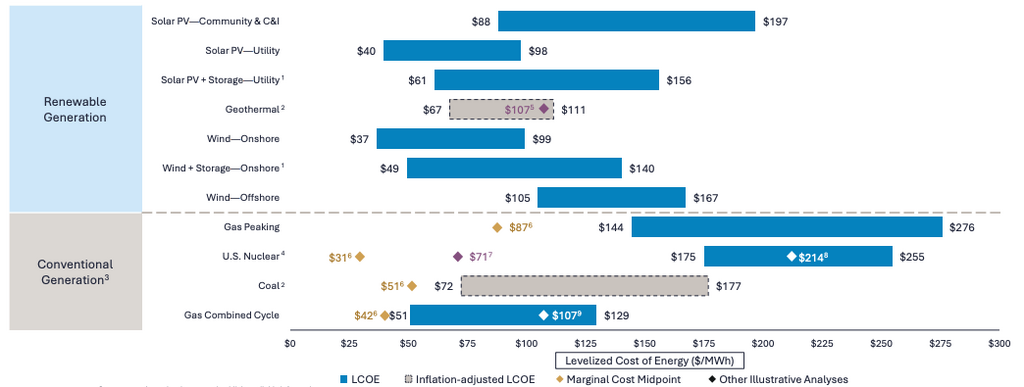
Kim’s analysis strongly advocates for renewables as the most economically viable option when compared to fossil gas or nuclear power. Data from Lazard’s 2026 Levelized Cost of Energy (LCOE+) Report indicates that, on a dollar per megawatt-hour basis, unsubsidized renewable energy sources remain the most cost-competitive form of new electricity generation. This economic advantage is expected to grow as renewable technologies mature and scale.
"AI is not a burden on the energy transition; it is a catalyst," Kim declared. "Korea has anchored its AI build-out to renewables by location, law, and policy. Industry leaders have signed on to RE100, and the underlying economics close the loop. If the cost of AI is the cost of power, zero-marginal-cost renewables will win." This statement encapsulates a forward-looking perspective, positioning AI not as an obstacle to clean energy but as a powerful incentive and driver for its accelerated adoption, ultimately leading to more cost-effective and sustainable operations.
Overcoming Bottlenecks in Taiwan’s Chip Industry
As a preeminent global producer of advanced semiconductors and AI servers, Taiwan occupies a critical position as an engine of global computing power. Allissa Tai, RE100 representative in Taiwan at the Chung-Hua Institution for Economic Research (CIER), detailed the structural obstacles and emerging opportunities confronting manufacturers seeking to secure reliable and affordable renewable electricity.
Taiwan’s Ministry of Economic Affairs anticipates electricity demand to grow at an average annual rate of 2.5% from 2026 to 2035, with a significant portion of this increase attributed to the expansion of semiconductor fabrication plants, AI data centers, and the associated cooling requirements. CIER estimates that AI and semiconductor-related projects alone could necessitate an additional 4.32 GW of power capacity by 2030.
To meet this projected demand, Taiwan’s Ministry of Economic Affairs plans to augment its energy supply by adding approximately 26 GW of new natural-gas-fired capacity by 2035. However, this strategy presents inherent risks. Taiwan imported over 94% of its energy in 2024, making it highly susceptible to international price volatility, potential shipping disruptions, and broader geopolitical uncertainties associated with an increased reliance on imported fossil fuels.
While major international technology corporations like Google and Apple are actively pursuing 100% renewable electricity for their operations and supply chains, the corporate procurement efforts of RE100 members currently account for only about 5% of Taiwan’s total renewable generation, according to findings from CIER and the Climate Group’s 2024-2025 Taiwan Renewable Electricity Market Briefing. Several key structural obstacles hinder a more rapid and widespread adoption of renewables for corporate energy needs. These include limitations in the availability of green electricity tariffs, the high cost of direct power purchase agreements (PPAs) for smaller off-takers, and regulatory complexities that can impede the development and integration of new renewable energy projects.
"To power the AI boom cleanly, we need energy infrastructure built at scale," Tai emphasized. "That requires policy stability, social consensus, and cross-party alignment. Transitioning to renewables is not just about climate; it is the bedrock of Taiwan’s economic security and global competitiveness." Her statement highlights the interconnectedness of energy policy, environmental sustainability, and national economic well-being, underscoring the critical need for a cohesive and long-term vision for Taiwan’s energy future.
An Action Plan for a Clean AI Ecosystem
To effectively align the rapid trajectory of AI growth with global climate objectives, the panelists at the Greenpeace East Asia webinar proposed a series of targeted reforms and strategic initiatives. Their recommendations aim to address the multifaceted challenges of energy demand, infrastructure development, and policy frameworks necessary for a sustainable AI future.
Firstly, they called for the establishment of clear and ambitious renewable energy targets specifically for the AI and data center sectors. This would involve setting mandates for data center operators and AI chip manufacturers to source a progressively increasing percentage of their energy from renewable sources, with defined timelines and accountability mechanisms. Such targets would provide the industry with a clear roadmap and incentivize investment in clean energy infrastructure.
Secondly, the experts advocated for regulatory reforms to facilitate and streamline the procurement of renewable electricity. This includes simplifying the process for establishing direct power purchase agreements (PPAs), expanding the availability of green electricity tariffs, and addressing market barriers that inflate the cost of renewable energy for corporate consumers. Promoting greater competition and transparency in the renewable energy market is crucial to ensuring affordability and accessibility.
Thirdly, the panel emphasized the importance of strategic investment in grid modernization and energy storage solutions. As AI-driven electricity demand escalates, a robust and resilient grid infrastructure is paramount. This includes investing in smart grid technologies, expanding transmission capacity, and deploying advanced energy storage systems to manage the intermittency of renewable sources and ensure a stable and reliable power supply for data centers and computing facilities.
Finally, the panelists stressed the need for enhanced international cooperation and knowledge sharing in developing sustainable AI supply chains. This involves fostering dialogue between governments, industry leaders, and environmental organizations across key AI manufacturing regions. Sharing best practices, technological innovations, and policy successes can accelerate the global transition to a clean AI ecosystem, mitigating environmental impacts and ensuring the long-term viability of the digital revolution. The collective vision presented by the experts offers a pragmatic and actionable framework for navigating the complex interplay between technological advancement and environmental stewardship in the age of artificial intelligence.

 Nana Muazin
 Asep Darmawan