Layla Zulfa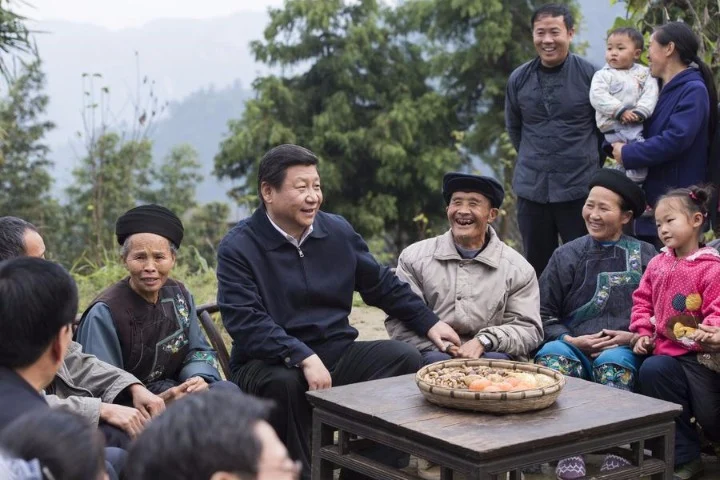
General Secretary of the Communist Party of China (CPC) Central Committee, Xi Jinping, has issued a forceful directive emphasizing the unwavering commitment required in the ongoing struggle against undesirable work styles. The instruction, released on Monday, came in response to a comprehensive report by Xinhua News Agency detailing new manifestations of misconduct within Party and governmental ranks. Xi, who also serves as President and Chairman of the Central Military Commission, unequivocally stated that efforts to curb such behavior must not cease, underscoring the enduring and complex nature of the challenge. He characterized these emerging forms of misconduct as fundamentally "old problems" that have merely adopted new guises, highlighting their intractability and tendency towards recurrence.
The Enduring Campaign Against Undesirable Work Styles
The directive from General Secretary Xi Jinping marks a significant reiteration of the Party’s long-standing campaign for self-purification and improved governance, a cornerstone of his leadership since assuming power in late 2012. The fight against undesirable work styles, including "formalities for formalities’ sake," bureaucratism, hedonism, and extravagance, has been a defining feature of the Party’s internal reform agenda. This initiative, often referred to as the anti-corruption and anti-extravagance campaign, was formally launched with the promulgation of the "Eight-Point Decision" by the CPC Central Committee in December 2012.
The Eight-Point Decision laid out stringent guidelines for Party and government officials, targeting a wide array of practices perceived as eroding public trust and undermining the Party’s legitimacy. These guidelines mandated simpler ceremonies, reduced excessive travel and inspections, fewer and shorter meetings, a ban on extravagant receptions, and a strict prohibition on the use of public funds for personal gain or lavish entertainment. The initial phase of the campaign saw a dramatic shift in official conduct, with numerous high-profile officials disciplined and a noticeable reduction in overt displays of luxury and wasteful spending across the country. According to official data, by the end of 2017, over 280,000 officials had been disciplined for violating the Eight-Point Decision, demonstrating the campaign’s breadth and impact. The Central Commission for Discipline Inspection (CCDI), the Party’s top anti-graft body, reported a continuous stream of cases related to these violations, reinforcing the message that such misconduct would not be tolerated.
New Forms, Old Problems: The Evolving Challenge
Despite the significant achievements recorded in the past decade, the Xinhua article and General Secretary Xi’s subsequent instruction underscore that the battle is far from over. The report meticulously detailed how undesirable work styles have adapted, evolving into "new forms" that are often more subtle but equally detrimental. These include officials conducting perfunctory research and inspections, characterized by superficial visits and a lack of genuine engagement with local issues or public concerns. Such practices represent a form of "formalities for formalities’ sake," where the outward appearance of diligence masks an absence of substantive work.
Another critical issue identified is the phenomenon of Party and governmental agencies, along with their personnel, displaying "false concern for the public." This involves token gestures of support or empty promises without delivering practical solutions or tangible improvements to people’s lives. This superficial engagement, often driven by a desire to project a positive image rather than to serve the populace effectively, stands in direct opposition to the Party’s stated commitment to "serving the people wholeheartedly."
The Xinhua article further highlighted problems such as local governments prioritizing the attention and approval of higher officials over the genuine satisfaction and well-being of the people they serve. This vertical accountability, where local leaders are more concerned with their superiors’ perceptions than with grassroots needs, perpetuates a culture of performance for show rather than substance. Such behavior often manifests in exaggerated statistics, grand but impractical projects, or the neglect of pressing local issues in favor of initiatives that might impress higher-ups.
Moreover, the report called attention to pervasive issues of officials dodging responsibilities, inaction, and sloth. These behaviors, indicative of a bureaucratic inertia, hinder effective governance and delay the implementation of crucial policies. The article also exposed instances of double-dealing and duplicity, where officials outwardly profess adherence to Party directives while secretly engaging in contradictory or dishonest practices. Such hypocrisy erodes internal cohesion and public trust, making it difficult to enforce discipline and maintain integrity.
A Chronology of Sustained Vigilance
The evolution of the campaign against undesirable work styles can be traced through several key periods:
- December 2012: The CPC Central Committee issues the "Eight-Point Decision," marking the official launch of the comprehensive anti-corruption and anti-extravagance campaign. This immediately led to a visible crackdown on lavish banquets, excessive travel, and other forms of official extravagance.
- 2013-2015: The initial phase of the campaign is characterized by a strong focus on "tigers and flies" – high-ranking officials and lower-level cadres alike – with numerous investigations and disciplinary actions. Public awareness of the campaign grows, and official conduct undergoes a significant transformation.
- 2016-2018: The campaign shifts towards institutionalization and consolidation of gains. Efforts are made to establish long-term mechanisms and regulations to prevent the resurgence of misconduct, moving beyond reactive crackdowns to proactive governance. Regular reports from the CCDI continue to highlight ongoing violations, indicating persistent vigilance.
- Late 2018 – Present: While the overt forms of misconduct become less prevalent, new, more subtle forms begin to emerge. This period sees the Party leadership, particularly General Secretary Xi, consistently reiterate the need for sustained effort. The Xinhua article and Xi’s latest instruction underscore the recognition that the fight against these "new forms" requires renewed strategic focus.
- Current Instruction (Monday): General Secretary Xi issues his latest instruction, directly addressing the "new forms" of misconduct outlined by Xinhua, emphasizing the need for Party and governmental departments at all levels to conduct self-checks and implement concrete rectification measures.
- Upcoming CPC Campaign: The instruction specifically links the avoidance of formalism to the upcoming CPC campaign on "staying true to our founding mission," indicating an integration of conduct improvement with ideological education.
- New Year’s and Spring Festival Season: The General Office of the CPC Central Committee identifies the impending holiday season as a critical juncture for preventing the resurgence of misconduct, particularly lavish spending and gift-giving, which historically have seen a spike during these periods.
Official Responses and Implementation Directives
Following General Secretary Xi’s instruction, the General Office of the CPC Central Committee promptly issued a circular, calling upon all Party and governmental agencies to meticulously study and implement the directive with immediate and decisive action. The circular stressed the imperative for these agencies to "carefully sift out new forms of undesirable work styles," to "resolutely correct them," and to achieve "solid improvement in this respect." This demonstrates a top-down mandate for a thorough and proactive approach to identifying and eradicating evolving forms of misconduct.
The circular also underscored the particular importance of the upcoming New Year’s and Spring Festival season. Historically, these festive periods have presented opportunities for a potential return of lavish practices, gift-giving, and other forms of misconduct. The directive explicitly instructed authorities to "resolutely prevent the return of misconduct" during this critical period and to "consolidate and build on the advances made in implementing the central Party leadership’s eight-point decision on improving Party and government conduct." This emphasizes the need for continuous vigilance and the institutionalization of discipline, rather than allowing any slackening during traditionally relaxed times.
Furthermore, Xi’s instruction explicitly called on leading officials at all levels to "take the lead in the campaign." This emphasizes the principle of "leading by example," a critical component of Party discipline. When senior cadres demonstrate integrity and adherence to the rules, it sets a powerful precedent for those below them, reinforcing the seriousness and universality of the campaign.
Broader Impact and Implications
General Secretary Xi Jinping’s renewed directive carries significant implications for Party discipline, public governance, and the overall political landscape in China.
Strengthening Party Discipline and Legitimacy: The persistent focus on combating undesirable work styles underscores the Party’s commitment to self-purification and maintaining its moral authority. By addressing internal misconduct, even in its evolving forms, the CPC seeks to reinforce its legitimacy in the eyes of the public and ensure its capacity for effective governance. This ongoing struggle is framed as essential for the Party to remain a strong, unified, and respected political force.
Enhancing Public Trust: The directive directly addresses public grievances related to official malpractice, indifference, and inefficiency. By tackling issues like perfunctory work, false concern for the public, and officials dodging responsibilities, the Party aims to bridge the gap between governance and public expectations. Improved conduct is expected to foster greater public trust and satisfaction, crucial for maintaining social stability and support for the government.
Improving Governance Efficiency: The eradication of bureaucratism, formalism, and sloth is directly linked to enhancing the efficiency and effectiveness of government operations. When officials are focused on substantive work, practical implementation, and serving the people, rather than on superficial displays or avoiding responsibility, policies are more likely to be executed effectively, leading to tangible societal benefits. This drive for efficiency is particularly pertinent as China navigates complex economic and social challenges.
Political Consolidation and Leadership: Xi Jinping’s consistent and direct involvement in this campaign reinforces his central role in shaping Party conduct and ideology. His personal emphasis on the fight against misconduct serves to consolidate his leadership and demonstrates his unwavering commitment to his governance philosophy. The integration of this directive into broader ideological campaigns, such as "staying true to our founding mission," indicates a strategic effort to embed these disciplinary standards deeply within the Party’s core values and operational ethos.
Long-Term Challenge: The acknowledgment that these are "old problems" in "new forms" highlights the inherent difficulty and long-term nature of reforming deep-seated behavioral patterns within any large organization. It suggests that this is not a campaign with a definitive endpoint but rather an ongoing, evolving struggle that requires sustained vigilance, adaptive strategies, and continuous institutional reinforcement. The Party recognizes that human nature and organizational dynamics will always present challenges to perfect conduct, necessitating perpetual efforts to uphold discipline.
In conclusion, General Secretary Xi Jinping’s latest instruction is a powerful reminder that the Communist Party of China views the fight against undesirable work styles as a continuous and vital undertaking. It signals an adaptation in strategy to counter evolving forms of misconduct, ensuring that the Party’s decade-long commitment to improved governance and public trust remains at the forefront of its agenda. The directive sets the stage for intensified scrutiny, particularly during key holiday periods, and underscores the imperative for leading officials to exemplify the very conduct they seek to instill across all levels of government.

 Sagoh
Sagoh
 Asro
Asro