Nila Kartika Wati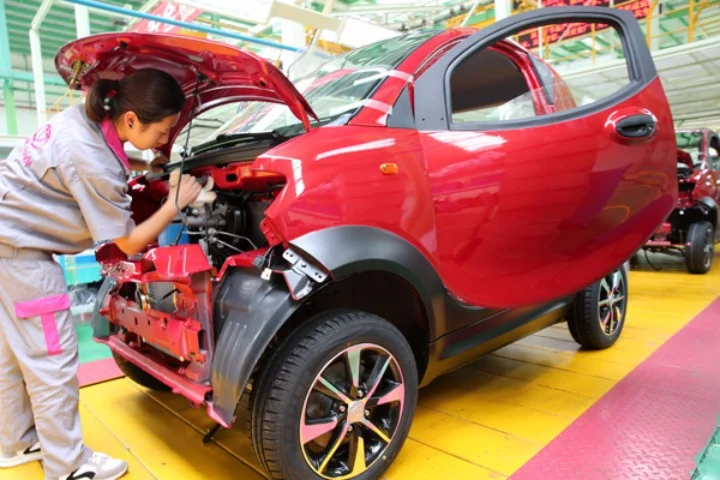
China’s colossal automotive market, the world’s largest by sales volume, exhibited a noticeable slowdown in growth during November, registering a modest 0.7 percent year-on-year increase with 2.96 million units sold. This figure, released by the China Association of Automobile Manufacturers (CAAM) on Monday, underscores a significant shift in market dynamics, diverging sharply from the robust expansion seen in previous years. The cumulative sales for the first eleven months of the year reached 25.85 million units, reflecting a 3.6 percent growth from the previous year. While seemingly respectable in a global context, this growth rate represents a stark deceleration, falling a considerable 10.5 percentage points short of the year-on-year growth observed during the same period in 2016.
The Fading Catalyst: Purchase Tax Incentives and Economic Headwinds
The deceleration in vehicle sales has been attributed to a confluence of factors, with the gradual phasing out of a crucial purchase tax discount playing a prominent role. Introduced in late 2015 as a stimulus measure to bolster the automotive industry and encourage the sale of smaller-engine vehicles, the incentive initially offered a substantial 50 percent reduction on the purchase tax for cars with engines smaller than 1.6 liters. This policy proved highly effective, injecting significant momentum into the market and contributing to record sales figures in 2016.
However, the incentive began its planned reduction at the start of 2017, with the discount halved to 25 percent from January. The complete expiration of this tax break is slated for the end of December, signaling a fundamental shift in market conditions. Xu Haidong, an assistant to CAAM’s secretary-general, articulated the organization’s revised outlook, stating that the overall sales growth for the entire year would "definitely fall to below 4 percent," a notable downward revision from CAAM’s initial estimate of 5 percent growth made at the beginning of the year. This revised forecast highlights the potent impact of policy adjustments on consumer purchasing behavior.
Beyond the tax incentive, broader economic conditions in China have also contributed to the tempered demand. Factors such as evolving consumer sentiment, tightening credit conditions in certain sectors, and a general recalibration of economic growth targets have subtly influenced discretionary spending on big-ticket items like automobiles. The confluence of these internal and external pressures creates a more challenging environment for automakers accustomed to sustained double-digit growth. Xu Haidong further cautioned about the impending future, remarking that "The trend is clear. Growth will slow down even further next year," without providing specific projections, yet underscoring the anticipation of continued moderation.
Segmented Performance: The Dominance of SUVs and the Decline of Traditional Segments
A deeper dive into the market segments reveals a nuanced picture. Passenger cars, which constitute the lion’s share of overall vehicle sales, experienced an even more pronounced slowdown. From January to November, a total of 22 million passenger cars were sold, marking a mere 1.9 percent year-on-year growth. This sluggish performance stands in stark contrast to the vibrancy seen in previous periods and is indicative of a mature market facing new pressures.
The modest growth in the passenger car segment was, in fact, largely propped up by the sustained popularity of Sports Utility Vehicles (SUVs). SUVs continued their remarkable trajectory, with sales surging by 14.5 percent year-on-year to reach 9.09 million units during the first eleven months. This segment’s robust performance reflects shifting consumer preferences, with buyers increasingly favoring SUVs for their perceived versatility, higher driving position, and often more spacious interiors, aligning with evolving lifestyle trends and improving road infrastructure across China.
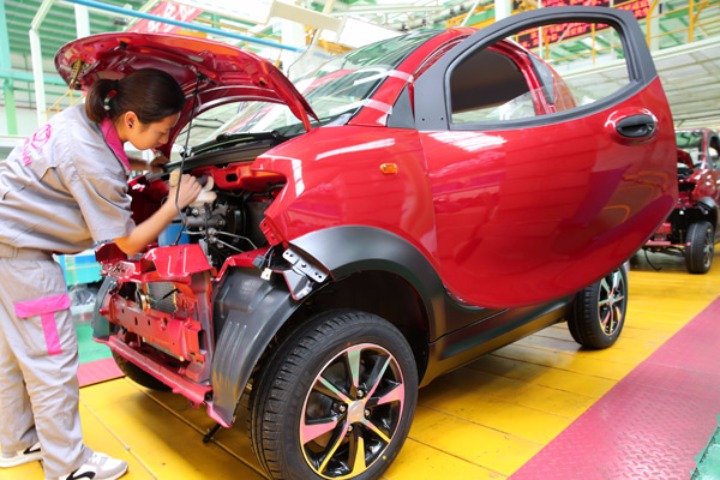
Conversely, traditional passenger car segments faced significant headwinds. Sedan sales experienced a decline of 2.3 percent, indicating a migration of consumer interest towards SUVs and potentially other vehicle types. The Multi-Purpose Vehicle (MPV) segment fared even worse, witnessing a substantial fall of 16.5 percent in sales. Minivans, once a staple for many families and small businesses, experienced the steepest decline, slumping by a considerable 20.1 percent over the same period. These figures collectively illustrate a pronounced shift in consumer demand, challenging manufacturers to adapt their product portfolios to meet these evolving preferences.
New Energy Vehicles: A Bright Spot Amidst Deceleration
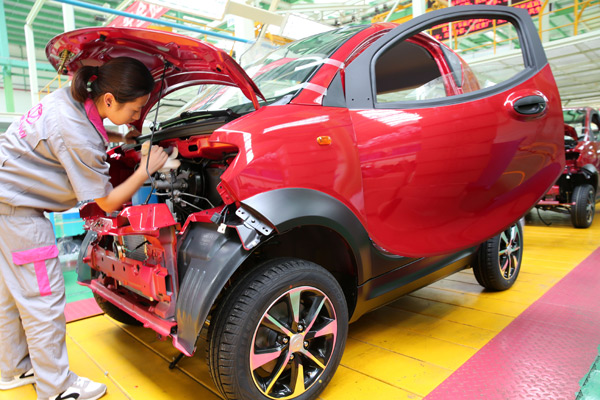
Amidst the broader market’s deceleration, the New Energy Vehicle (NEV) segment emerged as a significant beacon of growth and future potential. Comprising battery electric vehicles (BEVs), plug-in hybrid electric vehicles (PHEVs), and fuel-cell vehicles (FCVs), NEVs demonstrated solid and accelerating growth, propelled by strong government support and increasing consumer awareness.
November saw a record-breaking performance for NEVs, with 119,000 units sold, representing an impressive 83 percent surge year-on-year. This remarkable monthly figure contributed to a cumulative 609,000 units sold in the first eleven months of the year, marking a substantial 51.4 percent growth compared to the previous year. This trajectory places China firmly at the forefront of the global electric vehicle revolution.
Xu Haidong reiterated the positive outlook for NEVs, stating, "Their development is in line with our expectations. It is now almost certain that their sales this year would reach our whole-year estimate of 700,000 units." This confidence extends into the near future, with Xu adding, "We are confident in new energy cars and see no problems in their sales reaching 1 million units in 2018." This ambitious projection is underpinned by a comprehensive governmental strategy that includes substantial subsidies for buyers, mandates for automakers to produce a certain percentage of NEVs (the "dual credit" policy), and an aggressive push for charging infrastructure development.
The supporting infrastructure for NEVs has indeed been expanding rapidly. According to data from the China Electric Vehicle Charging Infrastructure Promotion Alliance, a total of 431,800 charging poles had been built across the nation by the end of November. This extensive network is crucial for addressing range anxiety and facilitating the widespread adoption of electric vehicles, demonstrating a coordinated effort between policymakers and industry stakeholders to foster a sustainable automotive ecosystem.
Commercial Vehicles: Sustained Demand
While passenger car sales experienced a slowdown, the commercial vehicle segment, encompassing buses and trucks, reported a comparatively robust performance. In November, 368,000 commercial vehicles were sold, marking a healthy 7.3 percent rise from the same month last year. This sustained demand is largely driven by ongoing infrastructure projects, growth in logistics and transportation sectors, and increased industrial activity.
For the first eleven months of the year, commercial vehicle sales totaled 3.75 million units, an impressive nearly 15 percent year-on-year increase. This growth rate significantly outpaced the overall industry average by 11.2 percentage points, highlighting the segment’s resilience and its critical role in supporting China’s economic activities. The continued expansion of e-commerce and the need for efficient goods delivery systems further fuel demand for various types of commercial vehicles.
Expert Outlook and Industry Reactions
The revised sales forecasts from CAAM signal a maturing market for traditional internal combustion engine (ICE) vehicles. Industry analysts generally concur with CAAM’s assessment, noting that the days of explosive, double-digit growth for the overall market are likely behind us. This shift compels automakers, both domestic and international, to re-evaluate their strategies. Manufacturers are expected to intensify efforts in product differentiation, focus on premium segments, and, most importantly, accelerate their transition towards electrification.
For domestic automakers, the slowing growth in traditional segments presents both challenges and opportunities. While competition intensifies, the NEV segment offers a chance to leapfrog established global players. Many Chinese brands have aggressively invested in NEV research and development, aiming to capture a significant share of this burgeoning market. International automakers, facing stringent NEV quotas and an evolving regulatory landscape, are rapidly localizing their electric vehicle production and introducing new models specifically tailored for the Chinese market. Companies like Volkswagen, General Motors, and Ford have announced significant investments in electric mobility within China, underscoring the strategic importance of the NEV sector.
Broader Economic and Environmental Implications
The trajectory of China’s automotive market carries significant economic and environmental implications. Economically, a slowdown in overall vehicle sales could temper growth in related industries such as steel, rubber, and electronics, though the strong performance of NEVs could partially offset this by driving demand for new components like batteries and advanced electronics. The automotive sector is a major employer, and sustained moderate growth necessitates efficient resource allocation and potential shifts in workforce skills.
Environmentally, the robust growth of NEVs is a critical component of China’s broader strategy to combat air pollution and reduce carbon emissions. The government has set ambitious targets for NEV penetration, aiming for a significant portion of new car sales to be electric by the next decade. The successful scaling of NEV production and infrastructure development is pivotal to achieving these environmental objectives and demonstrating China’s commitment to sustainable development. The progress in charging infrastructure, as highlighted by the 431,800 charging poles, indicates tangible steps towards creating a viable ecosystem for electric mobility.
Looking Ahead: Navigating a New Era
As China’s automotive market transitions into a new era characterized by moderated growth for traditional vehicles and accelerated expansion for new energy alternatives, the landscape promises continued evolution. The expiry of the purchase tax incentive at the end of 2017 will likely lead to a temporary dip in early 2018 sales as the market adjusts to the absence of the stimulus. However, the underlying drivers of demand, such as urbanization, rising disposable incomes, and the ongoing modernization of transportation infrastructure, remain strong.
The future of the Chinese automotive market will increasingly be defined by innovation, particularly in electrification, autonomous driving technologies, and connected car services. Policymakers are expected to continue supporting the strategic development of NEVs through various incentives and regulatory frameworks, ensuring China maintains its leadership position in this transformative segment. For automakers, success will hinge on their ability to adapt to changing consumer preferences, navigate evolving regulatory demands, and invest strategically in the technologies that will shape the next generation of mobility. The November sales figures are not just a snapshot but a clear indicator of a market undergoing profound structural changes, moving towards a more sustainable and technologically advanced future.

 Evan Lee Salim
 Suro Senen