Lina Hope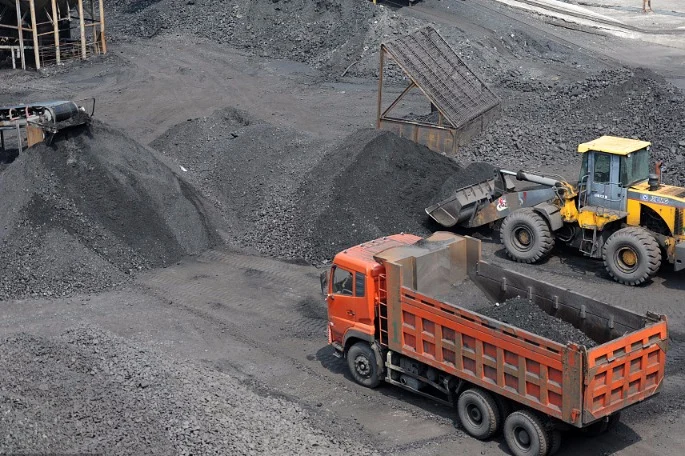
China is significantly ahead of schedule in its ambitious industrial capacity reduction goals, particularly in the coal and steel sectors, a testament to the nation’s resolve in pursuing supply-side structural reforms and tackling severe environmental challenges. Senior industry officials confirm that the country is poised to meet its five-year targets for cutting coal capacity well before the stipulated deadline, while substantial progress has also been made in the steel industry, prompting a strategic shift towards higher-grade imports in sectors like iron ore. This accelerated pace underscores Beijing’s commitment to rebalancing its economy, enhancing industrial efficiency, and combating pervasive air pollution.
Coal Sector Transformation: Exceeding Expectations
The drive to rationalize China’s vast coal industry has yielded remarkable results, far surpassing initial projections. Jiang Zhimin, vice-president of the China National Coal Association, recently announced that the country is likely to achieve its goal of reducing coal capacity by 500 million metric tons a full two to three years ahead of the planned three to five-year target. This significant milestone is now anticipated to be reached by the close of the following year, signaling an unprecedented pace of structural adjustment within a critical energy sector.
This rapid progress is illustrated by the dramatic reduction in the number of operational coal mines across the nation. From approximately 10,800 mines in 2015, the figure is projected to drop to around 7,000 by the end of the current year. This consolidation represents a deliberate strategy to close smaller, inefficient, and often unsafe mines, thereby enhancing overall industry safety and environmental performance. In 2016 alone, China successfully cut coal capacity by over 290 million tons. Building on this momentum, the target for 2017 was set at 150 million tons, a goal that was accomplished by November, according to data from the National Bureau of Statistics (NBS).
The restructuring has also led to a significant concentration of production in larger, more modern facilities. Jiang Zhimin highlighted that more than 1,200 coal mines now boast an annual production capacity exceeding 1.2 million tons, collectively accounting for over 75 percent of the country’s total coal capacity. This shift towards larger, more efficient operations is crucial for improving productivity, reducing environmental impact, and ensuring a more stable supply chain for the nation’s energy needs. The policy aims to phase out mines with annual production capacities below 300,000 tons, which are often characterized by outdated technology, high costs, and poor safety records. The long-term objective of the 13th Five-Year Plan (2016-2020) was to cap national coal production capacity at 3.9 billion tons and limit total consumption to 4.1 billion tons, signifying a strategic move away from coal dominance.
Steel Industry Restructuring: Targeting Outdated and Illegal Capacity
Parallel to the coal sector, China’s steel industry has also undergone a profound transformation, with substantial reductions in both legitimate and illegal production capacity. Xu Wenli, head of the Iron and Steel Division at the Ministry of Industry and Information Technology (MIIT), confirmed that the country has eliminated more than 115 million tons of steel capacity. This achievement brings China remarkably close to the upper limit of its capacity reduction target of 150 million tons set for the steel sector during the 13th Five-Year Plan period.
A critical aspect of this crackdown has been the elimination of "low-quality steel" made from scrap metal, often produced in small, unregistered induction furnaces (known as "ditiao gang"). These operations were notorious for their environmental pollution, poor product quality, and safety hazards, frequently operating outside regulatory oversight. By the end of June, China had successfully phased out the production of 140 million tons of this low-quality steel, a decisive move that not only improved environmental standards but also leveled the playing field for legitimate steel producers. This targeted removal of substandard capacity addressed concerns about market distortion and unfair competition.
The timeline for steel capacity reduction mirrors the accelerated pace seen in the coal sector. In 2016, over 65 million tons of steel production capacity were eliminated. The momentum continued into 2017, with the country meeting its annual capacity reduction goal of 50 million tons by the end of August, several months ahead of schedule. Xu Wenli emphasized that the government remains committed to these efforts, stating, "The country will continue to cut outdated steel capacity and prevent shuttered or illegal steel mills from returning to the market." This ongoing vigilance is crucial to ensure that the gains made are not reversed, particularly as market prices for steel products can incentivize the resurgence of dormant or illegal operations. The enforcement of stricter environmental regulations and frequent inspections have been instrumental in identifying and shutting down non-compliant facilities, including many "zombie enterprises" that were kept afloat by local governments despite being economically unviable.
Iron Ore Imports Surge Amidst Domestic Mine Closures
The sweeping industrial reforms extend beyond coal and steel production to upstream raw materials, profoundly impacting the iron ore sector. As China intensifies its efforts to combat air pollution and enhance environmental quality, the country is strategically closing small, polluting domestic iron ore mines. This policy shift is expected to lead to a significant increase in iron ore imports, as domestic demand for high-quality ore remains robust for the streamlined steel industry.
Lei Pingxi, chief engineer at the Metallurgical Mines Association of China, forecasted a substantial rise in iron ore imports. Imports were expected to increase by 5.5 percent year-on-year to 1.08 billion tons in 2017, with a further projected rise of 3 percent to 1.12 billion tons in 2018. This trend highlights China’s increasing reliance on global suppliers, primarily Australia and Brazil, for its crucial steelmaking raw material.
The domestic crackdown on polluting mines is severe. Lei indicated that approximately one-third of China’s iron ore mining licenses, predominantly belonging to small, environmentally damaging operations, are slated for elimination. Under a government-led initiative targeting smog and outdated steelmaking capacity, over 1,000 mining licenses are set to be canceled. This represents a substantial portion, accounting for 15 to 20 percent of the country’s total iron ore capacity. The closure of these mines not only addresses immediate environmental concerns but also drives the steel industry towards using higher-grade iron ore, which is more efficient in modern blast furnaces and produces less waste. This shift aligns with broader goals of industrial upgrading and sustainable development.
The Broader Context: Supply-Side Structural Reform and Environmental Imperatives
These aggressive capacity cuts are not isolated measures but are integral components of China’s overarching "supply-side structural reform" agenda, initiated in 2015. The core objectives of this reform are to reduce industrial overcapacity, deleverage the economy, cut corporate costs, strengthen weak links, and improve resource allocation. The 13th Five-Year Plan (2016-2020) provided the strategic framework for these reforms, emphasizing innovation, coordination, green development, openness, and shared benefits.
Environmental protection has emerged as a central pillar of this reform. The "Blue Sky Protection Campaign," launched in 2017, intensified the government’s commitment to combating air pollution, particularly in heavily industrialized regions. Coal and steel industries, being major contributors to smog and carbon emissions, became primary targets. The closure of outdated and polluting facilities directly contributes to cleaner air and water, fulfilling a growing public demand for improved environmental quality. This shift reflects a strategic pivot from a growth-at-all-costs model to one that prioritizes sustainable development and ecological civilization.
Economically, the reforms aim to foster a more balanced and sustainable growth model, moving away from heavy industry and investment-driven expansion towards a greater reliance on consumption, services, and high-tech manufacturing. By eliminating "zombie enterprises" and inefficient capacity, the government seeks to improve the overall profitability and competitiveness of remaining industries, allowing market forces to play a more decisive role in resource allocation. This rebalancing is crucial for China’s long-term economic stability and global competitiveness.
Economic and Social Implications
The rapid implementation of capacity reduction policies has profound economic and social implications. On the economic front, the removal of excess capacity has helped to stabilize and even boost commodity prices for coal and steel within China, improving the profitability of compliant enterprises. This has allowed many companies to reduce debt and invest in technological upgrades, fostering a healthier industrial landscape. However, the surge in iron ore imports signifies a greater reliance on global markets for critical raw materials, which could expose China to price volatility and geopolitical risks.
Socially, the closures of mines and mills have led to significant job displacement in traditional industrial heartlands. The government has acknowledged this challenge and implemented various measures to mitigate the impact, including setting up special funds for re-employment, providing training programs, and offering early retirement incentives. While these efforts aim to soften the blow, the transition can be difficult for affected workers and local communities, particularly those heavily reliant on single industries. Local governments, previously incentivized to support industrial growth, now face the dual challenge of managing social stability and reorienting their economies.
Global Repercussions and Outlook
China’s capacity reduction efforts have significant global ramifications. As the world’s largest producer and consumer of coal and steel, Beijing’s policies directly influence international commodity markets. The reduction in domestic supply, coupled with environmental crackdowns, has contributed to higher global prices for these commodities, impacting industries worldwide. For instance, the closure of low-quality steel production reduced the global supply of cheap steel, easing some of the international trade tensions that arose from accusations of Chinese steel dumping.
The increased demand for imported iron ore strengthens the market position of major global miners, particularly in Australia and Brazil, who are now crucial suppliers to China’s steel industry. This shift highlights the interconnectedness of global supply chains and China’s pivotal role in shaping them.
Looking ahead, China’s commitment to these reforms is expected to continue. The focus will likely shift from broad capacity cuts to more refined structural adjustments, emphasizing technological innovation, environmental compliance, and high-quality development. While challenges such as potential capacity rebound, managing social transitions, and ensuring stable raw material supplies persist, the accelerated progress achieved so far underscores China’s determination to forge a more sustainable, efficient, and environmentally responsible industrial future. The world will continue to watch closely as China navigates this complex but critical transformation, with implications for global trade, climate action, and economic development.

 Evan Lee Salim
 Suro Senen