Iffa Jayyana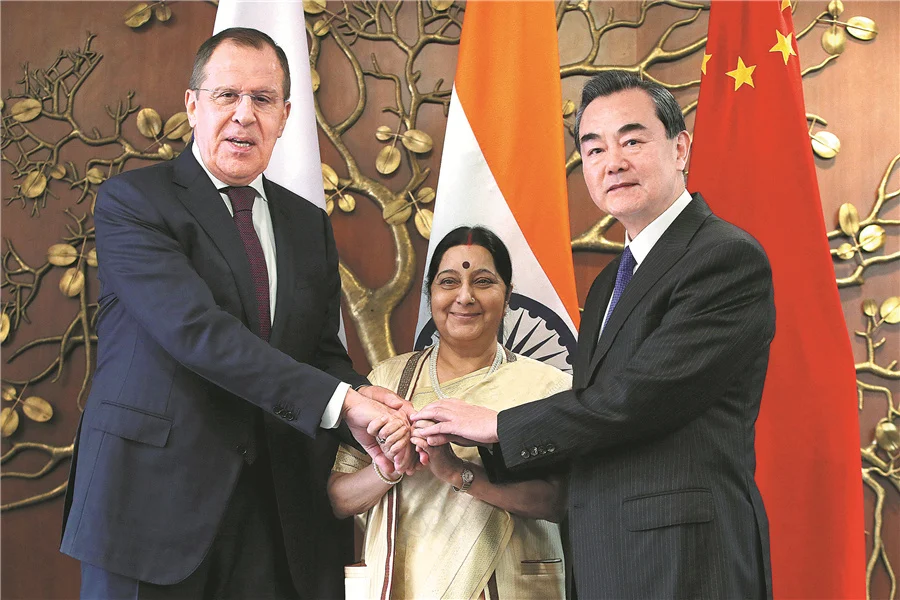
China, Russia and India have reaffirmed their commitment to a stable and prosperous Asia-Pacific region, emphasizing multilateralism and international law as cornerstones of regional security and economic architecture. The agreement was formalized in a joint statement following the 15th trilateral meeting of the foreign ministers of the three nations, held in New Delhi on Monday, December 11, 2017. The meeting, which brought together China’s Foreign Minister Wang Yi, Russian Foreign Minister Sergei Lavrov, and India’s Minister of External Affairs Sushma Swaraj, focused on a broad spectrum of global and regional issues of mutual concern.
Strategic Alignment on Regional Order
The core of the ministers’ deliberations centered on the imperative of maintaining a regional security and economic framework that is characterized by openness, inclusivity, and adherence to multilateral principles. The joint statement underscored that such an architecture, firmly rooted in universally recognized principles of international law, is indispensable for fostering enduring peace and stability across the Asia-Pacific. This shared vision signals a unified stance on how the region should navigate complex geopolitical dynamics and pursue sustainable development.
The three nations also highlighted the critical importance of coordinated efforts and robust cooperation within various regional forums and international organizations. The East Asia Summit, in particular, was identified as a crucial platform for these collaborative endeavors, aimed at safeguarding regional peace, promoting stability, and driving development and prosperity. This emphasis suggests a strategic alignment aimed at bolstering existing mechanisms for regional governance and problem-solving.
Deepening BRICS and SCO Cooperation
A significant portion of the discussions revolved around the ongoing cooperation within BRICS and the Shanghai Cooperation Organization (SCO). The ministers reiterated the high value they place on their strategic partnership within BRICS, a bloc comprising Brazil, Russia, India, China, and South Africa. The joint statement pledged to work collaboratively to implement all outcomes of BRICS summits, with the aim of strengthening cooperation across economic, political, security, and people-to-people domains. This commitment is geared towards ushering in what the statement termed the "second golden decade of BRICS cooperation."

The ministers also acknowledged China’s successful hosting of the Ninth BRICS Summit in Xiamen in September 2017, recognizing it as a pivotal event that advanced the bloc’s agenda. The successful conclusion of the Xiamen Summit, which saw leaders agree on measures to deepen economic ties, enhance financial cooperation, and strengthen people-to-people exchanges, served as a positive backdrop for the trilateral discussions.
Furthermore, the three countries underscored the strategic significance of their joint work within the Shanghai Cooperation Organization. The SCO was described as a vital instrument for fostering multilateral interaction in the political, security, economic, and cultural spheres across the Eurasian continent. The organization, which has grown to include eight member states and several observer states, plays a crucial role in addressing regional security challenges, promoting economic integration, and facilitating cultural exchange. The ministers’ affirmation of its importance signals a continued commitment to leveraging the SCO’s potential for regional stability and development.

The Trilateral Format: A Platform for Dialogue and Practical Cooperation
The Russia-India-China (RIC) trilateral meeting itself was characterized as a valuable platform designed to foster closer dialogue and practical cooperation in identified areas of mutual interest among the three nations. The joint statement explicitly clarified that this cooperation is not directed against any other country, aiming to dispel any potential misinterpretations or concerns about the bloc’s intentions. Instead, the focus is on enhancing consultation and coordination on regional and global issues through a spirit of mutual understanding and trust.
The ministers expressed a desire to strengthen this trilateral dialogue, recognizing its potential to contribute positively to international and regional peace and stability, as well as to promote global economic growth and prosperity. This forward-looking perspective underscores the belief that enhanced cooperation among major global players like China, Russia, and India can yield significant benefits for the wider international community.

Background and Context
The 15th RIC Foreign Ministers’ Meeting was held against a backdrop of evolving geopolitical landscapes. The Asia-Pacific region, in particular, has been a focal point of strategic competition and cooperation among major powers. The meeting provided an opportunity for these three influential nations to align their perspectives on key regional and global issues, including maritime security, counter-terrorism, economic development, and the reform of global governance institutions.
The RIC format, initiated in 2000, has steadily gained prominence as a mechanism for strategic dialogue and coordination among three of the world’s largest economies and most populous nations. The annual meetings of foreign ministers, along with occasional summits, have allowed for the deepening of mutual understanding and the identification of areas for practical cooperation. The group’s collective economic weight and strategic influence make their coordinated actions particularly significant on the global stage.

Chronology of Engagement
- 2000: The RIC format is established, initiating regular consultations among the foreign ministers.
- 2006: The first RIC Summit is held in St. Petersburg, Russia, marking a significant elevation of the dialogue.
- 2009: The RIC countries participate actively in the G20 London Summit, advocating for global economic recovery.
- 2014: The 11th RIC Foreign Ministers’ Meeting is held in New Delhi, reaffirming commitment to multilateralism and regional stability.
- 2016: The 13th RIC Foreign Ministers’ Meeting in Moscow discusses cooperation in areas such as counter-terrorism and energy security.
- 2017 (September): China hosts the Ninth BRICS Summit in Xiamen, where leaders discuss deepening cooperation and outline a vision for the bloc’s "second golden decade."
- 2017 (December 11): The 15th RIC Foreign Ministers’ Meeting convenes in New Delhi, resulting in the joint statement on regional security and economic architecture.
Supporting Data and Analysis
The combined GDP of China, Russia, and India, as of 2017, represented a substantial portion of the global economy. Their collective population also accounted for a significant percentage of the world’s inhabitants, giving their cooperative endeavors considerable weight. For instance, in 2017, China’s GDP was estimated to be around $12.24 trillion, Russia’s around $1.57 trillion, and India’s around $2.60 trillion, totaling over $16.4 trillion. This economic clout underscores their potential to influence global economic trends and contribute to sustainable development.
The emphasis on multilateralism and international law reflects a broader global trend towards seeking solutions to complex challenges through established international frameworks. In an era marked by rising protectionism and unilateral actions, the RIC countries’ commitment to these principles signals a desire to uphold the existing international order while also advocating for its reform to better reflect contemporary realities.

The cooperation within BRICS, particularly in economic and financial spheres, has seen the establishment of institutions like the New Development Bank (NDB). The NDB, headquartered in Shanghai, aims to finance infrastructure and sustainable development projects in BRICS and other emerging economies and developing countries, offering an alternative to traditional Western-dominated financial institutions. By the end of 2017, the NDB had approved a significant number of projects, disbursing substantial amounts of funding.
Similarly, the SCO has been instrumental in addressing regional security threats, particularly in Central Asia. Its efforts in combating terrorism, separatism, and extremism have contributed to regional stability. The organization’s expansion in recent years, with India and Pakistan becoming full members in 2017, further enhances its reach and influence.

Broader Impact and Implications
The joint statement issued after the 15th RIC Foreign Ministers’ Meeting carries significant implications for regional and global governance. By reinforcing their commitment to multilateralism and an open, inclusive regional architecture, China, Russia, and India are positioning themselves as key stakeholders in shaping the future of the Asia-Pacific and beyond.
Their unified stance on issues of regional security and economic development can provide a stabilizing influence in a complex geopolitical environment. The emphasis on cooperation within existing multilateral frameworks like the East Asia Summit suggests a preference for strengthening established institutions rather than creating new ones, which can foster greater predictability and effectiveness in addressing shared challenges.

The renewed focus on BRICS and SCO cooperation signals a continued effort by these nations to deepen their partnerships and leverage their collective strengths. This could lead to enhanced economic integration, greater coordination on security issues, and more robust people-to-people exchanges, ultimately contributing to the prosperity and stability of their respective nations and the wider global community. The RIC trilateral dialogue, as a platform for candid discussion and strategic alignment, remains a crucial element in navigating the evolving global landscape and promoting a multipolar world order.


 Nana Wu
 Suro Senen