Neng Nana
Tsinghua University and Imperial College London have officially launched the Tsinghua-Imperial Research and Innovation Fund, a significant new initiative designed to provide crucial early-stage financial support for pioneering scientific and technological projects. This collaborative endeavor between two of the world’s foremost research institutions aims to nurture bold ideas, facilitate cross-institutional exchange, and accelerate the translation of groundbreaking concepts into tangible advancements. The fund, initially endowed with $300,000 and planned for a three-year duration, signals a strong commitment from both universities to fostering a dynamic environment for discovery and innovation.
Genesis of a Strategic Partnership
The establishment of the Tsinghua-Imperial Research and Innovation Fund is a direct outcome of a broader strategic partnership agreement signed between the two universities in October. This foundational agreement articulated a shared vision for enhanced collaboration across various domains, including academic exchanges, student mobility, entrepreneurial ventures, and senior leadership engagement. The research fund represents the first tangible implementation of this high-level strategic alignment, translating abstract commitments into concrete action designed to drive scientific progress.
The initial investment of $300,000 is earmarked for a three-year period, with a clear intent to substantially increase financial support should the fund demonstrate success in identifying and nurturing promising research. This phased approach allows for rigorous evaluation of the fund’s efficacy and impact before committing larger resources. The focus of the funding is deliberately set on early-stage research, including small-scale experiments and the development of initial prototypes. This critical phase often presents a funding gap for researchers, where initial promising results require further validation and development before attracting larger, more established grant funding. By bridging this gap, the Tsinghua-Imperial fund aims to de-risk promising early-stage research and allow brilliant minds to explore unconventional avenues.
A Symbolic Signing Ceremony
The official inauguration of the fund took place on Friday at Imperial College London’s campus in South Kensington, London. The agreement was formally signed by Chen Xu, Chairperson of the Tsinghua University Council, and Professor Alice Gast, President of Imperial College London. The presence of these distinguished leaders underscored the strategic importance both institutions place on this collaboration.
Chen Xu articulated her enthusiasm for the initiative, stating, "This initiative is the first real step for both Tsinghua and Imperial to implement the strategic partnership that was signed in October, pledging to explore further exchanges and interactions between students, staff, entrepreneurs, and senior leadership from the two world-class universities. The research innovation fund will be able to facilitate faculties from both universities to work on those issues that we face together, as a common challenge." Her remarks highlight the fund’s role in operationalizing the broader strategic vision and its potential to address global challenges through joint research efforts.
Professor Alice Gast echoed this sentiment, emphasizing the shared ambition of both institutions. "Imperial and Tsinghua have a shared ambition to support groundbreaking research and create successful partnerships. Both universities recognize the importance of bringing people together to exchange ideas and collaborate. This new fund will help our innovative academic staff to pursue ambitious collaborations and explore new areas of research," she commented. Gast’s statement underscores the belief that collaborative synergy and the free exchange of ideas are paramount to driving scientific advancement.
A Confluence with Broader Diplomatic Ties
The announcement of the Tsinghua-Imperial Research and Innovation Fund coincided strategically with the UK-China High-Level People-to-People Dialogue. This high-level dialogue is a cornerstone of the bilateral relationship between the United Kingdom and China, serving as a vital platform for celebrating existing ties and identifying avenues for enhanced cooperation across various sectors, including education, culture, and scientific research. The timing of the fund’s launch suggests a deliberate effort to align academic initiatives with broader diplomatic objectives, reinforcing the significance of international collaboration in fostering mutual understanding and shared progress.
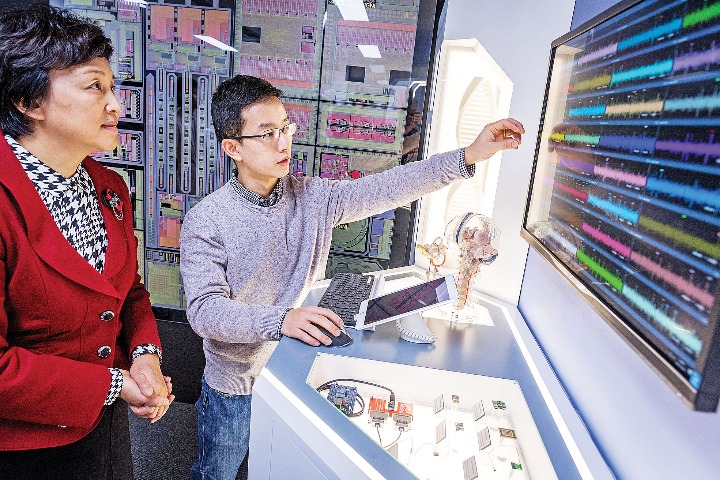
The dialogue aims to strengthen the "golden era" of UK-China relations by promoting deeper engagement and cooperation. The inclusion of a prominent academic and scientific initiative like the Tsinghua-Imperial fund within the framework of such a dialogue amplifies its visibility and underscores the strategic importance of scientific collaboration in the UK-China partnership.
Precedents and Potential for Impact
Imperial College London has a proven track record of fostering successful international research partnerships. In 2015, the institution launched a similar seed-fund initiative with the Massachusetts Institute of Technology (MIT). Early projects supported by the Imperial-MIT fund included groundbreaking work in areas such as enhancing battery life and performance, and the development of novel computing architectures that emulate different modes of "thinking." These past successes provide a strong precedent for the Tsinghua-Imperial fund, indicating a well-established model for nurturing innovative early-stage research through strategic international collaboration.
The impact of such initiatives can be far-reaching. By providing essential seed funding, the Tsinghua-Imperial fund has the potential to:
- Accelerate Discovery: Enable researchers to rapidly test hypotheses and validate novel concepts, potentially shortening the timeline from idea to breakthrough.
- Foster Cross-Cultural Innovation: Bring together diverse perspectives and expertise from both Tsinghua and Imperial, leading to more creative and robust solutions.
- Develop Future Leaders: Provide invaluable opportunities for students and early-career researchers to engage in international collaboration, building essential skills for a globalized research landscape.
- Address Global Challenges: Focus on research areas that tackle pressing global issues, such as climate change, public health, sustainable energy, and advanced materials.
- Stimulate Economic Growth: Facilitate the translation of research into commercially viable technologies and spin-out companies, contributing to economic development in both countries.
Imperial’s Leading Role in China Collaboration
Imperial College London has established itself as a leading academic research collaborator with China. Over the past five years, Imperial researchers have co-authored more than 3,000 publications with their Chinese counterparts, a testament to the depth and breadth of academic engagement. Furthermore, the university hosts a significant Chinese student population, with 2,600 Chinese students comprising its largest demographic group after Britons. This demographic strength is complemented by a substantial Chinese academic staff presence, with 225 Chinese staff members contributing to the university’s research and teaching endeavors.
This established infrastructure and existing collaborative network provide a fertile ground for the Tsinghua-Imperial Research and Innovation Fund to thrive. The deep roots of collaboration between the two institutions mean that the fund is not starting from scratch but rather building upon a foundation of mutual trust, shared research interests, and a history of successful joint ventures.
Future Outlook and Implications
The Tsinghua-Imperial Research and Innovation Fund represents a strategic investment in the future of scientific discovery. By focusing on the critical early stages of research, the fund is poised to unlock the potential of nascent ideas and support the next generation of innovators. The success of this initiative could serve as a model for future collaborations between leading universities worldwide, demonstrating the power of international partnerships in addressing complex global challenges and driving progress across a multitude of scientific disciplines.
The initial $300,000 investment, while significant for early-stage projects, is also a signal of intent. As Chen Xu and Professor Gast indicated, the universities are prepared to scale up their financial commitment should the fund prove its value. This forward-looking approach suggests a long-term vision for the partnership, one that aims to foster sustained innovation and cultivate a robust pipeline of groundbreaking research emanating from the collaboration between Tsinghua University and Imperial College London. The fund’s impact will be closely watched by the global academic community as a bellwether for the future of international research collaboration.


 Nana Wu
 Suro Senen