Ali Ikhwan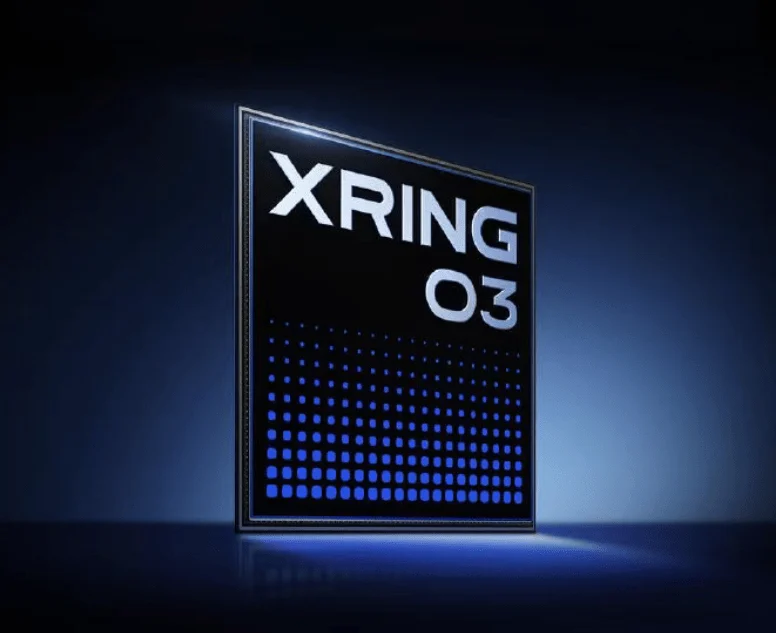
Xiaomi founder Lei Jun has publicly disclosed a hidden, intricate detail embedded within the company’s recently unveiled Xring O3 chip: a minuscule "OK" hand gesture. This microscopic symbol, measuring an astonishingly precise 60 micrometers across, is etched directly into the silicon. Lei Jun, in his revelation, explained that the symbol is intended to convey a reassuring message: "everything is OK," a sentiment that likely resonates deeply with Xiaomi’s long and often challenging journey into proprietary chip development. The Xring O3, officially introduced on August 24, represents Xiaomi’s latest and most ambitious foray into the realm of flagship AI smartphone System-on-Chips (SoCs), marking a significant milestone in the company’s strategic push for greater hardware independence and technological differentiation.
The Microscopic Easter Egg: A Symbol of Perseverance
The discovery of the "OK" gesture on the Xring O3 chip is more than a mere design quirk; it is a subtle nod to the intricate world of semiconductor engineering and a potential symbolic gesture from Xiaomi itself. At 60 micrometers, this etching is approximately the thickness of an average human hair (which ranges from 17 to 180 micrometers) and significantly smaller than a grain of sand, underscoring the extreme precision required in modern chip fabrication. Such "easter eggs" are not uncommon in the semiconductor industry, often serving as a morale booster for engineering teams, a subtle brand signature, or even a hidden message to competitors. For Xiaomi, a company that has faced numerous hurdles in its chip development efforts, the "everything is OK" message could be interpreted as a declaration of confidence and resilience, signaling that despite past challenges, their commitment to advanced silicon design remains unwavering and is now yielding tangible results. This level of detail in chip design reflects not only technical prowess but also a certain cultural pride within the engineering team.
Unpacking the Xring O3: Xiaomi’s Flagship AI SoC
The Xring O3 is positioned as Xiaomi’s premier AI smartphone SoC, designed to power its next generation of flagship devices. Its public unveiling on August 24 was accompanied by bold claims regarding its performance capabilities, particularly in the burgeoning field of artificial intelligence. Xiaomi has stated that the Xring O3 is the first flagship mobile chip to surpass an impressive 5 million points on AnTuTu, a widely recognized benchmarking platform used to assess the overall performance of mobile devices. Achieving such a score indicates a significant leap in processing power, graphical capabilities, memory performance, and user experience metrics compared to previous generations and competitive offerings.
At its core, the Xring O3 boasts a 10-core all-performance CPU architecture, meticulously engineered to handle a wide spectrum of computational tasks, from everyday application usage to demanding multi-threaded workloads. This multi-core configuration is likely optimized for both peak performance and power efficiency, crucial considerations for mobile devices. Complementing the CPU is a powerful Neural Processing Unit (NPU) rated at an astonishing 200 Tera Operations Per Second (TOPS). The NPU is a specialized processor designed to accelerate machine learning tasks, making it central to the Xring O3’s identity as an "AI smartphone SoC." This high TOPS figure suggests a substantial capability for on-device AI processing, enabling complex AI models to run directly on the smartphone without constant reliance on cloud servers. This capability is specifically tailored to support Xiaomi’s proprietary MiMo on-device AI model, promising enhanced user experiences in areas such as image processing, natural language understanding, real-time translation, predictive text, and advanced computational photography.
Xiaomi’s Long Road to Proprietary Silicon: A Chronology of Ambition and Challenge
Xiaomi’s journey into designing its own SoCs is not a recent endeavor but a protracted saga marked by ambitious beginnings, significant investments, and periods of relative quiet. The company’s aspiration to develop proprietary silicon dates back nearly a decade, driven by a strategic imperative to reduce reliance on third-party chip manufacturers like Qualcomm and MediaTek, gain greater control over hardware-software integration, and differentiate its products in a fiercely competitive market.
The initial foray into chip development began with the establishment of its wholly-owned subsidiary, Surge, in 2014. This culminated in the release of the Surge S1 in 2017, a mid-range SoC that debuted in the Xiaomi Mi 5c smartphone. The Surge S1 was a significant statement of intent, showcasing Xiaomi’s capability to design and manufacture its own application processors. However, despite its promising start, the Surge S1 did not see widespread adoption in subsequent Xiaomi devices, leading to a period where the company’s SoC ambitions seemed to wane, at least on the application processor front. Challenges in manufacturing scalability, performance competitiveness against established players, and the immense research and development costs associated with chip design likely contributed to this hiatus.
Despite the apparent slowdown in developing full-fledged SoCs, Xiaomi continued to invest in specialized chip development. This strategy shifted towards creating dedicated image signal processors (ISPs) and power management chips, allowing them to optimize specific functionalities without the daunting task of competing with global giants in general-purpose computing. This led to the introduction of:
- Surge C1 (2021): An independent image signal processor (ISP) integrated into the Xiaomi Mi MIX Fold, demonstrating Xiaomi’s commitment to enhancing photographic capabilities through proprietary hardware.
- Surge P1 (2021): A custom fast-charging chip designed to optimize battery management and charging speeds, featured in the Xiaomi 12 Pro.
- Surge P2 (2022): An upgraded version of the power management chip, further enhancing charging efficiency and battery health, found in the Xiaomi 13 series.
These specialized chips, while not full SoCs, were crucial steps in building internal expertise, refining design methodologies, and strengthening relationships with foundries. They represented a pragmatic approach, focusing on areas where proprietary hardware could offer immediate and tangible user benefits. The re-emergence of a full-fledged application processor like the Xring O3, after years of focusing on niche components, signifies a renewed and emboldened commitment from Xiaomi to compete at the highest echelons of mobile silicon design. The "OK" gesture on the Xring O3 thus becomes a potent symbol of this arduous journey, acknowledging past struggles while confidently affirming present success and future direction.
The Strategic Imperative: Why OEMs Develop Their Own Chips
The trend of smartphone original equipment manufacturers (OEMs) developing their own SoCs is a significant paradigm shift in the mobile industry. Companies like Apple, Samsung, Huawei (with HiSilicon), and Google have all invested heavily in proprietary silicon, and Xiaomi’s Xring O3 represents its latest entry into this exclusive club. The motivations behind this strategic imperative are multi-faceted and crucial for understanding the broader implications of Xiaomi’s latest chip.
Firstly, vertical integration offers unparalleled control over the entire hardware and software stack. By designing their own chips, OEMs can optimize performance, power efficiency, and feature sets specifically for their devices and operating systems. This allows for tighter integration between hardware and software, leading to a more seamless and responsive user experience, as famously demonstrated by Apple’s A-series chips.
Secondly, proprietary chips enable differentiation in a highly saturated market. While many smartphones may share similar external designs, the underlying silicon can provide unique capabilities, especially in areas like AI, image processing, and security. For Xiaomi, the Xring O3 with its 200 TOPS NPU and MiMo AI model is a clear attempt to carve out a distinct identity based on advanced AI capabilities.
Thirdly, developing in-house chips mitigates supply chain risks and reduces reliance on external vendors. Geopolitical tensions, global pandemics, and economic fluctuations have repeatedly highlighted the vulnerabilities of relying on a limited number of chip suppliers. Building internal design capabilities offers a degree of resilience and strategic independence.
Lastly, proprietary silicon allows for long-term innovation and cost optimization. While the initial R&D investment is enormous, in the long run, companies can tailor chips to their exact needs, potentially leading to better cost-performance ratios and the ability to introduce cutting-edge features ahead of competitors. It also fosters a deeper understanding of semiconductor technology, positioning the company for future advancements.
The Competitive Landscape of Mobile SoCs
The mobile SoC market is dominated by a few major players, primarily Qualcomm (with its Snapdragon series) and MediaTek (with its Dimensity series). Apple’s A-series chips power its iPhones, while Samsung’s Exynos SoCs are used in some of its Galaxy devices (though it increasingly relies on Qualcomm). Huawei, through its HiSilicon subsidiary, developed the Kirin series, but sanctions have severely hampered its ability to produce advanced chips. Google has also entered the fray with its Tensor chips, focusing heavily on AI capabilities for its Pixel smartphones.
Xiaomi’s Xring O3 enters a highly competitive arena. Its claim of surpassing 5 million points on AnTuTu places it in direct contention with the latest flagship offerings from Qualcomm (e.g., Snapdragon 8 Gen 3) and MediaTek (e.g., Dimensity 9300). While raw benchmark scores are important, real-world performance, power efficiency, sustained performance under load, and the effectiveness of its AI capabilities will be critical determinants of its success. The focus on 200 TOPS for its NPU is particularly noteworthy, as on-device AI is rapidly becoming a key battleground, with competitors also pushing the boundaries of AI processing power. For instance, Qualcomm’s latest chips also boast significant AI accelerators, emphasizing the industry-wide shift towards edge AI.
On-Device AI: The Future of Mobile Processing
The Xring O3’s emphasis on a powerful NPU and its integration with Xiaomi’s MiMo on-device AI model underscores a major trend in mobile technology: the shift towards pervasive, on-device artificial intelligence. On-device AI, also known as edge AI, allows AI algorithms to be processed directly on the device rather than relying on cloud servers. This paradigm offers several significant advantages:
- Privacy: User data remains on the device, reducing concerns about data transmission and storage in the cloud.
- Speed and Responsiveness: Processing occurs instantaneously, eliminating latency associated with network communication. This is crucial for real-time applications like voice assistants, augmented reality, and real-time video processing.
- Offline Functionality: AI features can operate even without an internet connection.
- Power Efficiency: Optimized NPUs can perform AI tasks more efficiently than general-purpose CPUs or GPUs, leading to better battery life.
The 200 TOPS capability of the Xring O3’s NPU suggests that Xiaomi is aiming for sophisticated on-device AI functionalities. This could manifest in enhanced computational photography, enabling more intelligent scene recognition, advanced portrait modes, and real-time video effects. It could also power more personalized user experiences, such as highly accurate voice commands, adaptive UI elements, and predictive features that learn from user behavior without sending sensitive data off the device. Xiaomi’s MiMo model, presumably a compact and optimized AI framework, is designed to leverage this NPU power, integrating AI seamlessly into various aspects of the smartphone experience.
Implications for Xiaomi and the Industry
The unveiling of the Xring O3 and its subtle "OK" message carries significant implications for Xiaomi’s brand perception, its technological trajectory, and the broader mobile industry.
For Xiaomi, the Xring O3 solidifies its position as a serious player in high-end hardware development, moving beyond its reputation primarily as a value-for-money smartphone assembler. It signals a maturation of its engineering capabilities and a commitment to innovation from the ground up. Successfully integrating a competitive proprietary SoC into its flagship devices will boost Xiaomi’s brand image, attracting tech enthusiasts and demonstrating its prowess in a highly technical domain. It also provides Xiaomi with a unique selling proposition, potentially allowing it to differentiate its devices more effectively against competitors who rely solely on off-the-shelf chips.
The "everything is OK" gesture, therefore, is not just an engineer’s inside joke but a public declaration of confidence. It signifies that Xiaomi believes it has overcome the significant challenges inherent in advanced chip design and is now ready to reap the rewards of its sustained investment. This success could pave the way for future generations of Xring chips, further cementing Xiaomi’s role as a technological innovator.
For the mobile industry, Xiaomi’s intensified push into proprietary silicon reinforces the trend of vertical integration among major smartphone OEMs. As more companies develop their own chips, the competitive landscape for traditional SoC suppliers like Qualcomm and MediaTek will become even more challenging. It also accelerates the focus on specialized hardware for AI, as on-device intelligence becomes a critical differentiator. The Xring O3’s performance claims and AI capabilities will set a new benchmark for what consumers can expect from flagship smartphones, pushing the entire industry towards more powerful, intelligent, and personalized mobile experiences. The era of generic, undifferentiated smartphone hardware is rapidly giving way to an age where proprietary silicon defines the true capabilities and user experience of a device.


 Lina Irawan
 Muslim