Dwi Wanna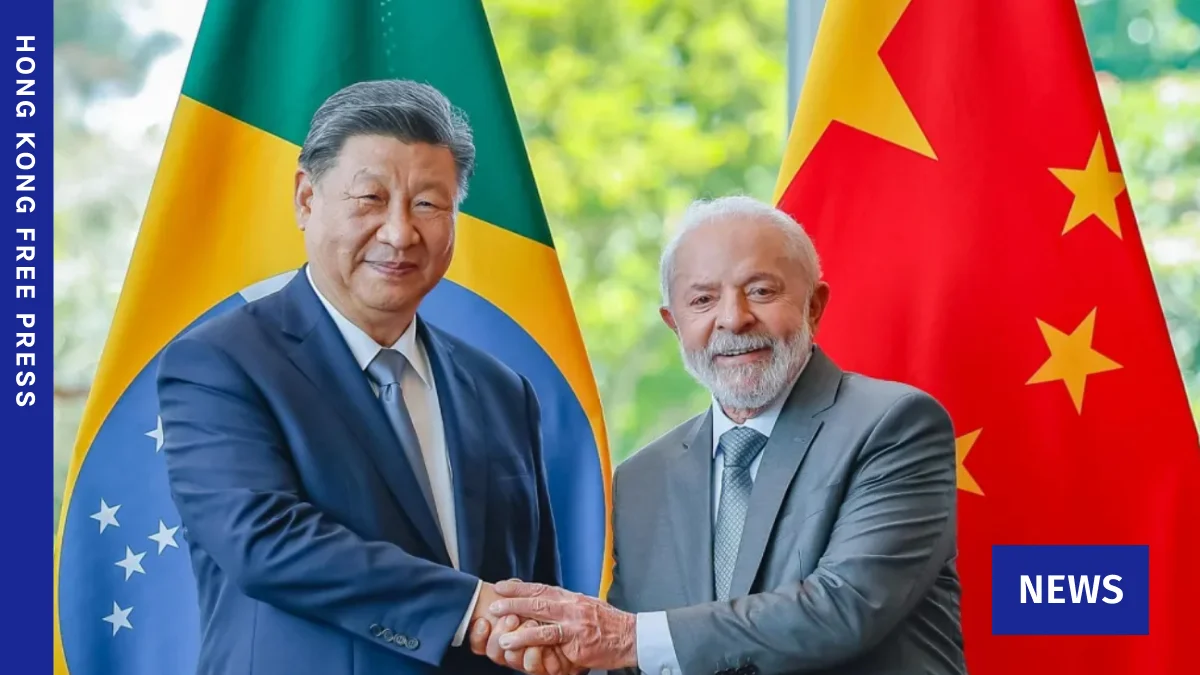
The pronouncement from President Xi, conveyed by state news agency Xinhua, emphasized China’s high regard for Brazil’s "international status and important influence." Xi reportedly affirmed Beijing’s support for Brazil in "safeguarding its sovereignty and independence, opposing external interference, and contributing to maintaining regional and world peace and stability." This statement comes at a highly sensitive time for Brazil, less than three months before a closely watched presidential election in October, which pits incumbent left-wing President Lula against right-wing candidate Flavio Bolsonaro, the son of former president Jair Bolsonaro.
Deepening Economic and Political Alignment

The call between the leaders of the world’s second and ninth-largest economies, respectively, signifies a deepening of political alignment and economic cooperation. For China, Brazil represents a vital partner within the BRICS bloc (Brazil, Russia, India, China, South Africa) and a cornerstone of its engagement in Latin America. Brazil is China’s largest trading partner in the region, a relationship that has expanded significantly over the past two decades. Bilateral trade between China and Brazil reached an unprecedented $171.49 billion in 2023, with China primarily importing agricultural products like soybeans, iron ore, and crude oil, and exporting manufactured goods and technology. This economic interdependence forms the bedrock of their strategic partnership, providing both nations with leverage in a complex global landscape.
During their discussion, both President Lula and President Xi reportedly agreed on the "importance of speeding up negotiations for a Mercosur-China agreement." Mercosur, a South American trading bloc comprising Brazil, Argentina, Uruguay, and Paraguay, represents a significant market. A comprehensive trade deal with China would provide Mercosur members, particularly Brazil, with enhanced access to the vast Chinese market, potentially reshaping regional trade dynamics and offering an alternative to traditional Western-dominated economic frameworks. Lula’s commitment to "diversifying markets and trade partners" reflects Brazil’s broader foreign policy agenda under his administration, which seeks to reduce reliance on any single power and cultivate a more multipolar global order.
US Pressure and Brazilian Political Tensions

The timing and content of Xi’s statement, particularly the reference to "external interference," cannot be divorced from Brazil’s current political and economic challenges, notably its fraught relationship with the United States. Washington has recently imposed two rounds of tariffs on various Brazilian products this month, following a substantial tariff hike in 2025. These measures were reportedly enacted in retaliation for a "coup-plot trial" in Brazil that led to the imprisonment of former president Jair Bolsonaro.
President Lula has vehemently denounced these US tariff pressures, characterizing them as a deliberate attempt to exert political influence during a critical election year. This sentiment is amplified by other recent diplomatic incidents. Just days prior to the call, Brazil denied visas for two United States officials who had sought to meet with Brazilian election authorities in Brasilia ahead of the October vote. This denial, confirmed by a diplomatic source to AFP, signals Brazil’s firm stance against perceived foreign meddling in its electoral processes.
The issue of election integrity has become a flashpoint in Brazilian politics, echoing controversies seen in the United States. Flavio Bolsonaro, a senator and son of the former president, has recently revived unsubstantiated claims regarding the insecurity of Brazil’s electronic voting system. These claims draw parallels to former US President Donald Trump’s persistent, false assertions about the American elections, suggesting a coordinated effort by right-wing elements to sow doubt about democratic outcomes. The Brazilian presidency’s statement on the call between Lula and Xi did not explicitly mention whether the specific issue of "external interference" was raised by Lula, though Xinhua’s reporting clearly indicates Xi’s proactive support on the matter.

A Chronology of Mounting Tensions
The recent developments are part of a discernible timeline illustrating growing friction between Brazil and the United States, alongside strengthening ties with China:
- 2025: The US imposes a major tariff hike on Brazilian products, ostensibly in response to the "coup-plot trial" and subsequent imprisonment of former President Jair Bolsonaro. This marked a significant downturn in economic relations.
- Early 2024: President Lula’s administration emphasizes a foreign policy aimed at diversifying trade partners and reducing dependence on traditional Western allies, actively pursuing closer ties with China and other BRICS nations.
- November 2024: Chinese President Xi Jinping visits Brazil, meeting with President Lula, further solidifying bilateral relations and setting the stage for deeper cooperation. Xi also attends the G20 Summit in Rio de Janeiro, underscoring China’s engagement with Brazil on multilateral platforms.
- Months leading up to October 2025 election: Flavio Bolsonaro, a key figure in the opposition, intensifies rhetoric questioning the integrity of Brazil’s electronic voting system, fueling domestic political polarization.
- This month (July 2025): The United States implements two additional rounds of tariffs on Brazilian goods, compounding economic pressure.
- Days prior to the call: Brazil denies visas to US officials seeking to engage with election authorities, citing concerns over potential interference.
- Monday, [Date of Call]: President Xi Jinping and President Lula da Silva hold a phone call, during which Xi explicitly pledges China’s support for Brazil against "external interference," as reported by Xinhua.
Geopolitical Implications and the Quest for Multipolarity

Xi’s explicit statement of support for Brazil against "external interference" carries significant geopolitical weight. It positions China as a powerful ally for nations seeking to assert greater autonomy from Western influence, particularly from the United States. This move reinforces Beijing’s strategy of cultivating partnerships in the Global South and promoting a multipolar world order, where no single nation or bloc holds unchallenged dominance.
For Brazil, this strategic alignment offers a crucial counterbalance to perceived US unilateralism. Lula’s foreign policy has consistently advocated for greater South-South cooperation and a more balanced international system. By strengthening ties with China and pursuing economic diversification, Brazil aims to safeguard its sovereignty and pursue its national interests without being unduly swayed by external pressures. The potential Mercosur-China agreement is a tangible example of this strategy, promising economic benefits while enhancing regional integration and collective bargaining power on the global stage.
The US, meanwhile, is likely to view these developments with concern. Latin America has historically been considered within Washington’s sphere of influence, and China’s expanding footprint, coupled with explicit declarations of support against "external interference," could be interpreted as a direct challenge to US regional hegemony. The ongoing trade disputes and diplomatic spats between Washington and Brasília underscore a broader competition for influence, where economic tools are increasingly intertwined with political objectives.

The Upcoming Election: A Defining Moment
The backdrop of Brazil’s upcoming October election adds another layer of complexity to these international maneuvers. The political climate is highly charged, with deep divisions and a history of contentious electoral outcomes. The current administration’s stance on foreign policy, particularly its embrace of non-Western partners and its resistance to US pressure, will undoubtedly be a factor in the electoral debate. Xi’s statement, while framed as support for Brazil’s sovereignty, could also be seen by some as an implicit endorsement of the current administration’s foreign policy direction, or at least a signal of China’s preferred outcome for stability and continued cooperation.
The "external interference" narrative resonates deeply within Brazil, especially given the history of foreign involvement in Latin American politics. Lula’s government is keen to project an image of national independence and self-determination, particularly in the face of perceived attempts by Washington to influence its domestic affairs. The denial of visas to US election officials and the strong condemnation of US tariffs are consistent with this narrative.

In conclusion, the phone call between President Xi Jinping and President Luiz Inacio Lula da Silva marks a significant moment in contemporary international relations. It highlights China’s expanding diplomatic reach and its willingness to openly support partners in challenging traditional power structures. For Brazil, it represents a continuation of its strategic pivot towards diversified international engagement, aimed at enhancing its sovereignty and economic resilience. As the Brazilian election approaches, the interplay of domestic politics, economic pressures, and shifting global alliances will continue to shape the trajectory of this vital South American nation and its place in an increasingly multipolar world.

 Nana Wu
 Lina Hope