Suro Senen
Southeast Asia’s automotive market, a region long synonymous with the enduring legacy of Japanese carmakers, is experiencing a profound and rapid transformation. The accelerating adoption of electric vehicles (EVs) is fundamentally reshaping the competitive landscape, posing a critical question for established automotive giants like Toyota and Honda: can they adapt swiftly enough to maintain their market relevance in this new era of mobility? This seismic shift was a central theme at a recent online seminar hosted by Greenpeace Japan on June 24, which delved into Indonesia’s burgeoning EV market and its significant implications for traditional Japanese automakers. The virtual event convened leading experts, including Aditya Mahalana, a senior researcher at the International Council on Clean Transportation (ICCT), and Achmad Rofiqi, vice chairman of PR & Education at the Indonesian EV Industry Association (PERIKLINDO), to provide in-depth analysis of the Indonesian and broader ASEAN automotive trajectory.
The Unforeseen Acceleration of EV Adoption in Indonesia
Contrary to conventional patterns of technology diffusion, where cleaner technologies typically gain traction first in wealthier economies, Southeast Asia, and specifically Indonesia, is demonstrating an accelerated uptake of EVs. According to Mahalana, middle-income economies are now embracing electric mobility at a faster pace than their more affluent counterparts. This phenomenon can be attributed, in part, to a lack of entrenched, legacy domestic auto industries in these nations. The absence of powerful lobbying groups defending established internal combustion engine (ICE) manufacturing and the presence of fewer import barriers for new technologies create a more conducive environment for welcoming affordable green transportation solutions.
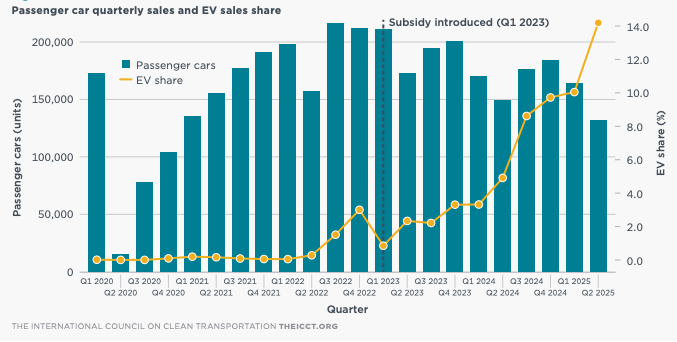
Data compiled by the ICCT vividly illustrates this dramatic shift. Indonesia’s EV sales have surged from a negligible figure of fewer than 150 units in 2020 to over 22,000 units by the second quarter of 2025. This exponential growth has propelled the country’s total EV stock to surpass 100,000 units. By the second quarter of 2025, EVs accounted for a significant 15.2% of all new passenger car sales, a figure boosted by an extraordinary 40% increase in sales from the preceding quarter alone. This rapid expansion suggests a transition from early adoption to mainstream consumer acceptance, a trend that has surprised many industry observers.
The underlying drivers of this EV boom in Indonesia are multifaceted. A key factor is the nation’s abundant natural resources, particularly nickel. As the world’s largest producer of nickel, holding a substantial 40% global share, Indonesia possesses a significant strategic advantage in the production of EV batteries, a critical component of electric vehicles. Achmad Rofiqi of PERIKLINDO highlighted this inherent advantage, emphasizing Indonesia’s potential to become a pivotal player in the global EV battery supply chain.
Beyond resource advantages, domestic adoption is being further fueled by several converging factors. The introduction of more affordable EV models tailored to local market needs, coupled with lower running costs compared to gasoline-powered vehicles, is making electric mobility increasingly attractive to a broader segment of the population. Furthermore, the rapid expansion of charging infrastructure is alleviating range anxiety and improving the overall user experience. By 2024, Indonesia had already established over 2,300 public charging stations strategically located across 300 cities, a testament to the government’s and private sector’s commitment to fostering a supportive ecosystem for EVs. This combination of factors is evidently propelling Indonesia’s EV market from a niche segment to a mainstream force.
New Entrants Redefine Competition in the EV Arena
This swift transition is not merely an evolution; it represents a fundamental rewriting of the competitive playbook in Southeast Asia’s automotive sector. For decades, established Japanese brands such as Toyota, Honda, and Nissan have enjoyed near-monopolistic dominance across the ASEAN market. Their success was built on a foundation of manufacturing prowess, robust engineering, and deeply entrenched brand loyalty cultivated over generations. While these brands continue to lead in the segment of conventional gasoline-powered vehicles, their position in the burgeoning EV market tells a vastly different story.
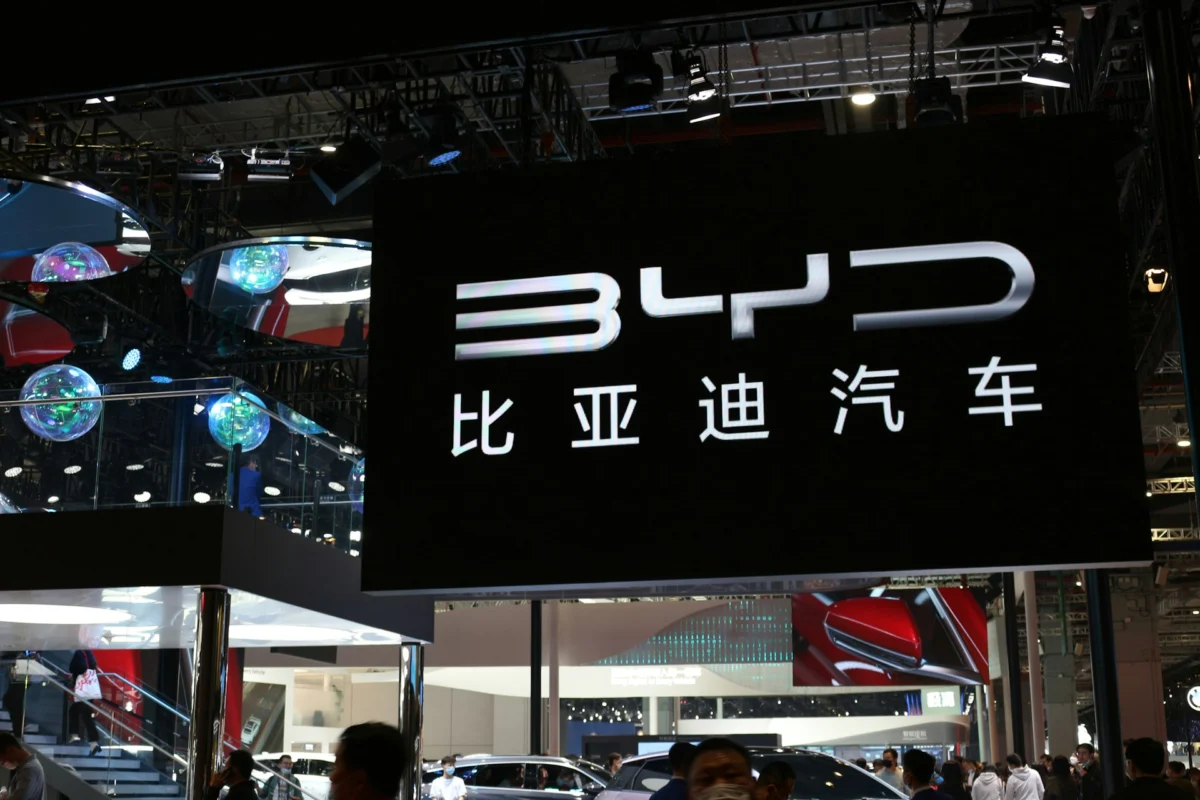
The void left by the gradual shift away from traditional powertrains is being rapidly filled by new and agile competitors, predominantly from China. Automakers like BYD and SAIC’s Wuling have emerged as formidable forces, now collectively commanding nearly 60% of all Battery Electric Vehicle (BEV) sales in Indonesia, according to ICCT data. Their competitive edge extends far beyond aggressive pricing strategies. These new entrants boast vertically integrated battery supply chains, granting them greater control over costs and production. They are also at the forefront of integrating advanced digital features and user interfaces into their vehicles, catering to the evolving expectations of modern consumers. Perhaps most critically, they exhibit incredibly fast product development cycles, often bringing new models from concept to market in as little as 12 to 18 months. This agility allows them to respond rapidly to market trends and consumer preferences, a stark contrast to the longer development timelines often associated with legacy automakers.
The implications of this competitive shift are profound. Established automakers, accustomed to decades of market leadership and predictable product cycles, are now facing rivals that operate with a different set of rules and a far greater sense of urgency. The traditional advantages of brand recognition and dealer networks, while still valuable, may not be sufficient to counter the technological innovation, cost efficiencies, and speed to market demonstrated by these new players.
The Imperative for Japanese Automakers to Accelerate Their EV Pivot
The evolving market dynamics underscore a clear message for incumbent automakers: adaptability is no longer a desirable trait, but a prerequisite for survival. "The rules of the competition are evolving. Companies that can adapt quickly will be positioned for long-term success," stated Rofiqi from PERIKLINDO. This sentiment was echoed by industry analysts who observe that companies failing to embrace rapid change risk being left behind.
Japanese automakers still possess significant strengths that have underpinned their historical success. These include world-class engineering capabilities, a reputation for exceptional safety standards, and a deeply ingrained trust among consumers built over many decades. However, to translate these strengths into continued relevance in the EV era, a strategic recalibration is essential. Rather than engaging in defensive lobbying efforts that seek to delay the transition to electrification, these companies have a unique opportunity to spearhead the region’s move towards a cleaner and more sustainable automotive future. This pivot requires a strategic focus on several key areas:
- Accelerated EV Product Development: A fundamental shift is needed to shorten product development cycles for EVs, mirroring the agility of newer competitors. This involves investing in agile R&D processes, modular platform development, and rapid prototyping.
- Localized Strategies: Developing EV models specifically designed for the diverse needs and preferences of Southeast Asian markets is crucial. This includes considerations for affordability, local driving conditions, and consumer expectations regarding features and design.
- Deeper Ecosystem Engagement: Collaboration and deeper engagement with the burgeoning EV ecosystem are vital. This encompasses partnerships with battery manufacturers, charging infrastructure providers, and technology companies to foster innovation and build a comprehensive EV value chain.
- Commitment to Decarbonization Targets: Setting ambitious and transparent greenhouse gas reduction targets for their EV portfolios is paramount. This demonstrates a genuine commitment to environmental sustainability beyond mere compliance.
Rofiqi further elaborated on the path forward, concluding, "The opportunity for Japanese automakers remains substantial… But maintaining leadership will require accelerated EV product development, localized strategies, and deeper engagement with the emerging EV ecosystem. The future does not have to be a competition between countries. It can be a collaboration that benefits the entire region." This vision suggests a potential for cooperative growth rather than solely competitive pressure, provided that established players demonstrate a willingness to embrace change.

Greenpeace’s Perspective: Linking Market Growth to Climate Imperatives
The rapid evolution of the automotive market in Southeast Asia, as highlighted in the Greenpeace Japan seminar, carries profound implications for global climate action. For nations in the ASEAN region, bypassing the extensive carbon lock-in associated with decades of internal combustion engine vehicle use presents a significant opportunity to accelerate their decarbonization efforts. The International Energy Agency (IEA) global EV forecast underscores the unavoidable nature of this transition, projecting global EV sales to reach an impressive 23 million vehicles this year alone. This monumental shift is anticipated to displace up to 5 million barrels of oil per day by 2030, making electric mobility an indispensable strategy in the global effort to mitigate the escalating climate crisis.
Erin Eunseo Choi, Climate and Energy Campaigner at Greenpeace East Asia, emphasized the urgency of this transition. "Indonesia’s rapid EV adoption proves the market is ready," she stated. "For legacy brands like Toyota, it exposes the real risk of the slow-walk strategies favored by traditional automakers. Relying on a defensive ‘multi-pathway’ approach that protects combustion engines and hybrids is no longer viable and is already costing them market share to faster competitors." Choi highlighted the immediate need for decarbonizing the transport sector through battery electric vehicles, particularly in light of geopolitical oil shocks and severe climate events such as El Niño. She asserted that "Japanese automakers must accelerate their EV strategies and set ambitious greenhouse gas reduction targets to achieve substantial cuts in total emissions."
This perspective from Greenpeace aligns with the scientific consensus on the urgent need for rapid emissions reductions across all sectors, including transportation. The current trajectory of EV adoption in Southeast Asia offers a tangible pathway for these nations to leapfrog traditional, carbon-intensive development models and embrace a sustainable future. The success of Indonesia’s EV market serves as a compelling case study, demonstrating that the transition to electric mobility is not only feasible but also economically advantageous and environmentally critical. For legacy automakers, the message is clear: embrace the EV revolution with conviction and speed, or risk becoming a relic of a bygone era in the rapidly electrifying world of automotive transport. The challenge and opportunity lie in transforming established strengths into the vanguard of a cleaner, more sustainable mobility future for Southeast Asia and beyond.

 Evan Lee Salim
 Laily UPN