Basiran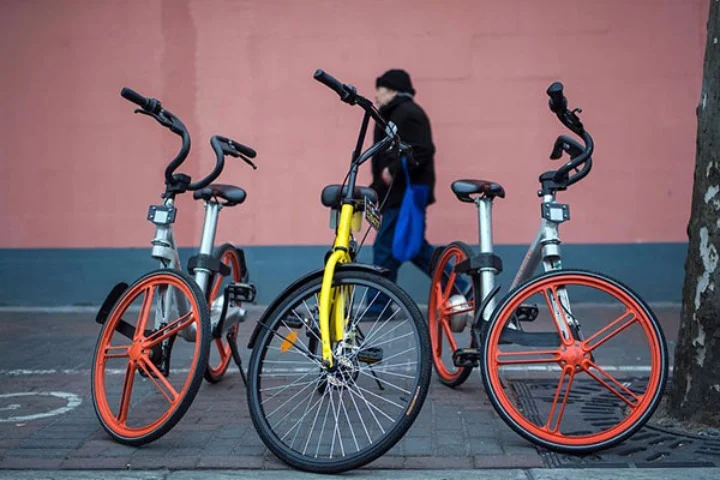
The strategic future of China’s fiercely competitive bike-sharing industry has been increasingly dominated by a compelling question: will the two dominant players, Mobike and Ofo, unite? This query, which gained significant traction in the latter half of 2017, has exposed a stark divergence between the financial imperatives voiced by influential investors and the staunch resistance from the companies’ top executives. As venture capital interest pushed for consolidation to stem massive losses, the founders of these unicorn startups have publicly rejected such overtures, creating a high-stakes standoff that could redefine urban mobility.
The Meteoric Rise and Unprecedented Investment in China’s Bike-Sharing Phenomenon
The narrative of Mobike and Ofo is inextricably linked to the broader phenomenon of China’s shared economy boom. Emerging rapidly around 2016, bike-sharing services quickly transformed urban landscapes, offering an innovative solution to the "last-mile" problem in bustling cities. With simple app-based rental systems, dockless bikes became ubiquitous, appealing to millions with their convenience, affordability, and perceived environmental benefits. This rapid adoption attracted an unprecedented influx of venture capital, with investors eager to back the next big thing in China’s tech sphere.
Mobike, founded by Hu Weiwei and Wang Xiaofeng, launched its distinctive orange-wheeled bikes, featuring advanced GPS tracking and integrated locks. Ofo, co-founded by Dai Wei and five university students, started with a simpler model, initially targeting university campuses before expanding aggressively nationwide with its iconic yellow bikes. Both companies rapidly scaled, deploying millions of bikes across hundreds of cities, securing dominant market shares through aggressive expansion, user subsidies, and a relentless focus on growth over immediate profitability. This era was characterized by a "land grab" mentality, where capturing market share was paramount, even at the cost of significant operational losses.
A Duopoly’s Costly Battle: The Genesis of Merger Talks
By mid-2017, Mobike and Ofo had solidified their positions as the undisputed leaders, collectively holding over 90% of the market share. While their rapid expansion was impressive, it came at an immense cost. The intense rivalry led to a perpetual cycle of subsidies to attract and retain users, coupled with mounting operational expenses for bike redistribution, maintenance, repairs, and combating theft and vandalism. The sheer volume of bikes also created significant urban clutter, leading to regulatory headaches and public criticism.
It became increasingly clear to many investors that the "burn rate" – the speed at which capital was being consumed – was unsustainable. Despite securing billions of dollars in funding, neither company had articulated a clear, viable path to sustained profitability. This financial reality began to temper the initial euphoria of growth, shifting the focus from expansion to consolidation.
Chronology of Investor Pressure and Executive Pushback
The latter half of 2017 marked a pivotal period, with public discourse around a potential merger intensifying:
- Mid-2017: Whispers of a merger began to circulate within industry circles as the financial strain of hyper-competition became evident. Analysts noted the parallels with other consolidated Chinese tech sectors, such as ride-hailing (Didi Chuxing absorbing Kuaidi Dache and later Uber China) and group buying (Meituan merging with Dianping).
- August 2017: Initial reports emerged quoting anonymous sources close to the companies suggesting merger talks were underway, though both firms officially denied them.
- September 2017: Allen Zhu, a prominent early investor in Ofo and managing director at GSR Ventures, publicly articulated the financial futility of continued competition. Speaking at a forum, Zhu stated that "continuing to burn cash to compete in the bike-sharing market is meaningless for Mobike and Ofo and only results in a huge loss." He emphasized the complex process of mergers, requiring a delicate balance of interests among investors, entrepreneurs, shareholders, and users. Zhu’s views, widely reported, highlighted that with both companies having secured a combined major market share and being well-matched in strength, only a merger could realistically pave the way to profitability.
- October 2017: Wang Gang, another significant Ofo investor, echoed Zhu’s sentiments, expressing his support for a merger on multiple occasions. He conceded, however, the limitations of investor influence when "a merger decision has to take many factors into consideration," according to AI Caijing.
- November 2017: The pressure mounted further with Mobike investors joining the chorus. Zhou Kui, a partner at Sequoia Capital China, a key backer of Mobike, was reported to have asserted that "it is time to merge when each company has a stable market share and little room to expand in China." Significantly, he added that "the resistance to a merger does not come from investors," directly pointing to the executive leadership as the primary impediment.
- Late November 2017: The executive resistance became explicitly public. Wang Xiaofeng, Mobike’s founder and chief executive, unequivocally stated that his company "will never merge with Ofo." Similarly, Dai Wei, CEO of Ofo, publicly denied any merger plans. However, AI Caijing cited an internal Ofo employee who reported Dai Wei stating internally that if a merger were to occur, "it must be Ofo merging with Mobike," revealing the deep-seated pride and control issues at play. This indicated that while the financial logic was undeniable, the ‘who acquires whom’ question was a significant stumbling block.
Supporting Data and the Unsustainable Cash Burn
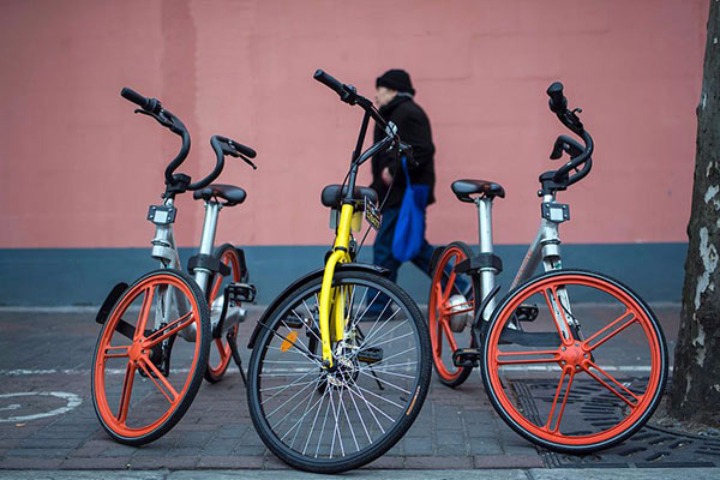
The calls for a merger were rooted in the stark financial realities of the sector. By late 2017, both Mobike and Ofo had raised astronomical sums, collectively exceeding $3 billion from an array of global and domestic investors including Tencent, Alibaba, Didi Chuxing, Sequoia Capital, Matrix Partners China, and Temasek Holdings. Despite this massive capital injection, neither company was profitable.
Industry estimates suggested that the daily operational costs for each company could run into millions of dollars, primarily driven by:
- Subsidies: Deep discounts and free rides offered to attract and retain users, essentially buying market share.
- Logistics and Redistribution: The labor-intensive process of moving bikes from areas of low demand to high demand.
- Maintenance and Repairs: Constant upkeep, given the high usage and frequent damage or vandalism.
- Technology Development: Ongoing investment in app features, GPS tracking, and smart lock technology.
The business model, relying on small per-ride fees (often less than a dollar) and refundable deposits (which became a source of controversy regarding their management), proved insufficient to cover these colossal expenses. The deposits, which could amount to hundreds of millions of dollars collectively, were a significant liability rather than a reliable revenue stream, particularly as user complaints about refund delays began to surface. The prevailing sentiment among investors was that a merger would eliminate redundant operational costs, reduce marketing expenditure, and create a single, larger entity with the potential to dictate pricing and finally achieve economies of scale necessary for profitability.
The Alibaba/Ant Financial Factor and the Rise of Hellobike
Adding another layer of complexity and strategic depth to the merger narrative was the involvement of China’s tech behemoths, Alibaba and Tencent, through their respective investment arms. Alibaba, a significant backer of Ofo, and its financial affiliate, Ant Financial, a key investor in Hellobike, played a crucial role in shaping the industry’s consolidation prospects.
In October 2017, the competitive landscape shifted with the strategic moves of Hellobike. Previously considered a distant third player, Hellobike was acquired by the subsidiary of Changzhou Youon Public Bicycle System Co Ltd, China’s first listed traditional public bike-sharing company. This acquisition provided Hellobike with substantial capital, operational experience, and a different model potentially integrating with existing public transport infrastructure. Following this, Hellobike successfully raised $350 million in its Series D1 round of financing in December 2017, with Ant Financial leading the investment. This investment not only injected vital capital but also lent significant credibility and strategic backing to Hellobike, positioning it as a formidable contender.
Hans Tung, a managing partner at GGV Capital – an early backer of Hellobike and also an investor in Ofo – offered a crucial insight to the South China Morning Post. He posited that "if one investor has invested in two firms, it will facilitate a merger to scale down the top three players into two." This highlights the strategic role of shared investors like Alibaba/Ant Financial in orchestrating industry consolidation. Their diversified investments across key players gave them leverage and a vested interest in a more rationalized market structure, ideally one that would eventually lead to profitable returns. The rise of Hellobike, backed by Ant Financial, also presented an alternative scenario: if Mobike and Ofo remained deadlocked, Hellobike could leverage its new capital and strategic partnerships to challenge the duopoly, particularly in tier-two and tier-three cities where the larger players might not have as entrenched a presence.
Broader Implications and Future Outlook
The ongoing merger saga between Mobike and Ofo carries profound implications for various stakeholders and the broader tech industry:
- For the Companies: A merger would undoubtedly lead to significant operational synergies, including rationalizing bike fleets, optimizing logistics, reducing marketing spend, and potentially increasing pricing power. It could also resolve the existential threat of continuous cash burn, paving a clearer path to profitability. However, it would also necessitate complex integration of distinct corporate cultures, technological platforms, and leadership structures. Without a merger, the risk of one or both companies collapsing under the weight of financial losses remains high.
- For Investors: The primary motivation for investors is to protect and grow their investments. A merger represents a strategic move to de-risk their portfolios, reduce competition-driven losses, and create a stronger, more viable entity with an eventual exit strategy. Continued competition only exacerbates the financial drain on their capital.
- For Users: In the short term, intense competition led to user benefits like low prices and abundant bikes. A consolidated market might see an end to aggressive subsidies and potentially higher prices, but could also lead to a more reliable, better-maintained service with fewer "bike graveyards" and improved urban management.
- For the Industry: The outcome of this standoff serves as a critical precedent for other hyper-competitive, venture-backed sectors in China. It underscores the transition from a growth-at-all-costs mentality to a more mature phase focused on sustainable business models and profitability. The consolidation observed in ride-hailing and food delivery industries suggests that bike-sharing may follow a similar trajectory.
- For Urban Planning and Regulation: Local governments across China struggled with the uncontrolled proliferation of dockless bikes, leading to parking chaos and regulatory challenges. A consolidated industry, with fewer, more responsible operators, could facilitate better dialogue and collaboration with urban authorities, leading to more sustainable integration of bike-sharing into city infrastructure.
The unresolved strategic deadlock between Mobike and Ofo, characterized by investor pressure for financial rationality and executive resistance driven by control and vision, defines a critical juncture for China’s bike-sharing landscape. With Hellobike’s emergence as a strengthened third player backed by Ant Financial, the stakes are higher than ever. The future of urban mobility in China hinges on whether the titans of bike-sharing can overcome their internal differences to forge a unified path towards profitability, or if their rivalry will ultimately lead to a different, perhaps more fragmented, outcome.

 Evan Lee Salim
 Suro Senen