
 Asep Darmawan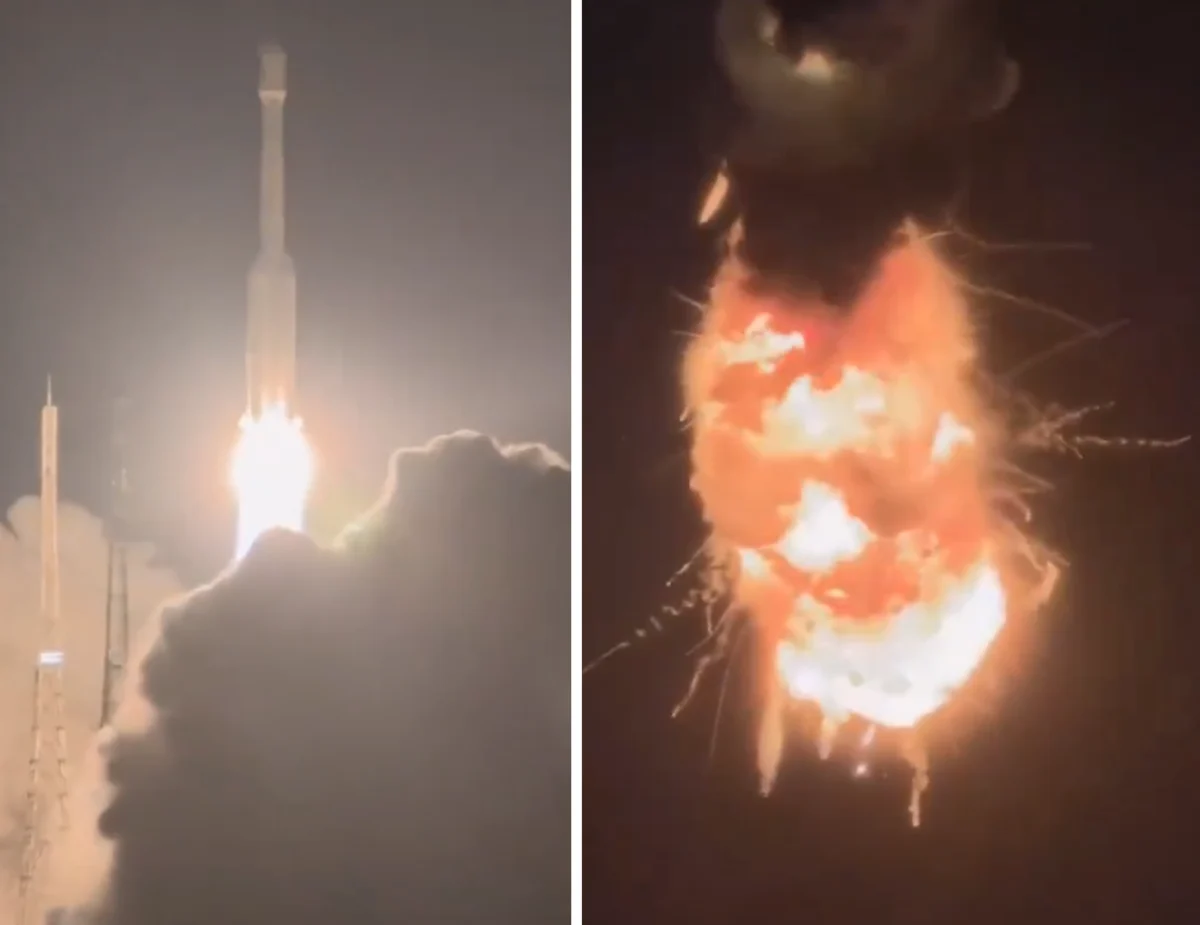
The incident marks a significant setback for China’s rapidly advancing space program, which has seen substantial investment and achieved several milestones in recent years. The Long March 7A, a relatively new variant in China’s workhorse rocket family, lifted off from the Wenchang Space Launch Site on Hainan Island at precisely 8:02 PM local time (1202 GMT). Its mission was to deploy the Zhongxing-4B (ChinaSat-4B) communications satellite into geosynchronous transfer orbit, a crucial position for relaying telecommunications services. However, mere moments after launch, the trajectory deviated, and eyewitnesses captured footage of what appeared to be a fiery disintegration in the night sky.
The Catastrophic Ascent: Eyewitness Accounts and Official Confirmation
The initial reports of the failure came swiftly, contrasting with the usual celebratory announcements following Chinese launches. State news agency Xinhua confirmed the "anomaly" occurred during the flight of the Long March 7A, carrying the Zhongxing-4B satellite. While official statements from Beijing remained concise, referring only to an "anomaly," the visual evidence quickly circulated globally, painting a more dramatic picture.
Videos, purportedly taken by observers on Hainan Island and shared across social media platforms, showed the rocket ascending for approximately 85 seconds before a sudden, brilliant flash illuminated the dark sky. The single point of light rapidly expanded into a fiery ball, followed by a lingering cloud of grey smoke, as debris was seen falling back towards Earth. The footage, some of which was shared by Singapore-based broadcaster Channel NewsAsia, captured the awestruck reactions of crowds who had gathered to witness the launch, their cheers turning to gasps of shock and concern as the spectacle unfolded. The vivid imagery suggested a severe structural failure or engine malfunction leading to the rocket’s destruction.

The Wenchang Space Launch Site, located on the northeastern coast of Hainan, is China’s fourth and southernmost launch facility, specifically chosen for its proximity to the equator. This location allows rockets to gain additional thrust from the Earth’s rotation, making it ideal for launching heavy payloads, particularly those destined for geosynchronous orbit, like the Zhongxing-4B. The site has been operational since 2014 and has hosted several key missions, including those for the Tiangong space station.
The Mission: Zhongxing-4B and the Long March 7A
The Zhongxing-4B satellite, intended for geosynchronous orbit, was designed to provide advanced telecommunications services, likely for both civilian and governmental use across China and potentially other regions. Communications satellites are integral to modern infrastructure, enabling everything from internet connectivity and television broadcasting to secure military communications and disaster response. The loss of such a satellite represents a significant blow to China’s telecommunications capabilities and a considerable financial write-off.
The Long March 7A (CZ-7A) is an expendable medium-lift launch vehicle, part of the new generation of Chinese rockets designed to replace older, less efficient models. It is a variant of the Long March 7, specifically optimized for geosynchronous transfer orbit missions. The ‘A’ designation indicates an extended upper stage, providing increased thrust and payload capacity. The rocket stands approximately 60 meters tall and is powered by kerosene-liquid oxygen engines, which are considered more environmentally friendly than the hypergolic propellants used in some older Long March variants.
This was not the Long March 7A’s first encounter with failure. Its maiden launch in March 2020 also resulted in an unsuccessful mission, with Xinhua reporting a "malfunction occurred" during that flight as well. This second failure for the 7A variant raises critical questions about its reliability and the engineering processes involved in its development and operation. Each launch failure costs hundreds of millions of dollars in lost hardware and payload, delays critical space infrastructure, and can damage national prestige.

China’s Ambitious "Space Dream"
The incident casts a shadow over China’s ambitious "space dream," a strategic initiative championed by President Xi Jinping. Beijing has poured billions of dollars into its space program, viewing it as a critical pillar of national power, scientific advancement, and technological independence. The objectives are multifaceted:
- Scientific Advancement: Pushing the boundaries of human knowledge through lunar and planetary exploration.
- Economic Growth: Developing a robust space industry, including satellite manufacturing, launch services, and space-based applications.
- Military Superiority: Enhancing reconnaissance, navigation, and communication capabilities for defense purposes.
- National Prestige: Demonstrating China’s technological prowess on the global stage, akin to the Cold War space race between the US and the Soviet Union.
In recent years, China has made remarkable progress, including landing robotic rovers on the Moon (Chang’e 3, 4, and 5) and Mars (Tianwen-1 mission’s Zhurong rover), completing its own Tiangong space station, and conducting numerous successful satellite launches. Just in July, China successfully landed a reusable rocket for the first time, a major technological leap aimed at significantly reducing launch costs and increasing launch frequency, mirroring capabilities pioneered by companies like SpaceX. This achievement was hailed as a key step towards making space access more routine and economical. The ultimate goal, as stated by Chinese officials, is to land astronauts on the Moon before 2030, intensifying the global lunar race with the United States’ Artemis program.
Historical Context of Launch Failures
Rocketry remains an inherently challenging endeavor, fraught with complex engineering, extreme forces, and unforgiving environments. Failures, while rare, are a stark reminder of the difficulties involved. Historically, every major spacefaring nation has experienced launch failures. The United States, Russia, Europe, Japan, and India have all had rockets explode on the pad, veer off course, or fail to deliver their payloads.

For instance, the early days of space exploration were marked by numerous setbacks. Even with decades of experience, modern launch systems are not immune. The average success rate for orbital launches globally hovers around 90-95%, meaning that failures, though infrequent, are an expected part of the development and operational cycle. Each failure provides invaluable data for engineers to diagnose problems, refine designs, and improve safety protocols.
China’s Long March rocket series, while generally reliable, has also had its share of failures. Beyond the two Long March 7A incidents, notable past failures include:
- Long March 3B (1996): Exploded shortly after launch, crashing into a village and causing casualties, a highly controversial event due to initial attempts to downplay its severity.
- Long March 3B/E (2017): Failed to place the Zhongxing-9A communications satellite into its intended orbit due to a second-stage malfunction, though the satellite was later able to reach a degraded orbit using its own propulsion.
- Long March 5 Y2 (2017): The second flight of China’s most powerful rocket failed due to an engine anomaly in the first stage, delaying the Tiangong space station module launches and lunar sample return missions.
These incidents underscore that even with advanced technology and rigorous testing, the margins for error in space launch are incredibly thin.
Global Space Race and Reactions
The global space landscape is increasingly competitive, with state-backed programs vying for dominance alongside a growing number of private companies. The United States, through NASA and commercial partners like SpaceX, is pursuing ambitious goals such as returning humans to the Moon via the Artemis program and eventually establishing a sustained presence there and on Mars.

Elon Musk, CEO of SpaceX, a company that has revolutionized access to space with its reusable rocket technology, offered a succinct yet empathetic reaction to China’s latest failure. Commenting on a social media post about the incident, Musk stated, "Rockets are insanely hard. I hope they have a speedy recovery." His words reflect a shared understanding within the space industry of the immense technical challenges involved. SpaceX itself has experienced numerous spectacular failures during its development phases, including early Falcon 9 prototypes exploding during test flights and more recently, the Starship test flights, which have often ended in dramatic fashion before achieving full success.
Ironically, just days before the Chinese incident, a four-tonne piece of a SpaceX Falcon 9 rocket’s upper stage, launched in 2015, was believed to have unintentionally crashed into the Moon. While this incident was not a mission failure in the traditional sense, as the rocket stage was derelict, it highlighted the growing issue of space debris and the long-term consequences of space activities.
Implications and Future Outlook
The failure of the Long March 7A and the loss of the Zhongxing-4B satellite carry several implications for China’s space program and the broader global context:
- Schedule Delays: The incident will likely cause delays in future Long March 7A launches, as investigators work to identify the precise cause of the "flight anomaly." This could impact the deployment of other critical satellites or even slow down the pace of China’s ambitious lunar and deep-space exploration missions if the problem is systemic to the Long March family.
- Financial Costs: The direct financial loss of the rocket and the satellite is substantial, estimated to be in the hundreds of millions of dollars. There are also indirect costs associated with investigations, redesigns, and the lost revenue or services the satellite would have provided.
- Reputational Impact: While failures are part of spaceflight, repeated failures of a specific rocket variant, especially after a prior maiden flight failure, can somewhat diminish the perception of reliability. However, China’s overall impressive track record in space will likely mitigate long-term damage.
- Technological Scrutiny: The investigation will focus on the design, manufacturing, and operational procedures of the Long March 7A. Engineers will meticulously analyze telemetry data, debris, and eyewitness accounts to pinpoint the root cause, which could range from a faulty component, an engine malfunction, or an error in launch operations.
- Safety Concerns: While the Wenchang site is designed with safety in mind, and launch trajectories are chosen to minimize risk to populated areas, any mid-air explosion results in scattered debris. Ensuring the safety of the public and mitigating the risk of space junk remains a paramount concern for all space agencies.
- International Competition: While other nations offer condolences, the failure subtly impacts the competitive dynamic in space. A robust and reliable launch capability is fundamental to maintaining a competitive edge in the space race.
In the wake of this setback, China’s space agency will undoubtedly conduct a thorough and transparent investigation, as it has done with past failures. The commitment to its "space dream" is deeply ingrained in national policy, and overcoming such challenges is viewed as a necessary step in the arduous journey of space exploration. The world will be watching closely as China seeks to understand the "anomaly" and bring its Long March 7A back to a reliable operational status, continuing its relentless pursuit of the final frontier.


 Raul Delapena Setiawan
 Lina Irawan