 Rifan Muazin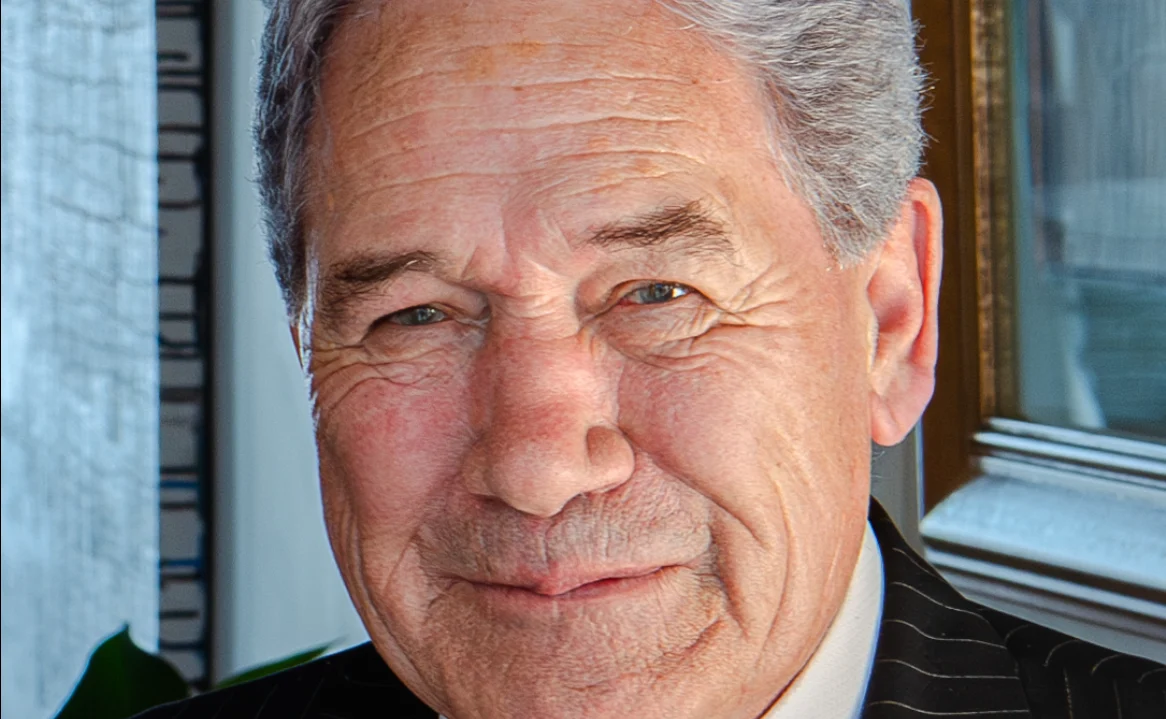
New Zealand’s Foreign Minister and Deputy Prime Minister, Winston Peters, ignited a significant political and diplomatic controversy on Thursday, drawing sharp condemnation from Beijing’s ambassador in Wellington after instructing a lawmaker of Chinese heritage to "go back to your own country." The inflammatory remarks, delivered during a heated parliamentary debate, have sent ripples through New Zealand’s domestic political landscape and raised questions about the nation’s diplomatic posture and commitment to multiculturalism.
The contentious exchange occurred on Wednesday in the New Zealand Parliament, amidst a debate concerning the country’s response to the COVID-19 pandemic. Lawrence Xu-Nan, a Member of Parliament for the Green Party, who was born in Tianjin, China, but grew up in Auckland, posed a direct question to Peters: "Are you vaccinated?" The query, seemingly routine in the context of public health discussions, elicited a disproportionately strong and personally charged response from Peters, a veteran politician known for his populist rhetoric and often confrontational style.
Peters, who leads the NZ First party, immediately retorted by questioning Xu-Nan’s belonging, stating the lawmaker had "come here five minutes ago." He then escalated his attack, instructing Xu-Nan, "Go back to your own country. That’s where they lie like a flatfish, but they don’t lie like that here." Peters continued, delivering a broadside against what he implied was Xu-Nan’s country of origin, "This is called a democracy, unlike what you’re used to. Go back to where you’ve come from, you loudmouth." The comments were widely interpreted as xenophobic and deeply offensive, particularly given Xu-Nan’s status as an elected representative of New Zealand citizens.

The Diplomatic Firestorm and Ambassadorial Intervention
The severity of Peters’ comments prompted a rare and significant intervention from the Chinese Ambassador to New Zealand, Wang Xiaolong. On Thursday, Ambassador Wang took to X (formerly Twitter) to express his disapproval, albeit in a diplomatically couched manner. Wang stated his preference to remain outside of New Zealand’s domestic political discourse but added, "suffice it to say, sometimes, a statement says more about the person that makes it than anything or anybody else." This subtle but potent critique from a foreign envoy underscored the gravity with which Beijing perceived Peters’ remarks, highlighting their potential to strain bilateral relations.
The Chinese Embassy’s decision to publicly address a domestic political incident is highly unusual and signals a strong message of displeasure. China is New Zealand’s largest trading partner, with two-way trade exceeding NZ$40 billion annually. This economic interdependence often necessitates a careful diplomatic approach from both sides. Ambassador Wang’s comments, therefore, carried considerable weight, hinting at the potential for diplomatic repercussions should such rhetoric persist.
Winston Peters, however, remained unrepentant. He swiftly fired back at Ambassador Wang on X, asserting that the ambassador’s comments had "proven my point." Peters framed his earlier outburst as a defense of democratic values and free speech, stating, "We live in a democracy that includes free speech and rights – those two values that other certain countries not only limit, but do so with force." He further challenged his critics, including the ambassador, by adding, "If that offends the pearl clutchers and the communist shills labelling it as ‘dangerous’ – welcome to New Zealand." This defiant stance indicated Peters’ unwillingness to retract or apologize, instead choosing to double down on his position and portray himself as a champion of free expression against perceived foreign interference.

A Pattern of Controversial Rhetoric: NZ First’s History
The incident, while shocking to many, is not an isolated event in the political career of Winston Peters or his NZ First party. NZ First, known for its populist and nationalist platform, often employs rhetoric that critics describe as anti-immigrant or xenophobic. The party has historically positioned itself as a defender of "Kiwi" identity, frequently advocating for stricter immigration policies and expressing skepticism towards globalist agendas. Peters, a political veteran who has served multiple terms as Foreign Minister and Deputy Prime Minister, has a long-standing reputation for provocative statements that resonate with a segment of the electorate but often draw criticism from other political factions and ethnic communities.
Earlier this year, Peters’ deputy, Shane Jones, faced significant backlash for criticizing New Zealand’s free trade deal with India, warning of a potential "butter chicken tsunami." This comment, widely seen as a racially charged dismissal of Indian cuisine and culture, sparked accusations of racism and cultural insensitivity. Jones, like Peters, has a history of making controversial remarks that align with NZ First’s populist appeal.
Furthermore, last year, both Peters and Jones were compelled to retract and partially apologize after Jones yelled "send the Mexicans home" at Mexican-born MP Francisco Hernandez during a parliamentary debate. Peters had subsequently supported Jones’s sentiment by telling both Hernandez and Lawrence Xu-Nan to "show some gratitude" for being in New Zealand. This recurring theme of telling immigrant politicians to "show gratitude" or questioning their belonging highlights a deeply problematic pattern of rhetoric emanating from NZ First, particularly when directed at non-Pākehā (non-European New Zealanders) Members of Parliament.

Such incidents underscore a persistent strain within New Zealand’s political discourse, where issues of immigration, national identity, and cultural integration often become battlegrounds for populist politicians. Critics argue that these remarks not only undermine parliamentary decorum but also contribute to a climate of intolerance and division within New Zealand’s diverse society.
New Zealand’s Multicultural Fabric and International Image
New Zealand prides itself on its multiculturalism and its progressive stance on human rights and social inclusion. The country has a significant and growing Asian population, with people of Chinese ethnicity constituting one of the largest Asian groups. According to recent census data, over 247,000 people identify as Chinese in New Zealand, making them a vibrant and integral part of the nation’s social and economic fabric. Many, like Lawrence Xu-Nan, are either born in New Zealand or have immigrated at a young age and consider New Zealand their home, contributing significantly to its development.
Peters’ comments risk damaging New Zealand’s carefully cultivated international image as an open, welcoming, and inclusive nation. Such rhetoric can send a chilling message to immigrant communities and international partners, suggesting a latent xenophobia that contradicts the country’s official narrative of diversity and respect. It also creates a perception of instability in a nation that often seeks to project itself as a beacon of liberal democratic values in the Pacific.

The incident further complicates New Zealand’s already delicate foreign policy balancing act, particularly concerning China. While New Zealand enjoys robust trade relations with China, it also increasingly aligns with its Five Eyes intelligence partners (Australia, Canada, the United Kingdom, and the United States) on issues related to human rights, regional security, and China’s growing influence in the Indo-Pacific. Public diplomatic spats, especially those involving accusations of xenophobia, can exacerbate these tensions and make it harder for New Zealand to navigate its complex relationship with Beijing. Maintaining economic ties while upholding democratic values and human rights is a constant challenge for many Western nations, and such domestic political outbursts do not simplify the task.
Domestic Political Ramifications and Calls for Accountability
Domestically, Peters’ remarks have triggered widespread condemnation from opposition parties, civil society groups, and many members of the public. The Green Party, to which Xu-Nan belongs, has unequivocally denounced the comments as racist and unacceptable. Green Party co-leader Chlöe Swarbrick stated that Peters’ remarks were "an attack on the integrity of our democracy" and "a deeply racist attack on a fellow Member of Parliament." Such sentiments are likely echoed across the political spectrum, with the Labour Party and even some within the National Party-led coalition government likely to distance themselves from Peters’ more extreme statements, even if they are coalition partners.
Calls for Peters to apologize or face censure are almost certainly emerging from various quarters. Parliamentary Speaker, whose role includes maintaining order and decorum, may also be pressured to address the incident, particularly if it violated parliamentary standing orders regarding respectful debate. The incident also reignites broader debates about the nature of free speech in a democratic parliament, the boundaries of acceptable political discourse, and the responsibility of public officials to uphold standards of respect and inclusivity. While Peters invoked "free speech" as a defense, critics argue that parliamentary privilege and the right to free expression do not extend to hate speech or xenophobic attacks against fellow elected members.

Furthermore, the controversy shines a spotlight on the role of populist parties like NZ First in shaping national narratives. While their rhetoric may appeal to a certain segment of the electorate, it often comes at the cost of alienating minority communities and undermining the principles of a cohesive, multicultural society. The repeated nature of these incidents suggests a deliberate strategy by NZ First to appeal to nationalist sentiments, even if it means employing divisive language.
Conclusion: A Lingering Shadow on New Zealand Politics
The latest controversy surrounding Winston Peters’ "go back to your own country" remark against Lawrence Xu-Nan is more than just a parliamentary spat; it is a significant event that exposes fault lines in New Zealand’s political discourse and international relations. It highlights the persistent challenge of balancing robust political debate with the need for respectful and inclusive language, especially in a diverse democracy.
The diplomatic backlash from China, while measured, serves as a stark reminder of the global implications of domestic rhetoric. New Zealand’s standing as a fair and inclusive nation, its crucial economic relationship with China, and its commitment to multicultural values are all put under scrutiny when such comments are made by its most senior diplomat. As New Zealand continues to navigate an increasingly complex geopolitical landscape and strives to foster a truly inclusive society, the pressure will remain on its leaders to demonstrate a commitment to unity and respect, both at home and on the international stage. The long-term impact of these words will likely resonate, influencing public discourse on immigration, national identity, and the very character of New Zealand’s democracy for some time to come.


 Muslim
 Laily UPN