Lina Hope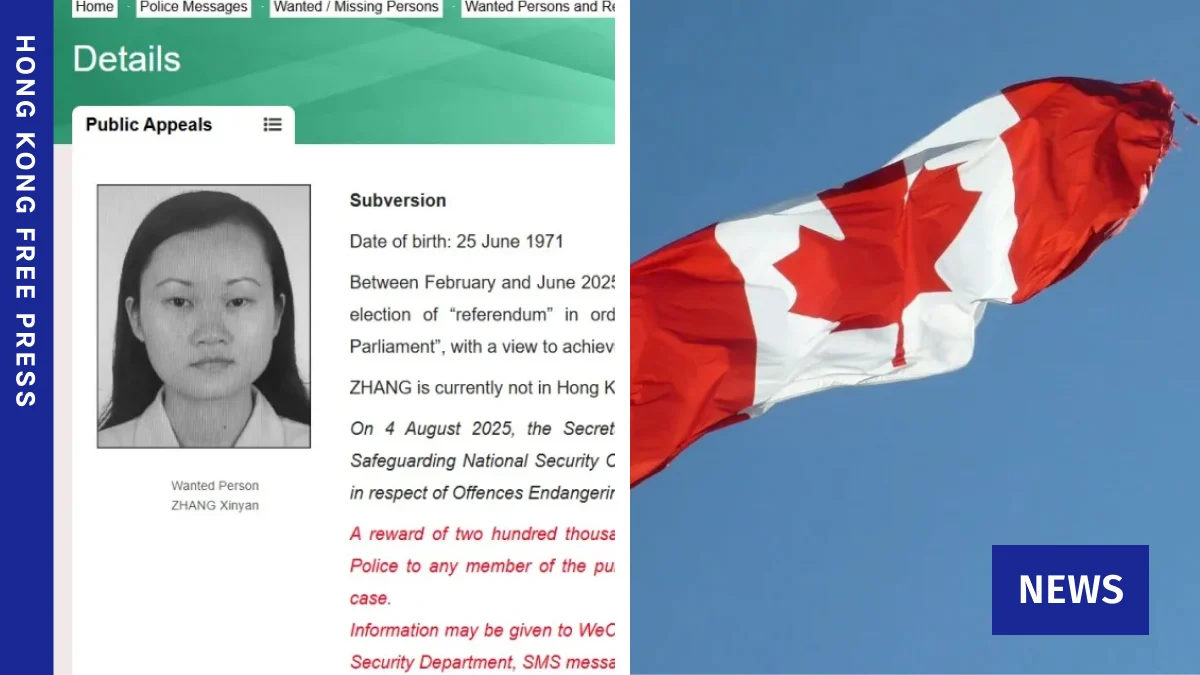
Chinese activist Zhang Xinyan, a figure sought by Hong Kong authorities, has successfully reached Canadian soil, arriving at Vancouver International Airport on Monday morning, Canadian time. Her arrival marks the end of a protracted and precarious journey that saw her detained in Thailand for months, narrowly avoiding deportation. The news was confirmed by Sheng Xue, a prominent Chinese Canadian activist who has been instrumental in advocating for Zhang’s safety and eventual resettlement.
A Perilous Journey from Dissident to Detainee
Zhang Xinyan, a 55-year-old Chinese dissident and practitioner of Falun Gong—a spiritual discipline banned in mainland China—had been living in exile in Thailand since 2014. Her departure from China was prompted by persecution, leading to the revocation of her Chinese passport by the Chinese embassy in Bangkok. This action necessitated her obtaining refugee status from the United Nations High Commissioner for Refugees (UNHCR), a critical step in her quest for international protection.

Her planned resettlement in Canada, facilitated through emergency channels, was scheduled to commence with a flight on July 8. However, her departure was dramatically interrupted in May when Thai authorities arrested her. The official reason cited for her detention was an alleged overstay of her visa, leading to her confinement at an Immigration Detention Centre. This detention marked the beginning of a tense three-month period, during which, according to Sheng Xue, Zhang faced the constant threat of being repatriated to China.
Sheng Xue, who is also a journalist and author, shared the anxious updates on her Facebook page, highlighting the severity of Zhang’s situation. In a post on Sunday, she revealed the precariousness of Zhang’s confinement: "there were a few times that she was almost sent to [China]. Now Zhang Xinyan is safe and will be finally landing in Canada in seven hours." This statement underscored the immense relief felt by Zhang’s supporters upon her eventual safe arrival in Vancouver.
Hong Kong’s Pursuit of Dissidents Abroad
Zhang Xinyan’s predicament is directly linked to her political activities and her election as a member of the "Hong Kong Parliament," an organization established by Hong Kong activists based in Canada. This body, which aims to function as a shadow legislature to advocate for democratic ideals in Hong Kong, was officially proscribed by the Hong Kong government in December of the preceding year.

The Hong Kong Police Force’s national security department has issued an arrest warrant for Zhang, alongside fourteen other activists, in July of the previous year. Each individual targeted by this warrant carries a bounty of HK$200,000 for any information leading to their arrest. Zhang is accused of subversion, a charge brought under Article 23 of Hong Kong’s domestic security legislation.
The Shadow of Article 23
The Safeguarding National Security Ordinance, commonly referred to as Article 23, was enacted in Hong Kong on March 23, 2024. This legislation, distinct from the national security law imposed by Beijing in 2020, broadens the scope of offenses deemed threats to national security. Its provisions criminalize acts such as treason, insurrection, sabotage, external interference, sedition, theft of state secrets, and espionage.
The ordinance introduces significant changes to legal procedures for national security suspects. It allows for pre-charge detention periods of up to 16 days. Furthermore, it grants authorities the power to restrict a suspect’s access to legal counsel, a measure that has drawn considerable criticism from human rights organizations. Penalties under Article 23 are severe, with potential sentences extending to life imprisonment for the most serious offenses.

The history of Article 23 is marked by significant controversy. It was first introduced in 2003 but was ultimately shelved due to widespread public opposition and mass protests. However, after years of being a sensitive and largely dormant legislative agenda item, it was resurrected and fast-tracked through the city’s legislature, which is now dominated by pro-Beijing lawmakers, passing unanimously without any dissenting votes.
International Condemnation and Hong Kong Authorities’ Justification
The enactment of Article 23 has been met with widespread international condemnation. Numerous human rights non-governmental organizations (NGOs), Western governments, and the United Nations have voiced grave concerns, characterizing the law as vague, overly broad, and a significant step backward for civil liberties in Hong Kong. Critics argue that the legislation further erodes the freedoms and autonomy that were guaranteed under the "one country, two systems" framework.
In contrast, Hong Kong authorities and Beijing have defended the law as a necessary measure to address perceived foreign interference and to fulfill a constitutional obligation to "close loopholes" in national security. They cite the widespread protests and social unrest of 2019 as evidence of the need for stronger security measures to maintain stability and order in the city.

A Network of Support and Gratitude
The successful transit of Zhang Xinyan to Canada was not solely the result of her own resilience but also a testament to the concerted efforts of a network of international activists and organizations. Sheng Xue expressed her profound gratitude to Global Affairs Canada, the government department responsible for the country’s diplomatic and consular affairs, for their support in facilitating Zhang’s emergency resettlement. She also extended her appreciation to other Chinese and Hong Kong overseas activists who contributed to the advocacy efforts.
The "Hong Kong Parliament," as described by its proponents, operates outside of Hong Kong, conducting unofficial polls with the stated aim of establishing a shadow legislature. Its overarching objective is to "pursue the ideal of Hong Kong people ruling Hong Kong," reflecting a continued commitment to democratic aspirations for the city.
The Broader Implications for Dissidents and International Law
Zhang Xinyan’s case highlights the increasingly challenging environment faced by Chinese dissidents and activists operating outside of mainland China. The long arm of Chinese influence, often exerted through requests for extradition or through pressure on host countries, poses a persistent threat to those who have fled persecution. Hong Kong’s evolving legal landscape, particularly the implementation of stringent national security laws, further complicates the situation, creating a climate of fear and uncertainty for those who continue to speak out against Beijing’s policies.

The detention and subsequent release of Zhang Xinyan underscore the complex interplay of international refugee law, national security concerns, and political activism. Her journey from potential deportation to safe haven in Canada serves as a stark reminder of the risks involved for individuals seeking to exercise their fundamental rights and freedoms in the face of authoritarian pressure. The case also brings renewed attention to the ongoing debate surrounding the extraterritorial application of national security laws and the protection of political exiles.
The UNHCR’s role in granting refugee status is crucial in providing a legal basis for protection. However, the practical implementation of resettlement can be fraught with challenges, as exemplified by Zhang’s detention in Thailand. The successful intervention by Canadian authorities and the solidarity of the activist community demonstrate the importance of international cooperation in safeguarding human rights.
As Zhang Xinyan begins her new life in Canada, her story serves as a potent symbol of the ongoing struggle for democracy and human rights in Hong Kong and China, and the enduring quest for safety and freedom for those who dare to challenge authoritarianism. The international community will continue to monitor the implications of Hong Kong’s security laws and their impact on the rights and freedoms of individuals, both within the territory and those who have sought refuge abroad. The success of her resettlement offers a beacon of hope for others in similar precarious situations, while simultaneously highlighting the persistent dangers faced by dissidents in an increasingly complex geopolitical landscape.

 Jia Lissa
 Muslim