Asro
Asro
After two consecutive years of commanding the global initial public offering (IPO) landscape, Hong Kong is poised to relinquish its coveted position as the world’s leading destination for new share flotations by the close of 2017. A significant downturn in the aggregate value of deals, despite a record number of listings, is projected to see the Asian financial hub descend to fourth place in the global IPO league table, trailing behind New York, Shanghai, and London, according to a comprehensive report from accounting and advisory firm KPMG. This shift underscores evolving dynamics within global capital markets, marked by intense competition and a growing appetite for technology-driven "new economy" enterprises, signaling a critical juncture for the city’s financial sector.
A Decline in Deal Value Amidst Record Listing Volume
While the number of initial public offerings in Hong Kong is anticipated to reach an unprecedented 160 for the entirety of 2017, shattering previous records for listing volume, the financial magnitude of these deals presents a starkly different picture. The total capital raised is projected to plummet by a substantial one-third, from HK$195 billion (approximately $25 billion USD) in 2016 to an estimated HK$130 billion. This figure represents the lowest annual aggregate value for IPOs in Hong Kong since 2012, highlighting a critical divergence between the quantity and the scale of market activity. The 2012 benchmark saw the market grappling with post-global financial crisis uncertainties and European sovereign debt concerns, making the return to similar low valuations in 2017 a cause for analytical scrutiny within financial circles.
The decline in overall value is further accentuated by the performance of the year’s largest listings. The aggregate funds raised by the top 10 newly listed companies in Hong Kong are estimated to decrease by a precipitous 45.5 percent, falling from HK$148.2 billion in 2016 to HK$80.8 billion in 2017. This stark contraction is largely attributable to the absence of "mega-sized" offerings that characterized previous years. For instance, the largest offering of 2017, Guotai Junan Securities, managed to raise HK$17.2 billion. While a significant sum, it pales in comparison to the colossal HK$59.2 billion garnered by the Postal Savings Bank of China in 2016, an offering that alone contributed substantially to Hong Kong’s previous top-tier ranking. This lack of cornerstone listings, often from large state-owned enterprises or established financial institutions, has profoundly impacted Hong Kong’s standing, allowing other global exchanges to surpass its total capital-raising capacity.
Hong Kong’s Historical Dominance and Its Foundations
For many years, Hong Kong has cemented its reputation as a premier destination for companies seeking to list publicly, particularly those from mainland China. Its strategic geographical location, robust regulatory framework, free flow of capital, and deep pool of international investors have historically made it an attractive gateway for Chinese enterprises seeking global capital. This appeal was particularly pronounced over the past decade, with the Hong Kong Stock Exchange (HKEX) frequently alternating with New York as the world’s top IPO venue. The years 2015 and 2016 were particularly strong, with Hong Kong securing the leading position due to a steady stream of large listings, predominantly from the financial services sector, including major Chinese banks and insurance companies like China Reinsurance Group and Bank of Jinzhou.
The dominance of traditional financial services firms was a defining characteristic of Hong Kong’s IPO market. In 2016, for example, an overwhelming nine out of the top ten flotations originated from the financial services sector. This reliance on a relatively narrow sector, while providing substantial deal value during periods of robust growth, also exposed the market to concentration risks and made it susceptible to shifts in the global financial industry and mainland China’s economic policies. The market’s consistent ability to attract these large, often state-backed, entities underscored its role as a critical conduit for capital formation in the broader Asian economy, especially as China’s economy continued its rapid expansion.
The Emergence of the "New Economy" and Market Transformation
Despite the retreat from the pole position in terms of capital raised, 2017 is paradoxically viewed by some market observers, including Maggie Lee, Hong Kong-based head of capital markets development group at KPMG China, as a pivotal year of transition and positive evolution for the Hong Kong Stock Exchange. Lee highlighted a long-awaited and strategically significant shift in the primary contributors to the IPO market, moving away from the traditional dominance of financial services firms towards the burgeoning "new economy" companies. This transformation is not merely statistical; it represents a fundamental reorientation of Hong Kong’s market profile and a proactive response to global investment trends. The "new economy" encompasses sectors driven by technological innovation, including internet services, e-commerce, biotechnology, artificial intelligence, and advanced manufacturing – areas that have seen explosive growth in valuation and investor interest worldwide, particularly within China.
Key examples of these transformative listings in 2017 illustrate this paradigm shift. China Literature, the online publishing giant backed by mainland technology behemoth Tencent, successfully debuted, garnering immense investor interest. Dubbed the city’s hottest and most profitable IPO in over a decade, its success reflected the market’s readiness for high-growth tech enterprises. Other headline-making listings from the "new economy" cohort included Zhong An Online P&C Insurance, China’s first online-only insurer, which leveraged big data and cloud computing for its operations; Yixin Group Ltd, an online automobile transaction platform spun off from Tencent-backed Bitauto, showcasing the convergence of technology and traditional industries; and Razer, a global lifestyle brand for gamers, highlighting Hong Kong’s potential to attract international tech-consumer brands. These offerings collectively injected a new dynamism into the exchange, signaling a diversification of the market and paving the way for other promising tech startups and innovative companies to consider Hong Kong for their public debuts. This strategic pivot towards the "new economy" is seen as crucial for Hong Kong to maintain its competitive edge against other global financial centers, attracting companies that represent significant future growth potential.
The Global IPO Landscape: A Shifting Playing Field
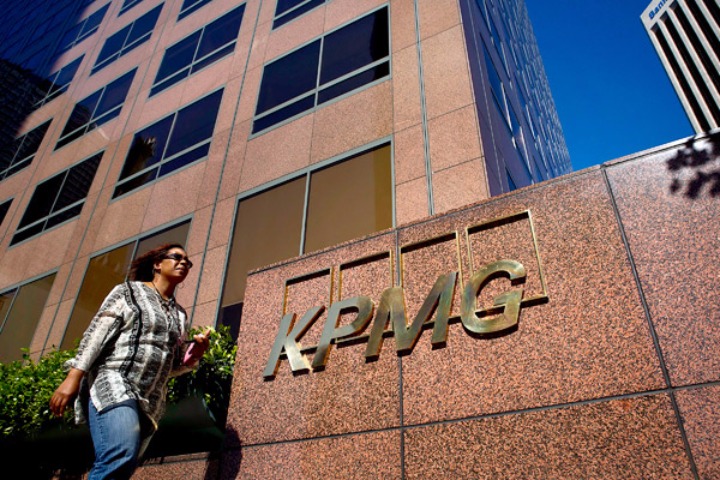
The 2017 global IPO league table reflects a highly competitive environment. While Hong Kong navigated its transition, other exchanges demonstrated robust performance, indicating a broader global appetite for new listings. The New York Stock Exchange (NYSE) emerged as a dominant force, leveraging its appeal to global tech giants and established corporations. Its deep liquidity, extensive investor base, and prestige continued to attract significant listings, making it a formidable competitor, particularly for large-cap technology firms seeking access to a vast pool of institutional and retail investors.
The Shanghai Stock Exchange (SSE) also experienced a strong year, securing its position as the second-largest venue globally in terms of capital raised, with the total value of listings hovering around HK$154 billion. Shanghai’s growth is largely driven by a vibrant domestic market and a strong pipeline of mainland Chinese companies opting to list closer to home, supported by national policies aimed at strengthening domestic capital markets and fostering technological independence. The increasing sophistication and openness of mainland exchanges present both opportunities and challenges for Hong Kong, as it navigates its unique role as an international gateway to China. The Shenzhen Stock Exchange, though not explicitly mentioned in the rankings, also played a significant role in China’s domestic IPO market, particularly for smaller and medium-sized technology companies.
London, despite the ongoing uncertainties surrounding Brexit, managed to secure third place. The London Stock Exchange (LSE) continued to attract a diverse range of companies, particularly from Europe and emerging markets, showcasing its resilience and enduring appeal as a global financial center. Its established infrastructure, strong regulatory environment, and access to European capital remain attractive to companies seeking international investor exposure, despite the political backdrop.
The global context of 2017 saw a generally buoyant market sentiment, supported by relatively stable economic growth in major economies and strong equity market performance across many regions. This environment was conducive to IPO activity, but also intensified competition among exchanges to attract the most promising companies. The performance of individual exchanges was often tied to their ability to adapt to changing issuer profiles and investor demands, particularly the growing interest in technology and innovation-driven sectors that promised higher growth potential.
Regulatory Adaptation and Future Aspirations
Recognizing the competitive pressures and the global shift towards "new economy" listings, the Hong Kong Stock Exchange has been actively exploring and implementing reforms to its listing rules. A significant aspect of this initiative involves considering adjustments to accommodate companies with weighted voting rights (WVR) or dual-class share structures. Such structures, common among technology companies, allow founders or key executives to retain control even after public listing, a feature that has historically been prohibited in Hong Kong but is permitted in exchanges like New York and increasingly being adopted elsewhere. The absence of such provisions has been cited as a reason why some prominent Chinese tech firms, such as Alibaba and JD.com, chose to list in the United States rather than Hong Kong, costing the city significant listing revenue and market prestige. The HKEX leadership has been vocal about its intention to evolve its framework to remain competitive.
Maggie Lee of KPMG China expressed optimism regarding Hong Kong’s future trajectory, believing that "2017 only marked a year of transition." She projected that "over the coming few years, the Hong Kong market will continue to gain momentum from the burgeoning appetite for ‘new economy’ companies." This sentiment is echoed by broader market expectations that Hong Kong’s efforts to modernize its listing framework will bear fruit, attracting a new generation of high-growth companies.
KPMG’s report places high hopes on the local bourse for the upcoming year, projecting Hong Kong to attract approximately 160 offerings in 2018, with total funds raised anticipated to be no less than HK$200 billion. This ambitious target reflects confidence in the ongoing transformation of the market and the expected positive impact of regulatory reforms, particularly if the proposed changes to attract companies with WVR structures come to fruition. The successful integration of more "new economy" companies, combined with a potentially revised listing regime, is expected to re-energize Hong Kong’s IPO market and bolster its standing as a magnet for emerging global tech enterprises.
Broader Implications for Hong Kong’s Financial Future
The dynamics observed in Hong Kong’s IPO market in 2017 carry significant implications for its long-term status as an international financial center. The decline in deal value, while a concern, is viewed by many as a necessary catalyst for a strategic pivot towards "new economy" firms. This shift is crucial for diversifying Hong Kong’s economic base, reducing its reliance on traditional sectors like finance and property, and aligning its financial ecosystem with global innovation trends that promise sustainable future growth.
The intense competition from exchanges in New York, Shanghai, and London underscores the imperative for continuous innovation and adaptability. Hong Kong’s unique position as a bridge between mainland China and the international capital markets remains a potent advantage, offering unparalleled access to both Chinese companies seeking global capital and international investors seeking exposure to China’s growth story. However, leveraging this advantage effectively requires a regulatory environment that is agile enough to attract a new generation of companies while simultaneously maintaining investor protection, market integrity, and international best practices. The successful listings of companies like China Literature, Zhong An, Yixin, and Razer serve as proof points that Hong Kong can indeed attract and successfully float high-growth technology companies. These successes not only provide capital for these firms but also generate significant ancillary business for Hong Kong’s sophisticated financial services industry, including investment banking, legal services, auditing, and asset management, creating a virtuous cycle of economic activity.
In conclusion, 2017 represented a turning point for Hong Kong’s IPO market. While it lost its top global ranking in terms of capital raised, it initiated a crucial strategic transformation towards embracing the "new economy." This adaptation, coupled with ongoing efforts to reform its listing rules and enhance its appeal to innovative companies, positions Hong Kong to reclaim its prominence in the global IPO landscape, albeit with a more diversified and technologically advanced profile in the years to come. The journey ahead involves navigating intense global competition and continuously refining its value proposition to both traditional and innovative enterprises seeking public capital, solidifying its role as a dynamic and forward-looking international financial hub.


 Evan Lee Salim
 Suro Senen