 Dwi Wanna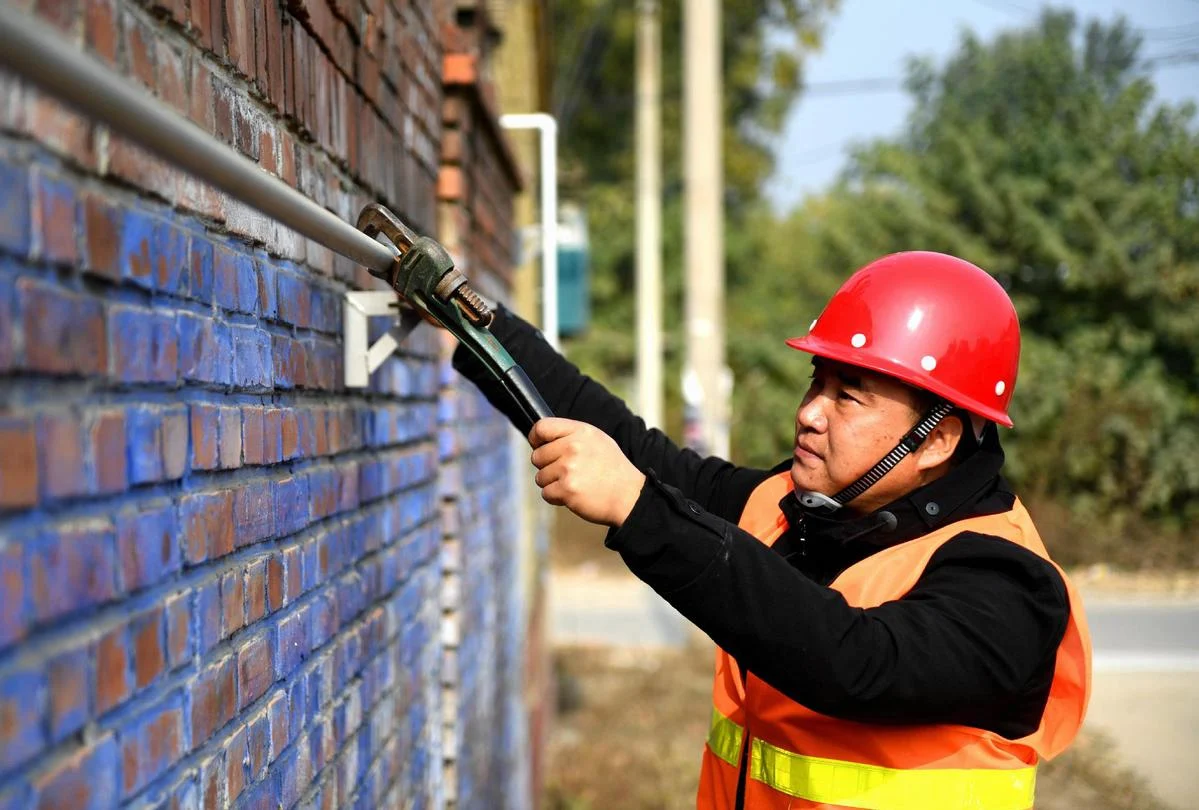
The Asian Infrastructure Investment Bank (AIIB) announced a significant $250 million loan on Monday, marking its inaugural investment in China and its first corporate financing deal, to bolster a critical natural gas project in Beijing. This strategic financial commitment is aimed at substantially reducing coal consumption and dramatically improving air quality across the capital region, aligning with China’s ambitious environmental protection agenda. The loan is extended to Beijing Gas Group Co., a pivotal player in the region’s energy infrastructure, to facilitate extensive coal-to-gas conversion initiatives designed to transition rural households from coal to cleaner natural gas for essential cooking and heating needs. The comprehensive project encompasses the construction of vital natural gas distribution networks, extensive pipeline infrastructure, and the necessary household connection facilities, as detailed by the Beijing-based multilateral financial institution in an official statement.
The Strategic Significance of the AIIB Investment
This quarter-billion-dollar loan represents more than just a financial transaction; it is a clear statement of intent from the AIIB regarding its commitment to sustainable infrastructure development and its active role in supporting its member countries’ green transitions. For China, the loan provides crucial long-term, relatively low-cost financing for a project that is integral to its "Blue Sky Protection Campaign" – a national effort to combat severe air pollution. The project, slated for completion by 2021, is projected to enable a remarkable annual reduction in coal use by approximately 650,000 metric tons. This reduction will be achieved by connecting an estimated 216,750 households across about 510 rural villages to the newly established natural gas distribution network, according to the AIIB’s detailed assessment. Such a large-scale conversion is expected to yield substantial environmental benefits, including a significant decrease in harmful particulate matter, sulfur dioxide, nitrogen oxides, and carbon dioxide emissions, directly contributing to healthier air for millions of residents in and around Beijing.
Beijing’s Battle Against Air Pollution: A National Imperative
China has, for over a decade, grappled with the severe environmental and public health challenges posed by widespread air pollution, particularly in its industrial heartlands and densely populated urban centers like Beijing. The notorious "airpocalypse" events of the early 2010s, characterized by hazardous smog levels, brought the issue to the forefront of national policy. In response, the Chinese government launched an unprecedented "war on pollution," implementing stringent environmental regulations and ambitious targets for emissions reduction. A cornerstone of this strategy has been the aggressive promotion of coal-to-gas conversion plans, especially in the northern provinces where coal has historically been the primary fuel for winter heating. These policies reflect a broader national commitment to transitioning towards a more sustainable energy mix, driven by both environmental imperatives and the desire to foster green, high-quality economic development. The Beijing-Tianjin-Hebei (Jing-Jin-Ji) region, being one of the most heavily affected and economically vital areas, has been a priority for these environmental interventions, making the AIIB’s investment particularly impactful.
Project Details: Scope, Scale, and Environmental Dividends
The scope of the project funded by the AIIB is comprehensive, addressing not only the supply of natural gas but also the last-mile connectivity crucial for rural households. It involves the engineering, procurement, and construction of new natural gas pipelines, the expansion of existing distribution networks, and the installation of household connection facilities, including meters and indoor piping. The direct beneficiaries are rural communities that have historically relied on inefficient and polluting coal-fired stoves for heating and cooking. By facilitating access to natural gas, the project aims to improve indoor air quality, reduce the incidence of respiratory illnesses, and enhance overall living standards for hundreds of thousands of people. Beyond the immediate health benefits, the displacement of 650,000 metric tons of coal annually translates into a substantial reduction in greenhouse gas emissions, directly contributing to China’s climate change mitigation efforts and its commitments under international agreements like the Paris Agreement. This makes the project a tangible example of how targeted infrastructure investment can deliver both local environmental improvements and global climate benefits.
Statements from Leadership and Experts
AIIB’s Commitment to Green Development
Jin Liqun, President of the AIIB, underscored the profound alignment of this investment with the bank’s core mission. "China’s commitment to reducing its reliance on coal will change lives and improve the environment, and that is why we are investing in a project aligned with that ambitious plan," Jin stated in the official announcement. He further elaborated that the project is not just about pollution reduction but also about introducing sustainable infrastructure that will significantly reduce greenhouse gas emissions and stimulate one of Asia’s most vital economic hubs. The AIIB, since its inception in 2016, has emphasized a "lean, clean, and green" operational philosophy, prioritizing projects that promote environmental sustainability, social development, and economic connectivity. This Beijing project serves as a concrete manifestation of that philosophy, demonstrating the bank’s capacity to finance large-scale green infrastructure initiatives in its largest shareholder country.
Expert Views on Financing and Challenges
The announcement garnered positive reactions from financial and energy sector experts. Zeng Gang, a distinguished financial researcher at the Chinese Academy of Social Sciences, highlighted the broader implications of the AIIB’s involvement. "Green financing in China will clearly be an important target for the AIIB," Zeng observed. He added that it is "reasonable that the AIIB is the provider of long-term financing with relatively low cost for such infrastructure projects, especially when Chinese commercial banks are facing greater liquidity pressure." This perspective points to the AIIB’s unique role as a multilateral development bank, capable of offering financial terms that domestic commercial banks might find challenging, thereby enabling critical, long-term infrastructure investments that have high societal returns but potentially longer payback periods.
However, experts also cautioned about potential challenges inherent in such a massive energy transition. Li Li, energy research director at ICIS China, a prominent energy consulting firm, while welcoming the AIIB financing, stressed the need for a holistic approach. She advised that "the nation should also boost investment in seasonal gas storage facilities, diversify import channels and improve the pricing mechanism to address potential shortages." Her comments underscore the complex interplay of infrastructure development, supply security, and market mechanisms that must be carefully managed to ensure the success and sustainability of the coal-to-gas transition. Rapidly increasing natural gas demand without adequate storage capacity or diverse supply sources could lead to price volatility and potential supply disruptions, especially during peak winter heating seasons.
The Broader Context of China’s Energy Transition
China’s pivot away from coal is a multifaceted strategy driven by a combination of environmental, economic, and geopolitical factors. As the world’s largest energy consumer and greenhouse gas emitter, China’s energy choices have global ramifications. The national energy plan aims to cap coal consumption, significantly increase the share of natural gas and renewable energy sources, and enhance energy efficiency across all sectors. Natural gas is viewed as a crucial "bridge fuel" in this transition, offering lower carbon emissions and fewer pollutants compared to coal. The country has been aggressively investing in domestic gas production, expanding its liquefied natural gas (LNG) import terminals, and constructing cross-border pipelines to secure diversified gas supplies from Central Asia and Russia. This massive infrastructural undertaking is central to meeting the surging demand created by projects like the Beijing coal-to-gas conversion.
Implications and Future Outlook
Environmental and Health Benefits
The successful implementation of this project will have profound environmental and health benefits. The reduction of 650,000 metric tons of coal use annually translates into significantly cleaner air, particularly reducing concentrations of PM2.5 (fine particulate matter), which is a major contributor to respiratory and cardiovascular diseases. This directly improves public health outcomes for rural residents who are often disproportionately affected by indoor air pollution from coal burning. The project is a critical step towards Beijing achieving its ambitious targets for air quality improvement, contributing to fewer smoggy days and a higher quality of life for its citizens.
Economic and Social Ripple Effects
Economically, the project generates employment opportunities during its construction phase, from skilled engineers to local laborers. In the long term, it fosters the development of a cleaner energy economy, potentially stimulating innovation in related technologies and services. Socially, the transition to natural gas provides greater convenience and safety for households, eliminating the need to transport and store coal, and reducing the risk of carbon monoxide poisoning from inefficient combustion. It modernizes rural infrastructure, bringing these communities closer to urban living standards.
AIIB’s Growing Footprint in Sustainable Infrastructure
For the AIIB, this landmark investment in China solidifies its reputation as a leading multilateral development bank focused on sustainable infrastructure. It showcases the bank’s ability to engage with its largest shareholder on critical domestic development priorities, further enhancing its credibility and influence in the region and globally. The project is likely to serve as a template for future AIIB investments in similar green infrastructure initiatives across Asia, particularly in countries facing similar challenges of rapid urbanization, industrialization, and environmental degradation. The bank’s commitment to financing projects that yield both economic returns and significant environmental benefits positions it as a key player in advancing the global sustainable development agenda.
Navigating the Challenges of Gas Transition
While the benefits are clear, the challenges outlined by experts like Li Li remain pertinent. China’s rapidly growing natural gas demand has at times outstripped supply, leading to temporary shortages and price spikes, particularly during harsh winters. To mitigate these risks, continued investment in strategic gas storage facilities is crucial to balance seasonal demand fluctuations. Furthermore, diversifying import channels, including expanding pipeline networks and securing long-term LNG supply contracts from various global sources, will enhance energy security. Finally, refining the pricing mechanism for natural gas, potentially moving towards market-based pricing while ensuring affordability for vulnerable households, is essential for sustainable operation and investment in the sector. These are complex policy and infrastructure challenges that will require sustained governmental and industry efforts.
In conclusion, the AIIB’s $250 million loan for Beijing’s coal-to-gas conversion project represents a pivotal moment in China’s environmental journey and the AIIB’s evolving role as a green financier. It is a tangible example of how international cooperation and strategic investment can accelerate the transition to cleaner energy, improve public health, and contribute to global climate goals, even as it navigates the inherent complexities of such a large-scale transformation. The success of this project will not only bring cleaner air to Beijing but also offer valuable lessons for other developing nations striving for a sustainable and prosperous future.


 Suro Senen
 Rifan Muazin