Nila Kartika Wati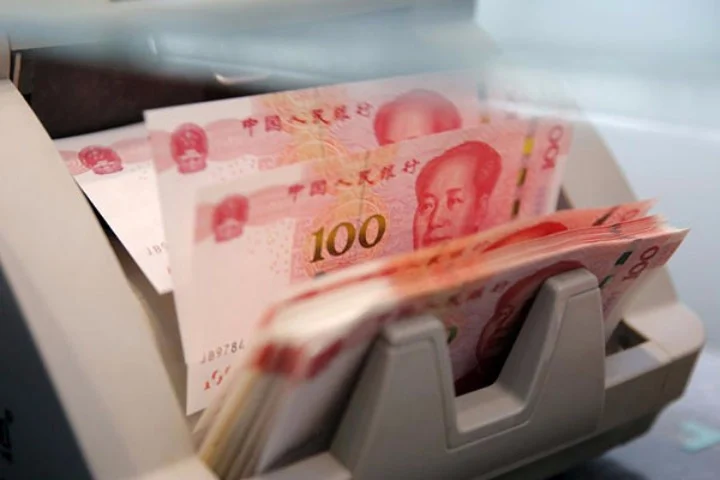
China’s financial landscape in November revealed a complex interplay of increased monetary stimulus designed to bolster economic growth alongside a steadfast commitment from regulators to prevent systemic financial risks. Data released by the People’s Bank of China (PBOC), the nation’s central bank, on Monday, indicated a notable acceleration in money supply growth and a significant surge in newly issued yuan-denominated loans. This expansion in credit comes as top financial authorities reiterate that risk prevention remains a paramount policy priority, signaling a delicate balancing act in the world’s second-largest economy.
November Sees Significant Boost in Money Supply and Lending
The broad measure of money supply, M2, which encompasses cash in circulation plus all deposits, demonstrated a robust increase of 9.1 percent year-on-year in November. This figure marked an acceleration from the 8.8 percent recorded in October, suggesting a deliberate injection of liquidity into the financial system. However, it is crucial to contextualize this growth, as the November M2 expansion was still 2.3 percentage points lower than the 11.4 percent growth observed in November of the preceding year, indicating a controlled, rather than runaway, expansion compared to historical trends. The M2 growth rate is a key indicator closely watched by analysts, as it reflects the overall liquidity conditions and potential for future economic activity and inflation. While an uptick can signal economic vigor, excessively high M2 growth can stoke inflation and asset bubbles, issues Chinese regulators are keen to avoid.
More striking was the surge in new yuan-denominated loans, which nearly doubled from October’s figures. Banks extended 1.12 trillion yuan ($169.69 billion) in new loans in November, a substantial increase from 663.2 billion yuan in October. This figure also significantly surpassed market expectations, which had hovered around 800 billion yuan, demonstrating a stronger-than-anticipated lending impulse. While lower than the 1.27 trillion yuan recorded in September, the November jump suggests a targeted effort to support various sectors of the economy as the year drew to a close. By the end of November, the total outstanding yuan loans had expanded by 13.3 percent from a year earlier, reflecting sustained credit expansion. Furthermore, the cumulative new loans issued in the first 11 months of the year reached an impressive 12.94 trillion yuan, a figure that already exceeded the full-year record of 2016 by 290 billion yuan, underscoring the substantial role of credit in driving China’s economic performance throughout the year.
Beyond traditional bank loans, China’s total social financing (TSF) also registered a significant increase. TSF, a comprehensive measure of credit and liquidity in the economy that includes off-balance sheet financing such as entrusted loans, trust loans, and undiscounted bankers’ acceptances, rose to 1.6 trillion yuan in November from 1.04 trillion yuan a month earlier. The growth in TSF is particularly important as it captures the broader scope of credit creation beyond conventional banking channels, offering a more complete picture of financial support flowing into the real economy. The components of TSF often include corporate bonds, equity financing, and government bonds, in addition to bank loans, providing diverse avenues for capital deployment.
PBOC Governor Emphasizes Proactive Risk Prevention
Amidst these robust lending figures, China’s central bank governor, Zhou Xiaochuan, delivered a clear message at an internal meeting on Monday: financial regulators must "prevent financial risks more proactively and effectively" while simultaneously balancing these efforts with economic growth. Zhou’s statement underscores the prevailing policy dilemma and the delicate tightrope walk regulators are undertaking. He further articulated that "the next step is to identify the key targets of financial reform, opening-up and innovative development," signaling a strategic approach to addressing underlying vulnerabilities while fostering innovation.
This directive from the highest levels of financial authority is not new but rather a reinforcement of a strategic pivot that has been gaining momentum throughout the year. Chinese policymakers have, for some time, been actively working to cool excessive money supply growth and implement new regulations specifically targeting high-risk lending practices. A primary focus of these efforts has been the curtailment of "shadow banking" activities, a complex and opaque segment of the financial system that operates outside traditional banking regulations and has been identified as a significant source of systemic risk. The central government’s intensified campaign against shadow banking and other forms of speculative financing reflects a commitment to ensuring long-term financial stability over short-term growth targets.
Background and Chronology of Deleveraging Efforts
The emphasis on financial risk prevention by Chinese authorities stems from a period of rapid credit expansion following the 2008 global financial crisis. In response to the crisis, China unleashed a massive stimulus package, which, while successful in averting a severe economic downturn, also led to an unprecedented surge in debt across various sectors. Corporate debt, particularly among state-owned enterprises (SOEs), swelled, and local governments accumulated substantial hidden debts through various financing vehicles. The shadow banking sector flourished, offering higher returns but often taking on greater risks, contributing to concerns about asset bubbles in real estate and the potential for non-performing loans.
International bodies like the International Monetary Fund (IMF) and the Bank for International Settlements (BIS) have repeatedly warned China about its rapidly rising debt levels and potential financial stability risks. The BIS, for instance, has highlighted China’s credit-to-GDP gap, a key indicator of financial stress, as a cause for concern.
Against this backdrop, 2017 marked a decisive shift in Beijing’s policy priorities towards deleveraging and financial risk mitigation.
- Early 2017: Regulators began tightening rules on interbank lending and asset management products, aiming to curb arbitrage and reduce leverage within the financial system.
- July 2017: The biennial National Financial Work Conference, a high-level meeting chaired by President Xi Jinping, explicitly prioritized financial stability and risk prevention. Xi called for stronger financial regulation and a crackdown on illicit financial activities, establishing a new Financial Stability and Development Committee under the State Council to coordinate regulatory efforts.
- October 2017: The 19th National Congress of the Communist Party of China further solidified this commitment, with President Xi emphasizing the need to prevent major risks, including financial risks, as one of the "three tough battles" for the coming years. This elevated financial stability to a national strategic priority.
- Late 2017: New regulations were rolled out to standardize local government debt, limit off-budget borrowing, and bring various forms of shadow banking activities, such as online peer-to-peer lending and entrusted loans, under tighter scrutiny. These measures aim to reduce moral hazard and ensure that risks are properly priced and managed.
Expert Analysis and Future Implications
Leading economists and analysts largely concur with the trajectory of China’s financial policy. Louis Kuijs, head of Asia Economics at Oxford Economics, articulated this consensus, stating, "In 2018, we expect policymakers to remain focused on reducing financial risks and deleveraging parts of the financial system deemed particularly risky, foreseeing regulatory tightening with respect to interbank market activity and shadow banking." His analysis suggests that the regulatory crackdown observed in 2017 is not a temporary measure but a sustained campaign.
Kuijs also anticipates a gradual deceleration in overall credit growth in the coming year. He projected that after likely "slightly exceeding the 13.8 percent target for 2017," credit growth would ease further, "to around 13 percent in 2018." This forecast implies a controlled slowdown, indicating that while credit will continue to expand to support economic activity, the pace will be more measured and aligned with the deleveraging agenda. This targeted reduction in credit growth aims to prevent the accumulation of further systemic risks without abruptly choking off economic momentum.
The balancing act for Chinese regulators is exceptionally complex. On one hand, maintaining adequate liquidity and credit growth is essential to support the government’s economic growth targets, foster innovation, and ensure employment stability. The November surge in M2 and new loans could be seen as a tactical move to ensure economic momentum does not falter as structural reforms are implemented. On the other hand, allowing uncontrolled credit expansion risks exacerbating existing vulnerabilities, potentially leading to a financial crisis that could have severe domestic and global repercussions.
The implications of this policy approach are far-reaching. For the real estate sector, tighter credit conditions and increased scrutiny of developer financing could lead to a more stable, albeit potentially slower, market. Local government financing vehicles (LGFVs), which have historically relied on implicit guarantees and off-balance sheet borrowing, face increased pressure to rationalize their debt and operate more transparently. Small and medium-sized enterprises (SMEs), often reliant on informal financing channels, might face challenges if shadow banking is too aggressively curtailed without sufficient alternative funding mechanisms. However, the long-term benefit of a more robust and transparent financial system is expected to outweigh these short-term adjustments.
Broader Economic Context and Global Impact
China’s monetary policy and financial stability efforts are intricately linked to its broader economic goals. The country has been transitioning from an export- and investment-led growth model to one driven by domestic consumption and innovation. This shift necessitates a financial system that efficiently allocates capital to productive sectors, rather than fueling speculative bubbles. Stable and sustainable growth, rather than just high growth rates, has become the paramount objective, as highlighted by President Xi Jinping’s emphasis on "high-quality development."
The stability of China’s financial system also carries significant global implications. As the world’s second-largest economy and a major driver of global growth, any financial instability in China could send shockwaves across international markets, affecting trade, investment flows, and commodity prices. Therefore, the proactive measures taken by the PBOC and other regulatory bodies are not just for domestic consumption but also contribute to global financial stability.
Conclusion
The November financial data from China presents a nuanced picture of an economy where growth imperatives are carefully weighed against the imperative of financial stability. The acceleration in money supply and loan growth signals a readiness to provide necessary liquidity to maintain economic momentum, particularly as the year concludes. Simultaneously, the unwavering rhetoric and consistent actions from PBOC Governor Zhou Xiaochuan and other top regulators underscore a deep-seated commitment to preventing systemic financial risks. This ongoing deleveraging campaign, with its focus on shadow banking and high-risk lending, represents a strategic long-term endeavor to foster a healthier, more sustainable financial environment. China’s journey towards balancing economic vitality with financial prudence will continue to be a defining characteristic of its economic policy in the years to come, shaping both its domestic trajectory and its role in the global economy.


 Evan Lee Salim
 Suro Senen