 Rifan Muazin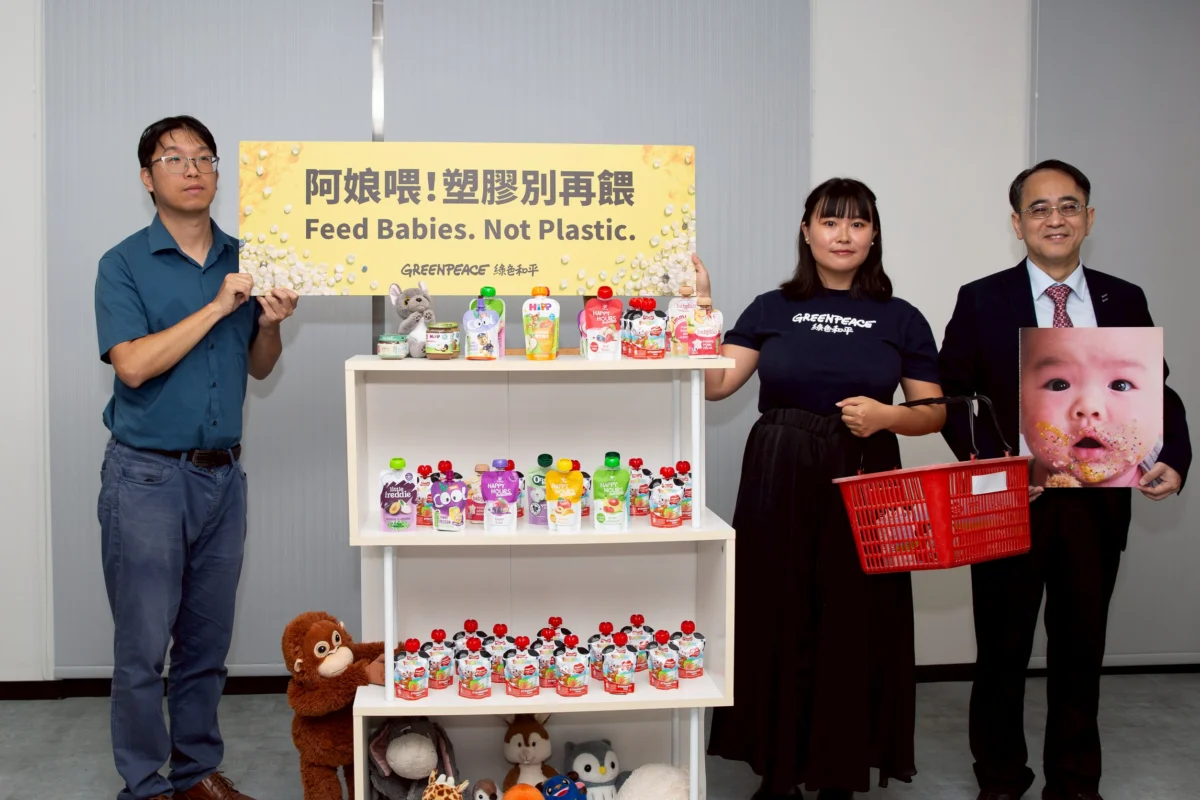
Taipei, July 14, 2026 – A significant majority of baby food products in Taiwan, including fruit purees and yogurts, are packaged in plastic pouches, raising serious concerns about early childhood exposure to microplastics and associated chemicals. A comprehensive survey released today by Greenpeace reveals that nearly 80 percent of these essential infant foods utilize plastic pouches, with a staggering 100 percent of products found in hypermarkets adopting this packaging format. This pervasive reliance on plastic leaves parents with virtually no non-plastic alternatives when selecting complementary foods for their infants.
The findings, detailed in Greenpeace’s "Packaging Survey of Baby Food Products, Including Fruit Purees and Yogurts, in Major Retail Channels in Taiwan," underscore a critical gap between parental intent to nourish their children and the reality of the packaging materials they are presented with. The survey, conducted in April 2026, encompassed a wide array of retail channels, including major hypermarkets, pharmacies, dedicated baby product stores, and prominent online shopping platforms such as Momo, PChome, Shopee, and Coupang. While hypermarkets presented an absolute reliance on plastic pouches for baby food, other retail avenues showed a slightly lower, yet still substantial, prevalence ranging from 74 to 79 percent. Popular brands implicated in this trend include Babybio, HiPP, Pascual, and Earth Love, indicating a widespread industry practice.
"Parents buy baby food to nourish their children, not to expose them to plastic risks from their very first bites," stated Chi Lo, Communications Officer at Greenpeace Taiwan. "When nearly 80 percent of products use plastic pouches, this is no longer simply a matter of parental choice. The market has failed to provide sufficient safer alternatives, and government regulations have failed to keep pace."
The Pouch Predicament: A Gateway to Microplastic Ingestion
The concern over plastic pouches stems from their complex multi-layered composition, typically comprising polyethylene terephthalate (PET), aluminum foil, and polyethylene (PE). Crucially, the inner PE layer, along with the spout and cap, are in direct contact with the food. Emerging scientific research increasingly points to the potential for these packaging materials to be a significant source of microplastic ingestion for consumers, extending beyond the well-documented issue of post-consumer plastic waste polluting the environment.
A pivotal study commissioned by Greenpeace International in 2025 by Norway’s SINTEF Ocean laboratory investigated pouch-packaged baby food from two major multinational brands. The results were alarming: microplastics were detected in every single product subjected to testing. Certain fruit puree samples exhibited concentrations of up to 99 microplastic particles per gram, translating to an estimated over 10,000 microplastic particles within a single pouch. Similarly, some yogurt products were found to contain an estimated upwards of 5,000 microplastic particles per pouch.
The laboratory analysis identified polymers such as polyethylene (PE) and polypropylene (PP) within the food samples, providing strong evidence that the packaging itself is a direct contributor to microplastic contamination. Furthermore, the study uncovered dozens of plastic-related chemicals, some of which are associated with toxicity and endocrine-disrupting properties, raising a red flag for potential health impacts on vulnerable infants.
Expert Voices: Advocating for the Precautionary Principle
The implications of these findings have resonated with medical professionals and scientific experts, who are urging a proactive approach to safeguarding infant health. Dr. Tzung-Hai Yen, a nephrologist at Chang Gung Memorial Hospital in Linkou, emphasized the current state of scientific understanding regarding microplastic toxicity. "While scientists have not yet fully determined how much microplastic exposure is harmful to human health, animal and cell studies have shown that high levels of microplastic exposure may cause oxidative stress, inflammation and even organ damage," Dr. Yen explained.
He strongly advocated for the adoption of the precautionary principle, stating, "Action should not wait until the health impacts on humans are fully proven. The precautionary principle should guide our actions to proactively reduce human exposure to microplastics." Dr. Yen further highlighted the heightened vulnerability of infants and young children, who are in critical stages of physical development and are more susceptible to environmental toxins than adults, making their protection a paramount priority.
Echoing these concerns, Dr. I-Lun Hsiao, Director of the Food Safety Testing and Functional Development Research Center at Taipei Medical University, pointed to the broader chemical risks associated with plastic pouches. "Plastic pouches may release not only microplastics but also other chemically complex substances generated during manufacturing or use, known as non-intentionally added substances (NIAS)," Dr. Hsiao noted.
Dr. Hsiao drew a comparison with international regulatory landscapes, observing that Taiwan currently lags behind regions like the European Union, the United States, and Japan in establishing a comprehensive regulatory framework for chemicals used in plastic food packaging and mandating transparent information disclosure. The potential for plastic-related chemicals to exhibit endocrine-disrupting properties, and their synergistic effects when present in combination, poses a complex and potentially amplified health risk. "When multiple chemicals enter the human body simultaneously, they may interact with one another, creating synergistic effects that could increase potential health risks," she cautioned.
A United Front: Greenpeace and Experts Urge Regulatory Action
In response to the mounting evidence and expert concerns, Greenpeace and the scientific community are jointly appealing to Taiwan’s Food and Drug Administration (TFDA) and relevant government bodies to implement robust measures to protect infants from plastic-related health risks. Their collective recommendations include:
- Strengthening regulations on plastic food packaging: This encompasses establishing stricter limits on the migration of microplastics and harmful chemicals from packaging into food, particularly for products intended for infants and young children.
- Enhancing monitoring and enforcement: Implementing rigorous testing protocols for baby food products to detect and quantify microplastic contamination and the presence of hazardous chemicals.
- Promoting the development and adoption of safer packaging alternatives: Encouraging innovation in sustainable and non-plastic packaging materials for baby food.
- Increasing transparency and public disclosure: Mandating that manufacturers provide clear information about the packaging materials used and the results of safety assessments.
Greenpeace has also issued a direct call to action for baby food manufacturers, urging them to proactively conduct independent testing of their products for microplastics and hazardous chemicals and to make these findings publicly accessible.
"Every parent wants to provide the best nutrition for their children. The next generation should not have to bear the health risks associated with plastic packaging," Lo reiterated. "Given the scientific uncertainty surrounding the impacts of plastic pollution on human health, the government should strengthen food packaging regulations while also reducing unnecessary plastic production at the source and phasing out unnecessary and high-risk single-use plastic products and packaging. Only then can we truly reduce the next generation’s exposure to microplastics and plastic-related chemicals."
The implications of the Greenpeace survey extend beyond Taiwan, highlighting a global challenge in balancing consumer convenience with the imperative of protecting public health, particularly for the most vulnerable populations. As scientific understanding of microplastic impacts continues to evolve, the pressure mounts on regulatory bodies and industry stakeholders to prioritize safety and sustainability in the packaging of infant nutrition. The report serves as a critical call to action, demanding a re-evaluation of the pervasive use of plastic in the food supply chain and a commitment to fostering a healthier future for children.
Appendices:
- Appendix 1: Packaging Survey of Baby Food Products, Including Fruit Purees and Yogurts, in Major Retail Channels in Taiwan
- Appendix 2: Greenpeace Report – The Microplastics Crisis: Hidden Risks of Plastic Pouches in Baby Food

 Raul Delapena Setiawan
 Basiran