Suro Senen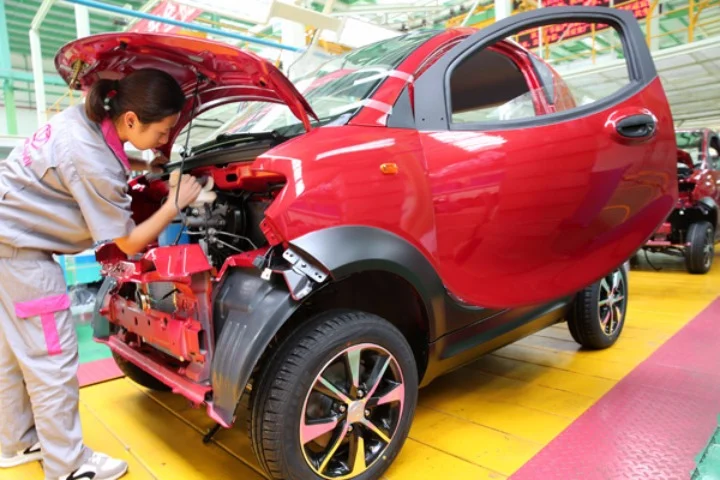
The automotive market in China, the world’s largest, demonstrated a marked deceleration in growth during November 2017, with overall vehicle sales posting a meager 0.7 percent year-on-year increase to 2.96 million units. This modest expansion, reported by the China Association of Automobile Manufacturers (CAAM) on Monday, underscored a significant cooling trend in a sector long accustomed to robust, often double-digit, growth. The slowdown was largely attributed to the gradual phasing out of a crucial purchase tax discount and evolving broader economic conditions, even as the burgeoning new energy vehicle (NEV) segment continued its impressive ascent, signaling a transformative shift within the industry.
Moderated Growth in the World’s Largest Auto Market
For the first eleven months of 2017, total vehicle sales reached 25.85 million units, representing a 3.6 percent increase from the same period a year prior. While this figure might appear respectable in a global context, it starkly contrasts with China’s recent history of rapid automotive expansion. Crucially, this growth rate was a significant 10.5 percentage points lower than the year-on-year growth recorded for January to November 2016, highlighting a substantial deceleration. Xu Haidong, an assistant to CAAM’s secretary-general, revised the organization’s initial forecast, stating that the overall sales growth for 2017 would "definitely fall to below 4 percent," missing the initial estimate of 5 percent growth set at the beginning of the year. This downward revision reflected the unexpected speed of the market’s moderation.
The slowdown in 2017 marks a pivotal moment for China’s automotive industry, which for over a decade served as a primary engine of global auto sales growth. From 2009 to 2015, the market frequently recorded annual growth rates exceeding 10 percent, occasionally touching 20 percent. The year 2016 itself saw a strong rebound with growth exceeding 13 percent, largely propelled by the initial phase of the purchase tax incentive. The current moderation, therefore, represents a maturation of the market, where growth drivers are shifting from pure volume expansion to more nuanced factors like segment preferences, technological innovation, and regulatory mandates.
The Fading Influence of Purchase Tax Incentives
A primary factor contributing to the decelerated sales growth was the diminishing effect of the government’s purchase tax discount, a policy initially implemented to stimulate the market and encourage the sale of smaller-engine vehicles. Introduced in October 2015, the incentive initially halved the purchase tax from 10 percent to 5 percent for cars equipped with engines of 1.6 liters or smaller. This policy had an immediate and profound impact, significantly boosting sales in late 2015 and throughout 2016.
However, the discount began to be phased out starting January 1, 2017, when the tax rate was raised to 7.5 percent (a 25 percent discount from the original 10 percent). This incremental reduction has gradually eroded the incentive’s stimulative power. The policy was scheduled to expire completely by the end of December 2017, with the tax rate reverting to the full 10 percent in 2018. This phased withdrawal created a "pull-forward" effect, where consumers rushed to purchase vehicles before the full expiry, leading to a temporary surge in sales in late 2016 and early 2017, followed by a subsequent dip as the effect wore off.
Xu Haidong explicitly stated that "The trend is clear. Growth will slow down even further next year," without providing a specific estimate for 2018. Industry analysts widely concur, anticipating a more challenging environment for automakers in the initial months of 2018 as the market adjusts to the full reinstatement of the purchase tax and the absence of the previous stimulus. This situation presents a test for both domestic and international manufacturers to maintain sales momentum through other strategies, such as new model launches, enhanced marketing, and competitive pricing.
Passenger Car Segment: A Tale of Diverging Fortunes
The passenger car segment, which constitutes the bulk of China’s automotive sales, experienced an even more pronounced slowdown than the overall market. From January to November, a total of 22 million passenger cars were sold, registering a modest 1.9 percent year-on-year growth. This figure underscores the selective nature of consumer demand within the market.
Within the passenger car category, performance varied dramatically across different vehicle types:
- Sports Utility Vehicles (SUVs): SUVs remained the undisputed driver of growth, with sales surging by 14.5 percent year-on-year to 9.09 million units during the first eleven months. This sustained popularity reflects a global trend amplified in China, where consumers favor SUVs for their perceived versatility, higher ground clearance suitable for varied road conditions, spacious interiors, and aspirational status. Domestic brands, in particular, have capitalized on this trend by offering a wide range of affordable and feature-rich SUV models.
- Sedans: In contrast to SUVs, sedan sales experienced a dip of 2.3 percent over the same period. Once the dominant segment, sedans are facing increasing pressure from the SUV craze and a maturing market where consumers are seeking differentiated driving experiences.
- Multi-Purpose Vehicles (MPVs): MPV sales saw a significant decline of 16.5 percent. This segment, traditionally popular with larger families, is also being challenged by the rise of larger SUVs and potentially by changing family dynamics in the post-one-child policy era, which might not be translating into a renewed demand for traditional MPVs as strongly as anticipated.
- Minivans: The steepest decline was observed in the minivan segment, which slumped by 20.1 percent. Minivans, often associated with utilitarian purposes and smaller businesses, have been steadily losing ground as incomes rise and consumers opt for more modern, comfortable, and image-conscious vehicles.
This divergent performance highlights a clear shift in consumer preference, moving away from traditional sedan and minivan formats towards the more robust and versatile SUV offerings. Automakers failing to adapt their product portfolios to this evolving demand risk losing significant market share.
The Electrification Drive: New Energy Vehicles Lead the Charge
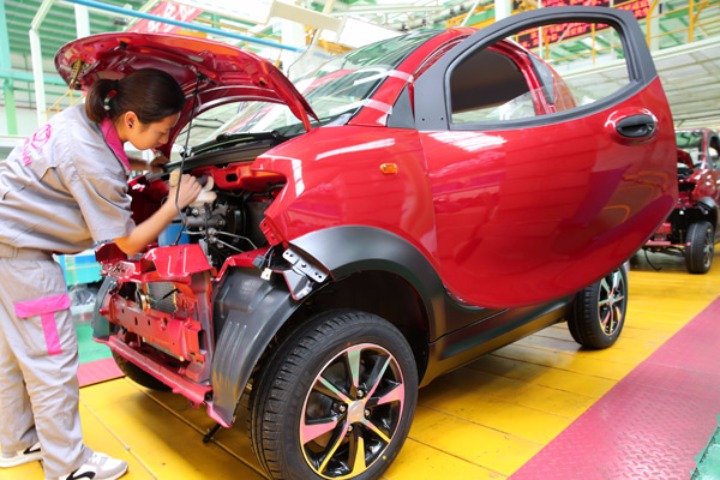
Amidst the broader market slowdown, new energy vehicles (NEVs) emerged as a shining beacon of growth, consistently outperforming conventional vehicle segments. NEVs, encompassing electric cars, plug-in hybrids, and fuel-cell vehicles, demonstrated solid and accelerating growth throughout 2017.
In November, a record 119,000 NEV units were sold, marking an impressive 83 percent surge year-on-year. This strong monthly performance contributed significantly to the cumulative sales figure for the first eleven months, which reached 609,000 units, representing a substantial 51.4 percent growth compared to the previous year.
Xu Haidong emphasized the robust performance of NEVs, stating, "Their development is in line with our expectations. It is now almost certain that their sales this year would reach our whole-year estimate of 700,000 units." Furthermore, the CAAM official expressed strong confidence in the segment’s future trajectory: "We are confident in new energy cars and see no problems in their sales reaching 1 million units in 2018."
This remarkable growth in the NEV sector is not merely organic; it is a direct result of aggressive government policies aimed at combating air pollution, reducing reliance on fossil fuels, and establishing China as a global leader in automotive electrification. Key policy measures include:
- Subsidies: Generous central and local government subsidies for NEV purchases have significantly lowered the upfront cost for consumers.
- Preferential Treatment: NEVs often enjoy advantages such as exemption from license plate lottery restrictions in major cities (like Beijing and Shanghai), easier access to driving permits, and reduced or waived vehicle purchase taxes.
- Charging Infrastructure: A rapid expansion of charging networks is crucial for widespread NEV adoption. According to the China Electric Vehicle Charging Infrastructure Promotion Alliance (CEVCIPA), a total of 431,800 charging poles had been built across the country by the end of November 2017. This ongoing infrastructure development addresses one of the primary concerns for potential EV buyers – range anxiety and charging accessibility.
- Dual Credit System: China introduced a "dual credit" system, effective in 2019 but requiring preparations earlier, which mandates automakers to produce a certain percentage of NEVs or buy credits from other manufacturers. This policy further incentivizes traditional automakers to invest heavily in NEV research, development, and production.
The ambitious targets for NEV sales, coupled with supportive policies and infrastructure development, position China at the forefront of the global electric vehicle revolution. Domestic brands like BYD, BAIC, and Geely, alongside international joint ventures, are fiercely competing in this rapidly expanding market.
Commercial Vehicles: A Pillar of Stability
Beyond passenger cars and NEVs, the commercial vehicle segment, comprising buses and trucks, also reported a decent sales performance, contributing to the overall market stability. In November, 368,000 commercial vehicles were sold, marking a 7.3 percent rise from the same month last year.
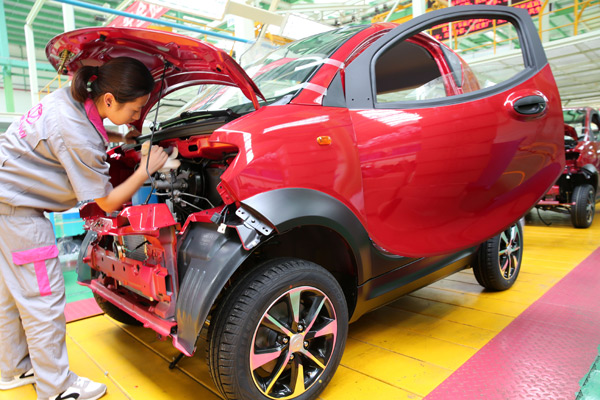
This strong monthly performance pushed total commercial vehicle sales for the first eleven months of 2017 to 3.75 million units, representing a substantial nearly 15 percent year-on-year increase. This growth rate was significantly higher than the industry’s average, exceeding it by 11.2 percentage points.
The robust performance of commercial vehicles can be attributed to several factors. Increased investment in infrastructure projects across China, a booming logistics sector driven by e-commerce, and stricter environmental regulations leading to the replacement of older, more polluting trucks with newer models, all likely contributed to this segment’s resilience. The demand for reliable transportation solutions for goods and public services remained strong, providing a consistent boost to the commercial vehicle market even as passenger car sales wavered.
Broader Economic Landscape and Industry Outlook
The moderation in China’s overall automotive market growth is intertwined with broader economic trends and policy shifts. While China’s economy has maintained a healthy growth rate, there have been structural adjustments, including efforts to deleverage, control housing prices, and shift towards a consumption-driven economy. These factors, alongside evolving consumer confidence and rising household debt levels, can influence discretionary spending on big-ticket items like automobiles.
For automakers, both domestic and international, the slowing growth presents new challenges. Companies that have relied heavily on volume growth will need to focus more on market share, brand differentiation, and profitability. The shift towards NEVs also necessitates substantial investments in new technologies, manufacturing processes, and supply chains, potentially putting pressure on established business models. International brands, while still holding significant market share, are facing increased competition from rapidly improving domestic manufacturers, especially in the SUV and NEV segments.
Looking ahead to 2018 and beyond, the Chinese automotive market is poised for continued transformation. The full expiration of the purchase tax discount is expected to exert downward pressure on conventional vehicle sales in the short term. However, the unwavering government support for NEVs, coupled with ongoing infrastructure development and technological advancements, suggests that this segment will continue its aggressive expansion. The implementation of policies like the dual credit system will further accelerate the transition towards electrification.
Industry experts anticipate that while overall market growth may stabilize at lower, single-digit percentages in the coming years, the underlying dynamics will be characterized by significant structural changes. The market will likely become more mature, demand-driven, and segmented, with a pronounced emphasis on connectivity, autonomous driving technologies, and, crucially, new energy vehicles. China’s trajectory in automotive electrification will not only shape its domestic industry but also exert a profound influence on global automotive trends and environmental sustainability efforts. The November 2017 figures, therefore, serve as a clear indicator of a market in transition, moving from an era of rapid expansion to one of strategic evolution and technological reorientation.

 Evan Lee Salim