Evan Lee Salim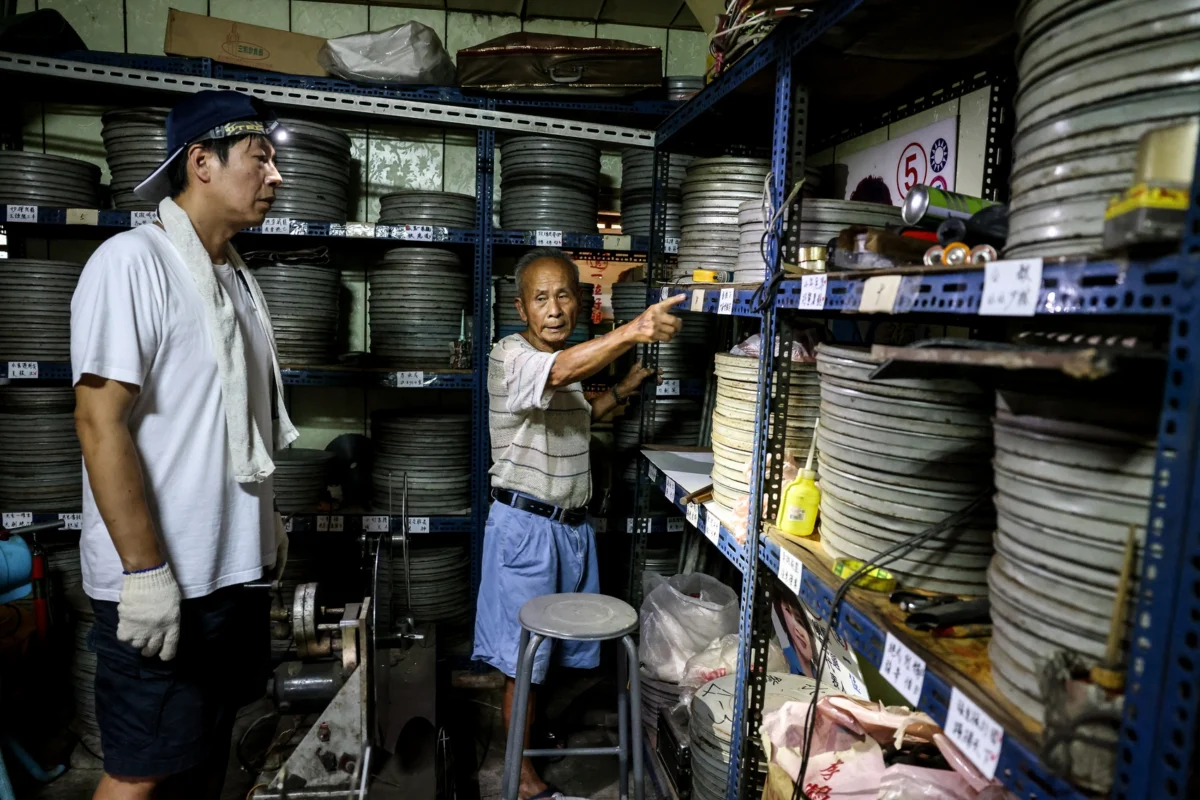
In the hushed, dimly lit confines of a traditional red-brick house nestled in central Taiwan, a dedicated team led by film hunter Wang Wei meticulously unearths and handles fragile film reels. These are not mere cinematic artifacts; they are the nearly vanished remnants of a vibrant Taiwanese film industry, a cultural boom that once captivated audiences but now teeters on the precipice of historical oblivion. The urgency is palpable as they salvage these delicate celluloid treasures, a critical mission to preserve a significant chapter of Taiwan’s cultural heritage.

The focus of this preservation effort lies on a unique genre known locally as "taiyupian" – Taiwanese-language films. These black-and-white productions flourished for a relatively brief but impactful period, from the mid-1950s to the late 1960s. Their emergence coincided with a specific political and social climate in Taiwan. Following their defeat by the Chinese Communist Party in the Chinese Civil War, the Kuomintang (KMT) government relocated to Taiwan. During their subsequent rule, which included a long period of martial law until the late 1980s, the KMT actively promoted Mandarin as the official language, often sidelining indigenous languages like Taiwanese Hokkien. Despite this linguistic policy, independent and private producers seized the opportunity to create films in the vernacular, which proved immensely popular among the local populace.
The significance of these "taiyupian" lies not just in their entertainment value but in their profound cultural and historical importance. Arthur Chu, chairman of the Taiwan Film and Audiovisual Institute (TFAI), articulated this point to AFP, stating that these films represent "an almost-voiceless post-war generation." Their existence, however brief, offers a rare glimpse into the lives, sentiments, and cultural expressions of a generation that navigated a period of significant political transition and linguistic suppression. For Wang Wei, the rediscovery of these films is deeply "meaningful," serving as a tribute to the individuals who dedicated their efforts to their creation and who, through their lens, captured the essence of Taiwan during that era. The stark reality, he emphasizes, is that if these reels are discarded or further deteriorate, "there’s no way to bring them back. They’re gone forever."

The Vanishing Reels: A Decade-Long Hunt
The quest to locate and preserve these Taiwanese-language films is a formidable undertaking. Wang Wei, who has dedicated the past decade to this pursuit, describes the search as "extremely difficult." His dedication has led him to uncover rare celluloids in unexpected places, including an old theatre in Los Angeles, highlighting the global dispersal and potential loss of these cultural artifacts. He collaborates closely with the government-funded TFAI, an institution that has been actively engaged in this archival mission for nearly two decades. Their efforts are crucial, as many of these films have been lost or have succumbed to the ravages of Taiwan’s typically hot and humid climate, accelerating their decay.
The primary threat to these vintage films is a phenomenon known as "vinegar syndrome." This chemical decomposition of cellulose acetate film bases causes them to become brittle, warped, and sticky, rendering them increasingly difficult to handle and restore. To combat this, the surviving reels must be meticulously stored in cold, controlled environments before they can undergo the painstaking process of repair. This often involves manual intervention, followed by high-resolution scanning and extensive digital clean-up and correction.

One of the key figures in this preservation endeavor is 86-year-old supplier Wang Chin-ting. Having entered the film business in 1984 and later acquiring a film company, he possesses a deep understanding of the industry’s history and the challenges of preserving its physical media. Among the hundreds of reels he has amassed over the years, only a small fraction are the coveted Taiwanese-language films. These precious few are currently housed in his ancestral home in Changhua, central Taiwan. The traditional red-brick house, with its naturally cool and dry conditions, provides a more stable environment than many modern facilities might offer for such delicate materials. Wang Chin-ting himself engages in the careful process of handling each reel, removing it from its metal canister and threading it through a rewinding machine, a crucial step in mitigating further deterioration.
At the TFAI’s restoration center in New Taipei City, the delicate work of physical repair is undertaken by film restorer Wu Long-hao. His task is one of immense precision and patience, often involving the use of specialized tape, a scalpel, and even eucalyptus oil to mend tears and stabilize damaged sections of film. Wu Long-hao acknowledges the precarious state of many of these reels. "Some reels are in such poor condition that we have to assume they may only survive a single pass through the scanner," he remarked. "If they snap, they are beyond saving." This statement underscores the critical nature of the current preservation efforts, where each successful restoration represents a victory against irreversible loss.

A Cultural Respite During Repression
The "taiyupian" films offered a vital cultural connection for a significant portion of Taiwan’s population during a period of political and linguistic constraint. These movies, encompassing a wide array of genres – from popular opera adaptations and thrilling dramas to comedies and romance stories – even included Taiwanese interpretations of international blockbusters like "James Bond" and "Tarzan." They resonated deeply with many Taiwanese individuals who had received their education during Japan’s colonial rule and, consequently, possessed limited proficiency in Mandarin.
The production of these films was often characterized by speed and limited budgets, driven by a burgeoning demand from audiences eager for content in their native tongue. As Arthur Chu of TFAI noted, many "taiyupian" were perhaps "crude" or even "absurd" in their execution. However, their value transcends their artistic merit. They provide an invaluable, visual record of everyday life in Taiwan during that era, capturing nuances of social customs, fashion, and urban and rural landscapes that might otherwise have been lost to history. Furthermore, these films serve as a crucial linguistic archive, preserving old Taiwanese dialogue, slang, and colloquialisms, making them a treasure trove for film researchers and linguists alike.

The decline of the "taiyupian" industry began in earnest from the late 1960s, with the advent of television stations and the subsequent rise of Taiwanese and Mandarin-language television dramas. Although the production of Taiwanese-language films continued until 1981, the shift in media consumption patterns and the evolving cultural landscape marked the end of an era.
Despite the industry’s eventual decline, the "taiyupian" held immense emotional significance for the post-war generation. For those who struggled to comprehend or read Mandarin Chinese, these films provided "a deep sense of comfort and an emotional outlet." Chu elaborated that audiences were willing to invest in a cinema ticket not just for entertainment, but as a form of solace and connection during years marked by political repression and hardship. The narratives of "joy, sorrow, love and loss" within these films profoundly touched their hearts, offering a shared experience and a reaffirmation of their cultural identity.

The Broader Implications: Preserving Identity
The ongoing effort to preserve "taiyupian" films is more than just an archival project; it is an essential act of cultural reclamation and identity affirmation for Taiwan. In an era of globalization and rapid technological change, the safeguarding of unique linguistic and cultural expressions becomes increasingly vital. The estimated 1,200 Taiwanese-language films produced during their peak represent a significant, yet alarmingly underrepresented, segment of Taiwan’s cinematic history. To date, film preservers have managed to salvage fewer than a sixth of this estimated total, highlighting the immense scale of the challenge and the urgency of the mission.
The implications of successful preservation extend beyond the realm of film history. These recovered narratives and linguistic nuances contribute to a more comprehensive understanding of Taiwan’s multifaceted identity, a nation that has navigated complex historical currents and cultural influences. By preserving these films, Taiwan is not only honoring its past but also enriching its present and future, ensuring that the voices and stories of a crucial generation are not silenced by time and neglect. The dedication of individuals like Wang Wei and organizations like the TFAI, coupled with the meticulous work of restorers, represents a critical bulwark against the erosion of cultural memory, ensuring that the legacy of "taiyupian" can continue to resonate for generations to come. The race against time continues, a testament to the enduring power of cinema to connect us to our roots and to the shared human experiences that define us.


 Ammar Sabilarrohman
 Azzam Bilal Chamdy